Croatian Olive Growers Weigh Pest Treatments Against Early Harvest
Following September rains, Croatian growers are weighing the risks of olive fruit fly infestations against the benefits of early harvesting, with regional conditions shaping their decisions.
Following a prolonged summer of drought and extreme heat, September rains have brought renewed concerns about olive fruit fly infestations in Croatia, leaving growers divided over whether to treat their groves or bring forward the harvest.
For those who irrigated and plan to harvest only at the end of October or in November, the fly will have enough time to complete its cycle and cause damage.
The arrival of cooler, wetter weather on September 10 and 11 created more favorable conditions for the olive fruit fly (Bactrocera oleae), one of the most damaging pests affecting olive cultivation.
While agricultural advisers in Istria have warned of high pest populations and recommended protective treatments, growers and experts in Dalmatia say risks vary considerably depending on local conditions and harvest timing.
Some argue that treating olive trees so close to harvest could cause more problems than the flies themselves, particularly in groves where summer temperatures have already disrupted the insect’s reproductive cycle.
High Pest Populations in Istria, Lower Pressure in Dalmatia
In Zadar County, agricultural adviser Ivan Šimičević said monitoring stations have recorded low-to-moderate olive fruit fly activity. He urged growers to inspect their groves regularly and collect and examine fruit samples to determine whether treatment is necessary.
Conditions are more concerning in Istria, where agricultural adviser Marina Kocijančić reported very high olive fruit fly populations at monitoring stations.
Advisers have recommended that Istrian growers treat their trees in the coming days with chemical products containing deltamethrin or flupyradifurone, which have relatively short preharvest intervals.
Meanwhile, some growers are considering alternatives, including kaolin, zeolite and natural coatings that form a protective layer on the surface of the fruit.
However, growers in Dalmatia question whether additional treatments are justified, particularly for groves scheduled for harvest in the coming weeks.
Growers Consider Alternatives to Chemical Treatments
Mladen Dušević, an olive grower from Ljubač, recently asked Dr. Ivica Vlatković, a physician and olive grower from Novigrad, about using wood charcoal distillate to protect olive trees.
Vlatković, who maintains an olive grove in his hometown, considers the distillate a promising option for organic growers and others seeking to reduce chemical treatments.
“I believe this is the best solution for protecting organic groves, as well as all those striving toward that type of production,” he said.
According to Vlatković, the distillate confuses olive fruit flies without harming beneficial insects and leaves no residue in the oil.
However, he cautioned that treatments should be completed at least three weeks before harvest because the product’s strong odor could affect the resulting oil’s aroma.
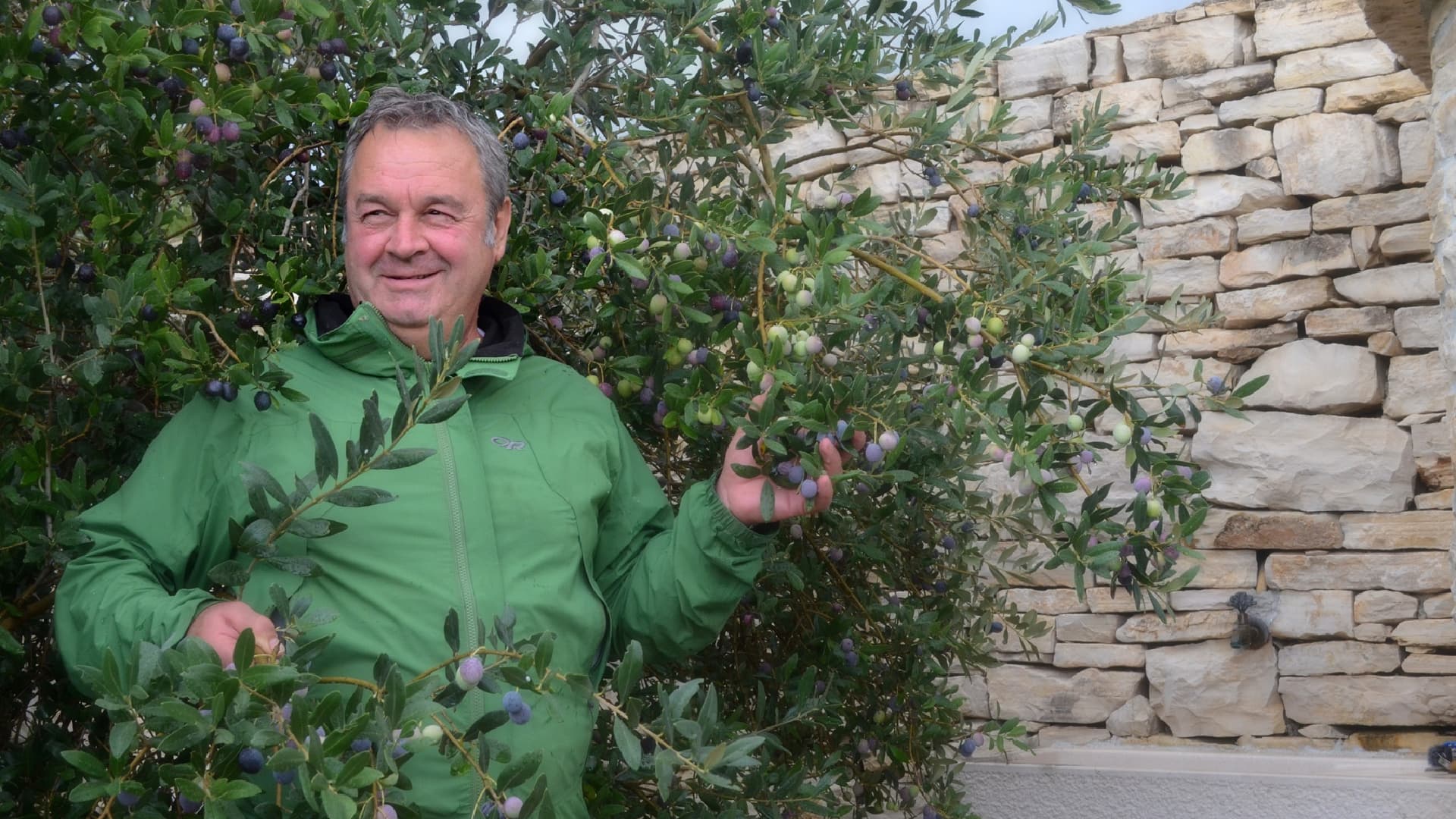
Ivica Vlatković in his olive grove in Novigrad, Dalmatia. He argues that growers planning an early harvest may have little to gain from treating against the olive fruit fly so late in the season.
He added that the three-week period also allows time for the insect’s reproductive cycle to progress, helping growers assess the potential damage. The odor dissipates over time, particularly after rainfall.
Despite the recent change in weather, Vlatković said no further treatment is necessary in his own irrigated grove this autumn.
“The extreme summer temperatures have done their job,” he said.
Vlatković believes the olive fruit fly population has not developed sufficiently to pose a serious threat before an early harvest. He noted that the insect needs at least 23 days to develop from egg to adult under the conditions he described.
He also questioned the value of applying kaolin so close to harvest, saying clay left on the fruit after washing at the mill could carry into the oil.
“The damage from any treatment at this point is greater than that caused by the fly itself,” he said.
In his view, growers planning to harvest in November have more reason to consider additional treatment, while those harvesting earlier may be able to avoid it.
Harvest Timing and Irrigation Shape Pest Risks
Šime Marcelić, an associate professor at the University of Zadar who maintains a restored 400-year-old family olive grove in Preko on the island of Ugljan, expressed a similar view.
He said olive fruit fly damage occurred in July, primarily in irrigated groves, before exceptionally high temperatures during July, August and early September disrupted the insect’s development.
According to Marcelić, the fly’s development is favored by high humidity and temperatures below 30 ºC.
He believes September rains are unlikely to significantly affect non-irrigated groves scheduled for harvest during the first half of October because the insects will not have enough time to complete their development before the fruit is picked.
However, growers who irrigated their trees and plan to harvest in late October or November could face greater risks.
“For those who irrigated and plan to harvest only at the end of October or in November, the fly will have enough time, about 30 days, to complete its cycle and cause damage,” Marcelić said.
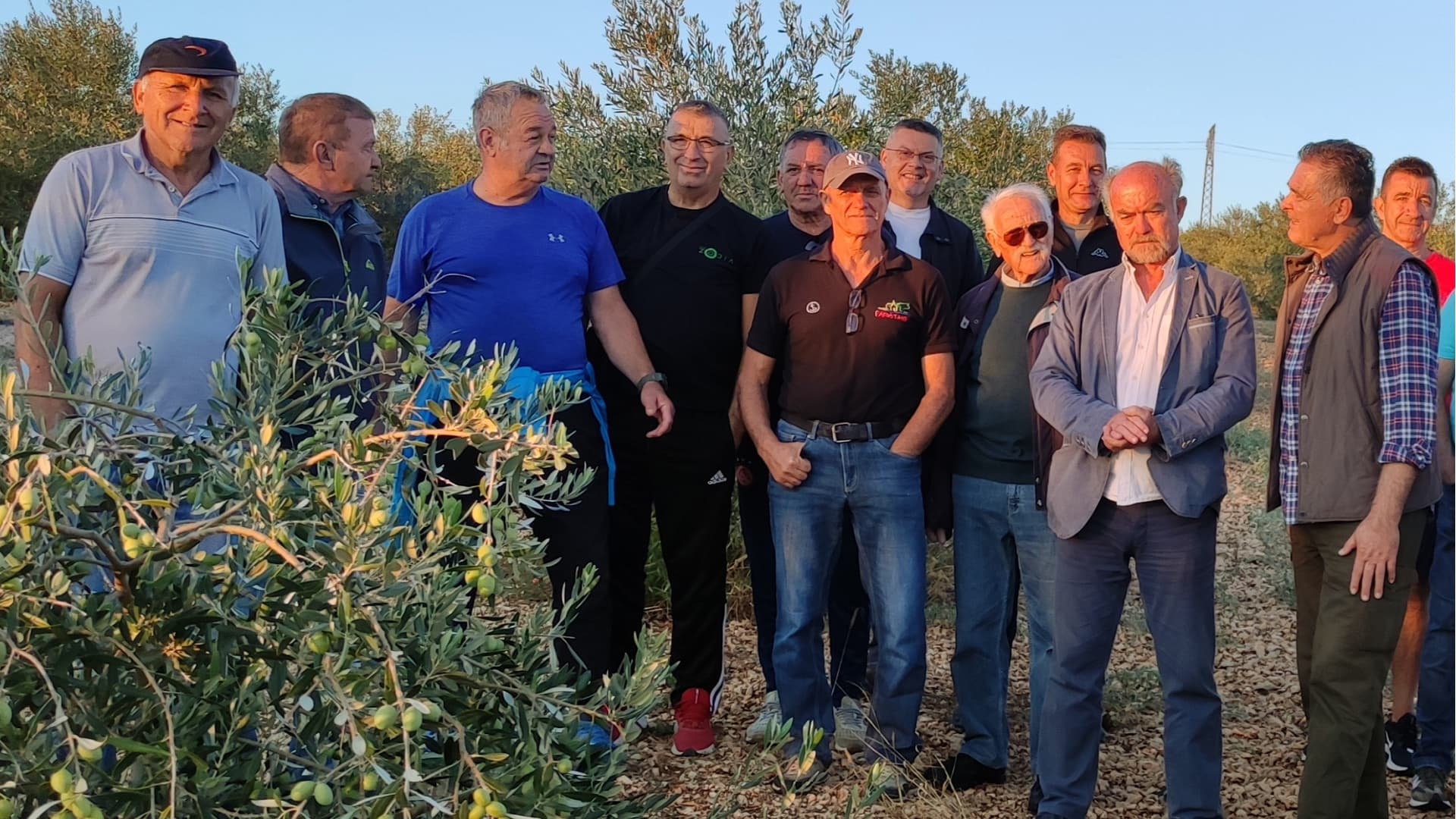
Olive growers in Dalmatia gather in a grove as the harvest approaches. Many in the region say an early harvest may be preferable to late-season treatments against the olive fruit fly.
He warned that coastal areas and islands are particularly vulnerable because humidity is often higher and temperatures are more favorable for the insect’s development.
Neglected and abandoned olive groves near the sea can also increase pest pressure in neighboring orchards, he added.
Marcelić said the risk is generally lower in the inland areas of Ravni Kotari and Bukovica, northern Istria and the hinterlands of central and southern Dalmatia.
In his own grove, prolonged drought left the olives shriveled for much of the summer. He said preventive treatment with kaolin clay has been sufficient to control the pest.
“Since I will harvest at the beginning of October, there is no need for further treatment,” Marcelić said. “The fruit is healthy and accumulating oil.”
However, he noted that oil accumulation is two to four percent lower than at the same point last year, which he attributed to the intense heat between mid-August and mid-September.
Lessons From a Croatian Olive Pest Specialist
The debate has also renewed attention to the work of the late Miro Katalinić (1949–2021), a Croatian agricultural scientist who spent many years at the Institute for Adriatic Crops in Split and worked with the country’s agricultural advisory service.
Katalinić advocated targeted pest management rather than automatically applying insecticides across entire groves whenever olive fruit flies were detected.
He identified abandoned olive groves and coastal gardens as potential summer breeding grounds from which flies could spread into cultivated orchards as temperatures declined.
His approach emphasized treating areas with concentrated pest pressure, particularly grove edges and using traps to reduce the need for widespread spraying.
Katalinić also promoted mineral-based protective coatings, including diatomaceous earth and clay, which can interfere with the insect’s ability to recognize suitable fruit for egg-laying.
Another technique he recommended was attract-and-kill treatments, in which a mixture of hydrolyzed protein bait and a small quantity of insecticide is applied to a limited portion of the tree rather than the entire canopy.
He also emphasized the importance of preserving beneficial insects that naturally help control olive fruit fly populations, warning that indiscriminate insecticide use could disrupt that balance and contribute to pesticide resistance.
His approach remains relevant to the current debate among Croatian growers, many of whom are seeking effective ways to protect their crops while limiting chemical inputs.
Early Harvest May Reduce the Need for Treatment
For growers approaching the olive harvest, the decision to treat depends largely on local pest populations, orchard conditions and the time remaining before picking.
Growers planning to harvest in late September or early October may face less risk of significant new infestations, particularly where summer heat has suppressed olive fruit fly activity.
Those planning to harvest in late October or November, especially in irrigated coastal groves, may face a longer exposure period as temperatures moderate and humidity increases.
The contrasting conditions in Istria and Dalmatia underscore the importance of monitoring individual groves rather than applying a uniform approach across Croatia’s olive-growing regions.
For many growers, the question is no longer simply whether to treat against the olive fruit fly, but whether bringing forward the harvest offers a more practical way to protect their crop and the quality of the resulting oil.