In Lebanon’s Olive Groves, War Deepens a Fight to Protect the Land
As conflict, displacement and food insecurity deepen, award-winning producer Karim Arsanios says Lebanon’s agricultural future depends on protecting soil, water and biodiversity.
When asked what worries him most as he walks through his olive groves, Lebanese olive oil producer Karim Arsanios did not start with war or economics. He started with nature, and with what he sees as his country’s failure to protect it.
“We have a beautiful country, we have exceptional nature, we have exceptional diversity of soil, and we do not try to protect it enough,” he told Olive Oil Times. “There’s uncontrolled urbanization happening everywhere. There’s no value to what we have.”
Thousands of farmers are losing their livelihoods and are barely able to sustain their families.
“We have created an ecosystem here, a very healthy ecosystem with wildlife and biodiversity,” Arsanios added. “And then, just a few hundred meters away, you see development projects destroying an entire mountain to build a compound.”
Arsanios, whose Solar extra virgin olive oil has earned international recognition, farms in the Kour district of northern Lebanon, far from the areas most directly affected by Israeli military operations in the south.
Still, like most Lebanese, he said the war is affecting everyone. “All families here, in one way or another and to different degrees, are touched by the war,” he said. “We’ve been suffering crisis after crisis.”
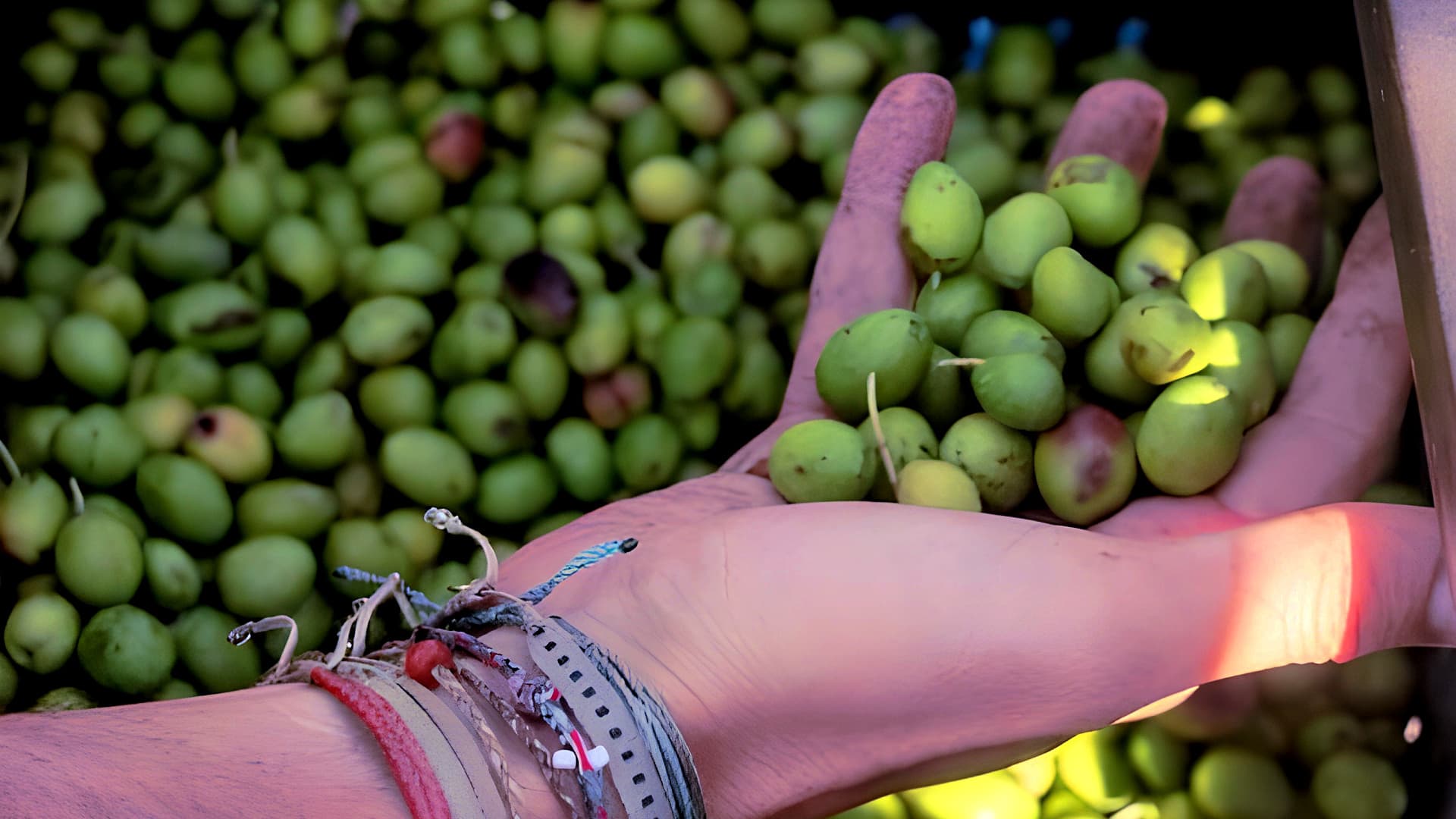
Freshly harvested olives from Solar’s groves in northern Lebanon.
Those crises now extend far beyond the battlefield. Alongside years of economic turmoil, Lebanon faces rising food insecurity, displaced farming communities and growing concern about the long-term impact of conflict on agricultural land and natural resources.
According to a recent Integrated Food Security Phase Classification analysis supported by the United Nations, about 1.24 million people in Lebanon are expected to face acute food insecurity between April and August 2026, up from the 874,000 classified between November 2025 and March 2026.
“The first in line are the people that are from the South,” Arsanios said. “Most farmers have been losing their livelihoods because of what is happening. They farm and they live out of their land and are being forced not to plant or harvest.”
International organizations have repeatedly warned about the consequences of displacement in southern Lebanon, where many farmers have left their land in search of safety in central and northern parts of the country. According to IPC, 76 percent of internally displaced people had been forced to leave their homes.
While southern Lebanon is not the country’s largest agricultural region, its role in the national food system is substantial. FAO assessments have shown that South and Nabatieh account for about 22 percent of Lebanon’s usable agricultural land, while the Bekaa and Baalbek-Hermel regions account for about 43 percent.
The south also plays an outsized role in several strategic crops. Widely cited estimates put the region’s share at more than one-fifth of Lebanon’s citrus production and about 38 percent of its olives, making the fate of southern farms critical to the country’s food security and agricultural identity.
A damage and loss assessment by FAO, Lebanon’s Ministry of Agriculture and the National Council for Scientific Research-Lebanon found that the agriculture sector suffered an estimated $118 million in damage and $586 million in losses between October 2023 and November 2024.
The assessment identified southern Lebanon and the Bekaa Valley as the most affected areas and said immediate support was needed to restart farming, livestock, fisheries and aquaculture activities. It also called for the restoration of perennial crops, farms, irrigation systems and agricultural machinery.
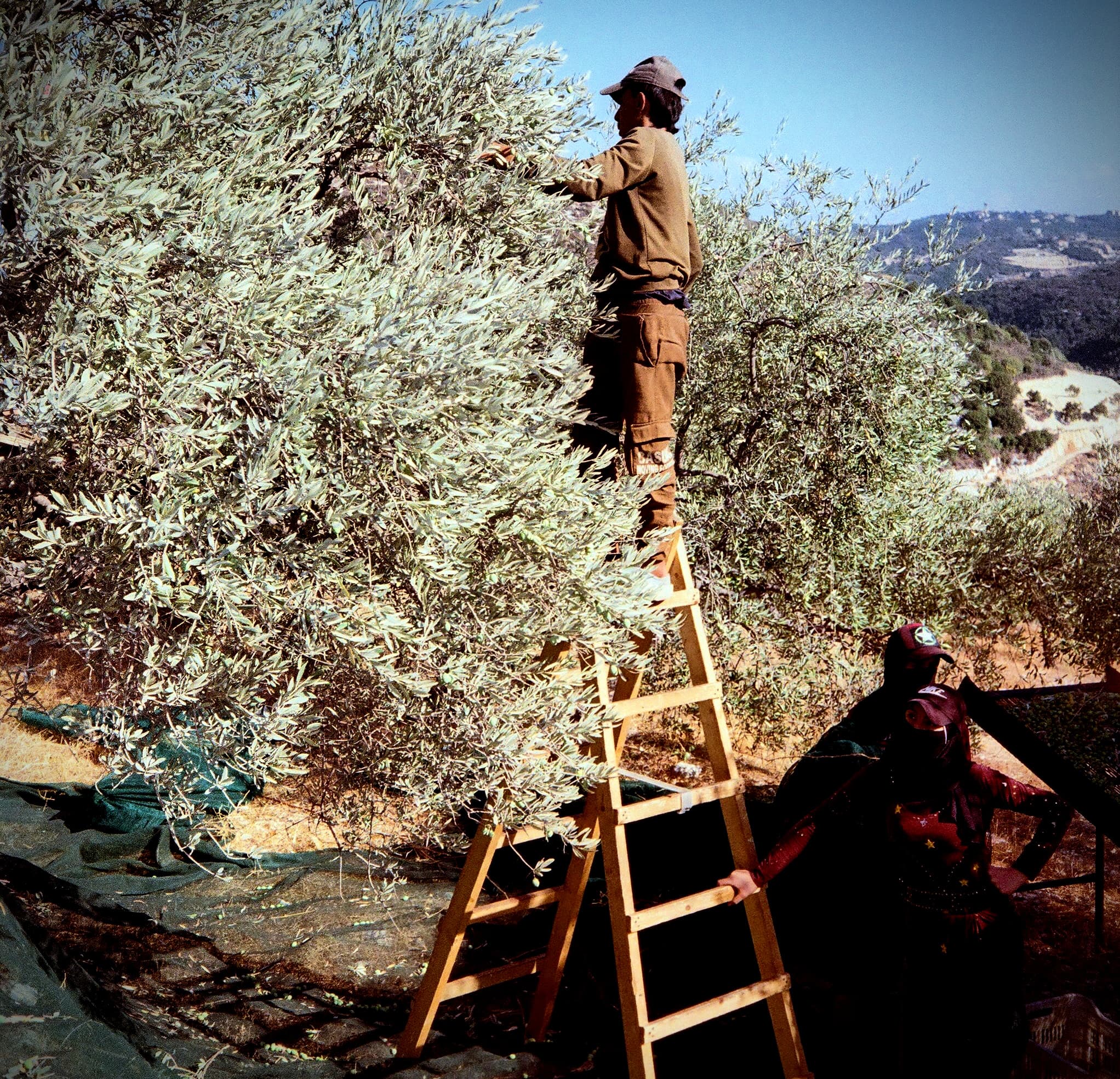
Workers harvest olives at Solar’s groves in northern Lebanon.
The disruption has extended beyond fields and orchards. Livestock, poultry, beekeeping and fisheries have also suffered, weakening rural incomes and threatening pollination, food production and local supply chains.
“In the south, agriculture is the primary source of livelihood,” Arsanios said. “Thousands of farmers are losing their livelihoods and are barely being able to sustain their families.”
He worries that the full consequences of the conflict have not yet emerged. “When actions are taken, there’s always a lag between what happens and the consequences,” he said. “I think we’re soon going to see the full extent of the consequences of the war.”
According to Arsanios, the lack of a coordinated national response is weighing on every sector of Lebanese society and the economy.
“The government is still not acting as a government should in times of war,” he said, criticizing authorities for failing to provide adequate support for displaced citizens amid inflation and a struggling economy. “Everybody in the country is feeling, to different degrees, the economic consequences.”
Although critical of the government’s response, Arsanios also argued that the international community had failed to exert sufficient pressure to end the conflict, leaving many Lebanese feeling abandoned amid a worsening humanitarian and economic crisis.
His own business provides an example. “Eighty-five percent of my sales happen in Lebanon,” he said. “Since the war happened, I’ve seen sales drying up.”
Arsanios had lived in Beirut for the previous six years. After the latest escalation and months of drones and explosions, he moved to a more secluded part of northern Lebanon. However, his work still regularly takes him to the capital. “You can’t be detached from what is happening,” he said.
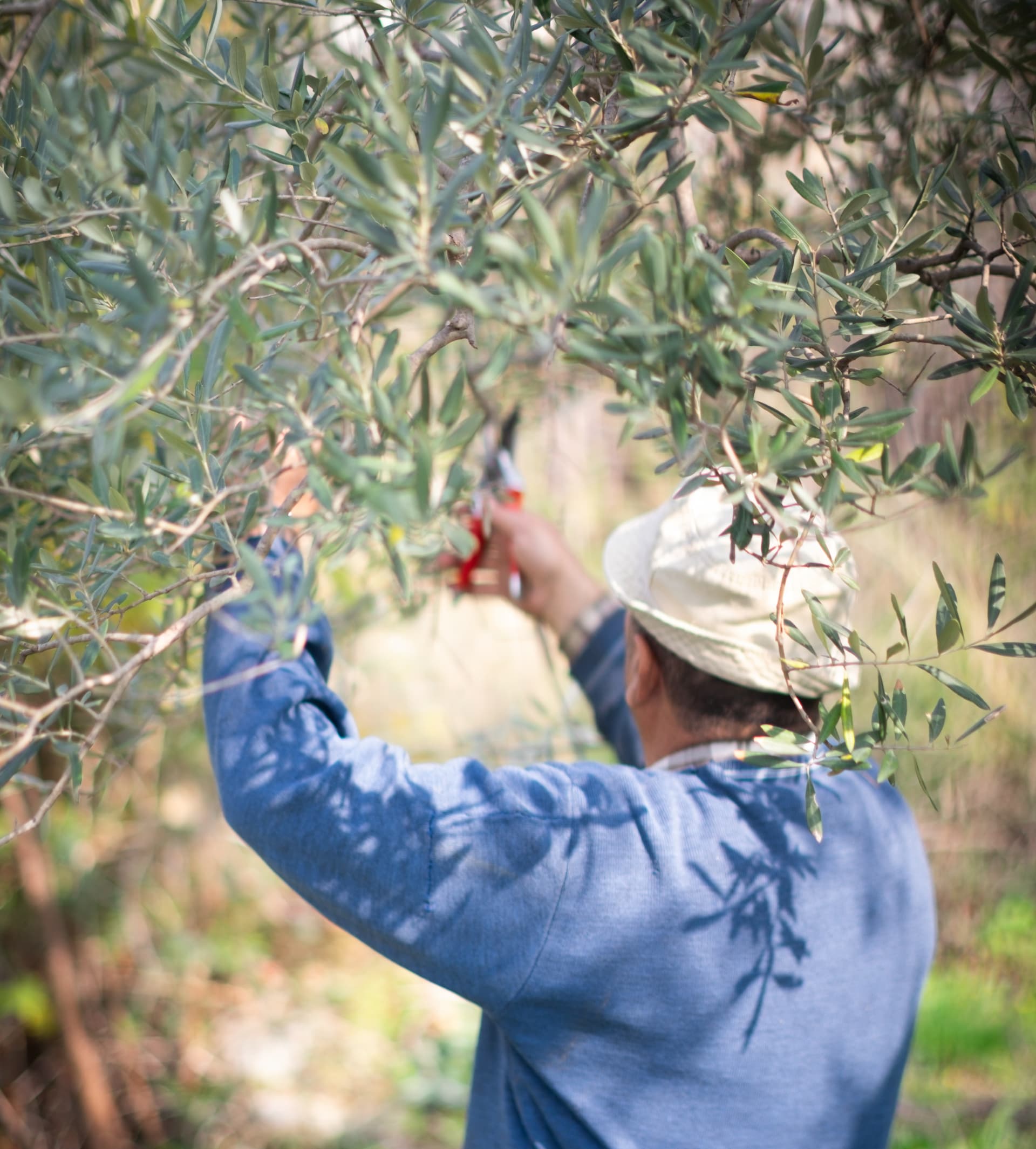
Pruning olive trees at Solar’s groves in northern Lebanon, where careful canopy management supports tree health and biodiversity.
While conflict dominates international headlines, Arsanios said Lebanese farmers face additional pressures that receive far less attention. “The main challenge is the price for energy,” he said. “We have one of the highest prices in the world when it comes to energy.”
Energy costs have become a major concern as farms contend with unreliable electricity supplies and the high cost of alternatives for powering irrigation systems and other agricultural operations.
“This year we had a lot of rain, which is actually a godsend,” Arsanios said. “But this is not the norm.”
Lebanon traditionally receives more precipitation than much of the region, but water availability is becoming more uncertain. FAO data show that agriculture accounts for about 55 to 60 percent of the country’s utilized water, while World Bank project documents have warned that dry-season water availability could fall by half by 2040.
“The way to address this would be to have water retention when there’s actual rain pouring in Lebanon,” Arsanios said. “But again, there’s no real infrastructure that actually allows us to do that.”
The combination of conflict, economic instability and environmental pressure is raising broader concerns about the future of Lebanese agriculture, including potentially long-lasting damage to land, water and ecosystems.
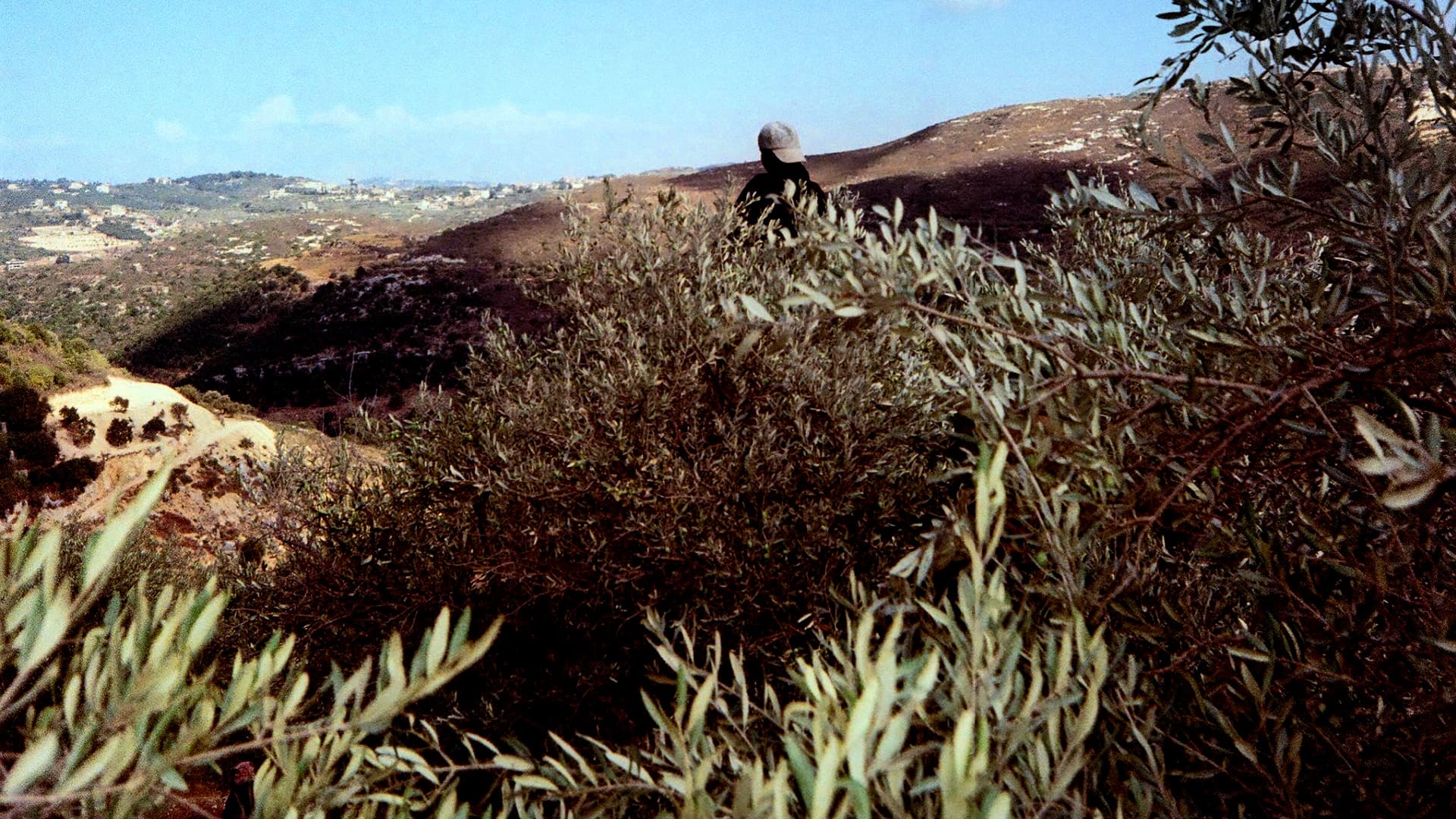
The olive-dotted hills of Koura
Earlier this year, Lebanese officials accused Israel of causing extensive damage to forests, agricultural land and ecosystems, including contamination linked to military activities and the destruction of thousands of hectares of vegetation.
Arsanios believes the environmental consequences could persist long after the fighting ends. A recent report citing Human Rights Watch and independent researchers accused Israel of using white phosphorus in southern Lebanon, burning more than 2,000 hectares of farmland and forests.
“There’s a lot of destruction. Not just olive trees. Tens of thousands of trees have been completely erased,” Arsanios said.
He said the destruction of trees and agricultural land is especially painful because many farmers still do not know whether they will be able to return to their properties or what condition they will find them in when they do.
“What’s really heartbreaking is there’s no real visibility on how post-war efforts are going to shape out,” Arsanios said. “Will people actually be able to go back to their lands and harvest and sustain their livelihood? Even though a so-called ceasefire has been reached, there are no real assurances from anyone.”
According to Arsanios, the Lebanese population is exhausted by the conflict and years of instability.
“That does not define Lebanon, and yes, the majority of the Lebanese population is tired. We are tired of the constant wars. We’re tired of not being able to plan. We’re tired that the younger generation is actually suffering once again what past generations have suffered,” he said.
“Working people do not care anymore about religions. We just want to have some stability to be able to live,” he added.
Even in such difficult circumstances, the award-winning olive producer remains cautiously hopeful about the future. “What I’m hopeful for is that there’s a new generation that is much more in sync with the earth, with the soil, with nature,” Arsanios said.
He sees growing awareness among younger Lebanese about the relationship between healthy ecosystems, healthy soils and healthy communities. “We are as healthy as our soil and our land is,” he said. “There’s a lot of people doing exceptional things when it comes to nature preservation.”
That perspective is visible in his own groves, where regenerative farming practices have helped build biodiversity and improve soil health over time.
According to Arsanios, as the country confronts food insecurity, displacement and environmental degradation, its future will depend not only on reconstruction but also on its ability to preserve its land, water resources and agricultural heritage for future generations.
“We as Lebanese,” he said, “we deserve the opportunity to show what we can do. And share with the world what we know how to do best, which is actually beautiful things.”
Note: Olive Oil Times sought comment from the Lebanese government and attempted to contact the Israel Defense Forces through official channels. While public statements on military operations in southern Lebanon are available from the IDF, no response to the specific agricultural and environmental issues discussed in this article was received before publication. Representatives of the Lebanese government were contacted but did not provide comment.