In Rome, Community Olive Harvest Provides Oil for Families in Need
Volunteers in Rome are harvesting olives from 65 trees in a public park, producing extra virgin olive oil for families in need as a growing community initiative gains municipal support.
The olive harvest is underway at Parco dei Romanisti in Rome’s Torre Spaccata neighborhood, where the park’s 65 trees will soon yield extra virgin olive oil to distribute to families and individuals in need.
Now operating under the patronage of the City of Rome (Roma Capitale), the Olio Bene Comune (Oil Common Good) project dates back to 2012, when a group of volunteers began caring for olive trees scattered throughout the public park on the city’s eastern outskirts.
Over the years, we have seen how activities like this in public spaces can counter civic disengagement and encourage people to take a more active role in their community.
In 2024, Olive Oil Times reported on the initiative, which has continued to grow. Last year, they added new trees, and Roma Capitale formally recognized the project through a collaboration agreement. Subsequent funding from the Charlemagne Foundation enabled further expansion of the olive grove and the purchase of new equipment.
Rome’s Environmental Protection Department, the Gaspar8 APS solidarity purchasing group, and Gli Olivari, the civic engagement association formed by the initiative’s original promoters, signed the agreement, and Gli Olivari continues to lead the project.
“This is a remarkable initiative that combines urban agriculture with a deeply meaningful solidarity project,” said Sabrina Alfonsi, Roma Capitale’s councilor for agriculture, environment and waste management. “Collaboration agreements are proving, once again, to be an extremely effective tool for horizontal subsidiarity between the administration and local community groups.”
“Beyond the extraordinary role urban gardens play in fostering community and inclusivity, the experience of the Parco dei Romanisti olive grove highlights the value of urban agriculture,” Alfonsi added. “Not only does it bring environmental benefits, such as soil and biodiversity conservation, but it also has a powerful social and solidarity-building impact.”
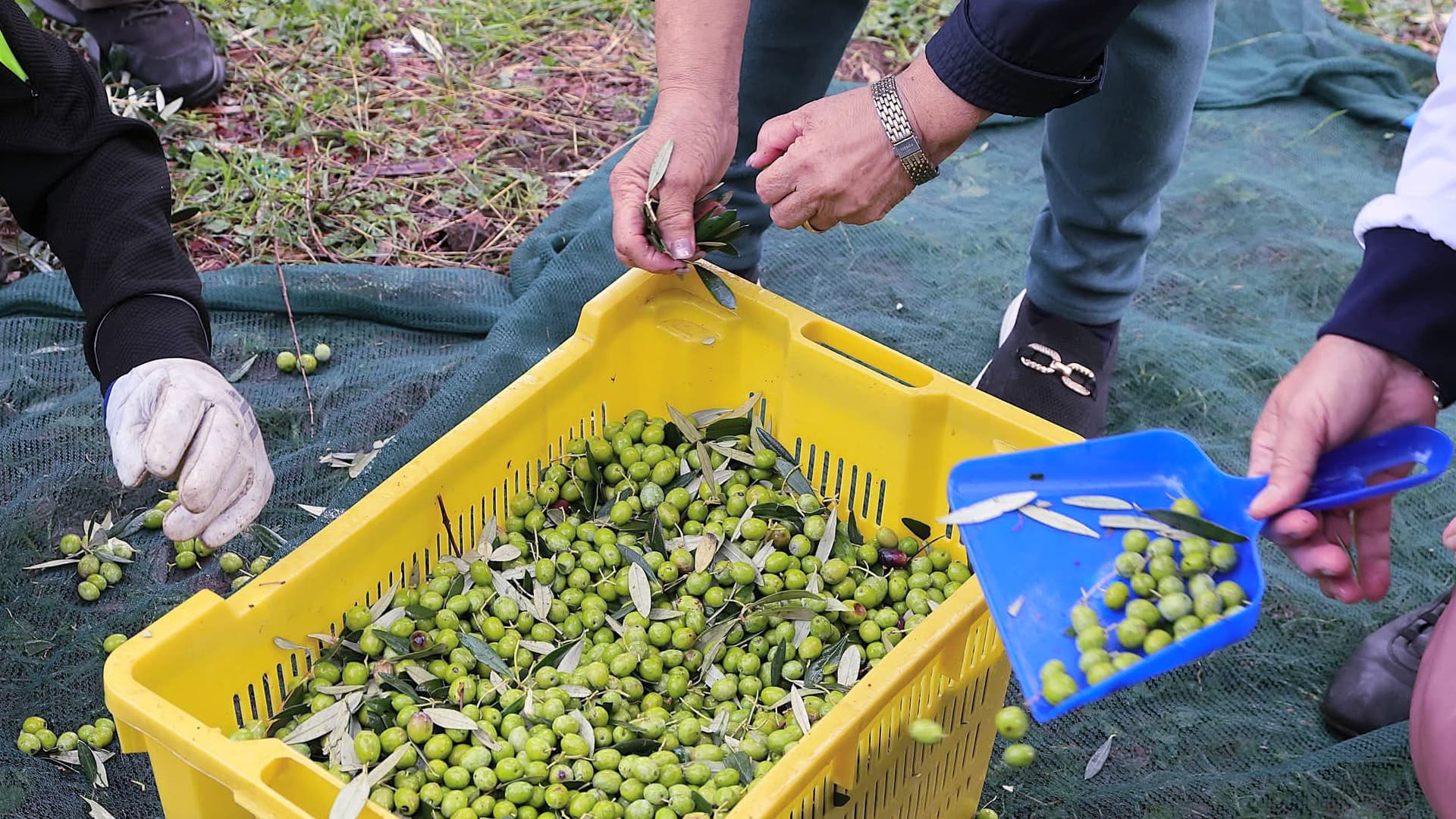
In 2025, Roma Capitale formally recognized the Olio Bene Comune project through a collaboration agreement. (Photo: Alfredo Vittorio)
Under Roma Capitale’s regulation on the shared governance of common goods, the three-year agreement covers the restoration and shared management of the park’s olive trees.
It also promotes environmental education for children and young people in collaboration with local schools, along with public discussions on food culture and healthy eating.
“The agreement was the final step needed to formalize our effort, which began as a grassroots endeavor aimed at safeguarding the community’s green heritage and supporting disadvantaged residents and has, over the years, come to be recognized as a best practice in fostering community cohesion, solidarity, and environmental stewardship,” Antonio Carosi, spokesperson for Gli Olivari, told Olive Oil Times.
Carosi said the project gained new momentum a few months before the agreement was signed, when the City of Rome added 13 olive trees to the 35 already growing in the park.
The trees were relocated from Viale Mazzini in northern Rome, where a redevelopment project was underway to restore the tree-lined avenue to architect Raffaele De Vico’s original design.
Earlier this year, the Charlemagne Foundation, which backs the project through its Periferia Capitale program, planted 17 more olive trees of the Leccino, Frantoio, Moraiolo and Pendolino varieties.
“The Charlemagne Foundation approved our funding request, which included the expansion of the existing olive grove, the purchase of essential equipment, and support for a range of educational activities we plan to organize in the coming months,” Carosi said.
Before the association could plant the new trees last spring, it had to complete the administrative procedures required to donate them to Roma Capitale under municipal regulations.
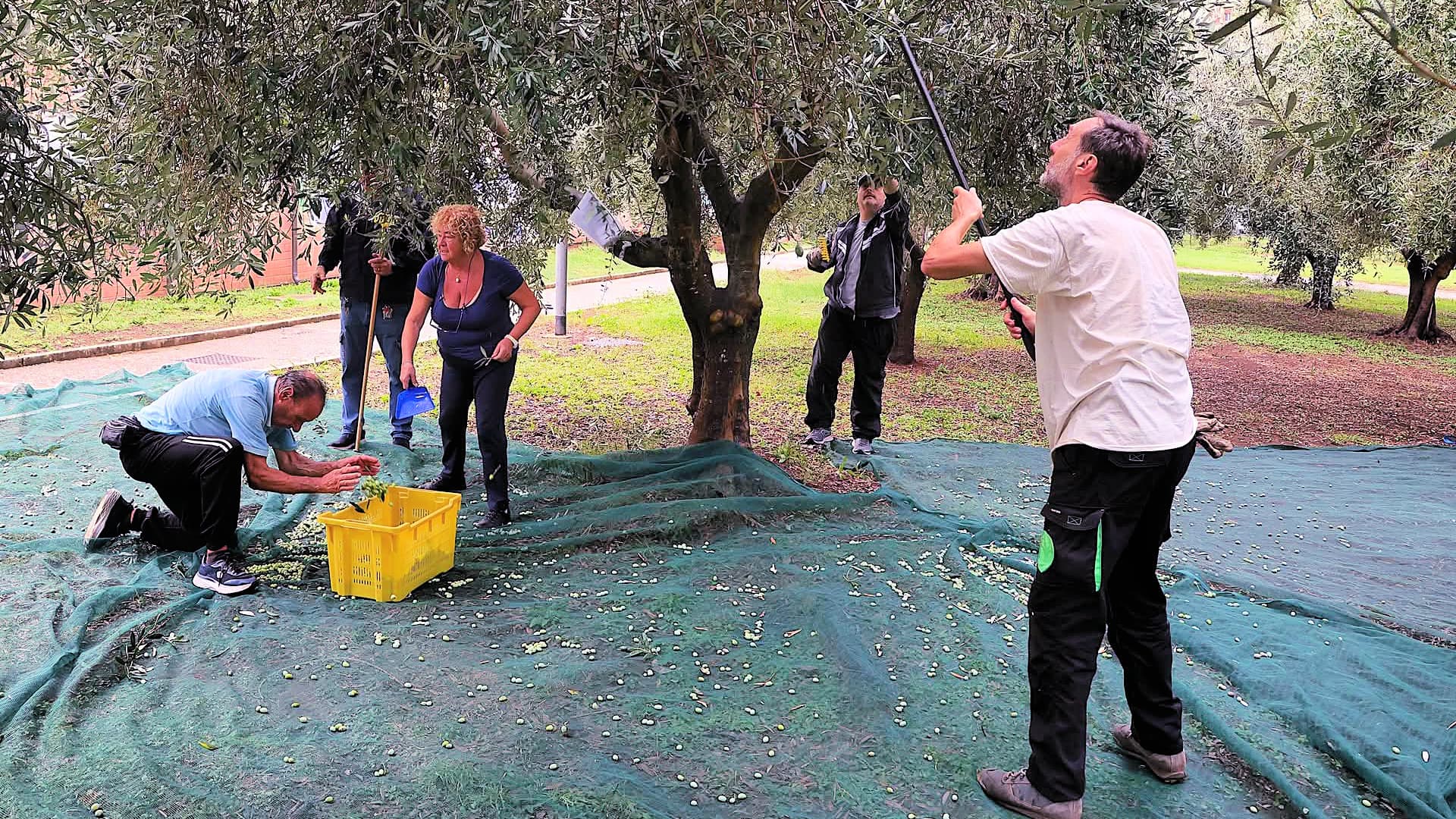
Following the harvest and milling, Gli Olivari volunteers bottle and label the olive oil before handing it over to local Caritas centers for distribution to people in need. (Photo: Alfredo Vittorio)
Gli Olivari is documenting the planting and year-round work in the grove for an educational film to be screened in schools, highlighting the project’s environmental and social benefits.
Last weekend, about two dozen local residents gathered in the park to harvest olives. The event also gave neighbors a chance to connect, with participants bringing homemade food to share with fellow volunteers.
The new equipment helped the harvest run smoothly, and volunteers promptly delivered the olives to a mill in the nearby town of Monte Compatri.
Gli Olivari volunteers are now bottling and labeling the oil before handing it over to local Caritas centers at the San Bonaventura and Santa Maria Regina Mundi parishes, which will oversee its distribution to people in need.
“We believe that another important aspect of this project is preventing food waste and ensuring that the olives are put to good use,” Carosi said. “Over the years, we have seen how activities like this in public spaces can counter civic disengagement and encourage people to take a more active role in their community.”
He said such initiatives encourage active citizenship and strengthen residents’ connections to their neighborhoods. By caring for the trees and donating the resulting oil to vulnerable residents, volunteers create a cycle of solidarity while raising awareness of the value of shared public spaces.
“This project rests on three great pillars,” Carosi said. “The first is care. By looking after a shared space, we help create an environment that is safe, clean and beautiful. We believe that beauty encourages people to value and protect it, giving the initiative a strong educational dimension.”
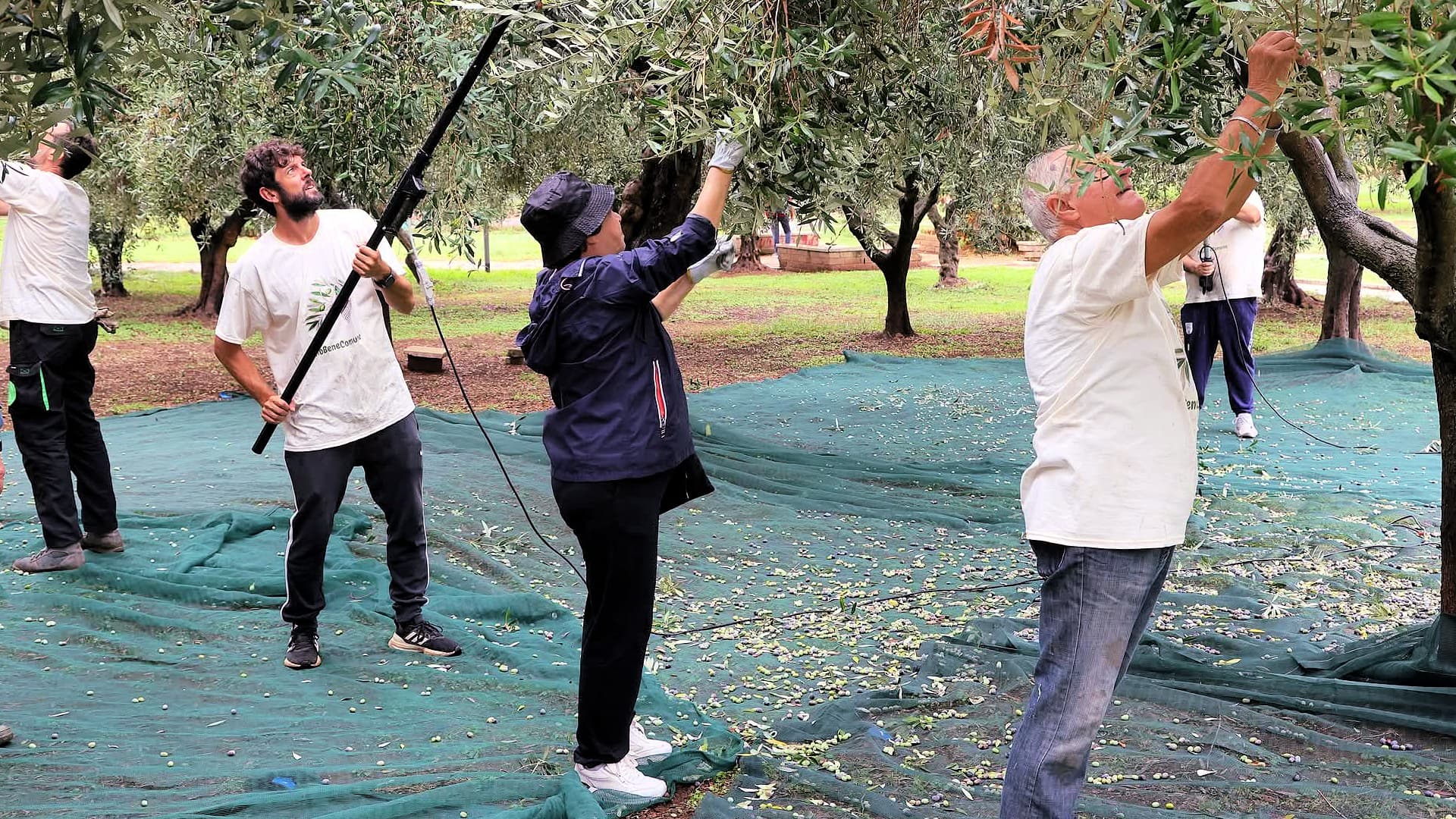
Extra virgin olive oil produced from the trees at Rome’s Parco dei Romanisti is distributed to community members in need. (Photo: Alfredo Vittorio)
“The second pillar is solidarity, embodied by the donation of oil to those most vulnerable, one of the project’s most meaningful aspects,” he continued. “The third is community building. This work requires commitment and time from people of very different backgrounds, yet it brings them together around the shared goal of caring for a common good in a completely selfless way, without any reward other than the positive impact generated by the initiative itself.”
Gli Olivari is now organizing a course on olive tree pruning and management, to be held in the park in the coming months and led by expert instructors.
The success of the Parco dei Romanisti initiative has also attracted interest from other community groups. In the coming weeks, local associations plan to organize olive harvests at nearby Parco Salvador Allende, Parco Sergio Albani in the Casal Brunori neighborhood and in the Statuario district.