Mediterranean Agroforestry Mapping Project Seeks Farmers’ Input Across Five Countries
A new international initiative is collecting data from farmers and organizations in five Mediterranean countries to build the region’s first map of agroecological agroforestry systems.
An international data collection effort is underway to build the first map of agroecological agroforestry in the Mediterranean. A survey was recently launched and will run until the end of September 2026, calling on farmers, technicians and institutions in Greece, Italy, Lebanon, Portugal and Turkey to share their experiences.
An agroforest increases biodiversity, enhances production outcomes and in many cases improves the beauty of the landscape.
The initiative is coordinated by the Italian non-profit organization Deafal ETS and involves partners from several countries, including Terra Sintrópica in Portugal, the Buğday Association for Supporting Ecological Living in Turkey, the Lebanon Reforestation Initiative, Millepiani APS in Italy and The Southern Lights in Greece.
The effort is part of the Mobilizing Agroforestry Practices through Participation, Innovation, and Networking for Growth (MAPPING) project. Co-funded by the European Union through the Erasmus+ program, the initiative aims to develop a free and open platform to gather data and best practices, allowing users to compare and explore agroforestry experiences across different regions.
Agroforestry involves the intentional integration of trees and shrubs into agricultural and silvopastoral systems. The practice has deep roots across the Mediterranean but declined with the rise of modern industrial agriculture.
The MAPPING project is based on the idea that agroforestry can help both mitigate and adapt to climate change by sequestering carbon, regulating water and protecting soil from erosion.
According to the FAO’s State of the World’s Forests report published in 2022, agroforestry could help restore more than one billion hectares of degraded land worldwide while improving soil fertility, agricultural productivity and rural livelihoods.
“In essence, an agroforest is a dynamic intercropping system, implemented through the integration of trees and perennial and annual plants, and through the ecological management of resources,” said Anna Morera Perez, head of environmental education and global citizenship at Deafal ETS and manager of the MAPPING project.
“Introducing new species allows for the creation of shaded spaces and new vertical and horizontal stratifications through roots, branches and soil cover that integrate agricultural, forestry and livestock functions,” she added. “For instance, poultry and small ruminants such as sheep can also be introduced into olive groves that are part of an agroforestry system.”
Morera Perez said the project is built on three pillars. The first focuses on mapping agroecological agroforests across the Mediterranean basin, particularly in Greece, Italy, Lebanon, Portugal and Turkey.
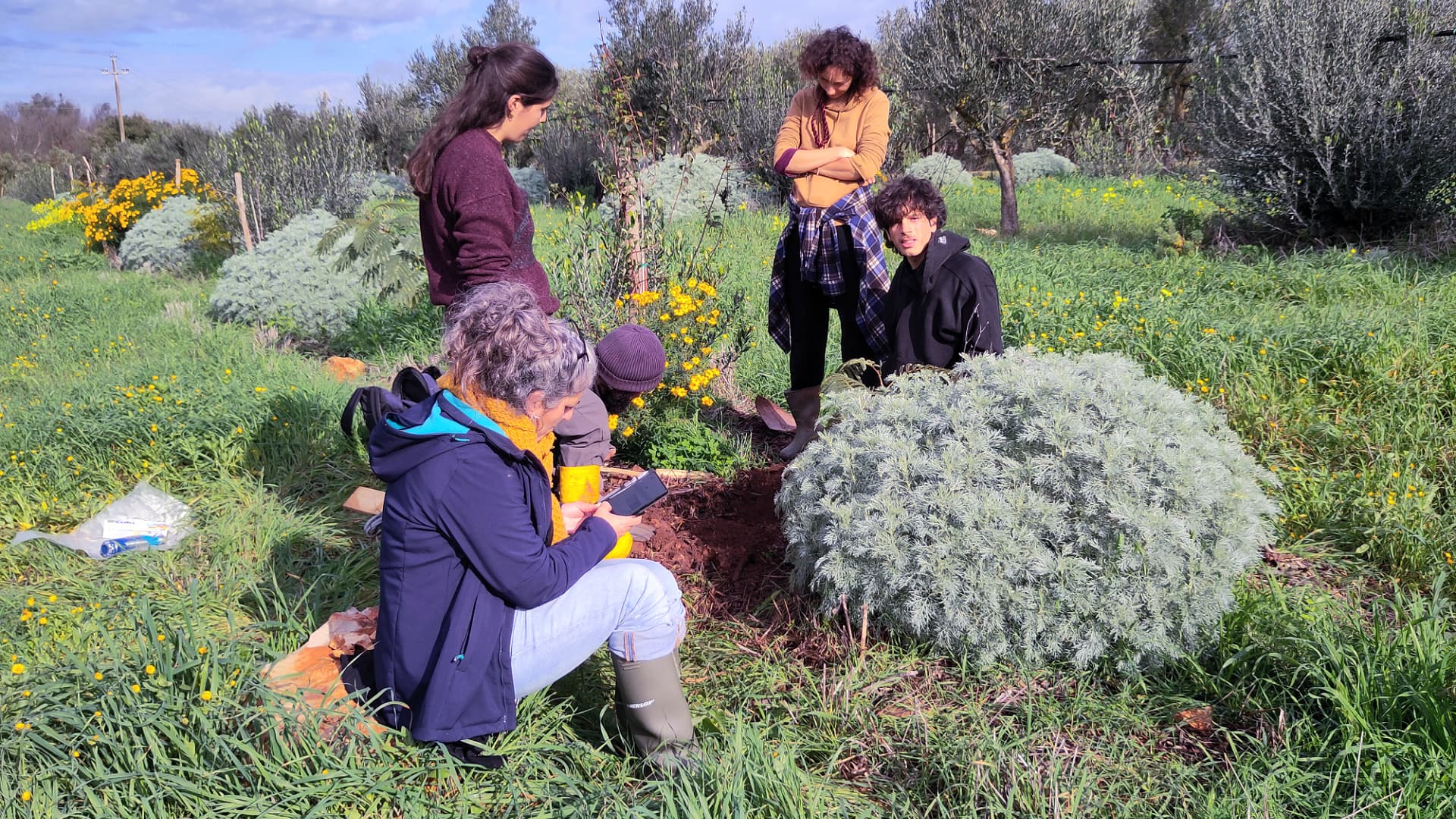
Deafal ETS and XFarm Agricoltura Prossima are now working to regenerate a 2-hectare olive grove through the ReAGES project by developing an agroforestry model. (Photo by Virginia Devoto)
To support the effort, project organizers launched the survey to identify agroforestry initiatives carried out by small, medium and large farms in both the public and private sectors.
“The condition is that farms follow agroecology principles, namely practicing organic and regenerative agriculture and, if animals are present, ensuring their well-being is safeguarded,” Morera Perez said.
She added that the survey is intended to assess the environmental, social and economic impacts of agroforestry systems, including their role in improving soil fertility, increasing biodiversity and helping diversify farmers’ income streams.
By the end of 2027, the project partners plan to publish a booklet highlighting selected best practices and release a series of country-specific podcasts.
“The second pillar of the project involves training farmers and technicians who are approaching agroforestry,” Morera Perez said. “We will hold international training in Portugal, hosted on a farm managed by the Terra Sintrópica association.”
The training sessions are expected to bring together farmers from different countries to exchange technical knowledge and practical experience related to establishing agroforestry systems.
The project will also produce educational videos and infographics focused on topics identified as most relevant to practitioners and the broader public.
“The third pillar, which is the broadest, involves citizens and non-experts,” Morera Perez said. “We will discuss agroforestry through innovative and cross-cutting languages such as art, illustration and theater.”
One of the agroforestry projects overseen by Deafal ETS is XFarm Agricoltura Prossima in San Vito dei Normanni, in Puglia. Since 2021, the team has worked to revitalize an abandoned centuries-old olive grove affected by olive quick decline syndrome caused by Xylella fastidiosa.
The project began with the planting of 500 trees representing 25 plant species, including carob, holm oak, hackberry, mulberry, pear, jujube, pomegranate and fig trees.
In a later phase, another 800 plants were introduced between olive rows, including artichokes, aromatic herbs and annual crops such as tomatoes, squash, garlic and sweet potatoes, which were intended to supplement farm income.
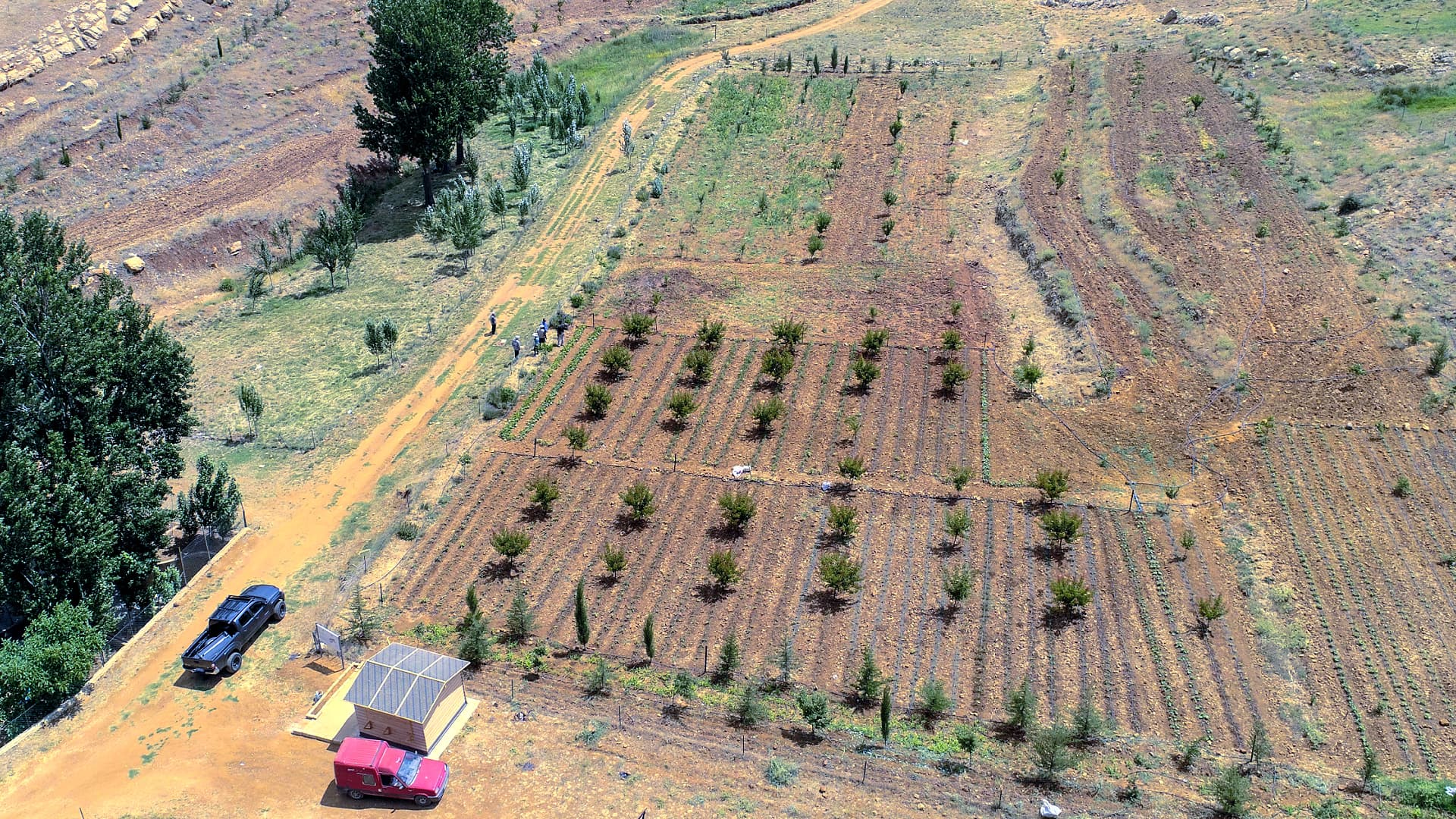
Agroforestry plot recently planted (Photo by Lebanon Reforestation Initiative)
Project organizers said the agroforestry initiative has become a regional model for landscape regeneration in areas affected by olive quick decline syndrome.
The MAPPING project follows the earlier AGES (AGroforestry: Ecological and Social) initiative coordinated by XFarm Agricoltura Prossima.
Through AGES, Deafal ETS and XFarm Agricoltura Prossima developed educational and training activities focused on agroecological practices and created the first mapping of agroforestry in Italy.
The MAPPING project aims to expand that mapping effort to the other participating countries. After the data collection phase, the web-based map will be developed by Millepiani APS through the Map For Future working group.
“Many studies show that in Southern Europe soil fertility has been severely degraded after years of pesticide use, poorly managed irrigation and inadequate plowing, all compounded by rising temperatures and the other effects of climate change,” Morera Perez said.
“Restoring degraded soils by integrating new plant species leads to far more resilient agricultural systems,” she added. “In many agroforestry contexts, we have observed an increase in farmers’ income.”
Morera Perez also said additional tree cover can help protect crops from excessive solar radiation and rising temperatures, particularly in Southern Europe.
“An agroforest increases biodiversity, enhances production outcomes and in many cases improves the beauty of the landscape,” she said.
Farmers implementing agroforestry systems in Greece, Italy, Lebanon, Portugal and Turkey are invited to participate in the multilingual survey, which organizers said takes approximately 10 to 15 minutes to complete.