New Clashes in Puglia As 42 Olive Trees Are Moved for Pipeline
Contractors are preparing to uproot another 1,800 olive trees along a five-mile route of the Trans Adriatic Pipeline. Up to 10,000 olive trees could be moved to enable construction of the entire $4.5-billion project.
Last week Puglia once again became the scene of clashes between police and protesters, as environmentalists tried to prevent the removal of the last 42 of 200 ancient olive trees, standing in the way of the controversial Trans Adriatic Pipeline (TAP).
We did everything in our power to ensure the trees remain healthy, watering the olive trees every 2 to 3 days.
The 42 olive trees which sparked last week’s protest had been uprooted in April and placed in containers. Olive trees cannot be uprooted during their rapid growth spurt (May 1st and Nov 30th), but uprooted olive trees can be moved throughout the year.
Lisa Givert, TAP’s Head of Communications told Olive Oil Times, “Due to protesters barricading the site, TAP was unable to move the olive trees to the nursery area before early July. However, we did everything in our power to ensure the trees remain healthy, watering the olive trees every 2 to 3 days.”
Despite the latest round of protests, in which roads were blocked to prevent removal of the olive trees and TAP trucks were vandalized, Givert said, “TAP has removed the first set of olive trees as planned. The schedule remains and TAP continues to work towards being ready to deliver the first gas from Shah Deniz in 2020.”
According to Givert, “TAP has now removed all 210 olive trees in the micro-tunnel area (the last set of 42 trees were transported on the morning of July 4). The trees were moved to a nearby nursery (Masseria del Capitano) where they will be stored and meticulously cared for until they can be replanted at their original location, once works have finished.”
TAP has constructed a protective canopy for the olive trees and put in place an irrigation system.
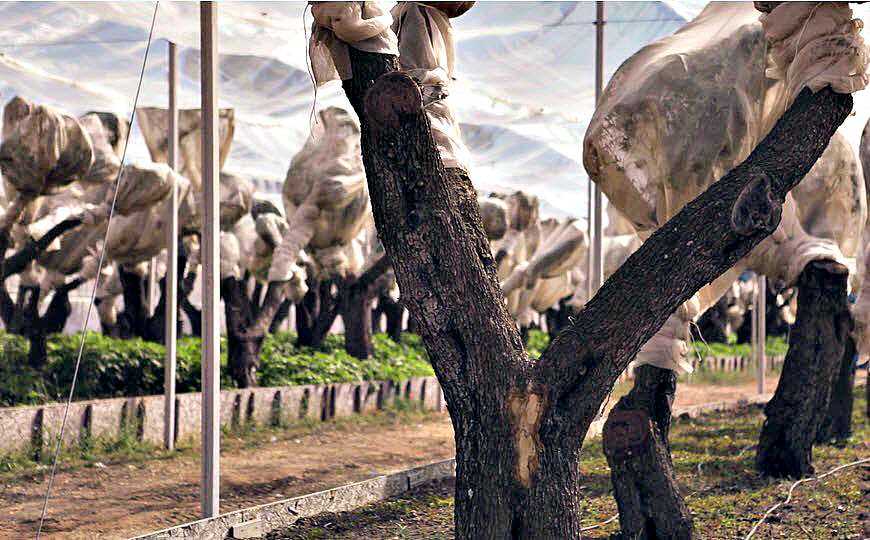
Givert added, “The olive trees housed in the nursery are looked after in line with the best agricultural practices, as per the Olive Trees Management Plan, approved by the Apulia Region. Nets protect the trees from the Xylella bacteria and irrigation channels have been built.”
The removal of the first batch of trees meant that TAP could press on with the second phase of the project, which involves the removal of a further 2,000 olive trees from the pipeline’s 8km route, from the micro-tunnel to the pipeline receiving terminal (PRT).
In total up to 10,000 olive trees including some classed as “monumental” are marked for removal during construction of the $4.5-billion pipeline which will transport natural gas from the Caspian Sea to Italy.
Givert added, “In a second stage, TAP needs to move and store approximately 1,800 olive trees along the pipeline’s 8km route, from the micro-tunnel exit to the Pipeline Receiving Terminal (PRT) before replanting them at their original site, when works are finished. TAP will remove the second set of olive trees as soon as the Verifications of Compliance (VoC or secondary permitting activities) are released by the competent authorities.

Protests against the removal of ancient olive trees for the pipeline began in March when TAP announced they were about to start uprooting the olive trees.
The project had already been delayed by a year due to strong local opposition. At the height of the protests, Puglia descended into a battleground with armed police charging as activists threw stones and bottles.
Eco-union has signed this letter on the climate-wrecking Trans Adriatic Pipeline #NoMoreGas #NoTAP 👉✍ https://t.co/yyUPJJkbfx pic.twitter.com/wSsULmXmwL
— ecounion (@ecounion) July 5, 2017
TAP’s timing for removal of the latest 42 trees was also criticized by the local mayor, Marco Poti who claimed the company had agreed to suspend activities between June and September when tourists flock to Puglia’s resorts. TAP defended this decision as necessary for the protection and wellbeing of the uprooted trees.
The Italian government classified TAP as a strategic project, which meant that local objections were overruled. Campaigners failed in their attempts to have the pipeline sited further north, in an industrial region of Puglia,
The TAP is the final leg of the 2,200-mile-long Southern Gas Corridor which will transport gas from Asia to Europe, a project seen as essential in reducing the EU’s dependence on Russian energy.