Swiss Olive Growers Turn Backyard Harvests Into a Growing Tradition
In southern Switzerland, a volunteer-led initiative is transforming olives from private gardens into locally milled oil while encouraging new plantings and better cultivation practices.
Swiss olive oil imports have risen by roughly 20 percent over the past decade, despite year-to-year fluctuations, from about 15,000 metric tons in 2016 to 17,939 metric tons in 2025, according to SwissImpex data. Imports peaked at more than 19,000 metric tons in 2020.
Claudio Premoli, president of the association Amici dell’Olivo (“Friends of the Olive Tree”) in Canton Ticino, southern Switzerland, said official trade figures may not capture all the olive oil consumed in the region.
“We should also consider that many consumers cross the border to Italy to buy their groceries because it is cheaper there,” he told Olive Oil Times. “A lot of the olive oil bottles bought abroad by Swiss people do not enter the official import statistics.”
In Ticino, Premoli said, interest in olive oil has also grown. The association’s collective harvest initiative, now in its tenth edition, gathers olives from gardens and other small private plots where much of the fruit was traditionally left unpicked.
“Until ten years ago, very few people in Ticino were making use of their olives, either for olive oil or even for preserving them in brine,” Premoli said. “The olive tree was mostly an ornamental plant in the garden. Someone might have had two or three trees, but they were still ornamental. The olives were not harvested. They were left on the tree, and then they fell. Apart from wasting them, by leaving the fruit on the ground, people were also bringing the olive fruit fly into their own gardens.”
The initiative began in 2017 with just two contributors, who delivered 28 kilograms of olives, yielding four liters of oil.
Participation grew the following year to 13 people, who brought in 156 kilograms. In 2022, 66 contributors delivered more than one metric ton of olives, averaging about 16 kilograms each. The harvest yielded approximately 118 liters of oil.
Olive oil production in Ticino remains limited. In 2020, local mills processed about 18.3 metric tons of olives and produced approximately 2,000 liters of oil.
Production fluctuates sharply from year to year. In 2023, the mills processed 4.5 metric tons of olives. In 2024, that figure rose to 11.7 metric tons, yielding approximately 870 liters of olive oil. The association attributed the relatively low oil yield that year to heavy rainfall during ripening and part of the harvest.
Premoli hopes this year’s crop will approach the 2024 level.
“We have high hopes for this campaign in Ticino because there is almost no olive fruit fly around and it is an on-year,” he said, referring to the olive tree’s natural alternate-bearing cycle. “If the trend we have seen over the last five or six years continues, our on-years have very little olive fruit fly, while in the off-years, when there are fewer olives, we have a lot of it. For us, this year is looking very good.”
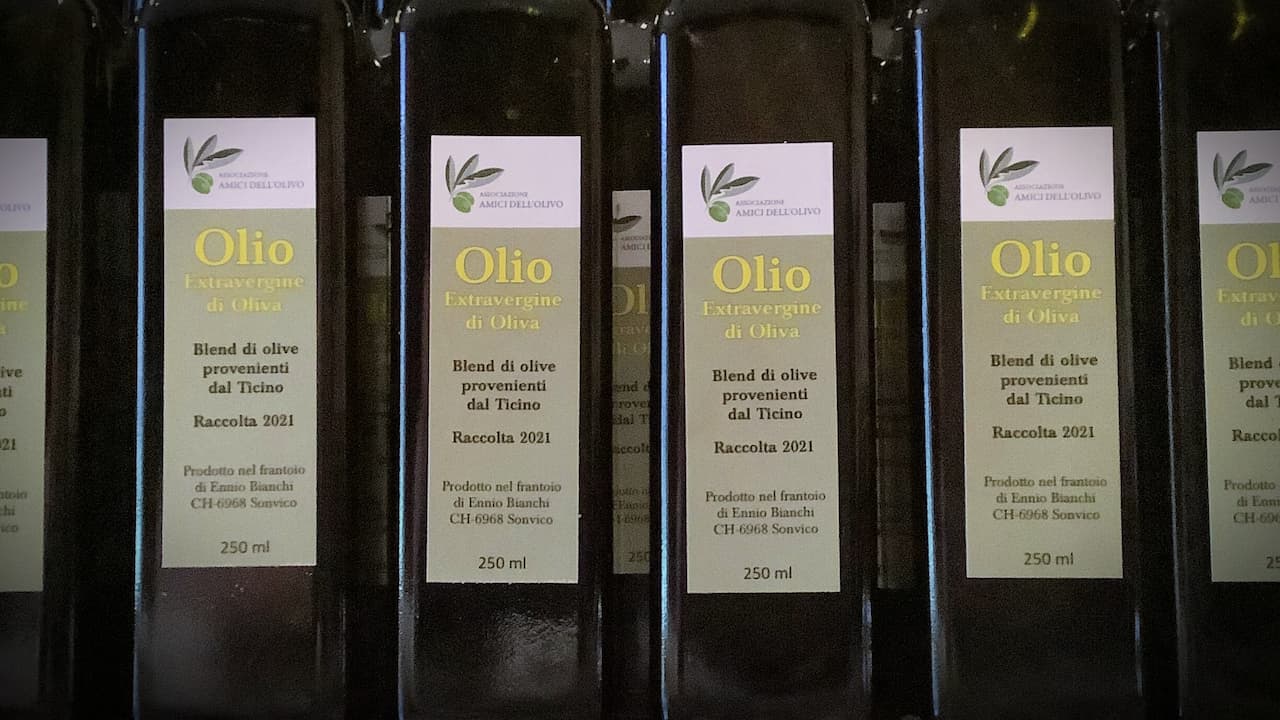
All olives donated through the collective harvest are pooled and milled together. Contributors receive bottles of the resulting oil rather than oil produced separately from their own fruit. There is effectively no minimum quantity required to participate.
“Our policy is that anyone can come, even with half a kilogram,” Premoli said. “For example, we have an elderly lady who usually comes with a Tupperware container holding 400, 500 or 600 grams of olives from her little tree. Regardless of how much they bring us, we give everyone a 250-milliliter bottle of olive oil as a gift.”
“They give us the olives and we give them the oil,” he added. “Clearly, if someone brings ten kilograms and the yield is 10 percent, we cannot give them one liter, because we have the milling costs, the bottle, the label, filtration, the pourer and the cap. But if someone brings one or two kilograms, they receive one of our small bottles, while someone bringing 20 kilograms might receive three or four.”
Frantoio Atena in Mezzana, one of Ticino’s two active olive oil mills and the facility serving the association, began regular operations in 2025. It replaced a much smaller mill that processed about 50 kilograms of olives per hour. The new facility uses Mori technology and can process approximately 150 kilograms per hour.
The hourly processing capacity differs from the minimum quantity required for an individual milling. The mill accepts batches of around 100 kilograms, although its standard pricing is based on 150 kilograms. Growers with smaller harvests can combine their olives with those of neighbors or other producers. Those with less than about 50 kilograms can instead contribute to the collective harvest.
Premoli said the new facility’s capacity was deliberately matched to Ticino’s olive production.
“There is no point in having a mill capable of processing 500 kilograms per hour when we do not have the raw material,” he said. “It is better to keep the mill open for a few more days.”
Amici dell’Olivo also promotes new plantings each year and organizes collective purchases of young olive trees, generally two or four years old. Varieties are selected in consultation with the association’s agronomist to suit Ticino’s conditions, where olive trees often grow in a cooler climate and at higher elevations than in the major olive-growing regions of nearby Italy.
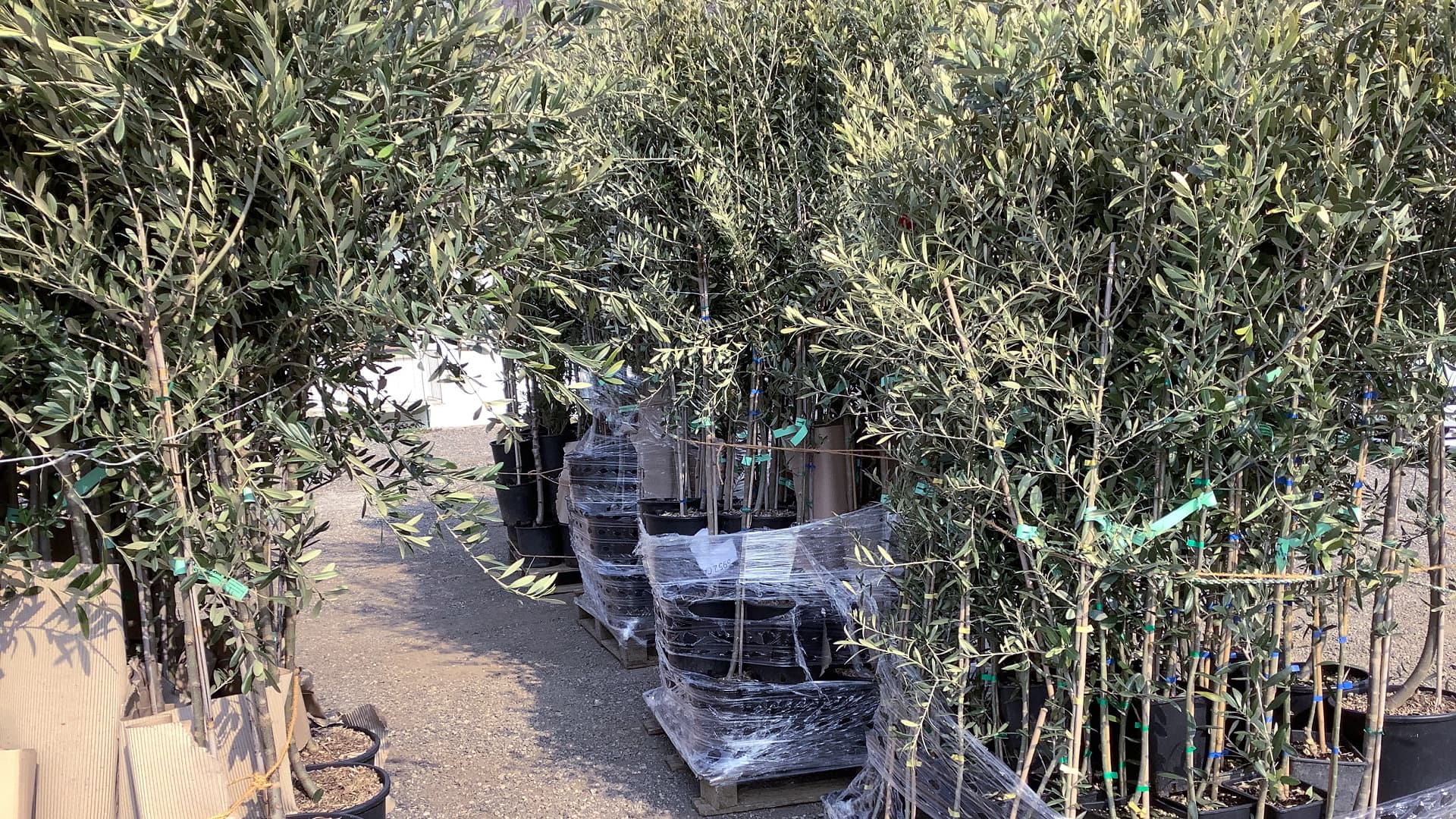
Young olive trees ready for distribution to members of Amici dell’Olivo, which organizes collective purchases of varieties suited to the growing conditions in Switzerland’s Ticino region.
“Leccino is the variety most widely planted in our region,” Premoli said. “We also have Frantoio, while Maurino and Pendolino are used as pollinators. Then there are other varieties that we recommend because we have seen that they work well here.”
The association also organizes pruning courses and advises growers on managing their trees.
“We practically cover the whole process, from planting to what people should do afterward, including treatments and management,” Premoli said. “We monitor the olive fruit fly and encourage people to harvest their olives and find a way to make use of them.”
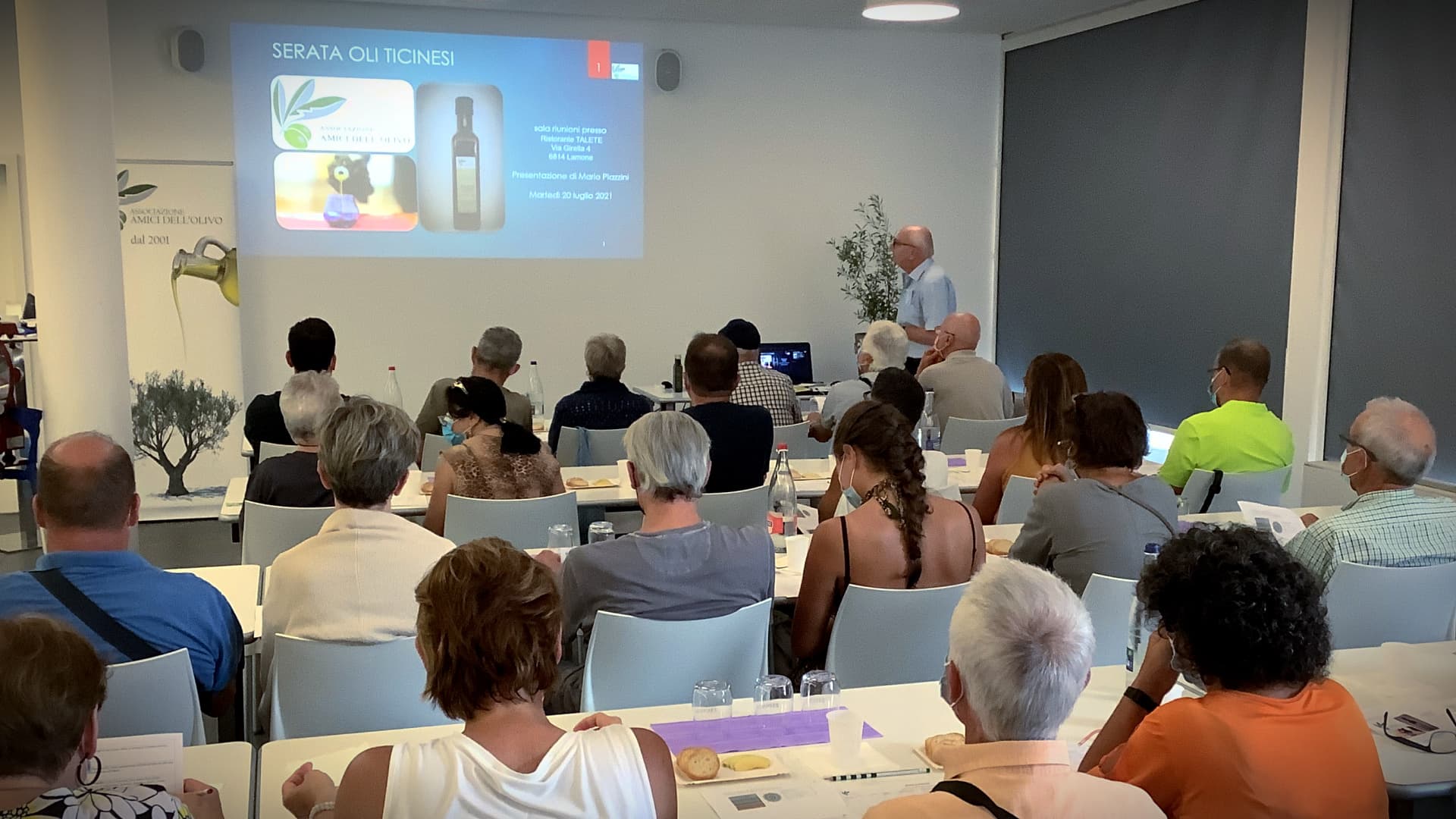
Attendees at a seminar on the health benefits of extra virgin olive oil organized by Amici dell’Olivo in Switzerland’s Ticino region.
Annual tastings of Ticino olive oils are another part of the association’s efforts to promote olive oil culture. Other activities include visits to olive-growing regions in Italy, occasional tastings of oils from those areas and events marking World Olive Tree Day.
“We are a committee of six people and we do all of this on a voluntary basis,” Premoli said. “The members pay a small fee and receive all the information, including a monthly newsletter. We now have almost 400 members, and some of them do not even have a single olive tree.”