
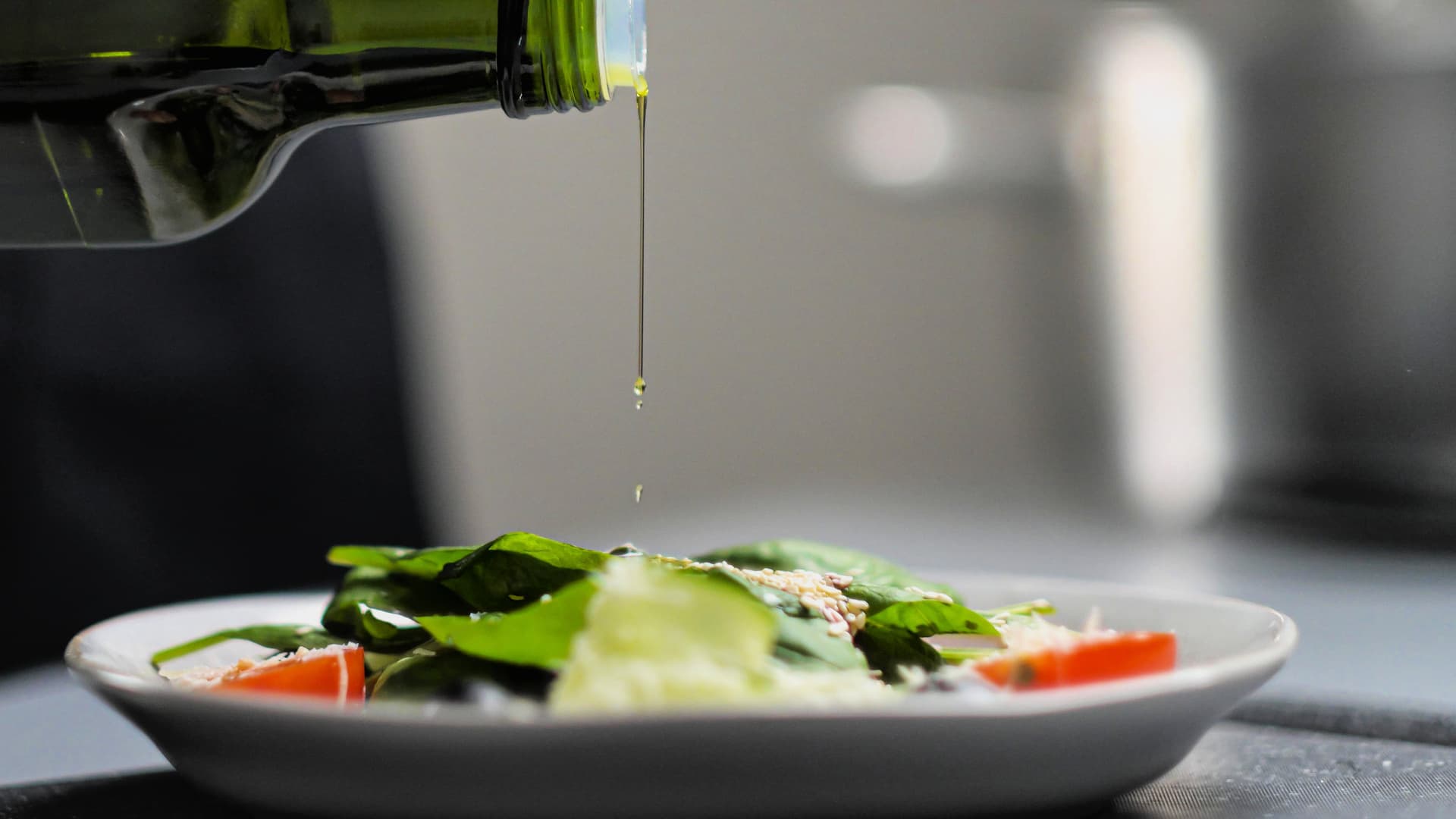
A preliminary study suggests that higher concentrations of phenolic compounds in extra virgin olive oil do not necessarily provide greater protection against oxidative stress, a factor associated with atherosclerotic cardiovascular disease.
Researchers from the University of Sherbrooke in Canada and Sultan Moulay Slimane University in Morocco found that long-term olive oil consumption improved antioxidant capacity in some older adults, but the benefits were not greater among those consuming oil with the highest phenolic content.
The findings suggest a threshold beyond which additional phenolic compounds do not further improve the body’s systemic antioxidant status.
“Our results suggest that extra virgin olive oil containing moderate levels of phenolic compounds significantly improves plasma total antioxidant capacity in post-myocardial infarction individuals and participants with higher adherence to MedDiet scores,” the researchers wrote.
“In contrast, high-phenolic extra virgin olive oil… did not produce a similar effect,” they added. “These findings indicate that increasing the phenolic concentration of olive oil beyond a certain threshold does not necessarily enhance systemic antioxidant status.”
Atherosclerosis, the buildup of plaque in arteries, can lead to coronary artery disease, stroke and peripheral artery disease. Oxidative stress contributes by promoting the oxidation of low-density lipoprotein (LDL) cholesterol.
When the body’s enzymatic antioxidant defenses cannot prevent oxidative damage, non-enzymatic antioxidants can help reduce oxidative stress and the harmful effects of oxidized LDL.
The preliminary study involved 48 participants divided into two groups: healthy individuals and people who had previously experienced a myocardial infarction, or heart attack. Participants maintained their usual diets and physical activity throughout the six-month study.
Each participant received 25 milliliters of olive oil daily, assigned to one of three groups: extra virgin olive oil high in tyrosol and hydroxytyrosol, extra virgin olive oil with lower phenolic content, or refined olive oil. Participants were unaware of which oil they received.
The high-phenolic extra virgin olive oil contained 161 milligrams per kilogram (mg/kg) of tyrosol and 233 mg/kg of hydroxytyrosol. The lower-phenolic extra virgin olive oil contained 13 mg/kg tyrosol and 7-13 mg/kg hydroxytyrosol. The refined olive oil contained no phenolic compounds.
The researchers said the findings were consistent with a recent network meta-analysis that found increased plasma antioxidant capacity among people following a Mediterranean diet and consuming olive oil with phenolic concentrations ranging from 147 to 582 mg/kg. That analysis also found no clear correlation between phenolic concentration and antioxidant capacity.
“A plausible explanation is that the organism may activate regulatory mechanisms to prevent antioxidant overload when plasma antioxidant capacity is already within physiological ranges,” the researchers wrote.
However, the effects of olive oil consumption varied according to participants’ health status and adherence to the Mediterranean diet.
Older adults at elevated cardiovascular risk associated with oxidative stress showed significant improvements in plasma antioxidant capacity after long-term olive oil consumption. Younger, healthy individuals studied separately showed similar improvements.
The researchers suggested that healthy individuals may already have sufficiently effective antioxidant defenses, limiting the measurable benefits of additional dietary antioxidants.
“In a stable and healthy physiological state, endogenous antioxidant systems may be sufficient to maintain redox homeostasis, such that additional dietary antioxidants might not elicit a measurable increase in systemic antioxidant capacity,” they wrote.
The improvement was more pronounced among participants who closely followed a Mediterranean diet, suggesting that overall dietary patterns influence the body’s response to olive oil.
“Dietary and micronutrient adequacy interact with physiological and pathological status to shape the antioxidant response to extra virgin olive oil,” the researchers wrote.
The researchers cautioned that the findings were preliminary and that larger studies are needed. The results concern antioxidant capacity rather than directly measured reductions in cardiovascular disease.
“These findings suggest that antioxidant responses to olive oil are context-dependent and not solely driven by phenolic concentration. Larger trials are warranted,” they concluded.