
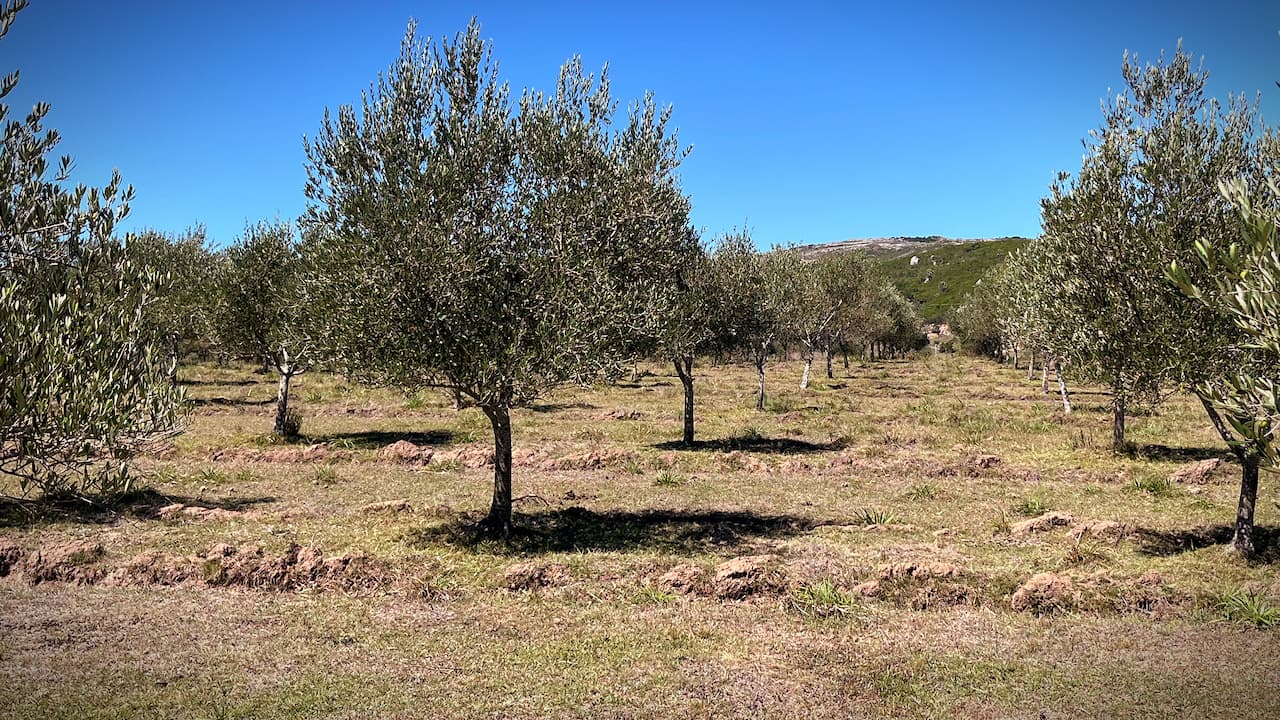
Uruguayan olive oil production rose for the second consecutive year in 2026, reaching 1,300 metric tons, according to data from the Ministry of Livestock, Agriculture and Fisheries.
The 2026 harvest exceeded the 1,273 tons produced in 2025 and 614 tons in 2024, although output remained 10 percent below the five-year average.
Producers across the country benefited from the arrival of El Niño, which helped alleviate the severe water deficit caused by prolonged drought in 2023 and 2024. The conditions had contributed to a historically low harvest in 2024.
Abundant winter rains ahead of the 2026 harvest, followed by a sunny, dry summer, helped produce strong fruit set across the country. Many producers also reported above-average oil yields.
According to the ministry, more than 11 million kilograms of olives were harvested for oil production, along with another 6,065 kilograms for table olives. Self-reported figures from 33 mills surveyed by the ministry showed an average oil yield of 11.7 percent.
Ministry data also suggest a relatively healthy domestic market, with producers reporting that they sold 64 percent of their olive oil in Uruguay and exported another 20 percent.
Brazil, Spain and the United States remained the leading destinations for Uruguayan olive oil exports, with smaller volumes also shipped to neighboring Argentina.
Despite rising production and exports, Uruguay remains a net importer of olive oil. A recent report by the Spanish Institute for Foreign Trade (ICEX) identified the country as a strategic market for Spanish olive oil exporters.
According to ICEX, Uruguay imported 2,200 tons of olive oil valued at $11.6 million (€10.6 million) in 2025, compared with exports of 285 tons worth $1.2 million (€1.1 million).
The institute said olive oil consumption has increased in recent years, reaching 0.5 liters per capita. Spain was Uruguay’s leading olive oil supplier in 2025, followed by Argentina and Italy.
“Extra virgin olive oil is gaining prominence due to growing health concerns and a preference for higher-quality products,” ICEX wrote. “Olive oil maintains a premium product image, although growth in the mid-market segment is encouraging consumption among a broader audience.”
While Spanish exporters see “significant growth potential” in Uruguay, some local producers worry that growing imports will weaken the domestic industry.
Producers told Olive Oil Times that more Uruguayan companies are importing olive oil to protect against volatile harvests and meet strict supermarket supply contracts.
Some producers and industry stakeholders have also privately expressed concerns about Uruguayan companies bottling imported oils and labeling them as “Product of Uruguay.”
These trends have helped keep prices for Uruguayan olive oil relatively flat, according to producers, even as the costs of bottles, phytosanitary products and other inputs continue to rise. Overall inflation has also added pressure, with government data showing a 4.82 percent increase since the beginning of the year.
According to the ministry, the average pre-tax bulk sale price for Uruguayan olive oil reached 388 Uruguayan pesos (€8.77), while the average retail price was 478.6 pesos (€10.80) per liter.
One competitive advantage for local producers is an 8.4 percent tariff on olive oil imports from the European Union.
However, the tariff is set to be phased out over the next decade under the European Union’s free trade deal with Mercosur, of which Uruguay is one of four member countries, once the agreement takes effect.
“There is significant growth potential in attracting consumers who switch from seed oils to olive oil,” ICEX wrote. “The E.U.-Mercosur Agreement will gradually improve the competitiveness of European olive oils.”
“Opportunities are growing for extra virgin olive oil, organic products and innovative packaging formats, particularly among younger consumers,” the report concluded.