Drought and Ill-Timed Rain Lead to Poor Harvest in Uruguay
Officials estimate production will be 72 percent below the five-year average, after an historic drought and a rainy harvest.
Two years of historic drought followed by rain during the harvest and the olive tree’s natural alternate bearing cycle have resulted in a significant production decline in the small South American country of Uruguay.
Gonzalo Aguirre, the award-winning producer of Olivares de Santa Laura and president of the Uruguayan Olive Association (Asolur), estimated that production would fall to 500,000 liters (458 tons) of olive oil in 2024, a 78 percent decrease compared to last year’s bumper harvest and 72 percent below the five-year average.
“There was a very, very low harvest,” he said. “It was partially due to the drought last year, which did not allow the shoots to be ready to grow olives. Also, the harvest was negatively influenced for some producers because it rained a lot, and they lost olives.”
See Also: 2024 Harvest UpdatesLaura Da Trindade, the director of Sabía in the southeastern inland department of Lavalleja, confirmed that this year’s harvest was significantly below the previous one.
“Our harvest was bad compared to last year but not as bad as the country in general,” she said. “We harvested 75 percent of the fruit compared to the previous two years, which were good harvests.”
“The biggest problem was the oil accumulation, which dropped significantly compared to previous years,” Da Trindade added. “We were at an average of ten percent when we were at 13 to 14 percent previously. A significant difference was seen in the amount of oil obtained.”
With production declining from 11 tons in 2023 to seven tons in 2024, Da Trindade said one of the company’s main challenges was lowering production costs to mitigate the impacts of the lower yield.
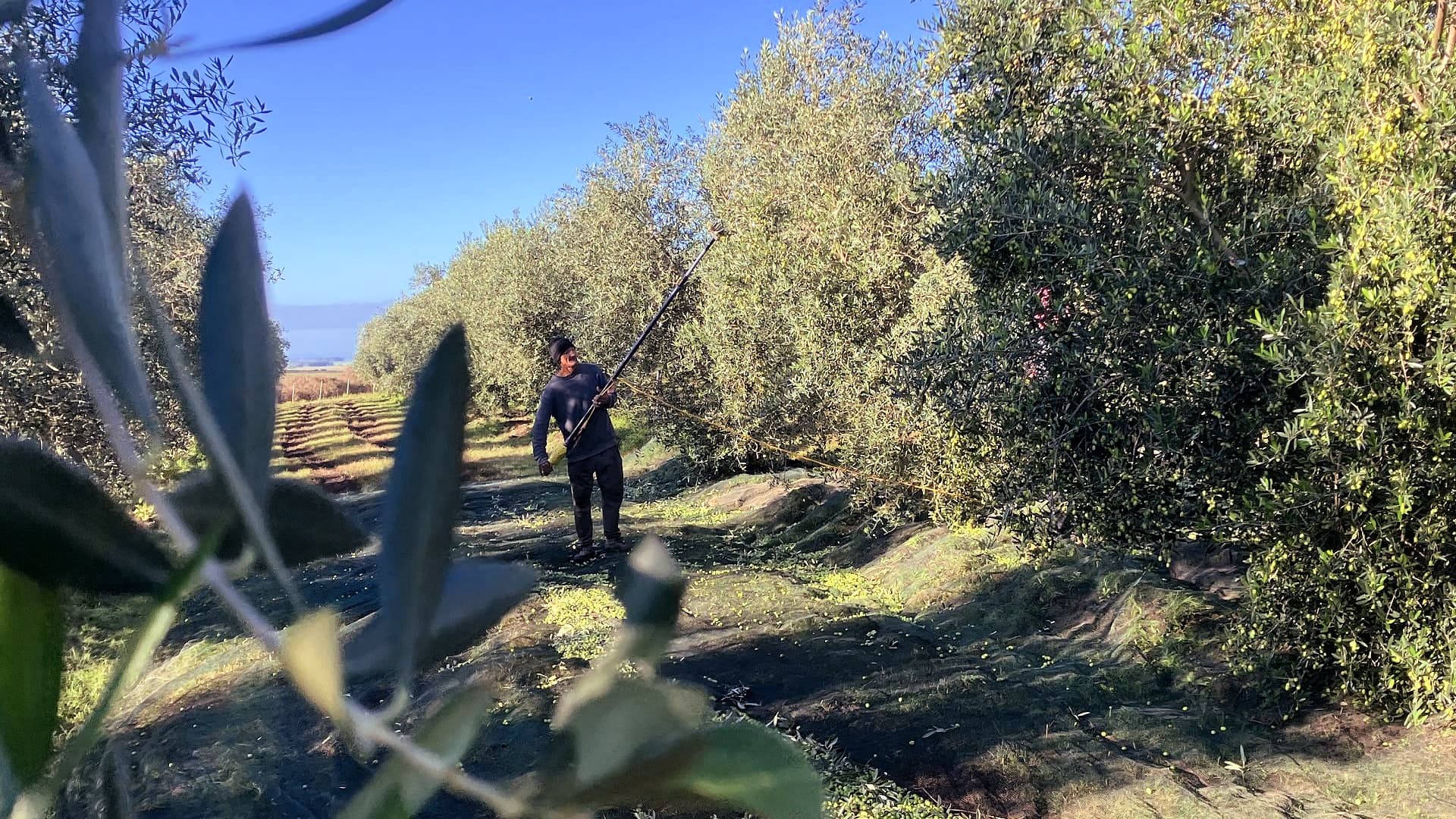
“This year’s challenges were to try to lower harvest costs because we knew it would be bad and also that there would be less demand for services in our oil mill due to the lack of fruit in the region,” she said. “This greatly increased our production costs and was one of the reasons why this year we chose to mechanize the harvest with umbrellas to reduce costs and harvest time.”
While most producers experienced significantly lower yields, María Vittoria, the director of Pique Roto in the neighboring department of Florida, said her production increased as recently planted trees matured.
Pique Roto in the south-central department of Florida is among the few producers who saw a production increase this year. (Photo: Pique Roto)
“For us, the harvest in 2024 was very good, reaching 190 tons of olives harvested and milled, with 9,000 trees,” she said. “We were possibly the plantation that obtained… the highest oil production per hectare: an average of 768 kilograms per hectare, with the excellence of Frantoio, which gave us 1,417 kilograms of oil per hectare.”
“We estimate that production will reach 25 tons, 212 percent more than last year,” Vittoria added. “Production was greatly impacted by the significant drought that affected the region and the department of Florida in particular, where there were eight months without rain.”
She said the company’s main challenges are ensuring the milling process is done quickly and well to achieve high quality and enriching the soil with pruning waste and olive pomace to avoid using chemical fertilizers.
The significant decline in production in Uruguay comes after a poor harvest in the Northern Hemisphere and lower crops in Argentina, Chile and Peru. As a result, consumers in Uruguay have seen significant price rises throughout 2024.
“Prices are already increasing because the large producers in the Mediterranean set the prices,” Aguirre said. “The international bulk business in Uruguay this year increased more than ever. There was a considerable increase of 30 to 40 percent at retail.”
“Prices in Uruguay have already risen, and I believe they will continue to rise due to lack of supply and high demand,” Da Trindade added. “We had to [raise our prices] quite a bit this year.”
Even in good years, about half of Uruguay’s olive oil supply comes from Argentina, Italy and Spain. As a result, Vittoria said domestic olive oil prices follow a different dynamic than those of imported oils.
“The price of local production and sale can be set relatively autonomously and punctually, taking quality as a reference,” she said.
However, Aguirre expects import prices to remain steady in the short term and drop by the beginning of 2025 when olive oils from the latest Spanish and Italian harvests begin to arrive.
“Next year, if there is a good harvest in the Mediterranean and the region, I believe that prices may even go down,” he said.
Instead of worrying too much about prices, Aguirre is more preoccupied with the International Olive Council (IOC) bringing the Mario Solinas Awards to Uruguay in August. This is the first time the competition has been held in the Southern Hemisphere.
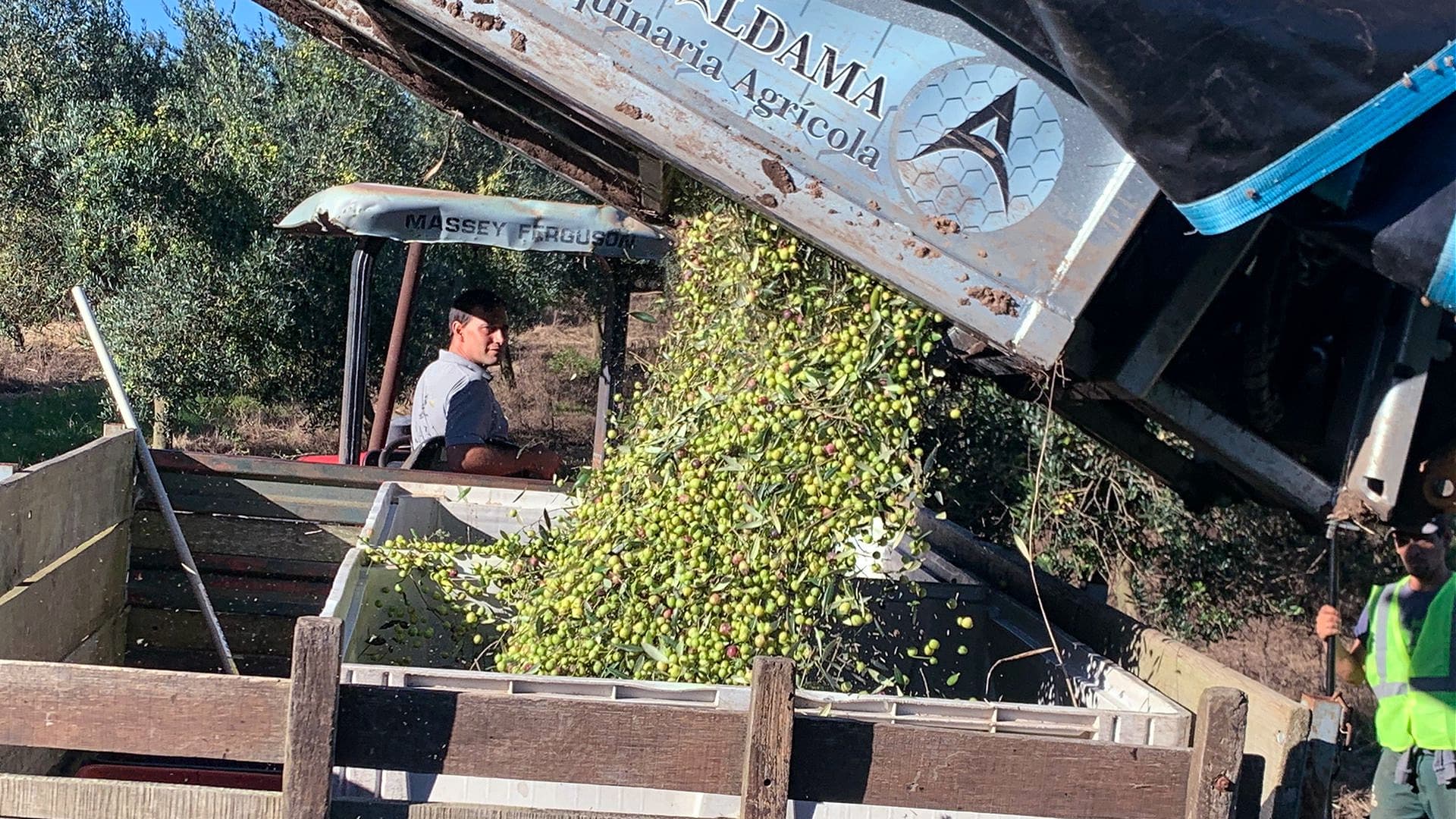
The poor harvest in Uruguay coincides with its hosting of the Mario Solinas Awards (Photo: Sabía)
Given the meager harvest and pressure for the event to succeed, he worries that the timing is unfortunate.
“It has been a bad harvest, and although entering Mario Salinas does not cost money, it has quantity requirements, and producers must use a notary to seal the samples,” he said.
The IOC recently announced changes to its rules to facilitate the entrance of more small producers in the Southern Hemisphere. The amount of olive oil each producer must save from the batch has been lowered from 4,000 to 1,000 liters.
Aguirre, who has been heavily involved in the process, hopes for a high turnout from Uruguay and the other seven producing countries in the Southern Hemisphere.
He confirmed that his company would send in samples, adding that he did not know how many samples the judging panel at the Uruguayan Technical Laboratory had already received. Da Trindade and Vittoria also said they would participate.
Samples must arrive by August 15th. Judging will take place in mid-September, with the results announced ahead of the second annual Latin American Olive Oil Conference, which will be held in Montevideo in November.
“I think it is important that [the competition becomes an annual event in Argentina and Uruguay] and that the world considers the quality of Southern Hemisphere producers because, in general, there is a lot of commitment to quality here,” Aguirre said.