Family Roots, Modern Ambition
After earning Gold Awards in their first two NYIOOC appearances, Panagiotis and Aggelos Giannoutsos seek to expand beyond Europe.
After just over two years in professional olive oil production, Yapapi, a young producer from the southern Peloponnese, has earned Gold Awards in two consecutive editions of the NYIOOC World Olive Oil Competition.
The company was founded in early 2024 by brothers Panagiotis and Aggelos Giannoutsos and Jérôme Bacquias, a French entrepreneur with a strong appreciation for Greek olive oil.
We want Yapapi to reach every corner of the world, with olive oil that is grown and produced with love, responsibility and respect.
“We come from the region of Kalamata, known worldwide for the quality of its olive oil, and from a family with five generations of olive oil producers,” co-founder Panagiotis Giannoutsos told Olive Oil Times.
Giannoutsos studied graphic design and has worked as a professional photographer for the past 14 years. His younger brother, Aggelos, is an agronomist specializing in olive cultivation and has also worked as a videographer for the past five years.
Giannoutsos said their interest in olive oil developed gradually as teenagers when they joined their father in the fields during the annual harvest.
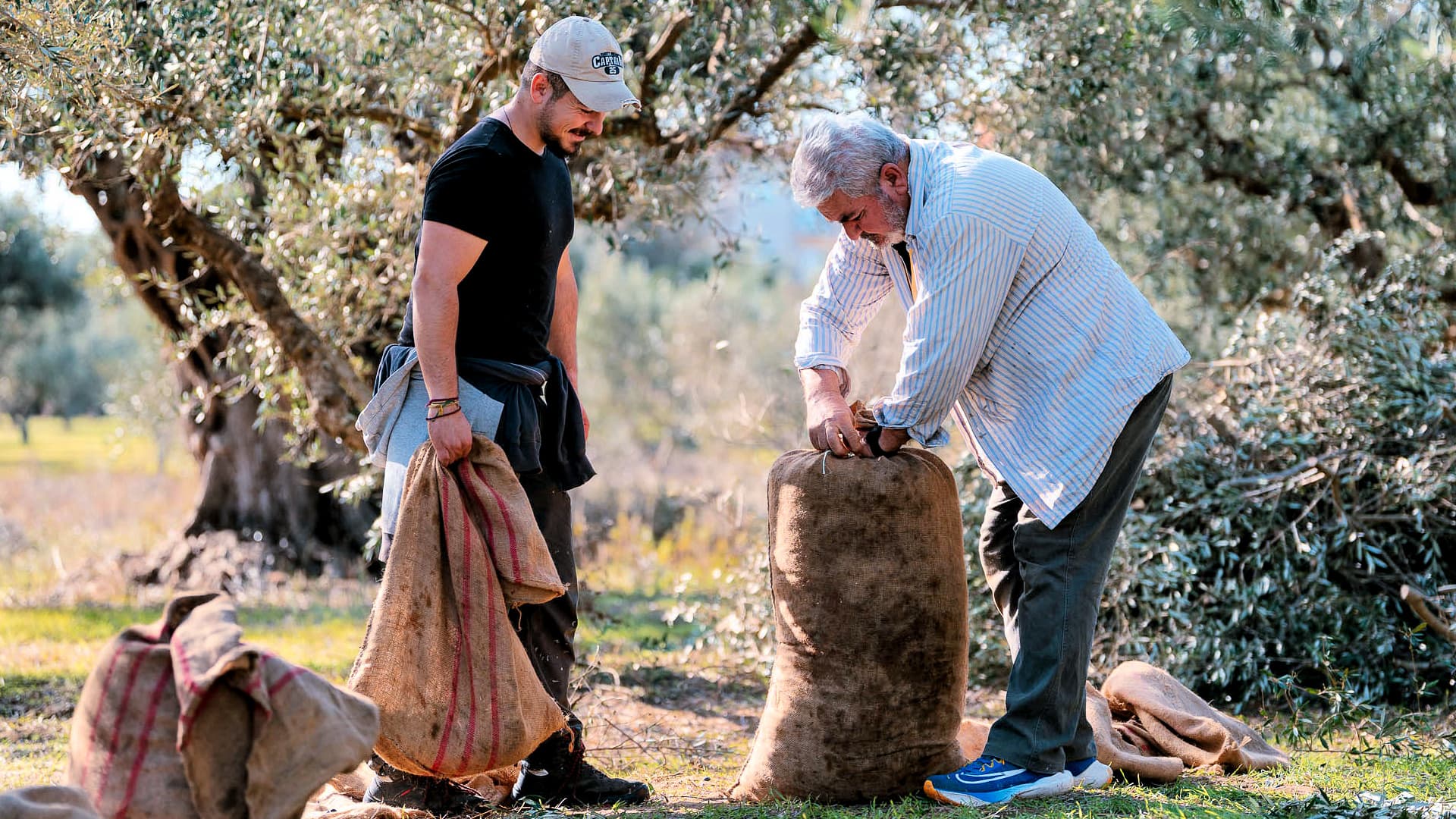
Aggelos Giannoutsos and father Dimitris in the olive groves (Photo: Yapapi/Panagiotis Giannoutsos)
The brothers later partnered with Bacquias, whom Giannoutsos had known professionally for several years. According to Giannoutsos, Bacquias’ entrepreneurial approach complemented the brothers’ experience and enthusiasm for olive oil.
“Jérôme and I knew each other before Yapapi,” Giannoutsos said. “He runs a leather goods company in Vienna, and I did product photography for his company for a few years.”
During one of their conversations about Greece and Kalamata, Giannoutsos learned of Bacquias’ appreciation for high-quality olive oil. Bacquias subsequently traveled to Greece to experience the production process firsthand.
Giannoutsos said Bacquias’ understanding of olive oil changed considerably after he joined the family during the harvest.
“Jérôme initially imagined that the harvest is something simple: You just shake the tree and the olives fall down,” he said. “Once he saw for himself every stage of the process, he understood how physically demanding, precise and time-sensitive the work truly is.”
“This experience gave him an even deeper respect for both the product and the people behind it,” Giannoutsos added.
The Yapapi name was derived from Giapapi, the former name of the brothers’ ancestral village.
“We have kept the name alive,” Giannoutsos said. “We wanted a name rooted in our region, yet easy for people anywhere in the world to pronounce. We replaced ‘Gia’ with ‘Ya’ so the pronunciation would be the same for everyone.”
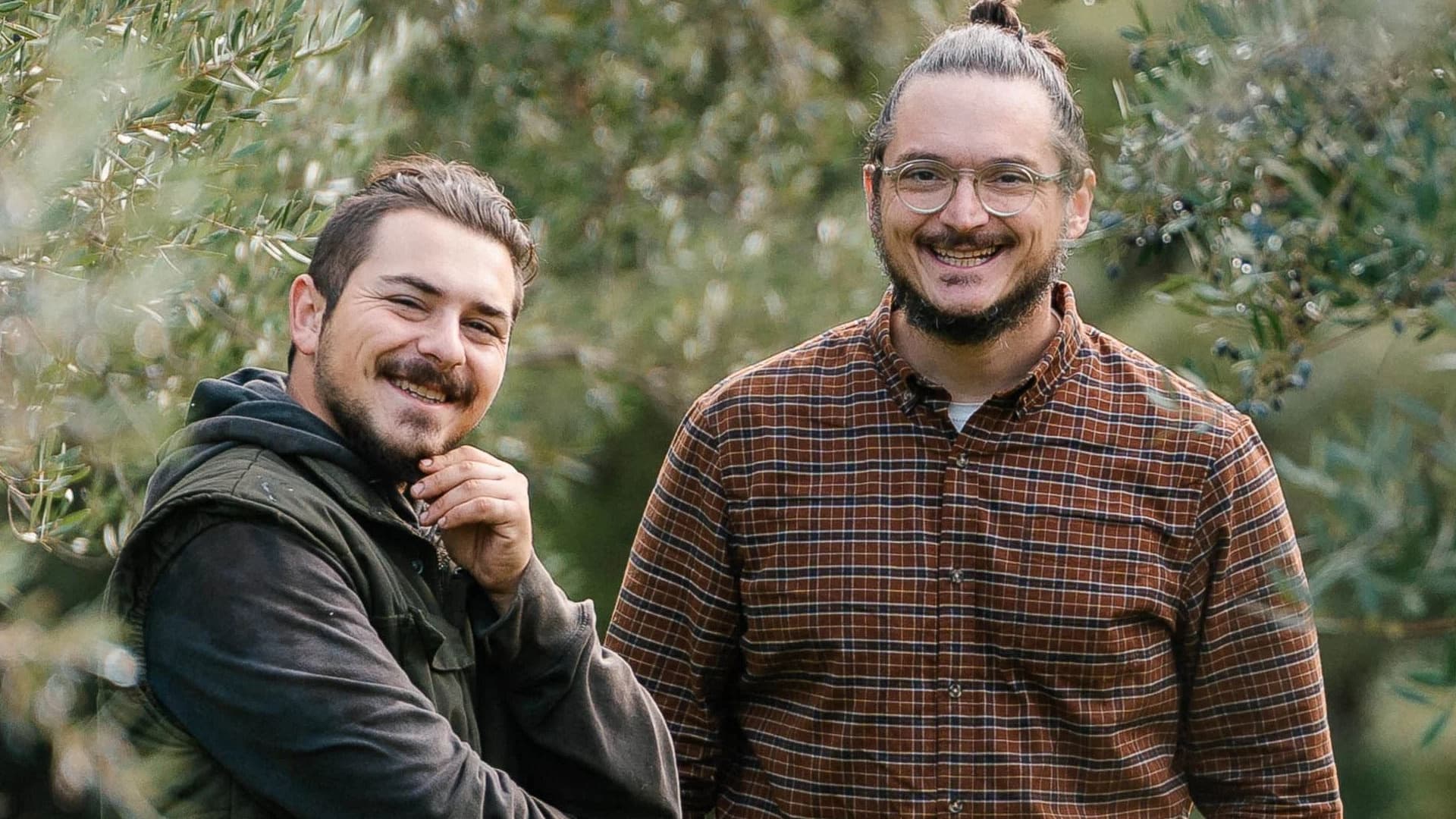
Yapapi co-owners Aggelos (left) and Panagiotis Giannoutsos
In Greek, the resulting name can also be interpreted as “for the duck,” which inspired the company’s duck-shaped logo.
The three partners began with 800 olive trees near the village of Evangelismos in the southern Peloponnese. The groves have belonged to the Giannoutsos family for generations. Since last year, the company has also begun working with trees owned by friends and relatives.
Giannoutsos said maintaining consistent quality remains one of the greatest challenges of olive farming.
“My brother and I are constantly testing new methods of cultivating, fertilizing and pruning, always looking for what works best,” he said.
“But the weather will always have the final word, and we always have to adapt to it,” Giannoutsos added. “Last year was one of the toughest. We managed to produce very high-quality oil, but we lost a significant amount of volume due to the weather conditions.”
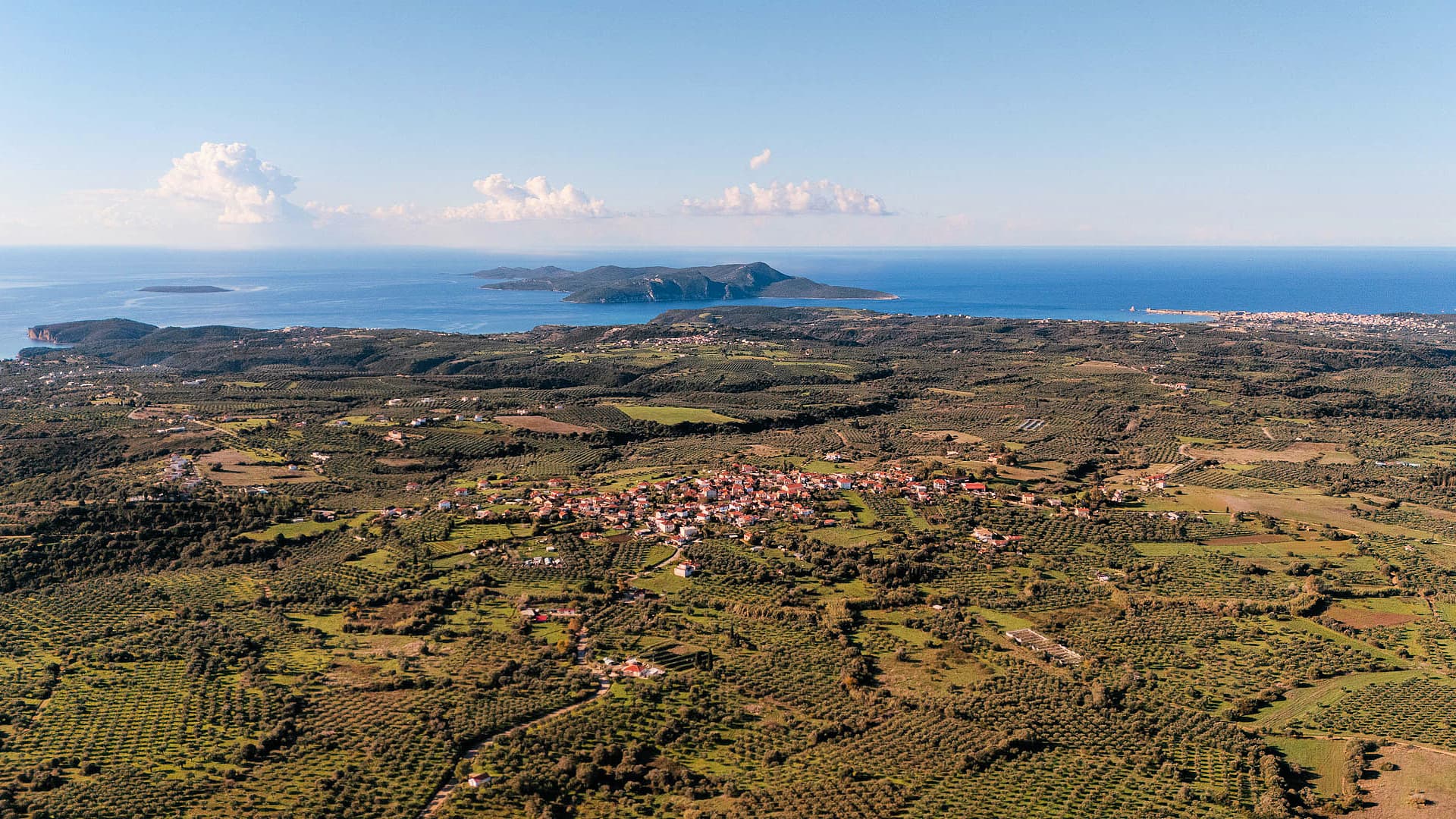
Olive groves surround the village of Evangelismos in the southern Peloponnese, where Yapapi produces its extra virgin olive oil near the coast of Messenia. (Photo: Yapapi/Panagiotis Giannoutsos)
He said one reason for establishing Yapapi was to bring more international attention to the quality of olive oil produced around Kalamata.
“Extra virgin olive oil from the area of Kalamata has very low acidity,” Giannoutsos said.
“For years, most of the oil produced in our region was sold to international traders,” he added. “Then they would mix it with oils of inferior quality from other countries, so consumers around the world would never have the chance to taste true Kalamata olive oil.”
The brothers have also focused on educating consumers, regularly publishing videos about the harvest and production process at their family-owned mill.
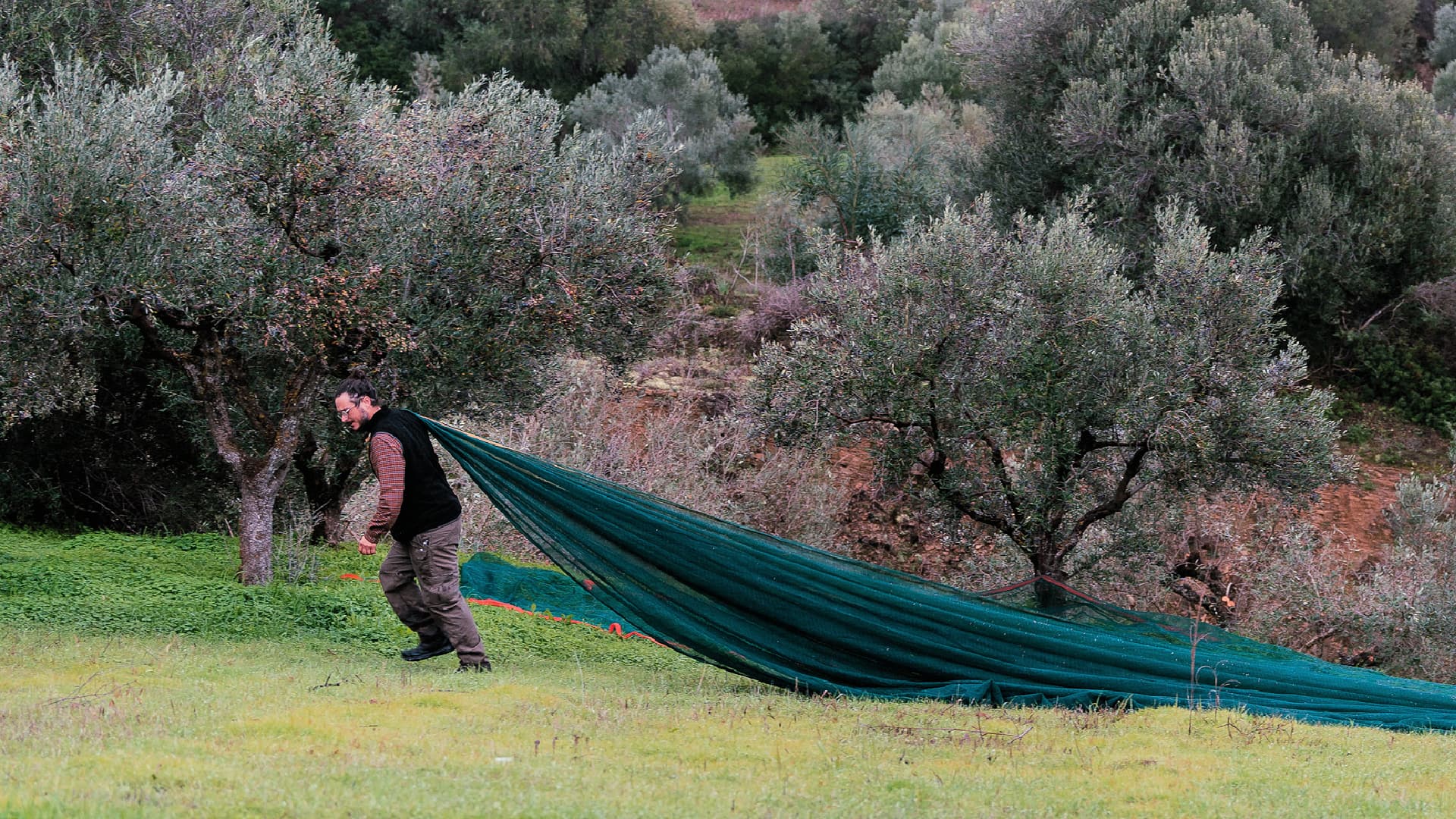
Panagiotis Giannoutsos spreads harvesting nets beneath olive trees near Evangelismos in southern Messenia, where the family produces its extra virgin olive oil. (Photo: Yapapi/Panagiotis Giannoutsos)
Giannoutsos, his brother Aggelos and their father, Dimitris, carry out most of the work in the groves. Relatives and friends from the area occasionally join them during the harvest.
“We learned about olive trees and harvesting together with those people, and there is a strong tradition of supporting one another throughout the harvest season,” Giannoutsos said.
Yapapi entered the NYIOOC for the first time in 2025 and earned a Gold Award for its extra virgin olive oil.
“Winning our first NYIOOC Gold Award last year for our Yapapi extra virgin was unbelievable,” Giannoutsos said.
“When you grow up consuming this olive oil your whole life, you assume that it is just what oil tastes like everywhere,” he added. “But seeing that quality officially recognized is a truly unique feeling.”
The producer from southern Messenia returned to the World Competition in 2026 and earned a second Gold Award, bringing its record to two awards in two appearances.
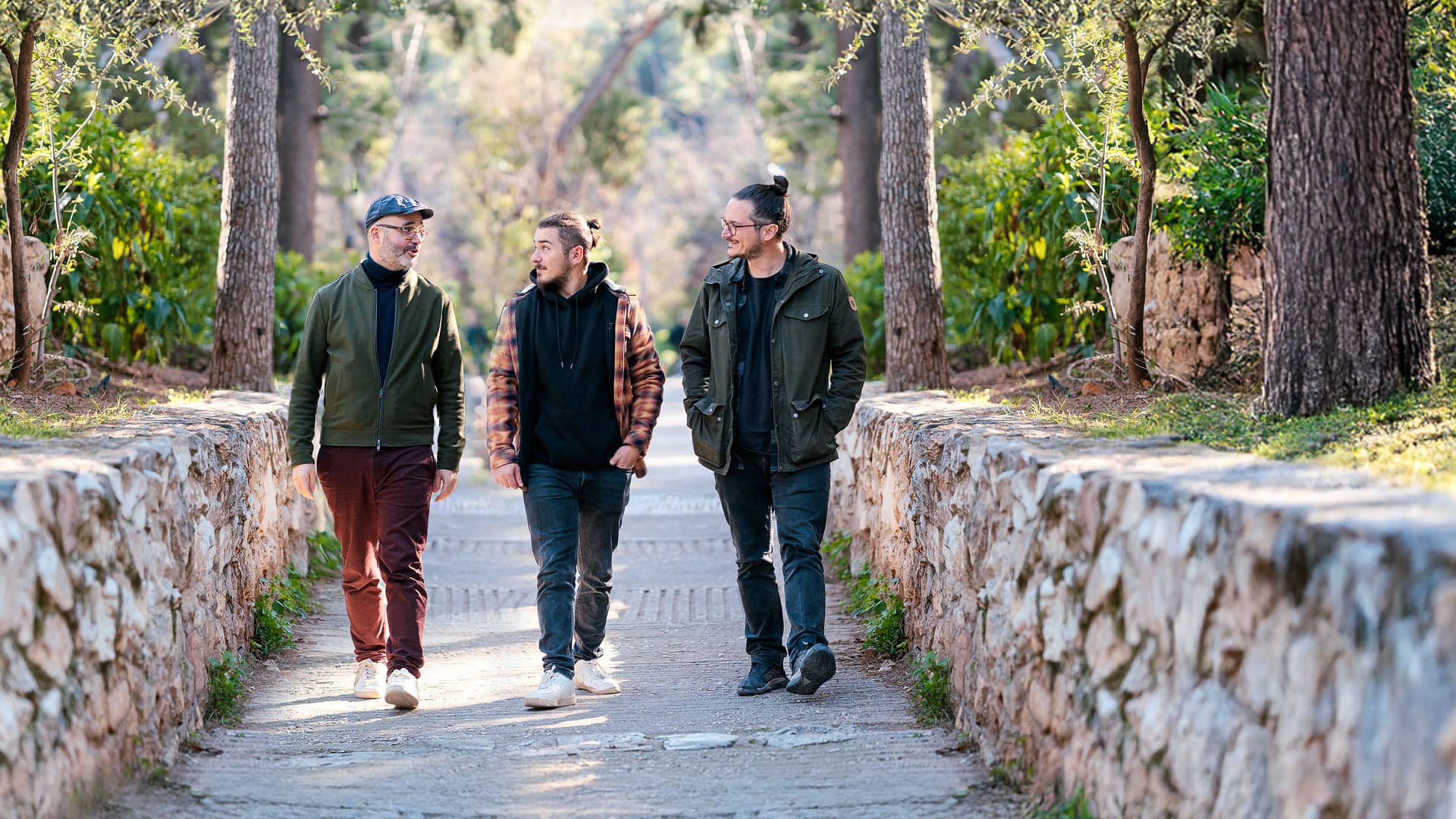
Jérôme Bacquias, Aggelos and Panagiotis Giannoutsos
The results and details of both award-winning oils are available on Yapapi’s producer profile in the Official Guide to the World’s Best Olive Oils.
Beyond the awards, the founders said they aim to establish Yapapi as a lasting presence in the international olive oil market.
“We want Yapapi to reach every corner of the world, with olive oil that is grown and produced with love, responsibility and respect,” Giannoutsos said.
Yapapi currently exports primarily to European markets. The founders also hope to return to the United States after a brief presence there last year.
“We hope to find a way back to the American market this year, where recent changes in customs and tariffs have made it particularly difficult for small family businesses like ours,” Giannoutsos said.
He added that the NYIOOC awards could help the company build trust with new customers and distributors.
“For our customers anywhere on the planet, the NYIOOC awards are a symbol of trust,” Giannoutsos concluded. “They show that the brand they choose is not afraid to be measured against the best oils in the world.”