
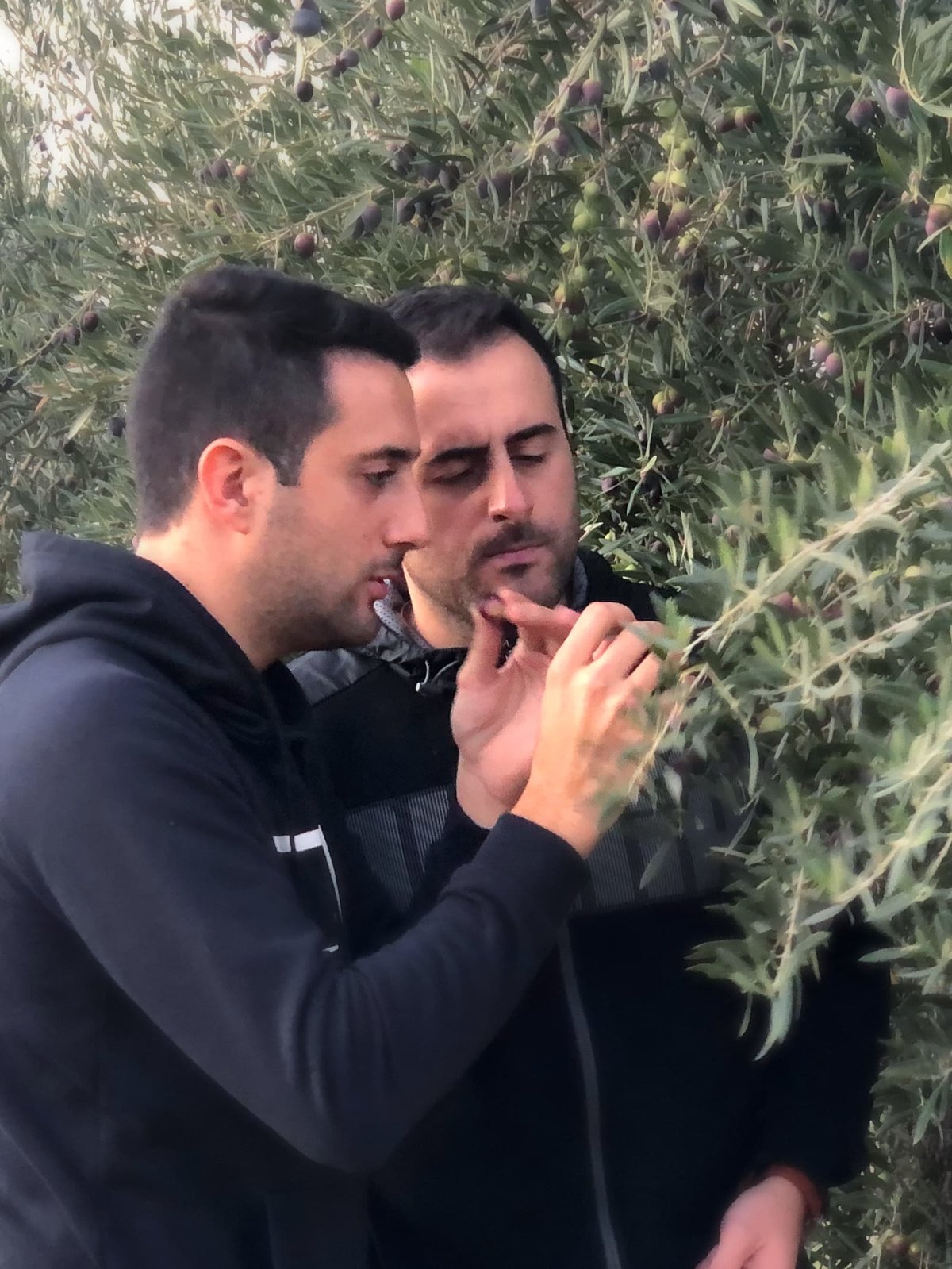
In Arjona, in Andalusia, Spain’s largest olive oil-producing region, a three-hectare family farm has remained productive without herbicides, pesticides or irrigation. According to the family behind La Biodiversa, cultivating biodiversity has been central to that success.
If you have other animals there that are eating the pests, you begin to create a balance. You are giving the environment the tools to create that balance.
“Our family farm is only three hectares. For decades, our ancestors cared for it. When the new generation introduced a new approach more than 20 years ago, it was a bit of a culture shock for many. It was our mum, Antoñita, who allowed us to proceed,” Antonio Puentes, co-owner of La Biodiversa, told Olive Oil Times.
Trained as an agricultural engineer, Puentes said he began by assessing severe soil erosion.
One of the most visible signs of degradation was a gully running through the farm, approximately two meters wide and two meters deep.
“When we were children, it was like our little Colorado Canyon,” Puentes recalled. “There was water, there were animals, and we could play there. But when you start analyzing the farm, you understand that it is a huge problem.”
To slow runoff and contain erosion, the family built dozens of small barriers using rocks, sand and other materials. They also stopped tilling the soil. Within two or three years, spontaneous vegetation began to establish itself across the orchard.
According to Puentes, that decision also helped address another significant problem: Verticillium wilt, a fungal disease that can seriously damage olive trees.
“Mostly due to the traditionally wide presence of cotton in the region, the fungus was everywhere, and we found it on approximately ten percent of our trees,” Puentes said, referring to the vulnerability he observed in Picual olive trees.
Encouraging a diverse mix of grasses was an important part of the response. “Grass tends to limit the movement of fallen olive leaves which can carry the fungus around,” he said.
Alongside sanitation practices, including cleaning and disinfecting pruning tools, Puentes and his team substantially increased soil organic matter, creating conditions that support insects, bacteria, fungi, protozoa, and other organisms.
“There were no directions at the time, no tools,” he recalled.
The farm initially adopted an integrated pest management approach. The farm installed traps throughout the orchard to monitor pest populations, including the olive fruit fly, and applied treatments based on infestation levels.
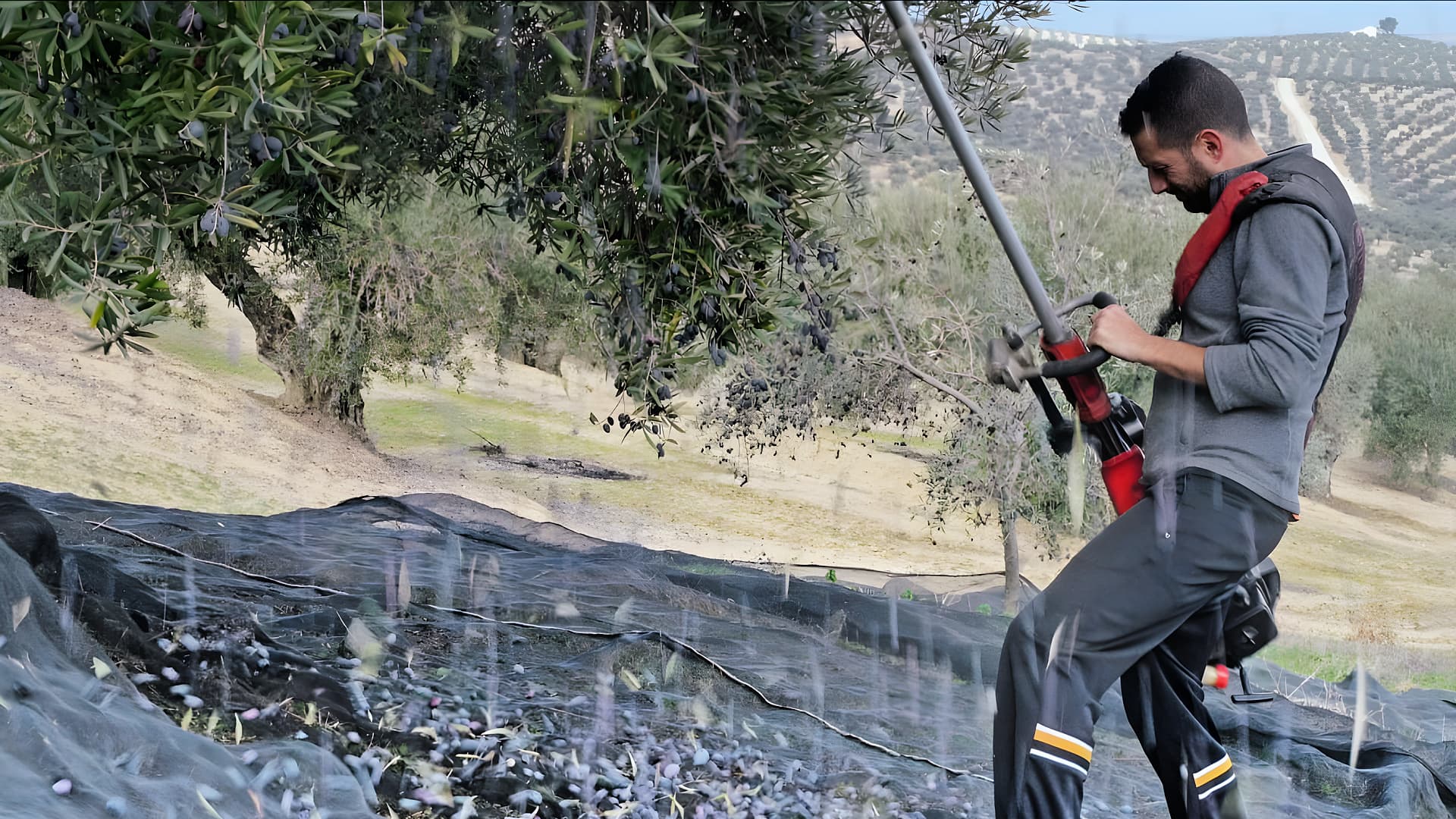
By encouraging natural vegetation and beneficial insects, a family-run olive farm in Spain has reduced erosion, controlled pests and maintained production without chemical treatments.
“But then, we started to see that pest levels were very low,” Puentes said.
The farm had already stopped using herbicides. Over time, Puentes said, the same approach led the family to abandon pesticides.
“What is a pest? It is a population that is out of control,” Puentes said. “You can come to our farm and find insects that are not good for the olive tree. They are there. But they are not at a level that affects the quality or the production.”
Ground cover also created habitat for insects, birds, reptiles and other animals, contributing to what Puentes described as a natural system of biological control.
“If you have other animals there that are eating the pests, you begin to create a balance,” he said. “That is what we mean at La Biodiversa when we talk about creating a natural sustainable balance. You are giving the environment the tools to create that balance.”
That approach was tested in 2022, when large populations of the olive moth, Prays oleae, appeared in the orchard. A conventional response might have been to treat the trees with an insecticide.
“When you use a product on the leaves, of course you kill the pest, but you are also killing the beneficial insects that are eating it,” Puentes said.
Instead, he inspected the trees and found abundant green lacewings, including Chrysoperla carnea, whose larvae prey on the eggs and other stages of several agricultural pests.
“We saw a lot of Prays, but we also saw a lot of Chrysoperla,” Puentes said. “The balance was there.”
The family decided against applying an insecticide and, according to Puentes, the infestation did not compromise production.
“Some people ask: if you are organic and you have a problem, how do you manage it?” he said. “The whole point is that we are not managing the farm only when the problem comes. We are already taking care of the soil and the environment. As a matter of fact, you have a complete environment working for you.”
Ants are another visible part of this ecological balance.
“I think we have more than ten different species of ants,” Puentes said. “Some work in the soil, others on the trunk and others on the leaves.”
Research in Spanish olive groves has also documented ant predation on Prays oleae.
The farm is home to frogs, lizards and numerous bird species. La Biodiversa now hosts bird-ringing sessions with a biodiversity specialist and visitors, during which birds are captured, identified, ringed and released.
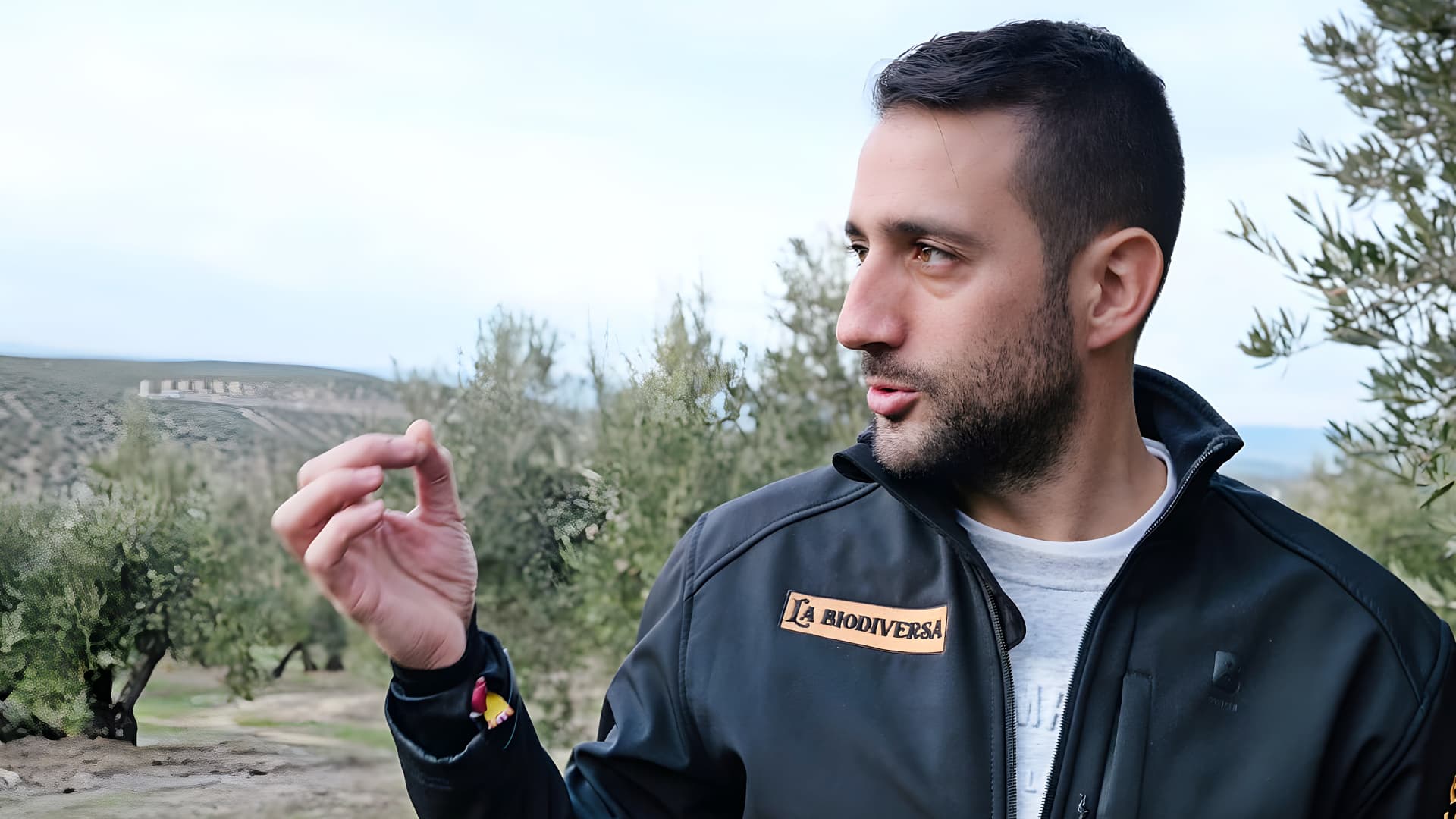
Antonio Puentes, co-owner of La Biodiversa, discusses the family’s approach to olive farming, which relies on biodiversity, healthy soil and natural pest control.
“During the first session, we recorded 25 birds in one morning,” Puentes said. “The specialist told us that in a normal organic farm you might find four, five or six.”
Puentes said the approach also reduces some production costs by eliminating the need for chemical treatments.
“We save the money for buying the product, applying the product, the diesel for the tractor and the person who has to do the treatment,” he said. “And most importantly for us, the soul of the project is producing food without those chemical treatments.”
However, he acknowledged that managing ground cover requires additional work. Farmers must monitor vegetation and cut it at the right time, and different orchards may require different strategies.
Puentes also challenged the assumption that organic production necessarily means accepting lower yields.
“People always say that organic production produces less,” he said. “But every farm is a world.”
He added that the family’s farming practices, combined with early harvesting, have helped reduce the effects of alternate bearing, the tendency of olive trees to alternate between heavier and lighter crops.
“We have the production data going back to 1995,” Puentes said. “If what we were doing was bad for production, we would see it in those numbers.”
The original three-hectare farm has 245 traditional rainfed olive trees and produces about 15,000 kilograms of olives annually, according to Puentes.
He said production in the current campaign reached about 16,000 kilograms, down from 18,000 in 2025 and 14,000 in 2024, after a record 23,000 kilograms in 2023.
Puentes also sees ground cover as a way to make better use of rainfall amid increasingly dry conditions. He said discussions about drought often focus almost exclusively on how much rain falls, overlooking how much water is lost through evaporation or runoff.
According to Puentes, bare soil allows runoff to gather speed, contributing to erosion. Managed vegetation, by contrast, acts like a carpet, protecting the soil and slowing water movement.
“The roots are in the upper part of the soil and the cover protects it,” Puentes said. “The water moves more slowly and you have many more pores, so infiltration increases. You are keeping more of the water that falls on the farm.”
Interest from other growers around Arjona has prompted La Biodiversa to extend its approach beyond the original three hectares.
The family advises some growers on soil and leaf analysis, organic fertilization and ground-cover management. Where spontaneous vegetation is difficult to establish, they have experimented with sowing mixtures of plant species to increase diversity.
In other cases, La Biodiversa rents farms and manages production directly.
“We are now trying to repeat and copy the method that we started at La Biodiversa more than 20 years ago,” Puentes said. “Some farmers already work organically and they are looking for another way to manage their farms and commercialize their production.”
However, Puentes cautioned against treating the original farm as a universal model.
“Our soil is very good and every farm is different,” he said. “Sometimes we start working with another farm and the grass does not establish properly in the first or second year. It is a process; it takes time. The grower has to adapt such an approach to the specifics of the farm itself.”
For growers considering a similar approach to sustainable olive farming, Puentes recommended beginning with a detailed assessment of local conditions.
“The first tool for a grower who wants to embrace this approach is analysis,” Puentes said. “Analyze the soil, analyze the leaves and understand the texture and structure of your soil.”
He advised starting with small trials, observing the results, and adjusting practices to each orchard’s characteristics.
“We made many mistakes,” Puentes said. “We tried different cereals, legumes and many different things. But through those mistakes we learned how the farm could be managed.”
“You have to analyze which practices you can introduce to give more life to your system,” he concluded.