
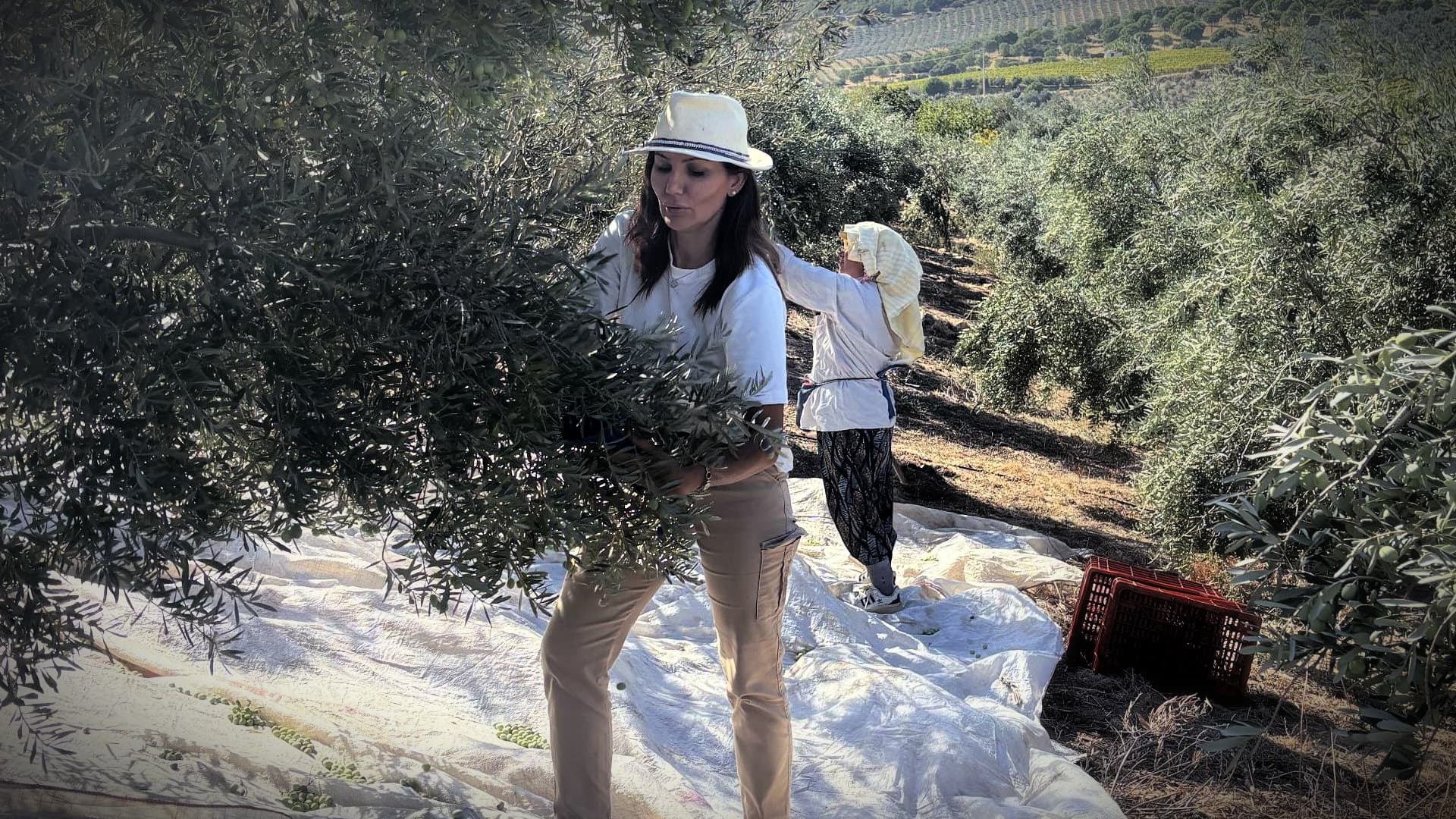
Turkey is heading for a bumper olive oil harvest, with early estimates putting national production at 400,000 to 500,000 metric tons in the 2026/27 crop year.
Experts attribute the outlook to olive trees entering an “on-year” in their alternate-bearing cycle and the growing number of trees planted in recent decades.
“With the entry into production of the olive trees planted about 20 years ago and the consequent increase in the harvest, it is evident that the production records beaten by Turkey in recent years are not the result of chance,” said Mustafa Tan, chairman of the Turkish National Olive and Olive Oil Council (UZZK).
Falling olive oil prices, combined with rising labor costs, mean that in some regions, growers may leave olives on the trees because harvesting would cost more than the crop would earn.
According to official estimates, Turkey has about 200 million olive trees, compared with 90 million 15 years ago. However, data from the Turkish Statistical Institute (TÜİK) indicate that about 155 million trees are fruit-bearing. A USDA report also examines the country’s growing agricultural production capacity.
The outlook comes amid a change in how official forecasts are prepared. Turkey’s Ministry of Agriculture and Forestry has taken over the process from UZZK, which had coordinated production estimates since 2007, according to Turkish media reports.
The rebound follows a disappointing 2025/26 crop year, when drought and the trees’ natural alternate-bearing cycle held production below 300,000 metric tons.
In 2024/25, official estimates put Turkey’s olive oil harvest at a record 475,000 metric tons, although final yield estimates differed.
The United States Department of Agriculture (USDA) and some industry experts placed production closer to 400,000 metric tons that season, following forecasts of a bumper crop.
This season, favorable conditions could push Turkish olive oil production to a new high.
“Based on our own assessments, we expect the national olive oil production to reach approximately 500,000 to 550,000 tons in the 2026/2027 season,” Murat Akman, managing partner at Artem Oliva, one of Turkey’s largest olive oil producers and exporters, told Olive Oil Times.
Akman cautioned that the figures remain provisional. Actual output will depend on how much of the olive crop goes to oil production, the fruit’s oil content, and harvest progress.
He also warned that a larger harvest would not necessarily translate into higher profits for growers and producers.
“Production costs have increased significantly in recent years, particularly harvesting labor, agricultural inputs, energy, and financing expenses,” he said.
“Meanwhile, the expectation of an abundant supply is putting downward pressure on olive oil prices at origin,” Akman added. “In some producing regions, current bulk market prices are reportedly approaching or even falling below production costs.”
Producer prices for extra virgin olive oil in Turkey remain below €5 per liter, ranging from 195 Turkish lira (€3.51) in Nazilli to 220 lira (€3.96) in Aydın and 274 lira (€4.94) in Edremit.
Ece Er Aydin, founder of Izmir-based Olizzi, agreed that Turkey could be heading for a record crop. She echoed Akman’s concerns about shrinking profit margins.
“The most pressing challenge is growers’ profitability,” Aydin told Olive Oil Times.
“Falling olive oil prices, combined with rising labor costs, mean that in some regions, growers may leave olives on the trees because harvesting would cost more than the crop would earn.”
Aydin, a certified olive oil taster, said the industry has also made significant gains in quality alongside its production growth.
“Many producers I work with have invested in advanced milling equipment and have modernized their facilities, bringing greater precision to processing and producing exceptional extra virgin olive oils,” she said.
Despite erratic weather and water shortages in some producing regions, Aydin sees opportunities for further growth by strengthening Turkish olive oil’s presence abroad.
“Turkey’s opportunity is to build a stronger international reputation for quality while ensuring that producing that quality remains economically viable for the people behind it,” she said.
In Balıkesir, in the northwestern Marmara region, olive oil production is expected to reach about 40,000 metric tons this season.
Local producer Nermin Gökduman said falling olive oil prices and steadily rising costs are discouraging some farmers from harvesting their groves.
“The operation does not cover production costs, and this year, many farmers will not harvest [their olives] with their families,” Gökduman said. “Unfortunately, there is the possibility that their crop will remain in the groves.”
Other producers in the area said daily wages for olive pickers have climbed to nearly 1,500 Turkish lira (€27) this year, from 900 lira (€17.20) last year.
A large harvest could also leave Turkey with substantially more olive oil available for export. But the country’s recent export performance has been weak.
Turkish olive oil exports fell 53 percent from January through September 2026 compared with the same period a year earlier, to just 15,700 metric tons.
By comparison, Turkey exported 146,000 metric tons of olive oil worth more than $700 million (€627 million) in the 2022/23 crop year.
Producers who have previously spoken with Olive Oil Times emphasized the need to build a stronger identity for Turkish olive oil in international markets.
To stimulate exports, the Aegean Olive and Olive Oil Exporters’ Association (EZZIB) is calling for the removal of trade barriers facing Turkish producers.
The association has urged the European Union to raise its duty-free olive oil import quota for Turkey from 100 metric tons to at least 60,000 metric tons.
Extra virgin and virgin olive oil imported into the EU from Turkey outside that quota is subject to a duty of €1.12 per kilogram.
With producer prices in EU olive oil-producing countries at about €3.50 to €4.50 this season, experts said the duty amounts to roughly one-third of the product’s value, making Turkish olive oil less competitive for European importers and wholesale buyers.
EZZIB has also called for the removal of an additional 12.5-percent tariff on Turkish products entering the United States, one of the country’s leading olive oil export destinations alongside Spain and Italy.
Association chairman Mehmet Emre Uygun identified the United Kingdom as another promising market. Turkey and the U.K. have had a free trade agreement since 2021, and Uygun said upcoming negotiations could open the way for duty-free Turkish olive oil exports.
As the harvest progresses, producers say stronger access to foreign markets will be essential.
“The 2026/27 season presents both an opportunity and a challenge for the Turkish olive oil industry,” Akman said.
“Higher production could strengthen Turkey’s position in international markets, particularly by improving supply availability and price competitiveness,” he added. “However, competition from other Mediterranean producers, especially Spain, will remain an important factor.”
Akman said the industry needs to emphasize value-added and branded exports over bulk shipments, differentiate its oils by quality and develop long-term relationships with international buyers.
“Ultimately, a record harvest should be measured not only by how much olive oil we produce, but also by how much value that production creates for the farmers and businesses behind it,” he concluded.