Turkish Olive Variety Anchors Georgia’s Growing Olive Sector
Cold-hardy Gemlik trees dominate Georgia’s expanding olive groves as growers refine agricultural practices, production and consumer education.
Gemlik has emerged as the olive variety best suited to Georgia’s climate, according to Kemal Kahraman, chief executive of Georgian Olive Oil.
“Its tolerance to cold makes it a truly exceptional variety,” he told Olive Oil Times.
“The Kakheti region, where most of Georgia’s olive production is concentrated, can experience winter temperatures between minus fourteen and minus eight degrees Celsius,” Kahraman said.
Local producers have tested several cultivars over the years, but Kahraman estimated that Gemlik now accounts for roughly 90 percent of the country’s olive trees.
Native to Turkey’s Marmara region, Gemlik is known for consistent productivity, early bearing and versatility in olive oil and table olive production.
Kahraman said those traits, combined with its tolerance to low temperatures, have made it the defining cultivar of Georgia’s emerging olive sector.
He traced the transformation to 2009, when his father, Ahmet Kahraman, joined Turkish nursery specialists, olive experts, university professors and Georgian institutions to determine whether commercial olive cultivation could succeed in the Caucasus nation.
Georgia was better known for a winemaking tradition stretching back millennia than for olive oil.
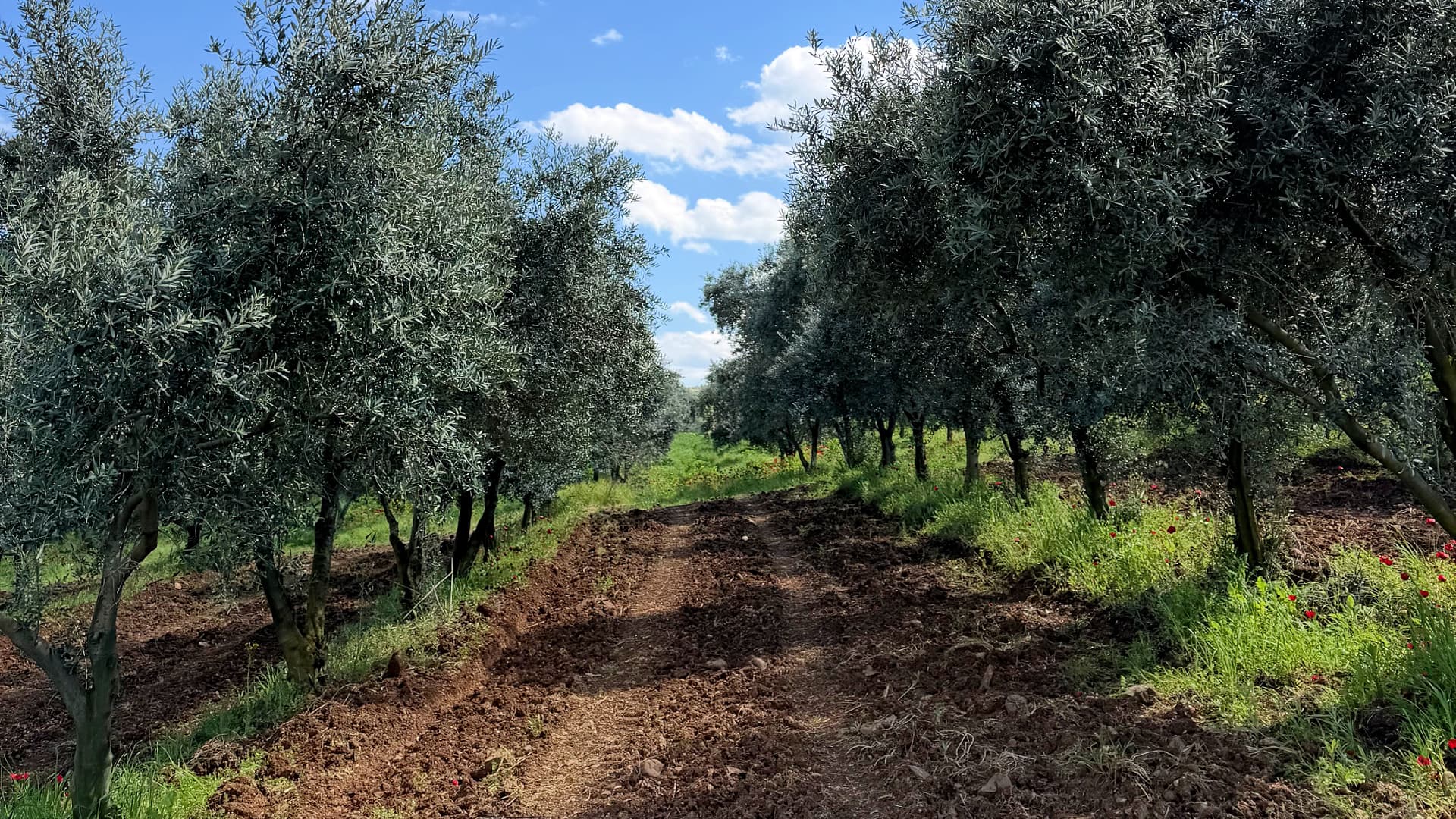
Rows of mature Gemlik olive trees at one of Georgian Olive Oil’s orchards in eastern Georgia, where the cold-hardy cultivar has become central to the country’s expanding olive sector.
“My father always wanted to create meaningful projects that would benefit Georgia,” Kahraman said. “When the opportunity arose to introduce olive cultivation to Georgia, we saw it as much more than an agricultural investment.”
“We saw it as an opportunity to bring a long-term agricultural culture, create economic opportunities for future generations and contribute something valuable to the country,” he added.
Demonstration orchards were planted across nine regions as researchers tested several Turkish and Spanish cultivars under local conditions.
Gemlik eventually stood out as the variety best suited to Georgia’s continental climate, where harsh winters had long been considered one of the main obstacles to commercial olive growing. The industry’s expansion has also coincided with increasingly favorable growing conditions in parts of eastern Georgia.
Since those early trials, Georgia’s olive industry has grown steadily.
The country joined the International Olive Council in 2019, tying its emerging industry more closely to the global olive oil sector.
The government has also expanded its support for olive cultivation through agricultural development programs.
According to Georgia’s Ministry of Environmental Protection and Agriculture, more than 3,200 hectares of olive groves have been planted through the government’s Plant the Future program, backed by more than €7 million in public funding.
Earlier initiatives also helped finance nurseries, olive mills and new commercial groves, particularly in eastern Georgia.
“Today, we estimate that there are approximately three million olive trees planted across Georgia, covering between 5,500 and 6,000 hectares of olive groves,” Kahraman said.
“Olive cultivation is no longer viewed as an experimental crop in Georgia,” he added. “It is gradually becoming an established agricultural sector.”
While comprehensive national statistics remain limited, Kahraman believes olive cultivation has expanded well beyond the projects directly supported by public funding.
Georgian Olive Oil now farms approximately 170,000 olive trees across two commercial orchards in Kakheti and operates an olive mill established in 2016.
Olives are typically milled within three hours of harvest to preserve quality, Kahraman said.
“Our ambition extends beyond our own company,” he added. “We want to encourage more farmers and investors to plant olives and contribute to the development of the entire sector.”
Kahraman said the company has supported that goal by supplying nursery stock and technical expertise to new growers.
Between 2012 and 2015, he estimated that Georgian Olive Oil provided consultancy and technical support to establish roughly 300 hectares of new olive groves.
The company also operates an olive nursery in Sakobo that, according to Georgia’s Ministry of Environmental Protection and Agriculture, was designed to produce about 500,000 olive saplings annually in 2023. Capacity was expected to increase to one million saplings in subsequent years.
For Kahraman, however, expanding the planted area is only part of the equation.
“Deploying agronomic practices is essential,” he said. “Growers must prepare trees properly for winter. Post-harvest foliar nutrition programs are very important for strengthening the trees before cold weather arrives.”
“Another critical practice is avoiding irrigation after the end of August,” Kahraman added. “Allowing trees to gradually harden off before winter significantly improves their resistance to low temperatures.”
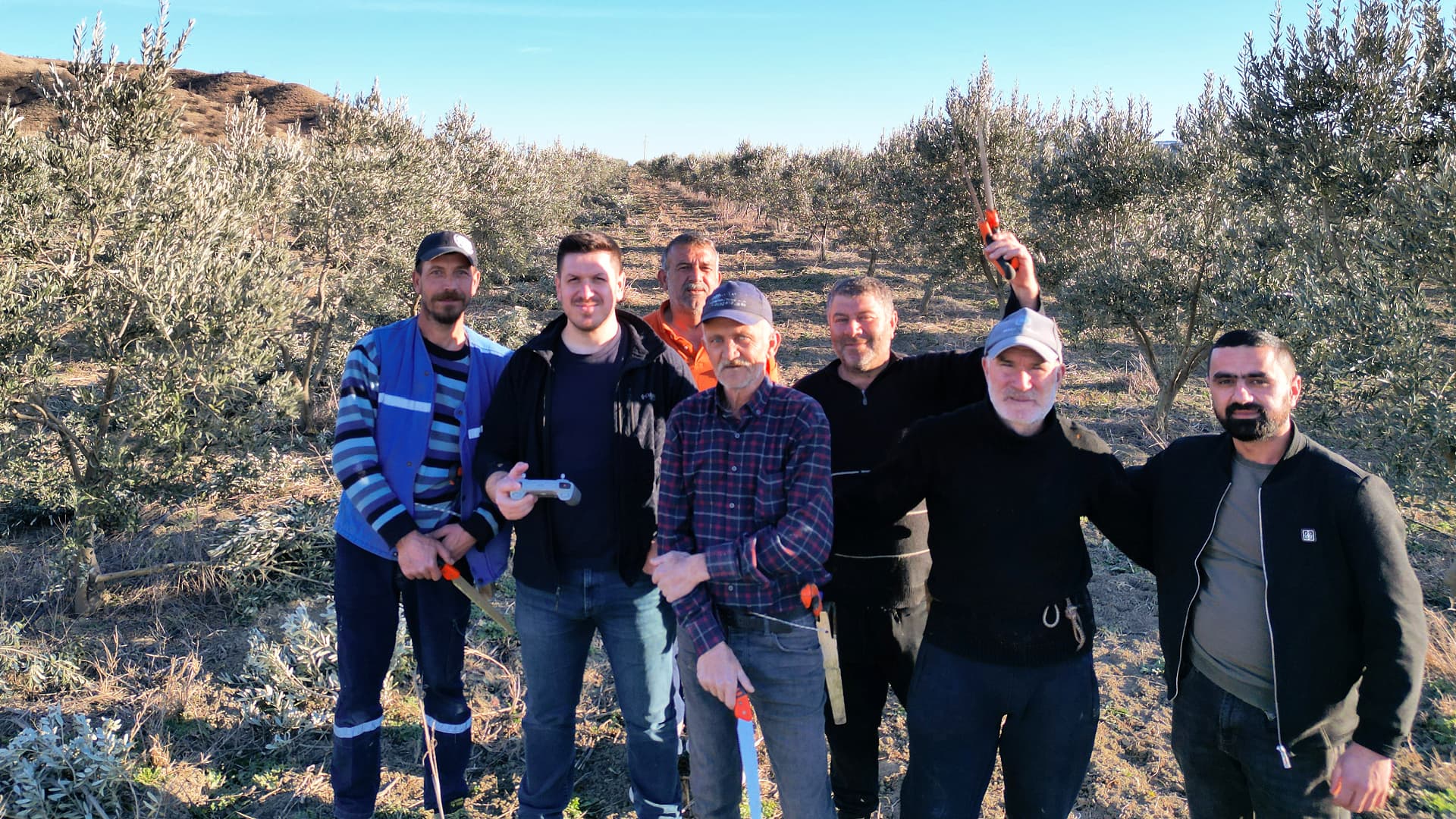
Kemal Kahraman, chief executive of Georgian Olive Oil, joins workers during seasonal pruning at one of the company’s orchards in Georgia, where careful management is considered essential to protecting trees from harsh winter conditions.
That careful management, he said, has contributed to an encouraging outlook for the 2026 season.
“I have very high expectations for the 2026 season in our own orchards,” Kahraman said. “Our orchards are currently developing very well, and we expect both strong yields and excellent fruit quality.”
However, he warned that not every grower is following the same approach.
“Many have planted large areas of olives but do not always provide the level of care required for successful production,” Kahraman said.
“In Georgia, planting 700 or 800 hectares is relatively easy,” he added. “Maintaining those orchards properly is much more challenging and requires significant investment in irrigation, nutrition, pruning, plant protection and professional management.”
A shortage of skilled labor compounds the challenge. Georgia remains a young olive-growing country, Kahraman said, with relatively few trained pruning experts, olive agronomists and technical specialists.
“While I expect some producers to achieve excellent results in 2026, I believe there will continue to be significant differences in productivity and quality across the sector depending on how professionally individual orchards are managed,” he said.
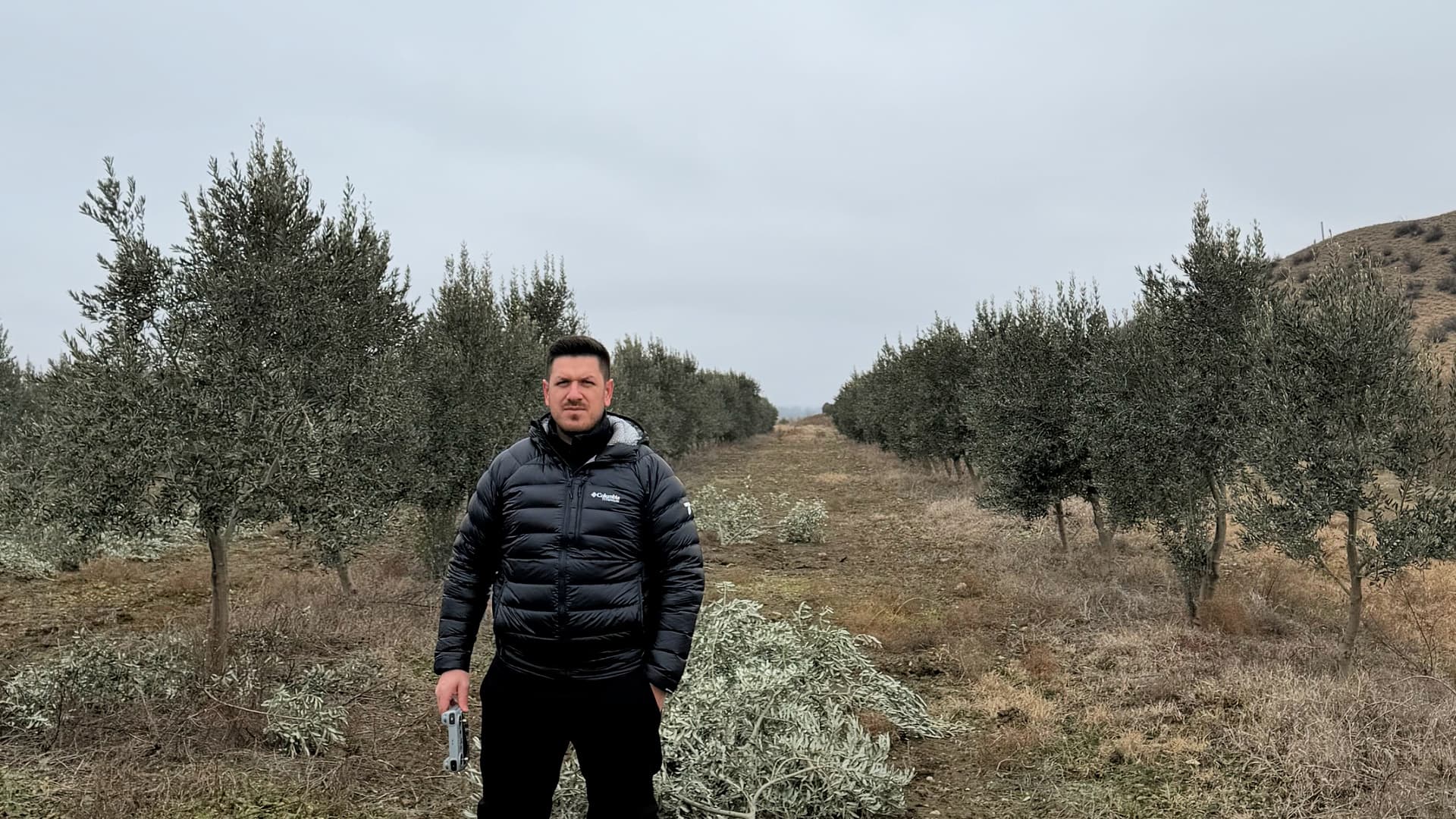
Kemal Kahraman stands in a recently pruned Gemlik orchard in Georgia’s Kakheti region, where careful winter preparation and professional management are essential to maintaining productivity and protecting trees from severe cold.
Even as production expands, Kahraman said producers must work to develop the domestic market and help consumers better understand extra virgin olive oil.
“Awareness is still relatively limited,” he said. “For many years, olive oil was not a traditional part of everyday Georgian cuisine, so consumer knowledge is still developing.”
Increasing domestic olive oil consumption, he said, will require sustained educational efforts through public campaigns, television programs, social media and direct engagement with consumers.
“Education is a major part of our mission because many consumers are still unfamiliar with the differences between extra virgin olive oil, refined olive oil and pomace oil,” Kahraman said.
The company regularly welcomes visitors to its orchards and olive mill, allowing consumers to observe the production process firsthand and better understand how extra virgin olive oil is made.
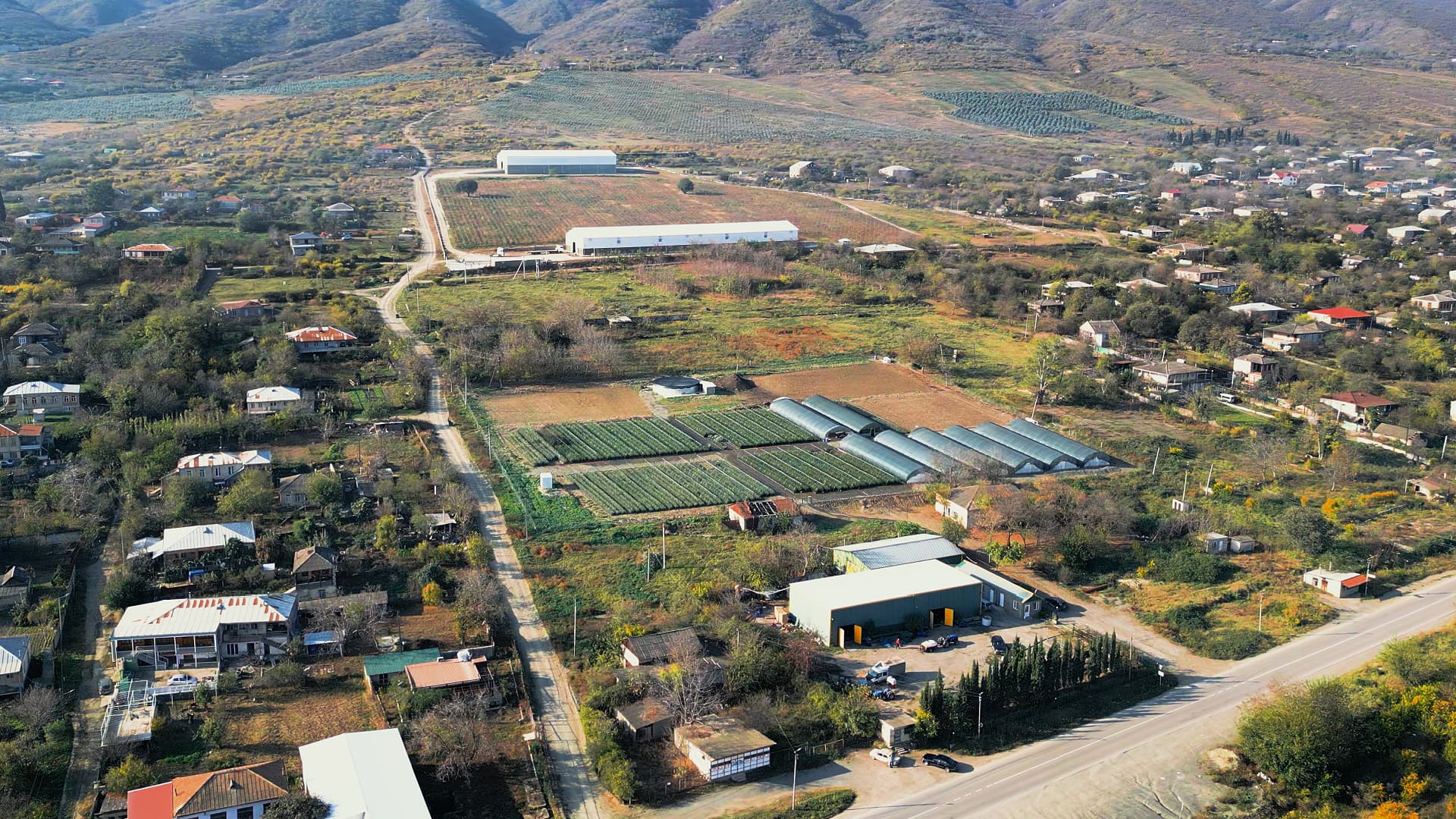
An aerial view of Georgian Olive Oil’s nursery and production facilities in Sakobo, eastern Georgia, where the company propagates olive saplings for its own orchards and supplies planting material to growers across the country.
“Our olive oil is used by many Italian restaurants throughout Georgia,” Kahraman said. “Because olive oil culture is still relatively new here, the most detailed feedback often comes from chefs, olive oil professionals and consumers who already know what high-quality extra virgin olive oil should taste like.”
While Georgia is internationally renowned for its ancient winemaking tradition, fertile land and agricultural heritage, Kahraman believes olive oil can gradually become another product associated with the country.
“Many people are surprised to learn that high-quality olives can be grown successfully in Georgia,” he concluded. “Once they discover the story behind our orchards and taste the oil, interest often develops naturally.”