Dalmatian Olive Growers Honored After Perfect Showing
Olive oil producers from Croatia’s Split-Dalmatia County earned awards for all 25 entries at the 2026 NYIOOC, prompting regional officials to pledge continued support for the sector.
Regional officials honored olive oil producers from Croatia’s Split-Dalmatia County after they won awards for all 25 entries at the 2026 NYIOOC World Olive Oil Competition.
The county’s producers earned 17 Gold Awards and eight Silver Awards, contributing to a strong showing by Croatian olive oil producers, who collected 128 awards nationwide, including 103 Gold and 25 Silver.
When it comes to quality, we are the most consistent country in the world.
Croatia finished second in awards, behind Italy, which received 166 awards, including 121 Gold and 45 Silver. Greece ranked third with 106 awards, followed by the United States with 94 and Spain with 85.
“We are second in the world,” said Zlata Šunjić, an olive grower from Split-Dalmatia County.
Croatian producers also achieved a particularly high success rate. Of the 144 oils submitted, 128 received awards, representing a success rate of nearly 89 percent, compared with 79 percent for Italy.
Regional officials recognize producers
For producers in Split-Dalmatia County, the recognition was especially significant: all 25 submitted oils received awards.
“The awards mean a great deal to us,” Šunjić said. “We want to produce even better extra virgin olive oils. We live for this, we are dedicated to it, and it gives us tremendous encouragement.”
Split-Dalmatia County Prefect Blaženko Boban hosted a reception for the award-winning producers, congratulated them on their achievements, and reaffirmed the county’s commitment to supporting the sector.
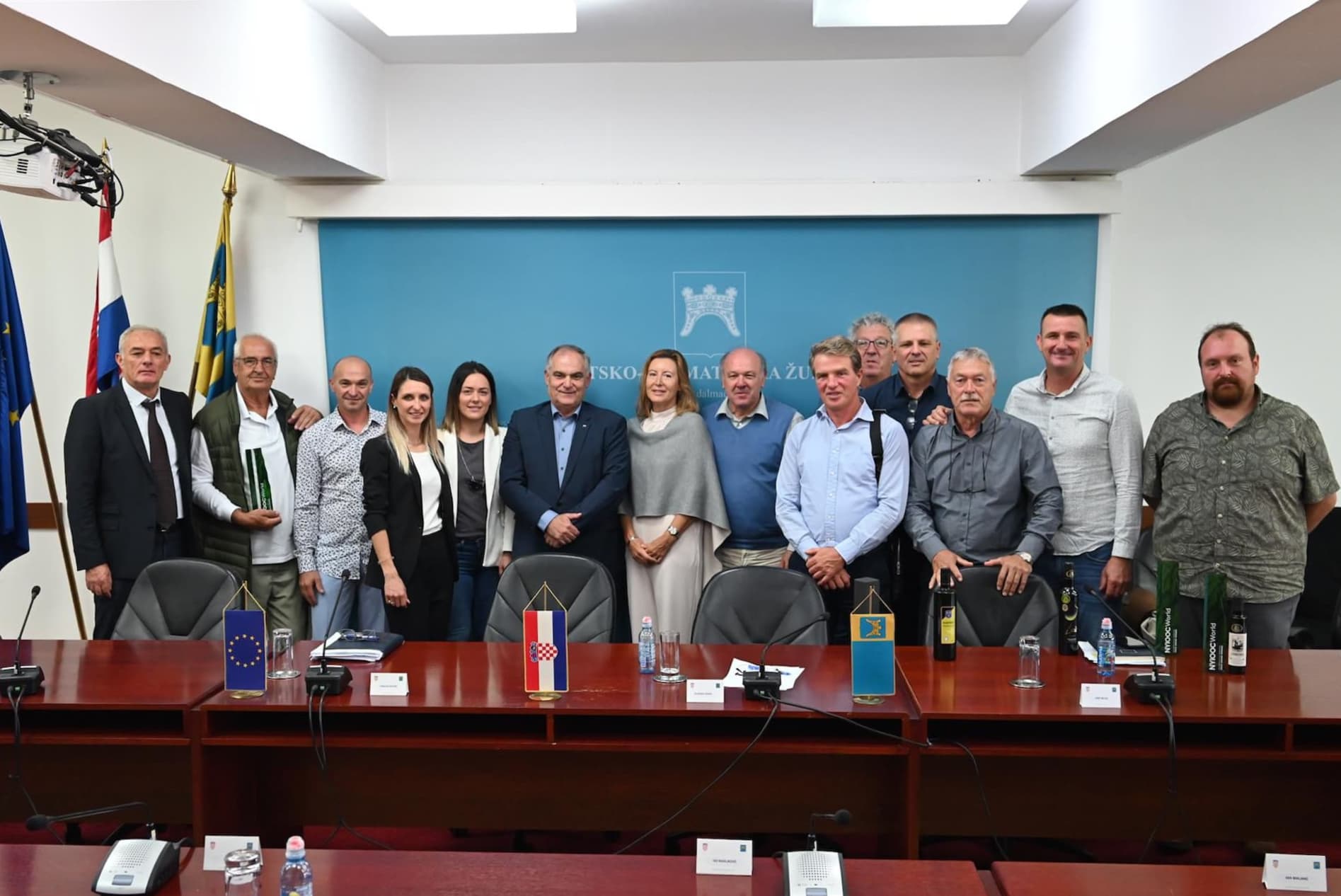
A perfect success rate at the NYIOOC has brought recognition to Dalmatian olive growers, even as rising costs and competition from cheaper imports threaten profitability.
Boban highlighted an initiative by leaders of four Dalmatian counties to protect and strengthen a regional identity for high-quality Dalmatian olive oil.
He also called for greater promotion and closer cooperation between growers and agricultural experts to shape the industry’s future, including irrigation and restoring areas damaged by wildfires.
Much of the burned land was previously covered by pine forests. Amid changing climatic conditions, growers supported planting olive trees in suitable areas instead of restoring pine cover.
Boban said the county would continue financing the purchase of olive trees and other fruit seedlings. He encouraged growers to apply regularly for county assistance programs.
According to Boban, Split-Dalmatia County has helped finance more than four million seedlings of Mediterranean fruit trees, olive trees and grapevines through a program that will continue.
Traditional production faces market pressures
Ivica Ljubenkov, president of the Association of Croatian Olive Growers and Olive Oil Producers, called for stronger marketing of Dalmatian olive oils and improved irrigation of neglected agricultural land.
He said international competitions offer valuable exposure for producers but also require entry fees that growers often pay out of pocket.
Although county governments already provide financial assistance, Ljubenkov argued that greater support for competition expenses would help increase Dalmatia’s visibility in international markets.
He also warned that domestic producers are finding it increasingly difficult to sell their oils as cheaper imports gain ground in the Croatian market. Ljubenkov questioned the quality of some imported products and said traditional production methods contribute to higher prices for locally produced oils.
Asked about prices reaching €40 per liter for some Istrian olive oils, he pointed to the labor-intensive nature of Croatian production.
Unlike larger producers in Spain, Italy and other Mediterranean countries, many Croatian growers rely heavily on manual labor. According to Ljubenkov, harvesting alone accounts for about 40 to 50 percent of the oil’s final price.
While mechanization could reduce costs, he maintained that hand harvesting lets growers select fruit carefully and maintain high-quality standards.
Quality over quantity
Croatia’s two principal olive-growing regions, Istria and Dalmatia, together produce an estimated 3,500 to 5,000 metric tons of olive oil annually, a fraction of the more than 1.3 million tons produced in Spain.
Despite the difference in scale, Croatian producers argue that their international competition results demonstrate the strength and consistency of their oils.
“When it comes to quality, we are the most consistent country in the world,” said Filip Erceg, an enologist from Zadar.
At the 2026 NYIOOC, Istria and the neighboring Kvarner region earned 54 awards, including 51 Gold Awards. Dalmatia’s four counties collectively received 74 awards, including 52 Gold Awards.
The results also reflect the sustained success of individual Croatian producers. Istrian producer Avistria ranks eighth in the growers’ cited international competition standings, while Dalmatian producer Ivica Vlatković has accumulated 25 awards in New York since 2017.