Indian Pioneers Seek Space in Import-Dominated Market
Local olive growers in India are confronting heat, water scarcity and limited consumer awareness as they attempt to establish a domestic extra virgin olive oil industry.
“You get the classic Koroneiki bitterness, but with a unique tropical undertone. Some tasters find hints of raw mango skin and tomato leaf.” That is how Mukesh Manjoo described to Olive Oil Times the extra virgin olive oil produced at Manjoo Farms in southern India.
The Indian consumer is familiar with seed oils, so educating them on the health benefits and flavor profiles of extra virgin olive oil is a slow process
Manjoo is part of a small group of Indian producers attempting to cultivate olive trees under extreme climatic conditions while introducing local consumers to new flavors, health-focused food culture and high-quality extra virgin olive oil.
In a country where frying oils and traditional cooking fats still dominate most kitchens, a handful of farmers are trying to build an entirely new olive oil culture. While olive oil imports continue to expand in India, local production remains limited, with European producers supplying most supermarket shelves and urban kitchens.
According to World Bank data and official customs figures submitted to the International Olive Council, India’s virgin and extra virgin olive oil imports reached 1,637 tonnes in 2024, valued at approximately €14.4 million, up from €10.8 million the previous year as global prices surged. Spain accounted for roughly 74 percent of imports, followed by Italy at 15 percent and Tunisia at about eight percent.
Still, the figures do not capture the full picture of India’s olive oil market. According to trade data from European export organizations, including Federolio, olive pomace oil accounts for more than half of all olive oil entering India by volume.
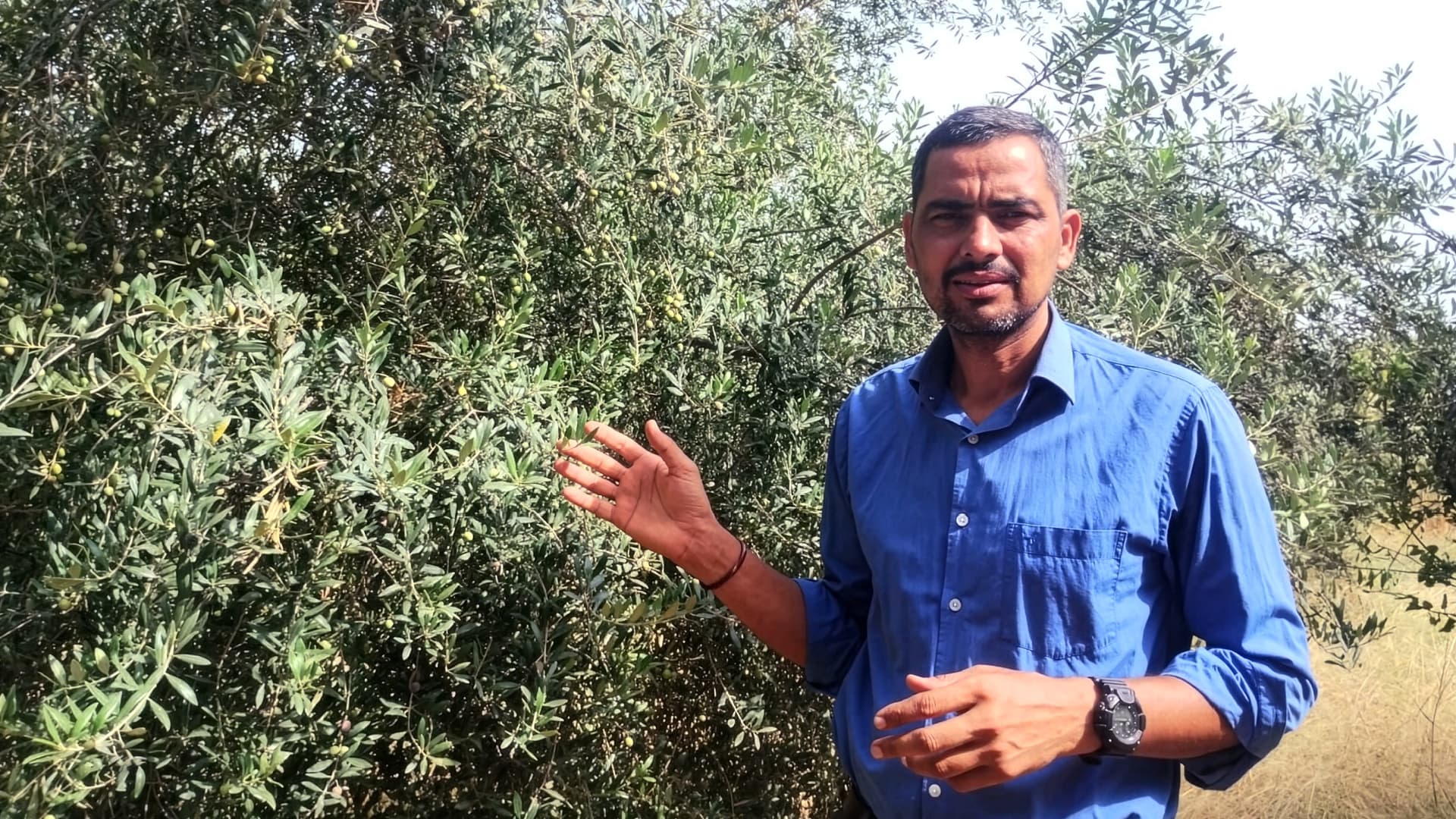
Mukesh Manjoo stands among olive trees at Manjoo Farms, where experimental groves in southern India are testing the limits of olive cultivation outside traditional Mediterranean climates.
Pomace oil, extracted from olive pulp residue using solvents and refined at high temperatures, is significantly cheaper than extra virgin olive oil. It also has a higher smoke point, making it more compatible with traditional Indian frying methods. Importers shifted toward pomace oil when global olive oil prices climbed sharply.
The recently announced trade agreement between the European Union and India, which is expected to gradually reduce tariffs on European olive oils, could further increase imports and improve access to higher-quality olive oils for Indian consumers.
At the same time, a small number of local producers are trying to create space for Indian-made extra virgin olive oils. Through a pilot project launched by the Rajasthan government to encourage local olive cultivation, Manjoo Farms planted its first 450 olive trees in 2014 in a region better known for desert landscapes and extreme temperatures than Mediterranean crops.
According to Manjoo, summer temperatures can exceed 48 degrees Celsius, while winters can be freezing.
“At first many people thought it was impossible,” he said. “But I believed that with the right irrigation systems and the right varieties, olives could survive.”
The idea emerged during his years serving in India’s National Security Guard, when travels abroad exposed him to Israeli agriculture and olive cultivation techniques. Observing similarities between arid Israeli landscapes and parts of Rajasthan, Manjoo began exploring whether olive trees could adapt to Indian conditions.
He imported olive saplings from Israel and began experimenting with greenhouse cultivation, drip irrigation and water-management strategies designed to address Rajasthan’s severe water scarcity.
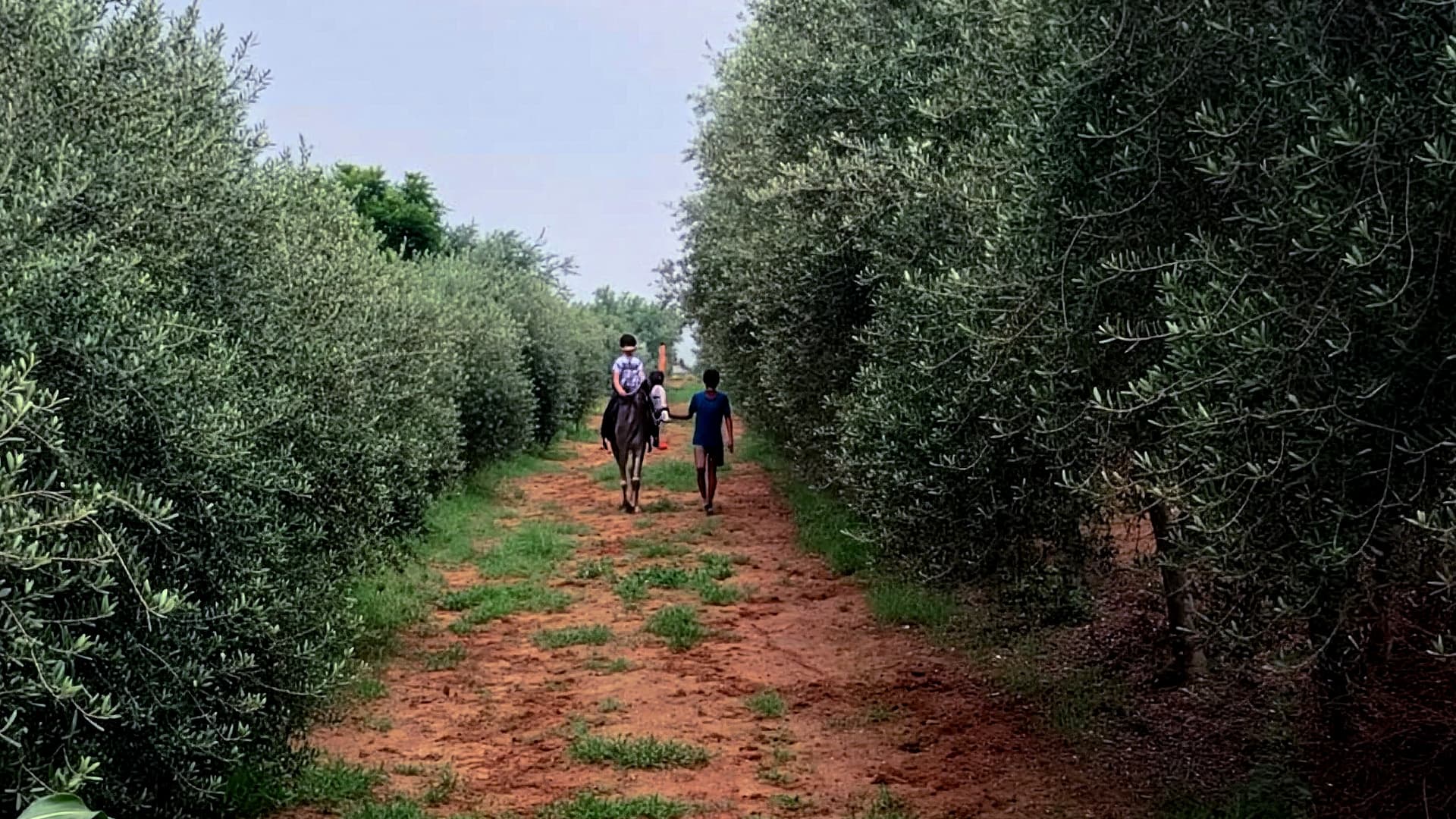
Rows of olive trees line a grove at Manjoo Farms in southern India, where producers are experimenting with large-scale olive cultivation in a non-Mediterranean climate.
After his first commercial harvest, Manjoo said a buyer offered to purchase his olive oil in bulk for 900 rupees per liter, or about €8. The following season, he shifted to direct marketing and digital outreach to increase the value of the farm’s production.
Using smartphones, WhatsApp and social media, he documented the farming and milling process and began selling bottled oil directly to consumers across India. According to Manjoo, the strategy eventually allowed him to sell production for roughly 2,000 rupees per liter, nearly €18, through a direct farm-to-consumer model.
“The value is not only in the olive tree,” he said. “It is also in understanding technology, marketing and the relationship with the consumer.”
Today, Manjoo Farms operates groves in the hilly regions of Tamil Nadu in southern India, managing more than 15 hectares of olive trees integrated with drip irrigation systems and modern agronomic practices.
Among the cultivars tested, Koroneiki proved to be the most resilient. “Its high polyphenol content and ability to withstand the heat of the Indian sun made it the ideal choice,” Manjoo said.
Challenges remain significant. Unlike traditional Mediterranean olive-growing regions, tropical and subtropical parts of India present unusual physiological challenges for olive trees.
“The absence of a dormant period is our biggest hurdle,” Manjoo said. “We have to manage the vernalization process through pruning techniques and water stress management.”
The farm harvests olives early to preserve chemical quality before the monsoon rains arrive.
“Temperature control is our obsession,” Manjoo said. “We keep malaxation strictly below 24 degrees Celsius and cool the olives before processing.”
The farm uses a small-scale Pieralisi milling system equipped with a cooling jacket for the malaxer, while harvested olives are chilled in a cold room before extraction.
Alongside modern technology, Manjoo said a sustainable approach to farming is essential to maintaining olive oil quality under such difficult conditions.
“Sustainability is core,” he said. “We utilize solar-powered pumps for our drip irrigation system, which is vital given the erratic power supply in rural Tamil Nadu.”
The farm also recycles olive pomace by composting it and returning it to the soil as organic fertilizer.
“We are trying to reduce our reliance on chemical inputs as much as possible,” Manjoo said.
The company is also pursuing organic olive oil certification, which Manjoo described as a complex but strategically important step for future expansion and export ambitions.
India’s organic certification system is regulated by the National Program for Organic Production, overseen by the Ministry of Commerce. Producers seeking certification must comply with standards covering cultivation, traceability and processing, often through multi-year conversion periods. Small producers frequently cite high costs, bureaucracy and lengthy approval procedures as major obstacles.
The system is recognized by the European Union and Switzerland as equivalent to their own organic standards, while exports to the United States require additional compliance under USDA organic regulations.
Still, limited consumer awareness of extra virgin olive oil remains one of the biggest barriers facing local producers, especially outside affluent urban centers.
Most Indian olive oil consumers are concentrated in urban middle- and upper-middle-income groups, particularly Millennials and younger Generation X consumers interested in wellness, preventive health and international cuisine. Market analyses identify Mumbai, Delhi, Bangalore and Chennai as the main growth hubs for premium extra virgin olive oil consumption.
“The Indian consumer is familiar with seed oils, so educating them on the health benefits and flavor profiles of extra virgin olive oil is a slow process,” Manjoo said.
Some olive growers have struggled to wait for demand to develop. Over the years, several farmers in Rajasthan who began growing olives abandoned their projects because of weak demand, poor yields, water shortages and thin margins.
Only a few years ago, some growers publicly said that switching to olive cultivation might have been a mistake.
Manjoo acknowledged the many challenges involved in building an Indian olive oil industry.
“Yes,” he said, “we are pioneers.”