New Blue Zone Identified in Sardinia, Where Women Live Exceptionally Long Lives
Researchers have identified a new longevity hotspot in central Sardinia, where exceptional survival rates among women distinguish the village from the island’s original Blue Zone.
Nestled in the Marghine region of central Sardinia, Bolotana has an exceptional concentration of centenarians, with rates ten times the Sardinian average and eleven times the United States’ rate. Longevity is particularly pronounced among women, whose late-life survival rates rival those of the world’s longest-lived populations.
Many people in our community still follow a way of life closely tied to the rural traditions and the rhythms of the countryside.
After participating in a study examining the demographic factors behind this remarkable longevity, researcher Dan Buettner identified the small mountain village in the province of Nuoro as a new Blue Zone.
Blue Zones are regions known for exceptional longevity, where residents reach age 100 at significantly higher rates than average and experience lower rates of chronic disease, potentially reflecting healthy diets and lifestyles.
The term originated in pioneering demographic research by Gianni Pes of the University of Sassari and Michel Poulain of the University of Louvain, who used blue circles to mark Sardinia’s long-lived communities on a map during the early stages of their studies. Buettner later partnered with the two researchers and other scientists to investigate longevity hotspots worldwide.
The research team first identified a cluster of 14 municipalities across Barbagia and Ogliastra, in central-eastern Sardinia, for their exceptional longevity and healthy lifestyle patterns, designating the area as the world’s first Blue Zone in 2004.
“The new Sardinian Blue Zone of Bolotana is distinct and located about 110 kilometers from the first one identified more than 20 years ago,” said Pes, a co-author of the study with Buettner.
“For our investigation, we obtained demographic information from the municipal civil registry, while relying on historical parish registers as an independent source for cross-validation of data,” Pes explained.
“Specifically, civil birth records were linked to subsequent civil and, when available, parish records using concordance of anagraphical data, parentage, family relationships, and other identifying information. Genealogical timelines were additionally reconstructed when necessary to exclude linkage to siblings or homonymous relatives.”
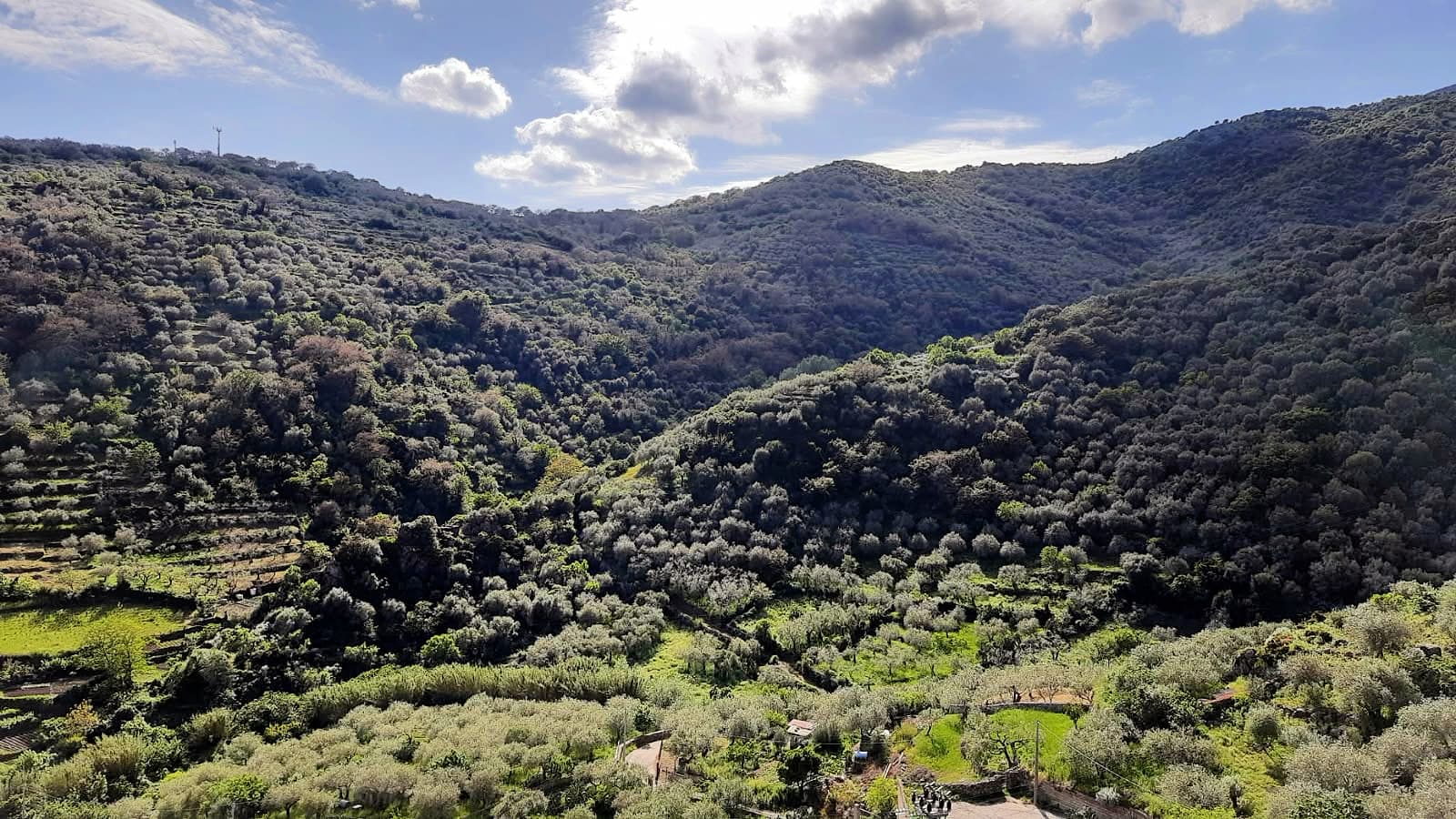
The newly designated Blue Zone of Bolotana is nestled in the mountainous Marghine region of central Sardinia. (Photo by Giacomo Nieddu, Terracuza)
The study focused primarily on the period from 2021 to 2025, when Bolotana had an average resident population of 2,266, including ten people aged 100 or older. That represented approximately 442 centenarians per 100,000 residents, with the most pronounced longevity advantage observed among women.
Researchers also analyzed data from 2020 to account for potential effects of Covid-19 and conducted a period-matched comparison covering 2015 to 2019.
They found that women who reached age 70 had an additional life expectancy of 20.85 years, while 13.83 percent of women reaching that age survived to 100. Both figures exceeded the averages and the highest annual values recorded in Nuoro province and Italy during the same period.
Bolotana’s female longevity estimates also ranked exceptionally high against international benchmarks from the Human Mortality Database, placing second only to Hong Kong on both measures.
Overall, women in Bolotana exhibited one of the most favorable late-life survival profiles recorded internationally. Their probability of surviving from age 70 to 100 was more than three times that of women in the United States.
Researchers noted that Bolotana’s predominantly female longevity advantage from 2021 to 2025 contrasts with the pattern historically observed in Sardinia’s original Blue Zone, where exceptional longevity was particularly pronounced among men and the difference between the sexes was relatively small.
The contrast suggests that exceptional late-life survival in Sardinia may follow different demographic patterns across communities and time periods.
“Such heterogeneity could reflect differences in cohort composition, environmental, social, behavioral, or other population-specific characteristics,” Pes explained.
“Several mechanisms could plausibly contribute to the pronounced female survival advantage observed, including genetic background, dietary patterns, physical activity, family support, social cohesion, continuity of residence, and access to care.”
Researchers also reviewed historical dietary surveys and interviewed local physicians to better understand the lifestyle factors that might contribute to the community’s longevity.
Their findings indicated that the traditional diet was largely plant-based, with meat consumed only about five times a month throughout much of residents’ lives. Much of the food was locally sourced, including olive oil, olives, cheese and wheat produced by residents themselves.
Although these lifestyle findings were not part of the study’s core analysis, they provided context for interpreting the demographic results.
“The present demographic analysis cannot determine whether any of the diet and lifestyle factors contributed to the observed pattern or assess their relative importance,” Pes said.
“Comparative individual-level studies will be required to evaluate potential biological, behavioral, and social determinants of exceptional longevity in the village. We are now focusing on this line of research.”
Local residents welcomed the announcement of Bolotana’s designation as a new Blue Zone. The recognition was discussed at a town council meeting, where Pes formally presented a certificate acknowledging the municipality’s inclusion among the world’s Blue Zones.
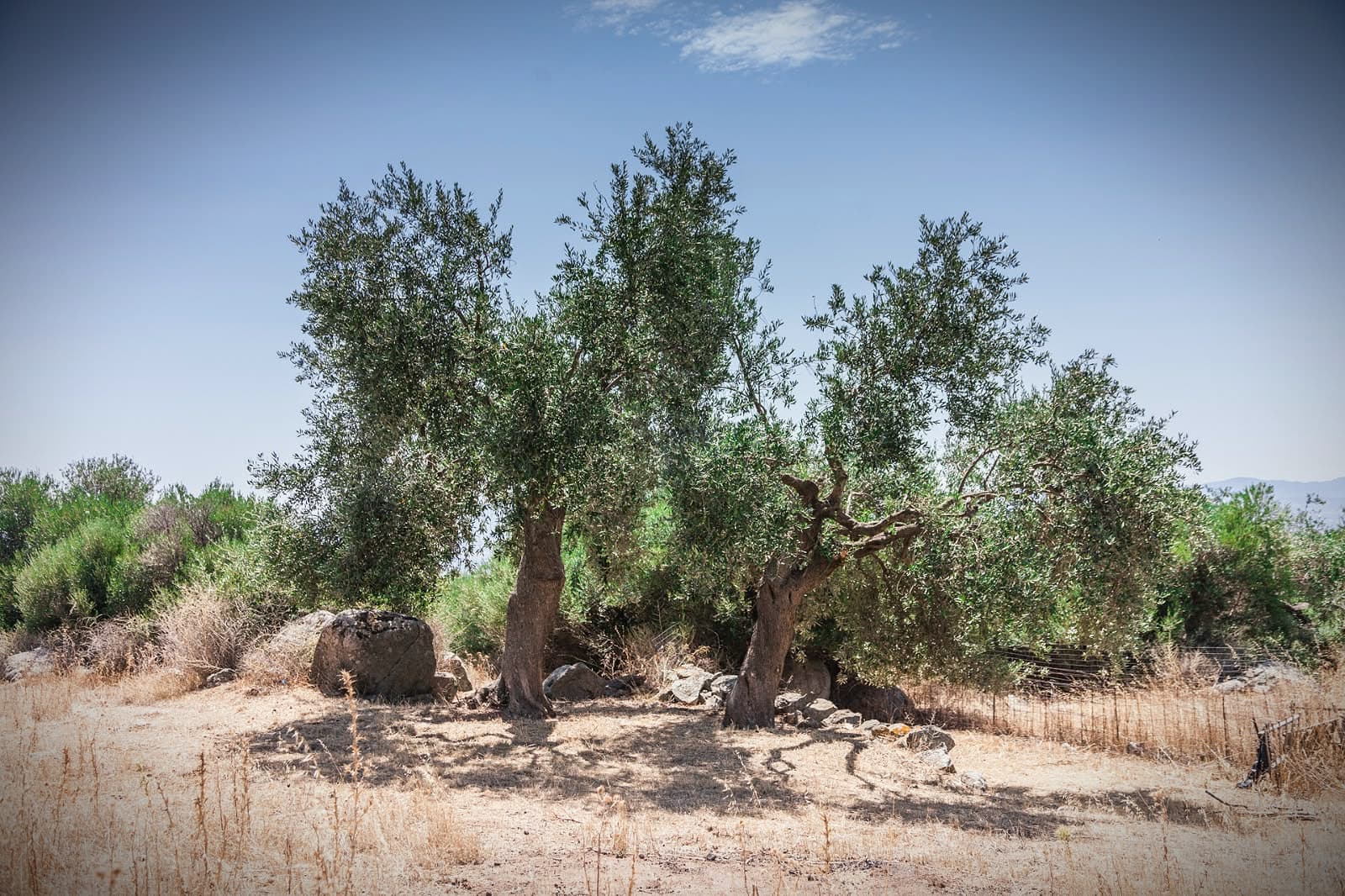
Olive oil is a dietary staple among Bolotana’s residents, whose eating habits are predominantly plant-based. (Photo by Giacomo Nieddu, Terracuza)
Joining him were Salvatore Pedde, president of Ormìnas, a cultural association dedicated to promoting the local area and its traditions, and Vittorio Romerio of the School of Archival, Paleography and Diplomatic Studies at the Cagliari State Archives. Both contributed to the demographic research.
“This recognition is important for our community, as it highlights our identity, culture, and traditions,” Bolotana Mayor Francesco Manconi told Olive Oil Times.
“Among the factors that contributed to our community’s remarkable longevity, healthy eating is undoubtedly a key element. One of the hallmarks of our agricultural tradition is olive oil, which has always held a central place in our diet and continues to be used daily as an ingredient in a wide range of traditional dishes.”
Among Bolotana’s olive growers is Giacomo Nieddu, who produces extra virgin olive oil at the Terracuza estate on the hillsides surrounding the village. The farm was among the sites researchers visited last year while engaging with the local community.
“This recognition validates our vision and reinforces our commitment as producers of high-quality extra virgin olive oil, whose health benefits are widely recognized,” Nieddu told Olive Oil Times.
His olive groves, many of them centuries old, are scattered across steep terraces where olive cultivation is considered a form of “heroic” farming. Through Terracuza, Nieddu has been leading a restoration project to revive the area’s abandoned orchards and preserve the landscape.
The company also promotes local olive varieties, including Bosana, Majorca and Cariasina, which it uses to produce traditionally processed table olives.
“Beyond olive oil and a balanced diet, maintaining a healthy lifestyle is crucial,” Nieddu added. “Many people in our community still follow a way of life closely tied to the rural traditions and the rhythms of the countryside, which definitely contributes to people’s well-being.”