Tunisian Producers Unite Behind Award-Winning Brand to Raise Global Profile
The Farmers Union for Development and Sustainability created UNNA to bring award-winning Tunisian producers together under a shared brand focused on quality, traceability and international recognition.
A new Tunisian brand created by a collective of olive growers, millers and specialists has won a Gold Award at the 2026 World Olive Oil Competition.
We wanted to create something stronger together than we could achieve separately.
UNNA represents the joint effort of a dozen award-winning producers and olive oil professionals who have joined forces around a shared goal: bringing greater visibility and value to Tunisian olive oil.
The initiative is led by the Farmers Union for Development and Sustainability (FUDS), a newly established group created to bridge the long-standing gap between the quality of Tunisian olive oils and their recognition in international markets.
“Individually, we were not able to make Tunisian olive oil visible the way it deserves,” Sonda Laroussi, chief executive of FUDS, told Olive Oil Times. “We decided to work together, maintaining exactly the same commitment to quality, but joining forces under a common brand.”
The result is a range of olive oils produced according to a common protocol, shared standards, traceability requirements and quality criteria.
“Unna means ‘us,'” Laroussi said. “We wanted to create something stronger together than we could achieve separately.”
The project grew from a shared frustration among its participants. Many had already earned individual accolades at international competitions, including the NYIOOC, but those private successes had not translated into broader recognition for Tunisian olive oil as a whole.
“We have producers who have already won major awards on their own,” Laroussi said. “But we were still unable to give Tunisian olive oil the visibility it should have.”
During years of working with producers across Tunisia, Laroussi said she repeatedly saw award-winning oils disappear into bulk supply chains, where their identity and value were largely lost.
“Imagine an olive oil that wins Best in Class and then is sold to an exporter who blends it,” she said. “It breaks your heart.”
According to the project’s organizers, UNNA’s Gold Award-winning monocultivar Chetoui embodies FUDS’ collaborative approach. Rather than coming from a single estate, the oil was made from olives harvested by five producers growing the traditional northern Tunisian variety.
“There is an important message in that olive oil,” Laroussi said. “It is a monocultivar Chetoui, but it comes from five producers. It is a quality oil, but it is also a common oil, with a story that brings together many different stories.”
The collective spans the country, bringing together small family operations and medium-sized businesses. Some members own modern milling facilities, while others focus entirely on cultivation and rely on partner mills. All are bound by FUDS’ commitment to quality and transparency.
“We only select olive oils with excellent characteristics,” Laroussi said. “Every batch is analyzed, evaluated and traced. We know where the olives were harvested, when they were milled and how the oil was stored.”
Many of the producers who joined FUDS had already invested heavily in quality production, modern mills and international competitions. Still, much of their olive oil continued to be sold anonymously, at a fraction of its potential value.
“If these producers cannot sell their oils as bottled products, something is wrong,” Laroussi said. “They do everything required to produce exceptional olive oil, but in the end the olive oil is often sold to exporters.”
For Kamel Gargouri, an olive grower, agricultural consultant and former International Olive Council expert who helped shape the project, the issue reflects a broader structural challenge facing Tunisia’s olive oil sector.
“In my opinion, there is still not enough awareness abroad about the quality of Tunisian olive oil,” he told Olive Oil Times. “Many consumers do not even know that Tunisia produces olive oil.”
That lack of recognition remains striking for a country that ranks among the world’s leading olive oil exporters and has one of the largest areas of certified organic olive groves.
“We are the first producers of organic olive oil in the world,” Gargouri said. “We have enormous potential, but we still need to improve the way we communicate and market our olive oil.”
“Today, much of our olive oil is still sold in bulk,” he added. “Importers are often looking for volume rather than high-quality olive oil. Farmers cannot survive on that model.”
For Gargouri, quality recognition is not an end in itself. It is a tool for building stronger brands and greater market presence.
“The first step is to create a recognized label,” he said. “Then you need quality awards, visibility and communication. These distinctions help consumers understand that the olive oil is truly exceptional.”
A growing number of international awards suggest that more Tunisian producers are embracing that strategy.
“There is much greater awareness among producers today,” Gargouri said. “They understand the importance of quality and the value that recognition can create.”
Practical business realities also drove Afet Ben Hamouda, co-founder of A&S Olive Oil, to join FUDS. Ben Hamouda and her sister Selima returned to their family farm in northeastern Tunisia after pursuing careers outside agriculture. Their father had traditionally harvested olives and sold them to local mills, but they envisioned a different future for the farm.
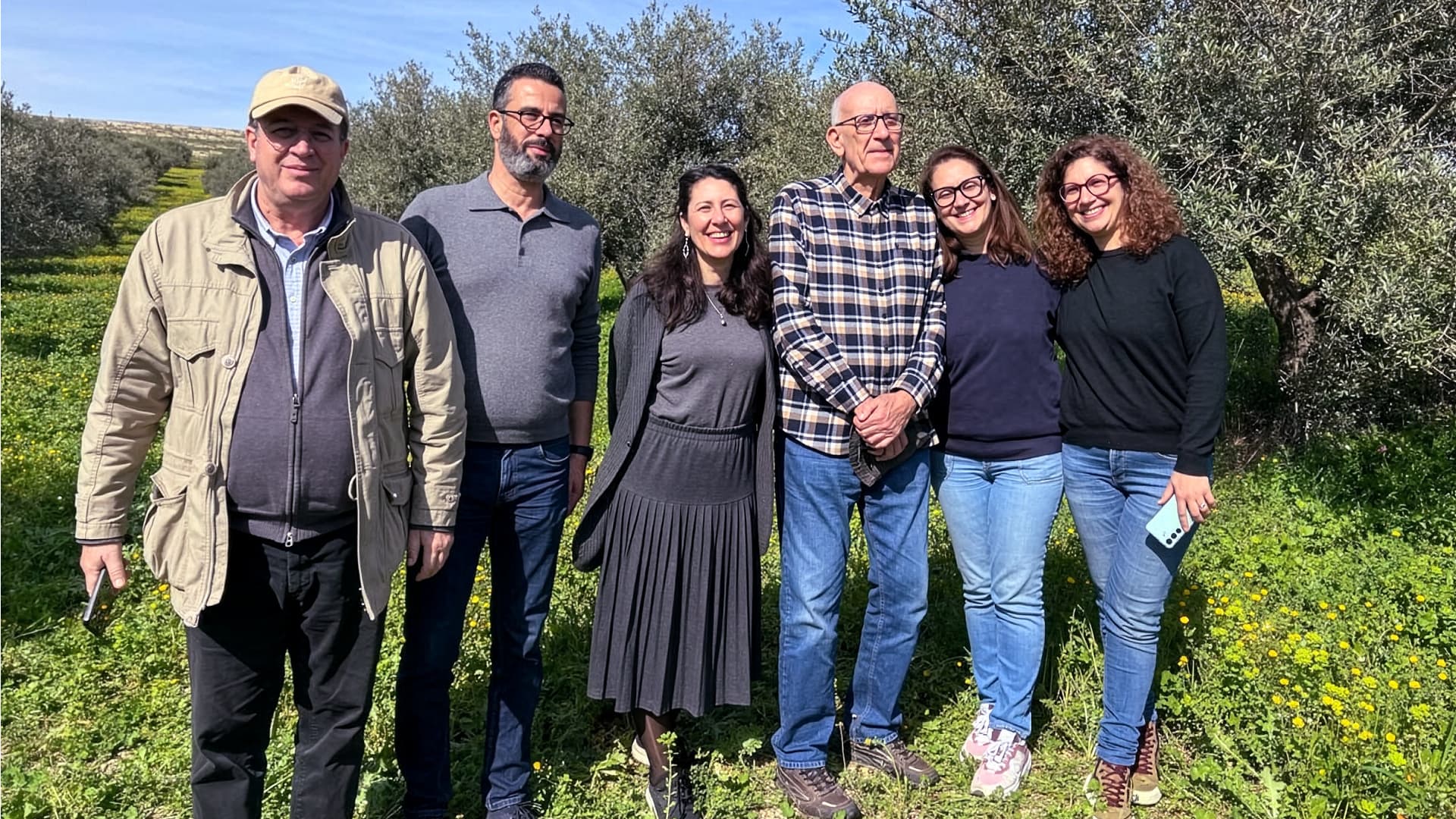
Afet and Selima Ben Hamouda with their family at their olive grove in northeastern Tunisia, where they developed A&S Olive Oil before joining the FUDS collective behind UNNA.
“We wanted to add value,” Ben Hamouda told Olive Oil Times. “We didn’t just want to do things the way they had always been done.”
A tasting session proved to be a turning point, convincing the sisters to pursue premium olive oil production and eventually invest in their own mill.
“We could not find a mill in our area that matched the quality standards we were looking for,” Ben Hamouda said. “So we decided to buy a small mill ourselves.”
“I still remember the exact moment,” she added. “Japanese tasters were evaluating oils, and one of them tasted ours and simply said, ‘Wow.’ That was when we thought maybe we were doing something right.”
As the sisters built a reputation for quality and began earning international recognition, they encountered many of the same obstacles that other premium Tunisian producers faced.
“We reached a point where it became too expensive to grow internationally on our own,” Ben Hamouda said. “We wanted to make A&S more visible, but we were still too small to answer larger market demands.”
Their experience mirrored the challenge described by Laroussi and Gargouri. Despite producing award-winning olive oil, much of the company’s output continued to follow the traditional commercial path.
“Much of our production is still sold in bulk,” Ben Hamouda said. “Financially it works, but our objective was always to bring high-quality olive oil to consumers and make A&S more visible.”
Joining FUDS was straightforward after a visit to the World Olive Oil Exhibition in Madrid, where Ben Hamouda observed Spanish producers presenting themselves collectively while maintaining their individual identities.
“We felt they were working as one,” she said. “That idea stayed with us.”
For Ben Hamouda, the increasingly competitive market has only strengthened the case for cooperation.
“The market is becoming more challenging and more competitive,” she said. “That only reinforces our belief that producers need to work together.”
“If you are alone, you go fast,” Ben Hamouda added. “If you are together, you go far.”