
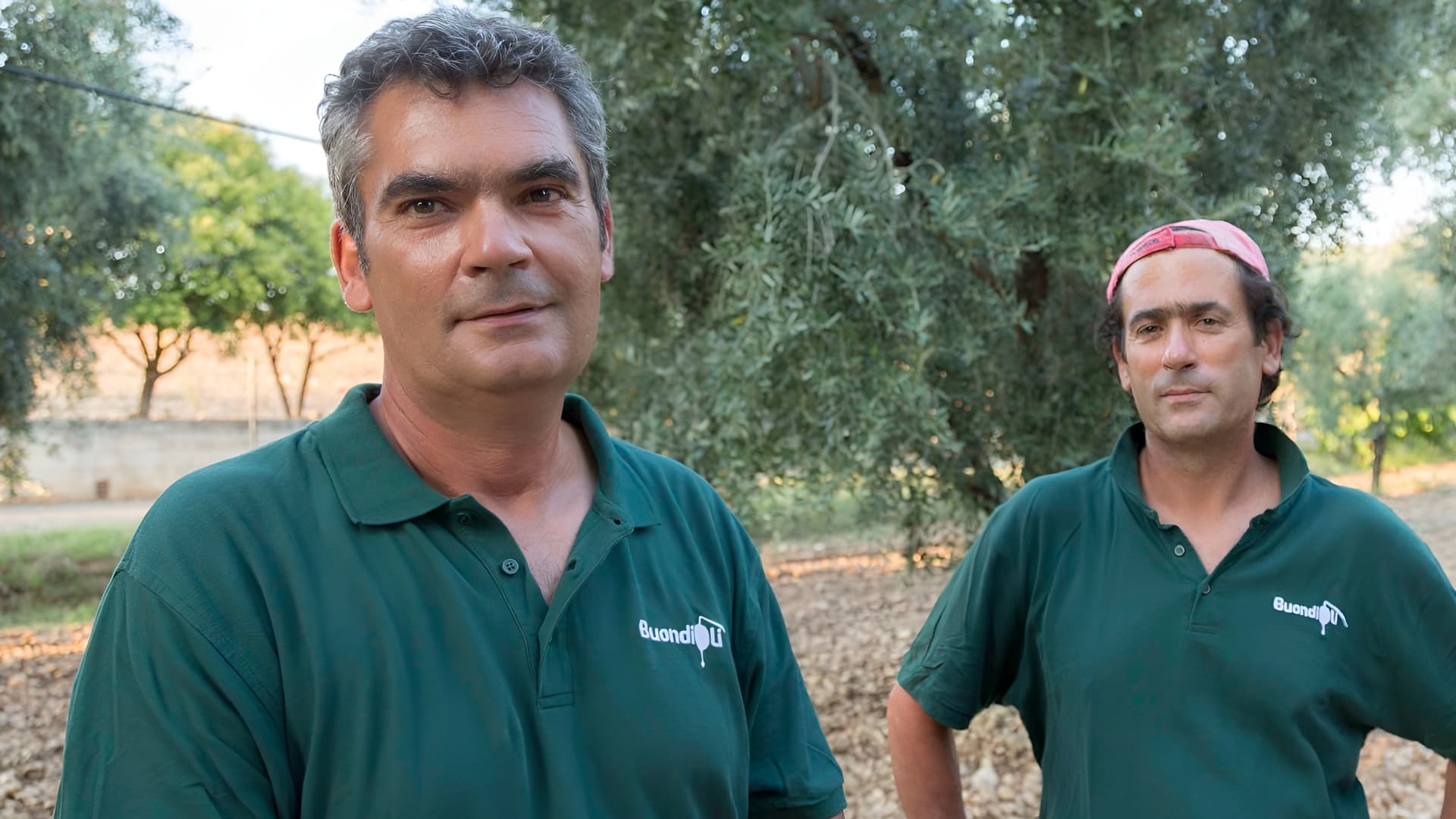
“From a production standpoint, it has been a good year,” Domenico Buondioli, a fourth-generation olive grower in Carpino, on the Gargano peninsula in Puglia, told Olive Oil Times.
We cannot expect farmers to bear the costs of providing benefits to society. The landscape is a public benefit, but the cost of maintaining traditional olive groves falls on the grower.
Unusually high summer temperatures limited olive fruit fly infestations in the region. Yet favorable growing conditions have done little to ease the industry’s concerns.
“It’s a shame things have turned out this way,” Buondioli said, describing a season marked by falling olive oil prices, substantial unsold inventories and widespread uncertainty among growers and millers as the 2026/27 harvest unfolds.
Driven by recovering production around the Mediterranean, olive oil prices on national and international markets have fallen sharply. According to the Institute of Services for the Agricultural and Food Market (ISMEA), the average Italian extra virgin olive oil price at origin stood at €4.75 per kilogram in October 2026, down 47.6 percent from the same month a year earlier.
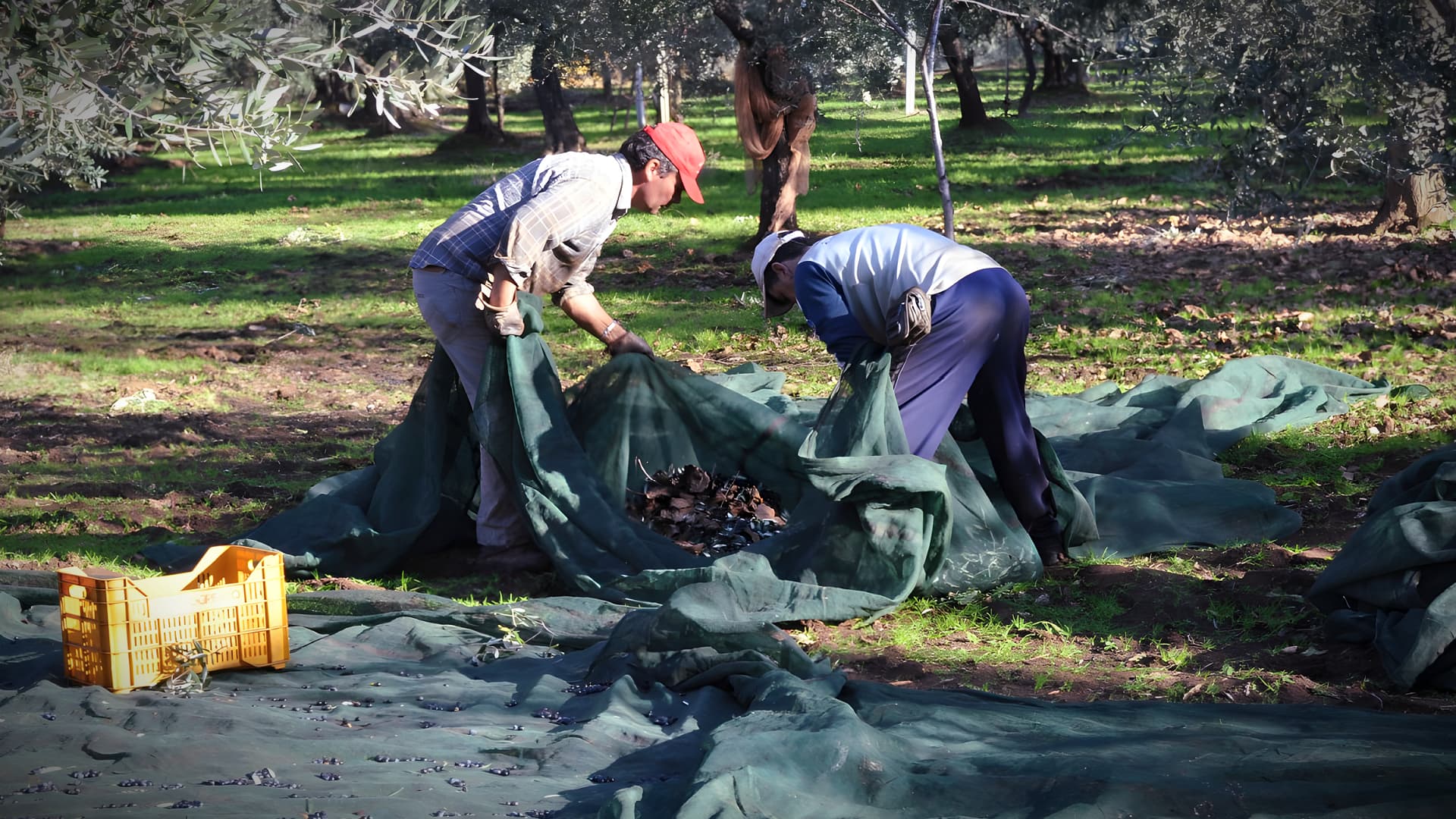
Workers gather freshly harvested olives in nets at the Buondioli family’s groves in Puglia, where rising labor costs are adding to the pressure of falling olive oil prices.
Olive oil stocks in Italy are also sharply higher than a year ago. The latest report from the Italian Agriculture Ministry’s food quality and antifraud inspectorate shows 194,539 metric tons in storage at the end of October, up 40 percent from a year earlier.
In October, olive growers, millers and cooperatives demonstrated in Puglia against falling prices. Among the organizers, the Orgoglio Olivicolo committee called for official recognition of a sector crisis, stricter import traceability and anti-fraud controls, and emergency storage measures to support producer prices.
“The reasons behind the protests are absolutely justified,” Buondioli said. “The problem is partly the timing and partly the organization. The timing coincided with a period when you either harvest the olives or lose them.”
“In my view, we need to distinguish between two products: commodity olive oil and quality olive oil,” he added. “The protests of recent days have essentially been about the commodity product.”
According to Angelo Frascarelli, professor of agricultural economics at the University of Perugia, current price trends should be considered in the context of the exceptional market conditions of recent years.
Italian extra virgin olive oil prices hovered around €4.20 to €4.30 per kilogram during the first half of 2022, before climbing above €9.50 as severe production shortages affected Spain and other Mediterranean producers.
“The question is, why did prices rise? Why did something worth €4.20 reach €9.70?” he said, explaining that the shortage of standard olive oil on international markets had also driven up Italian prices.
“Growers came to believe that was the right price. But it wasn’t,” Frascarelli said. “All it took was for Spain and the Mediterranean to resume production.”
The current €4.75 quotation is thus not far from the €4.20 to €4.30 level Frascarelli recalled from before the price surge.
Spain, the world’s largest olive oil producer, has forecast approximately 1.6 million metric tons for the 2026/27 crop year, 23 percent more than in the previous season.
By contrast, an October forecast reported by Olive Oil Times put Italian olive oil production at between 270,000 and 290,000 metric tons for 2026/27, approximately 20 percent below the previous season, despite the favorable conditions Buondioli described on the Gargano.
Buondioli estimated that harvesting alone can cost an established olive-growing business in his area €3 to €3.50 for each kilogram of olive oil eventually produced. He described a harvesting operation involving five workers and mechanical equipment that can cost around €1,200 for a single day. Those expenses do not include annual grove management and milling costs.
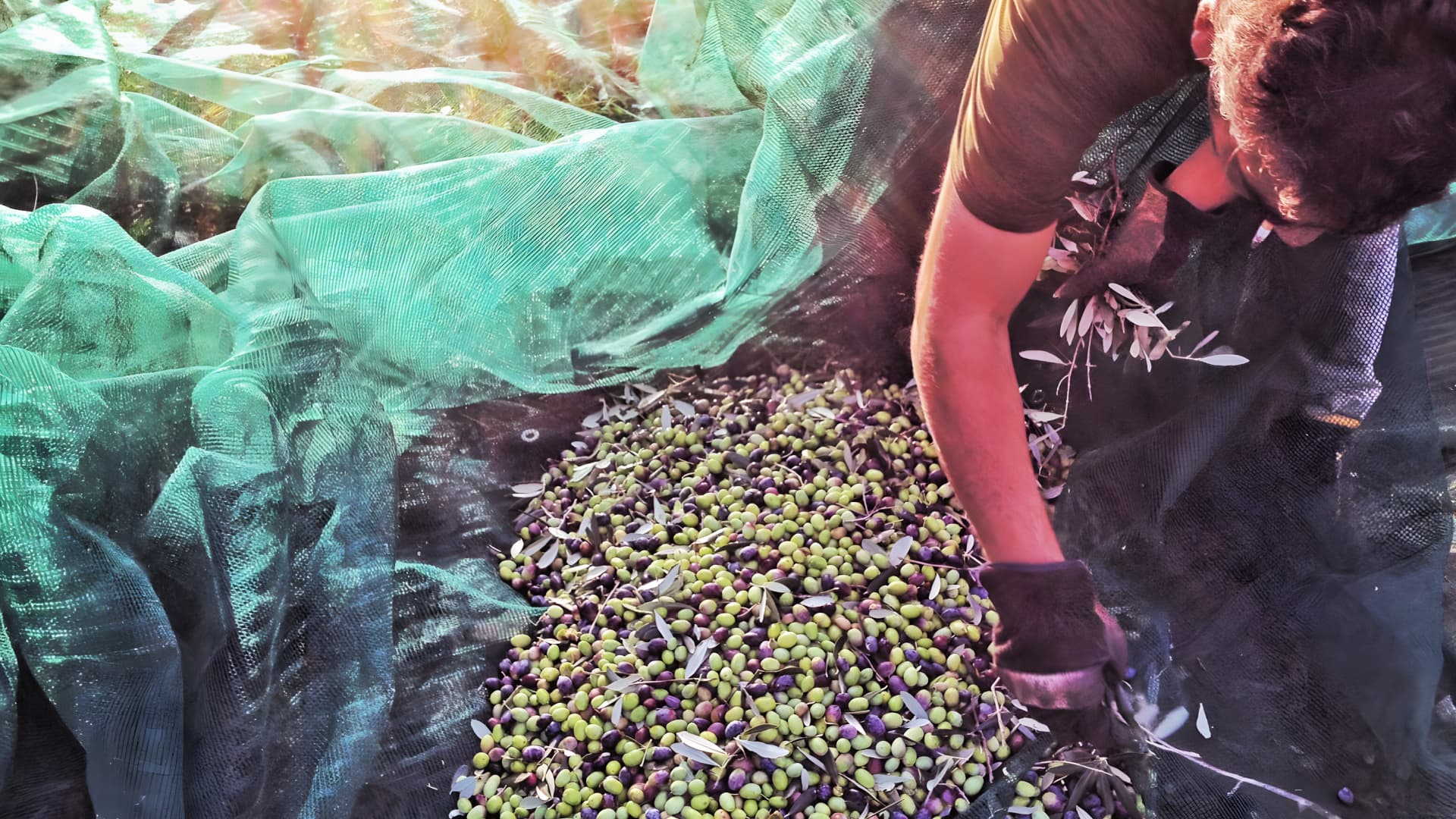
Domenico Buondioli gathers freshly harvested olives at his family’s groves in Puglia, where rising production costs and falling olive oil prices are squeezing growers’ margins.
Buondioli pointed to sharp increases in agricultural fuel, labor, equipment maintenance and packaging costs in recent years.
“Everything has gone up,” Buondioli said. “Bottles have gone up, boxes have gone up, labels have gone up, caps have gone up.” He cited a machinery component whose replacement cost had risen from €260 to €560.
These challenges do not affect all Italian producers equally. Frascarelli cautioned against treating Italian olive growing as a single production system.
He identified three broad categories, each facing different economic conditions: “heroic” olive groves maintained in challenging areas such as steep or terraced hillsides; traditional groves with limited mechanization; and modern, more productive operations that have invested in technology and efficiency.
“The prospect of not harvesting olives mainly concerns the second category, which is on the borderline between profitability and operating losses, especially at a time when labor is increasingly difficult to find,” he said, referring to traditional groves.
“The problem today may be less about prices than about costs, particularly labor costs,” Gabriele Scozzafava, an agricultural economist at the University of Florence, told Olive Oil Times. “Beyond the financial burden, there is also the difficulty of finding workers. Manual harvesting has become particularly challenging.”
In a recent study, Scozzafava and fellow researcher Tommaso Fantechi examined the long-term economic viability of traditional, intensive and super-high-density olive groves in a hilly area of Tuscany.
In the study, traditional groves were assumed to yield 400 kilograms of olive oil per hectare, with annual harvesting costs of €1,800 per hectare. Super-high-density orchards, by contrast, were assumed to yield 1,500 kilograms per hectare, with annual harvesting costs of €1,000 per hectare.
According to the researchers’ model, economic sustainability without support from the European Union’s Common Agricultural Policy (CAP) would require an olive oil price of €9.60 per kilogram for traditional groves in those Tuscan hills, compared with €6.97 for intensive and €4.13 for super-high-density systems.
Frascarelli said geographical indications and product differentiation can help growers command higher prices, but certification alone offers no guarantee.
“Differentiation is certainly the most promising path, provided consumers recognize it,” he said.
ISMEA data for October 2026 show that extra virgin olive oil certified under the Terra di Bari Protected Designation of Origin (PDO) was quoted at an average of €4.59 per kilogram. During the same month, Toscano Protected Geographical Indication (PGI) olive oil averaged €12 per kilogram, while Garda PDO olive oil reached €14.
Although a national average for Italian extra virgin olive oil is not directly comparable with a quotation for a single PDO, the €4.59 Terra di Bari PDO price was below ISMEA’s €4.75 national average for Italian extra virgin olive oil that month.
Frascarelli noted that abundant supply and weaker consumer recognition can keep certified oils close to standard market prices.
“The collective management of supply might allow producers to negotiate directly with industry and retailers and secure some price advantage, although not a substantial one,” Frascarelli added.
For Buondioli, whose family business produces organic extra virgin olive oil, convincing Italian consumers to pay more for quality remains a major challenge.
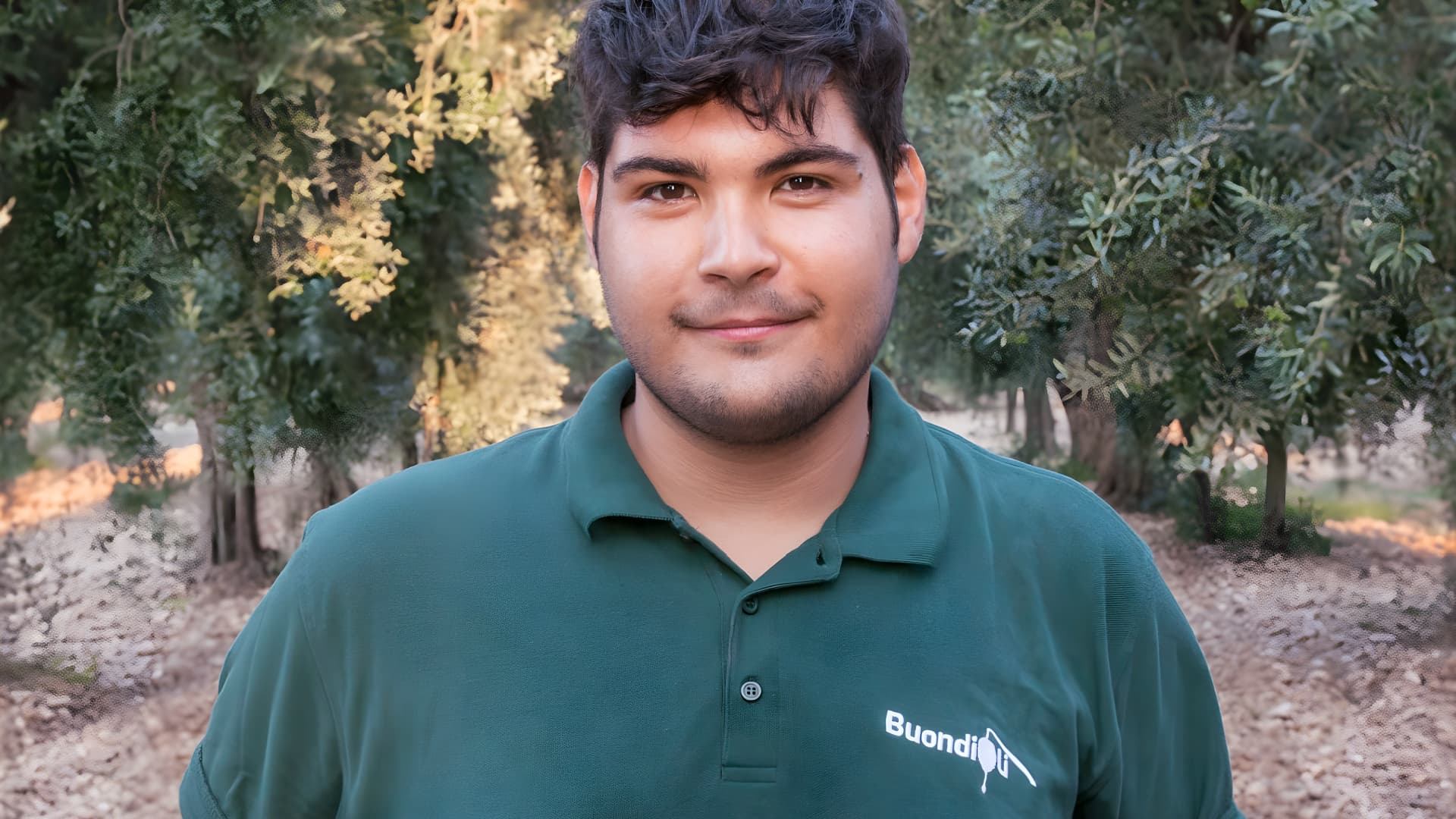
Domenico Buondioli, a fourth-generation olive grower in Puglia, says favorable harvest conditions have been overshadowed by falling olive oil prices and rising production costs.
“If you find an extra virgin olive oil on the supermarket shelf for €5 a liter, and another one for €12, you can imagine what happens,” he said.
“In Italy, everyone has an uncle or a cousin whose olive oil they trust,” Buondioli said. “Word of mouth counts for more than someone they don’t know trying to sell them a product.”
As a result, his family business has increasingly turned to international markets. “We produce quality, and essentially we export it,” he said.
Dora Desantis, president of the olive oil group at Assitol, the Italian association of the edible oil industry, said the industry faces its own pressures.
“When prices fall, the value of company stocks declines, and businesses may find themselves selling in a market that no longer recognizes their original purchase costs,” she told Olive Oil Times.
In her view, retailers’ demands for lower wholesale prices also complicate planning and investment.
“We are asking retailers to reflect on the continued use of extra virgin olive oil as a loss leader in below-cost promotions,” she said. “The risk is that an exceptionally low price becomes what consumers perceive as normal.”
The contribution of traditional and “heroic” olive groves extends well beyond olive oil production.
“We cannot expect farmers to bear the costs of providing benefits to society. The landscape is a public benefit, but the cost of maintaining traditional olive groves falls on the grower,” Scozzafava said.
Traditional groves can contribute to landscape preservation, biodiversity conservation and the protection of hillsides through dry-stone walls. These benefits, often described by economists as positive externalities, do not necessarily translate into higher prices for the olive oil produced.
The Scozzafava–Fantechi study estimated that, even with existing CAP support, traditional olive groves face an annual profitability gap of approximately €950 per hectare compared with intensive systems and €3,104 compared with super-high-density orchards.
These figures could help guide public support, but Scozzafava stressed that they do not measure the value of environmental and cultural benefits, which requires site-specific assessment.
He also warned that modernization alone cannot close the gap. Limited mechanization, an aging farming population and insufficient technical assistance remain significant obstacles, making targeted public intervention essential to preserving economically vulnerable olive landscapes.
For Desantis, preserving Italian olive growing also means protecting its diversity of cultivars and regional olive oil profiles. Modern, highly mechanized orchards, however, often rely on a limited range of varieties.
“If we want modernization to avoid a gradual loss of our varietal identity, we must invest in research,” she said. “In some areas we can significantly improve competitiveness through innovation, mechanization and better organization of production. In other areas, many interventions are much more difficult.”
For those territories, Desantis called for targeted public policies to preserve landscapes, biodiversity and cultural heritage whose value extends beyond olive oil production.
“We must have the courage to recognize that there is no single future for Italian olive growing,” she said.
The ColtivaItalia agricultural support law, given final parliamentary approval by the Senate on November 4, allocates €300 million to olive sector measures under the National Olive Plan for 2026–2030.
ISMEA has also introduced €40 million in zero-interest loans for olive mills facing liquidity pressures.
Both measures address structural investment or liquidity needs, but neither directly guarantees growers higher prices.
Desantis said Italy must decide what kind of olive growing it wants to develop, recognizing that different territories will require different solutions.
“Otherwise, we risk promising olive growers a level of remuneration that the market alone cannot guarantee,” she concluded.