Albania Producer Sees Global Potential in Indigenous Olive Varieties
In southwestern Albania, Musai Olive Oil is combining organic farming, traditional cultivation and modern milling technology to bring international attention to the country’s indigenous olive varieties.
A Gold Award at the 2026 NYIOOC World Olive Oil Competition confirmed the growing attention premium olive oil producers in Albania are receiving in international markets.
“It is an international recognition of our family’s many years of dedication and a confirmation that Albania is capable of producing olive oil at the highest global standards,” Bruna Musa and Kejda Musa, director and marketing manager of Musai Olive Oil, told Olive Oil Times.
The local environment has an extraordinary impact on its profile, as the climate, soil and proximity to the sea create a very distinctive territorial identity.
The family-owned farm, located near the village of Skrofotine in the Vlora region of southwestern Albania, transformed its long connection to olive cultivation into a professional olive oil business in 1995.
“Our family has always had a deep connection with olive trees and the land, but over the years we decided to transform this tradition into a long-term professional project,” the Musas said.
Within a few years, the company began reaching international customers while promoting the quality and identity of Albanian production.
The Musas said much of that quality comes from the unique position of their groves in the hills surrounding Vlora, near where the Adriatic and Ionian Seas meet.
“This territory offers an ideal microclimate for olive cultivation, with mild winters, abundant sunshine and mineral-rich soil,” the Musas said. “The clean sea breezes naturally ventilate the groves and reduce excessive humidity, promoting healthier fruit.”
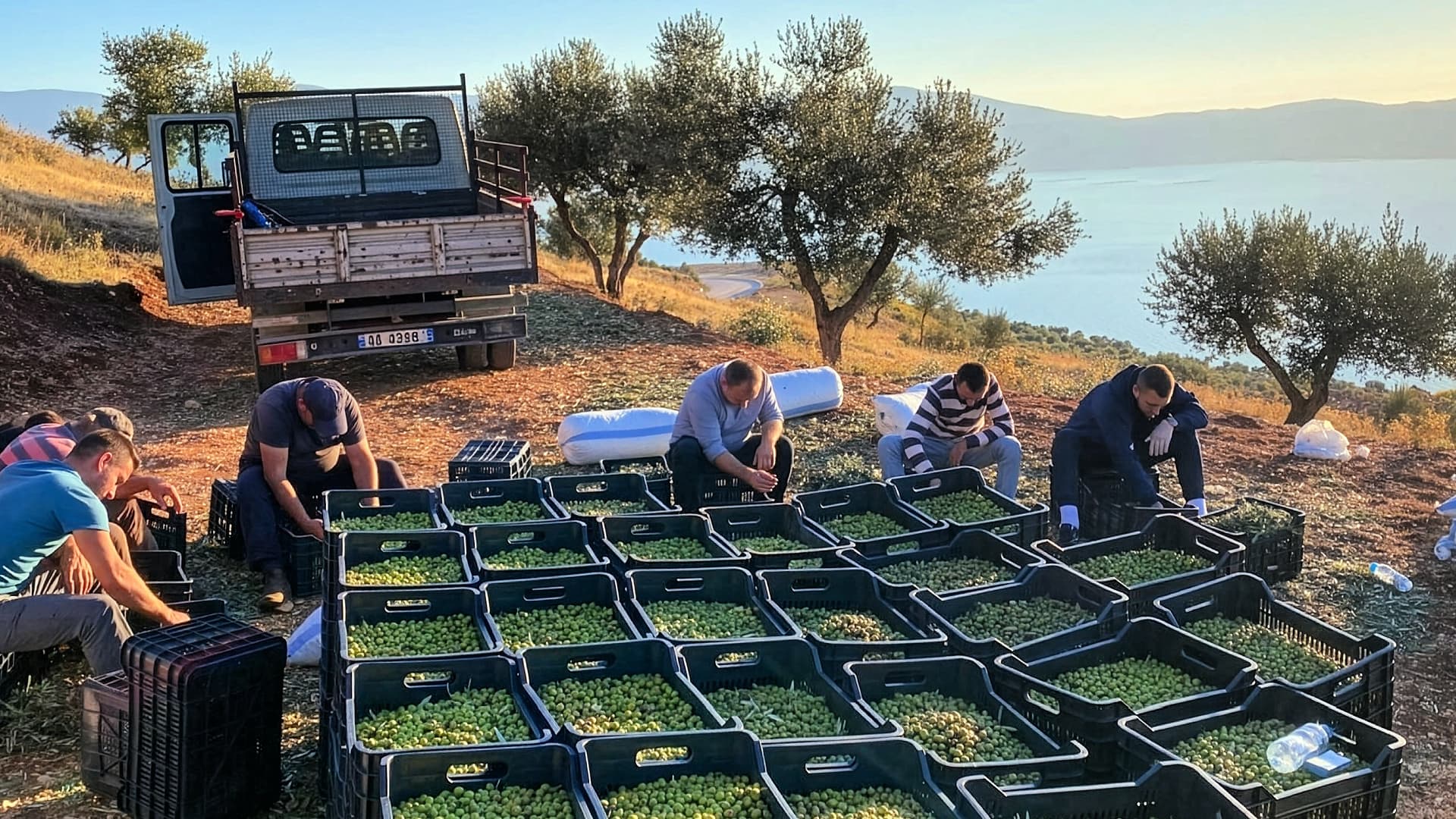
The Musai Olive Oil team sorts freshly harvested Kalinjot olives overlooking the Albanian Riviera near Vlora, where coastal breezes and rocky hillsides shape the character of the region’s olive oils.
The olive-growing landscape surrounding Vlora stretches across rocky coastal hills where olive cultivation has adapted for centuries to steep terrain and long, dry summers. Many traditional orchards are planted on limestone-based slopes with excellent natural drainage, conditions that favor slower fruit development and concentrated aromatic profiles.
In many areas, olive trees continue to grow on ancient terraces carved into the hillsides, reflecting a long agricultural tradition closely connected to the rugged coastal landscape of southern Albania.
“The proximity to the sea has a direct influence on the character of our olive oil,” the company said. “The local environment has an extraordinary impact on its profile, as the climate, soil and proximity to the sea create a very distinctive territorial identity.”
Musai’s production is certified organic. According to the NYIOOC analysis, the company’s oils are characterized by notes of artichoke, pepper, green almond and olive leaf.
The herbaceous and structured profile is closely tied to Kalinjot, a local cultivar that dominates the area. The indigenous Albanian variety, closely associated with the Vlora region, is receiving growing international attention for its qualities.
“Kalinjot is unique due to its high polyphenol content, natural stability and rich organoleptic profile,” the Musas said.
According to the company, promoting native cultivars is part of a broader effort to define a recognizable Albanian olive oil identity in export markets.
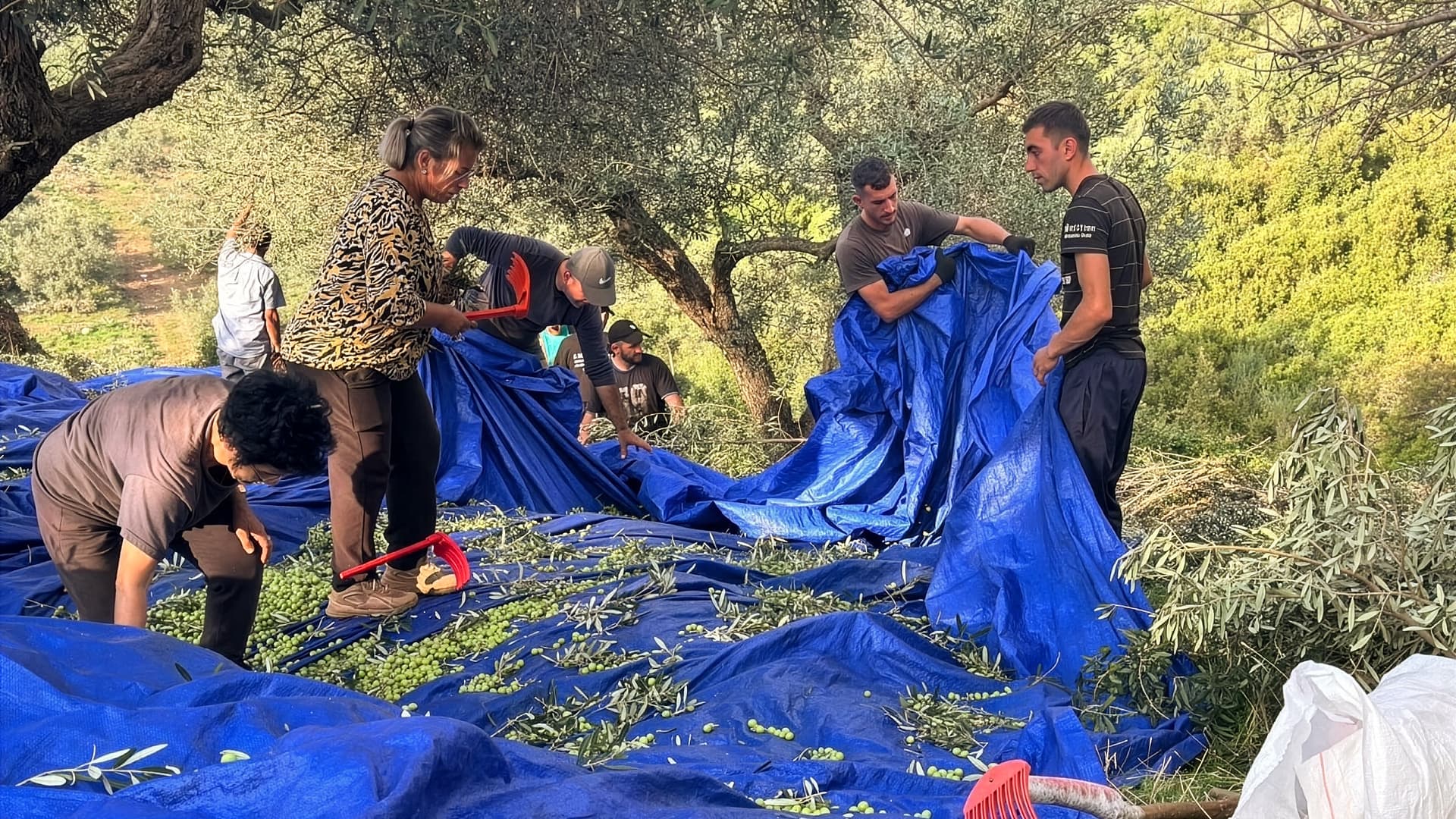
Workers gather olives beneath centuries-old trees in southwestern Albania, where traditional harvesting methods remain central to the production of high-quality extra virgin olive oil.
“Compared to more internationally recognized varieties, Kalinjot produces olive oils with a strong personality and an authentic Mediterranean identity,” the company said.
In the Vlora region, modern commercial olive oil production remains closely connected to centuries-old agricultural traditions.
Rather than focusing solely on maximizing production, the farm’s management strategy centers on maintaining healthy trees and preserving fruit quality through sustainable grove management.
“We follow sustainable, quality-oriented practices, including careful pruning, continuous soil monitoring, organic nutrition and regular tree health control,” the Musas said.
Year-round activities include preventive phytosanitary management guided by close monitoring of the groves and minimal-intervention principles.
“Our focus is on prevention and constant monitoring,” the Musas said. “We use the most natural methods possible and minimal intervention, while respecting local biodiversity.”
Most of the farm’s orchards rely primarily on natural rainfall, with controlled irrigation used only during particularly dry periods, a choice the company said is intended to preserve “the ecological balance of the territory.”
Newer plantations and updated agricultural systems have been added over time to improve consistency and long-term sustainability.
Musai’s harvest timing is guided by maturity analysis and the buildup of phenolic content.
“Great care during harvesting is essential because the quality of olive oil begins at the exact moment the olive is detached from the tree,” the Musas said.
The farm’s mill, equipped with Alfa Laval technology and operating at a capacity of 1,000 kilograms per hour, produces around 100 tons of oil each season.
Like producers across the Mediterranean, the company said climate change is becoming an increasingly significant factor in production planning.
Extreme temperatures, prolonged drought and unpredictable seasonal conditions affect both yields and the natural development cycle of olive trees, requiring ongoing adjustments to agronomic management.
“This requires more careful monitoring and continuous adaptation in agronomic management,” the company said.
Despite those pressures, Musai believes growing international interest in indigenous cultivars and lesser-known Mediterranean terroirs is creating new opportunities for Albanian producers in export markets.
“Albanian olive oil is gaining increasing international attention,” the Musas said. “Consumers and experts are discovering the potential of our indigenous varieties and the authenticity of Albanian terroir.”
For Musai, the NYIOOC Gold Award represents both validation of the company’s production model and an opportunity to accelerate that process as demand grows for distinctive, origin-driven olive oils with clear regional identities.
“I believe that in the coming years Albania will play a much more important role on the global map of premium olive oil,” the company said.
“Tradition is our identity, while innovation is the way we move forward,” the Musas added. “We preserve traditional methods and respect for the land, while continuously investing in modern technology, quality standards and new agronomic knowledge.”