Cypriot Producer Finds Success by Letting Nature Return to the Grove
A returning wild plant confirmed years of work restoring ecological balance on a Cyprus farm, where biodiversity, organic practices and careful production have helped earn international recognition.
Last year, a wild plant reappeared in the fields of To Pervoli Tou Theodorou, a family farm in Cyprus. Charis Christoforou recognized it immediately: it was something his mother used to cook when he was in primary school. He told her not to touch it and let it spread.
We want to show that high-quality olive oil can be produced while improving the environment.
Speaking to Olive Oil Times, Christoforou said the moment captured something the farm had been working toward for years: the slow return of ecological balance to land dotted with olive trees. According to the producer, that approach has helped the company gain international recognition despite its modest size, including a Silver Award at its first appearance at the 2026 NYIOOC World Olive Oil Competition.
Christoforou’s father established the operation in the 1980s. After returning to Cyprus from the United Kingdom, Theodoros Christoforou began planting olive trees in rows.
“That was uncommon at the time. Many local groves still consisted of scattered olive trees mixed with carob trees and managed using more traditional methods,” Christoforou said. According to him, his father believed irrigation and a more structured layout would improve productivity and long-term management.
“We knew we were producing good olive oil, but we lacked the tools to objectively measure and demonstrate its quality,” he said.
After taking over the farm in 2015, Christoforou moved in a different direction, converting the groves to organic farming and introducing aromatic herbs and other crops alongside the trees.
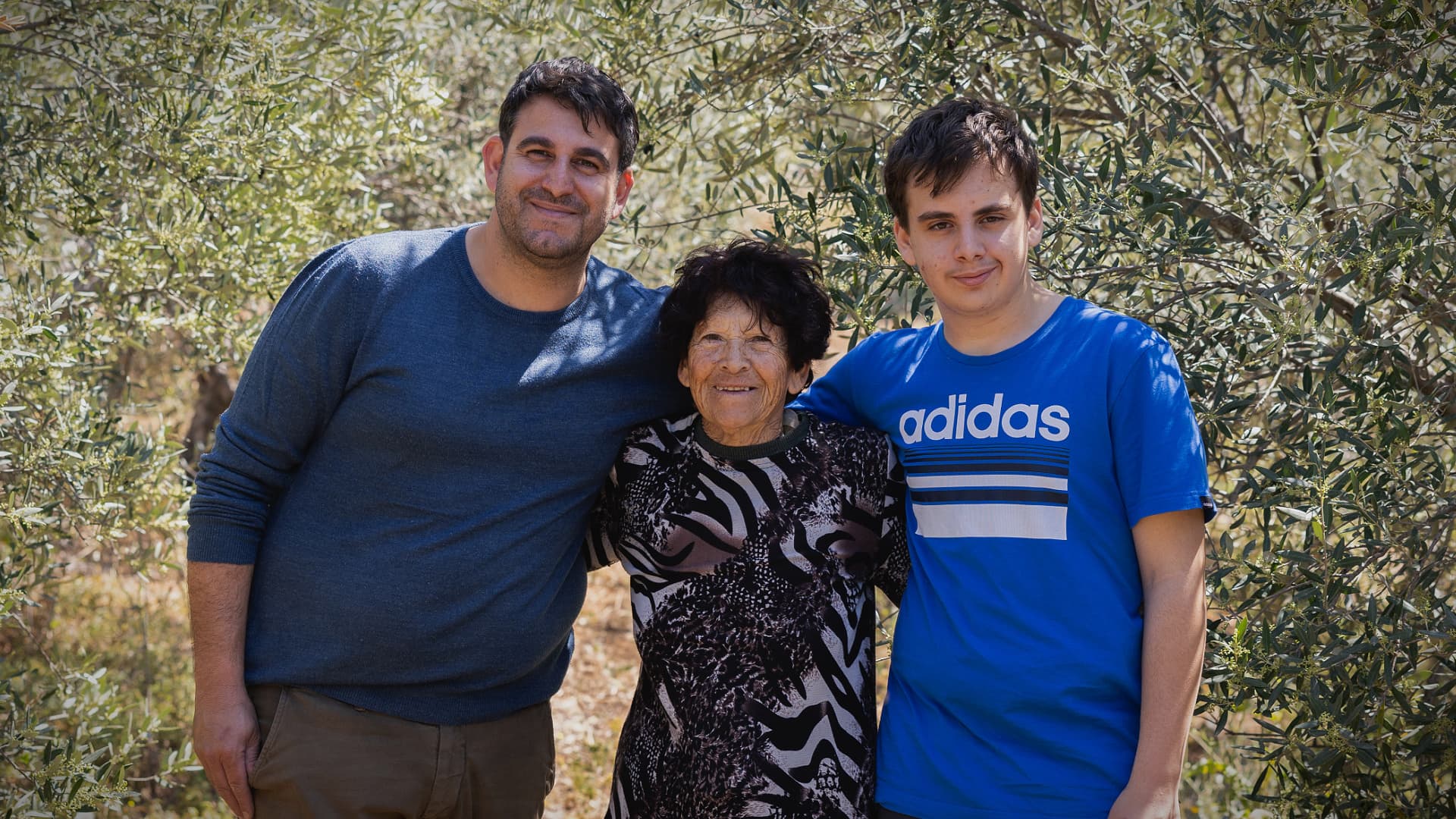
Three generations of the Christoforou family — Charis, his mother Maria and his son Angelos — stand among the olive trees that have sustained the family farm in Cyprus for decades.
He said his training as a mechanical engineer shaped the way he approached the transition.
“Engineering teaches you to look at a problem scientifically and identify all the forces involved,” he said. “Instead of applying a chemical treatment, we try to understand what is causing the problem and what natural solution can restore balance.”
Instead of burning pruning remnants, they were chipped and returned to the soil. Tillage stopped. Beehives were added, followed by owl nest boxes. Working with a university researcher, Christoforou began measuring soil nutrients and biological activity.
Over several years, soil organic matter doubled from 1.9 percent to four percent. For Christoforou, the increase demonstrated that years of reducing disturbance and returning organic material to the soil were producing measurable results.
The farm also installed smart irrigation, which quickly ran into an unexpected problem: mice were chewing through the water lines, drawn to the only reliable source of moisture during Cyprus’s hot, dry summers. The solution was simple. Wildlife water stations were installed, and the damage stopped.
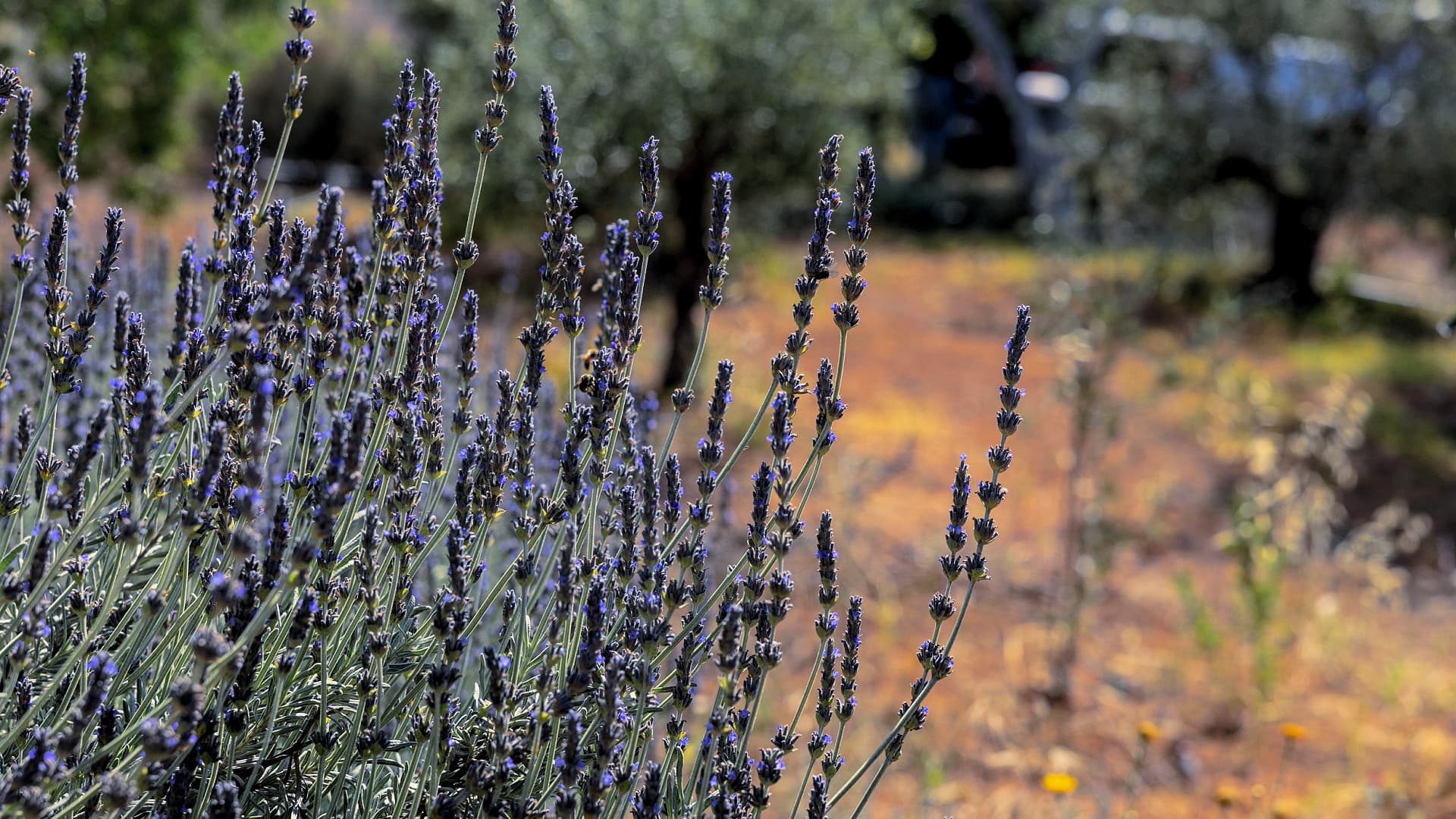
Lavender and other aromatic herbs grow between the olive trees at To Pervoli Tou Theodorou, where crop diversification has improved farm biodiversity while creating additional sources of income.
Other changes were driven as much by economics as by ecology.
“We also had to cope with an income problem,” Christoforou recalled. “Olive oil brought income only once a year. We needed to improve profitability.”
The herbs, now numbering more than 20 species, along with three commercially sold iced teas, addressed that challenge and gradually changed the farm’s ecology in ways he had not anticipated.
A doctoral researcher from the University of Cyprus found large insect populations concentrated almost entirely on the aromatic plants, leaving the olive trees largely undisturbed.
“This study helped us understand that biodiversity creates balances that are not always obvious,” Christoforou said. “We discovered benefits that we had never planned for.”
Another example of the farm’s experimental approach is its use of zeolite, a naturally occurring mineral sprayed directly on the trees. According to Christoforou, it reduces insect pressure while improving moisture retention in leaves and fruit, increasing their resistance to heat stress.
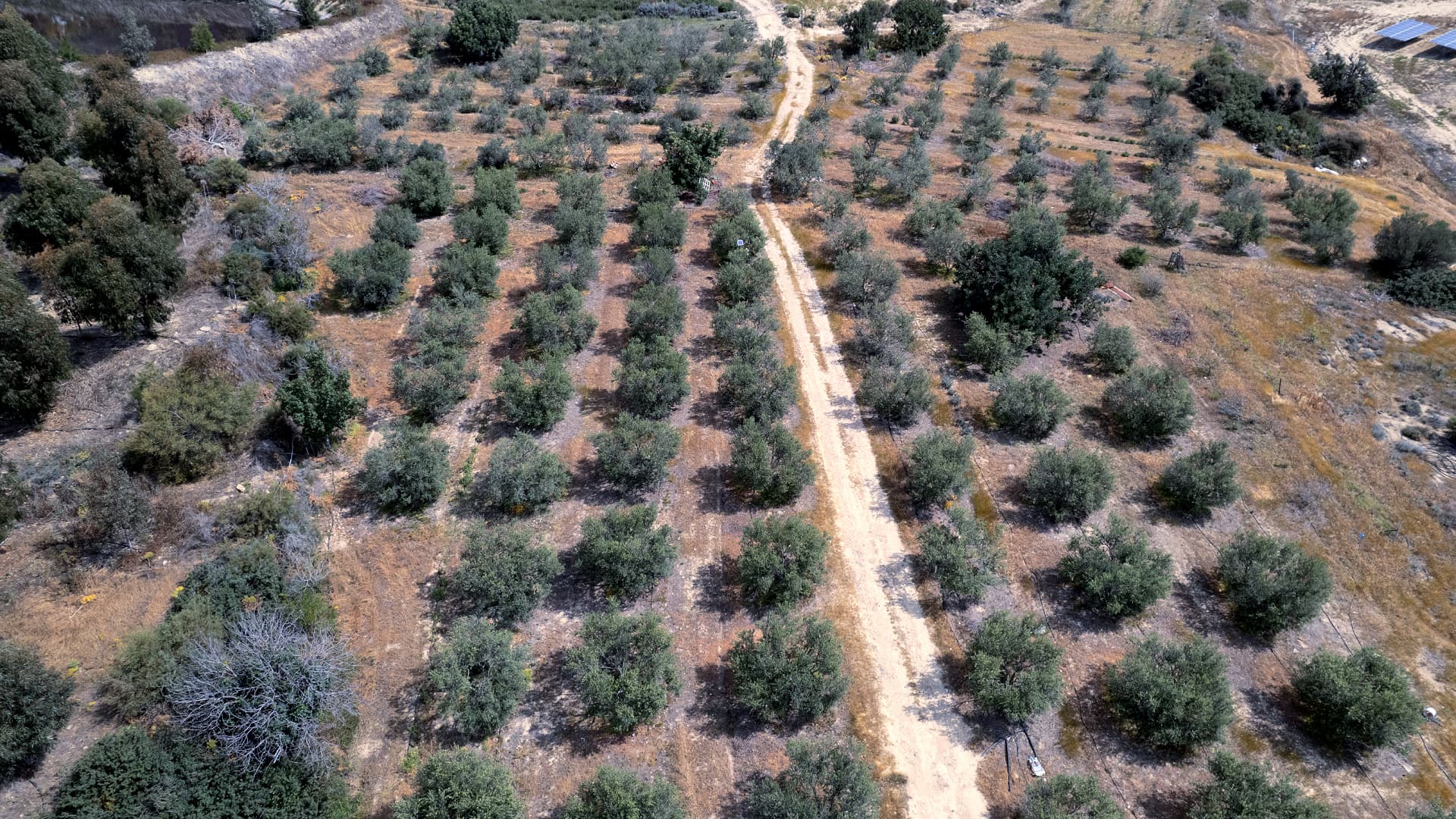
An aerial view of To Pervoli Tou Theodorou shows the family’s olive groves in Cyprus, where organic cultivation, biodiversity initiatives and careful water management are central to the farm’s long-term strategy.
“With the exception of this year, the previous four years were extremely hot,” Christoforou said. “We had very short winters followed by long periods with temperatures reaching 40 to 45 degrees Celsius.”
“It felt as if we had only a little bit of winter and then summer,” he added.
Compounding the challenge, air masses carrying dust from North Africa and the Middle East can reach the island during olive flowering, burning open blossoms and reducing fruit set.
“We have seen significant losses because of that,” he said.
To mitigate the effects of extreme summer temperatures linked to climate change, the farm partnered with growers in the mountains, where olives ripen under cooler conditions that help preserve the sensory and chemical characteristics associated with premium oil.
“We pay a premium for those olives,” Christoforou said. “This gives farmers an incentive to improve quality and adopt more sustainable practices.”
To Pervoli manages about 1,000 trees and collaborates with three additional organic growers. Although the company does not own its own mill, Christoforou personally supervises production of its premium oils, monitoring temperatures, processing times and filtration to maintain high quality standards.
He believes that commitment to quality has helped the company begin exporting to Germany and Lithuania. Following its success at the NYIOOC, he expects international expansion to continue.
“We want to show that high-quality olive oil can be produced while improving the environment at the same time,” he said. “If we can demonstrate that these practices work, more farmers may adopt them. That would benefit olive farming, biodiversity and the future of agriculture in Cyprus.”