Orthodox Monastery Earns Three Gold Awards at NYIOOC for Bosnia and Herzegovina
A Serbian Orthodox monastery in southern Herzegovina won three Gold Awards at the NYIOOC, adding to Bosnia and Herzegovina’s growing list of recognitions at the world’s largest olive oil quality contest.
A Serbian Orthodox monastery in southern Herzegovina has won three Gold Awards at the NYIOOC World Olive Oil Competition, adding to Bosnia and Herzegovina’s growing record at the annual quality contest.
The awards went to oils produced by Manastir Tvrdoš, a 15th-century monastery near Trebinje that has long been known for wine production and its Roman-era cellars, a popular destination for visitors interested in the region’s food and heritage.
“Last year we won one gold, and this year three,” said Miljan Grgić Porfirije, a hieromonk at the monastery. “This is another confirmation of our commitment to the olive and to producing extra virgin olive oils.”
In recent years, the monastery’s groves around the site have drawn growing attention, reflecting the wider expansion of olive farming in Herzegovina.
Porfirije said the monastery currently has 1,700 trees, including local Herzegovinian cultivars and Greek and Italian varieties.
One of the Gold Awards went to Manastir Tvrdoš Chalkidiki, a monovarietal oil made from the Greek Chalkidiki cultivar. Porfirije said the olives were hand-harvested and pressed promptly, producing a green oil with pronounced fruitiness and a high polyphenol content.
A second Gold Award went to Monastic blend, also produced from hand-picked olives and milled according to best practices to preserve freshness and balance.
The third Gold Award was earned by Manastir Tvrdoš Kalamata, produced from the well-known Greek table olive variety. Porfirije said the orchard’s soils and climate appear well suited to the cultivar, and that the resulting oil contains more than 400 milligrams of polyphenols per liter, a level often associated with heightened oxidative stability and increased interest from health-conscious consumers.
Porfirije added that the monastery is expanding its olive operation and building a new mill. Once completed, it will also offer milling services to other growers in the Trebinje municipality, where producers cultivate about 8,000 olive trees.
Across Herzegovina, the sector has accelerated in recent seasons, supported by institutional programs and producer-led cooperation. Marko Ivanković, director of the Agromediterranean Institute in Mostar, said 15,000 new trees were planted last season on about 150 hectares.
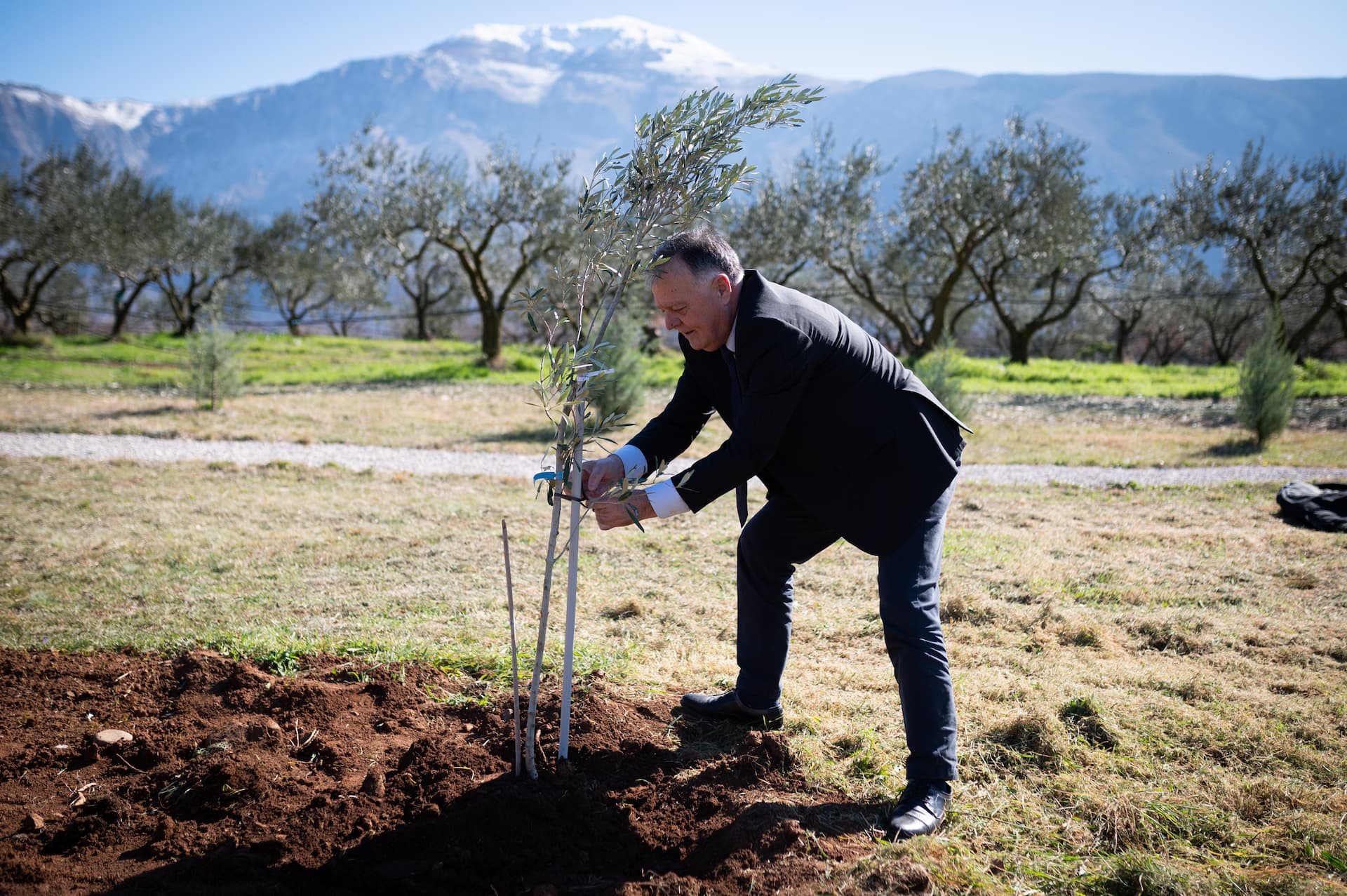
Marko Ivanković, director of the Agromediterranean Institute
He pointed to the role of the Herzegovinian Association of Olive Growers and Millers (HUUM), founded five years ago, in organizing producers and advancing quality and origin initiatives.
With support from the EU4Agri project, HUUM helped secure Protected Designation of Origin status for Herzegovina’s extra virgin olive oil at the national level, Ivanković said. He added that producers expect the PDO process to progress to the European Union level.
HUUM, which includes growers from different faiths and ethnic backgrounds, also became the owner of a Protected Designation of Origin (PDO) in 2024, branded Zlatne kapi Hercegovine, to strengthen market recognition for regional oils.
Ivanković said Bosnia and Herzegovina has also joined the International Olive Council (IOC), based in Madrid, and that a concept for “olive oil routes” in Herzegovina has been prepared and forwarded to interested institutions as part of a broader push to develop tourism linked to olive culture.
Porfirije said the NYIOOC results reflect collective progress. “This is our shared success,” he said, noting that he also serves as HUUM’s vice president.
Herzegovinian producers won 11 awards at last year’s NYIOOC and are hoping to surpass that total as more results are announced this season.