Italian Tailor Stitches Bespoke Revival Into Abandoned Olive Groves
A bespoke tailor from Italy’s Molise region has found an unlikely kinship between fine tailoring and extra virgin olive oil — both built on craft, natural materials, and a refusal to cut corners.
A young tailor with deep roots in central Italy has found an unlikely bridge between artisanal craftsmanship and the ancient world of the olive grove — and turned that connection into a mission.
Mario Iannetta, a bespoke tailor based in Bojano in Italy’s Molise region, launched the Verde Su Misura (Bespoke Green) project to fund the recovery of abandoned olive groves by selling upcycled work jackets. He has since expanded the initiative to produce extra virgin olive oil and co-led olive oil and fabric-pairing sessions — fostering dialogue between two worlds that, at first glance, seem far apart.
I see how craftsmanship, local tradition, and sustainability define both tailoring and olive growing.
“My very first teacher was my great-grandmother, Vincenza, who was a seamstress in the nearby village of Roccamandolfi,” Iannetta said, welcoming guests to his atelier. “I remember the scent of cloth as I walked into her workshop. She showed me how to thread the needle and use the treadle sewing machine. She later passed it on to me, and I treasure it as one of the most precious things I own.”
His path to tailoring was not straightforward. He spent school summers working in a shirt factory, then encountered Sebastiano di Rienzo, founder of the SEBA Museum of Tailoring in Capracotta — a village with a storied artisanal heritage. The meeting proved decisive.
“Meeting him made me realize how distinct my region’s reputation is in the sector, and that strengthened my resolve to become a tailor, even though my family did not approve at first,” he said. “They did not think it was a reliable job. So I initially began studying economics at university, but in time I managed to convince them.”
Iannetta trained at the Accademia Nazionale dei Sartori and completed his apprenticeship under Gaetano Aloisio, president of the World Federation of Master Tailors. After work experience in Emilia-Romagna and Naples, he won the prestigious Forbici d’Oro (Golden Scissors) Award in 2018.
He was later offered a position at a world-renowned fashion house, but chose to return home and open his own company instead. Today, he travels worldwide to meet clients while remaining rooted in Molise.
Iannetta has also embraced a broader social mission, organizing training courses accessible to unemployed people of all ages. It was this spirit of giving back that gave rise to his olive grove recovery project.
“A few years ago, speaking with passionate producers from the area, I realized how aware consumers have become,” he said. “Extra virgin olive oil is increasingly appreciated — there is growing attention to its quality, origin, and production sustainability. I immediately saw a parallel with what I do: a high-quality product that may cost a little more but gives back much more, carrying values that elevate the purely hedonistic dimension.”
The parallel runs deep. Iannetta noted that a good suit, like a well-made oil, demands meticulous care — at least a hundred hours of work and exclusively natural materials. “A good suit should feel like home,” he said.
Sustainability stitched in
Traditional tailoring, Iannetta explained, is rooted in a deeply sustainable approach. Natural fibers — cotton, wool, silk — make garments breathable, reducing perspiration and the need for frequent washing. That, in turn, means less water use, fewer chemical cleaning agents, and lower costs over time.
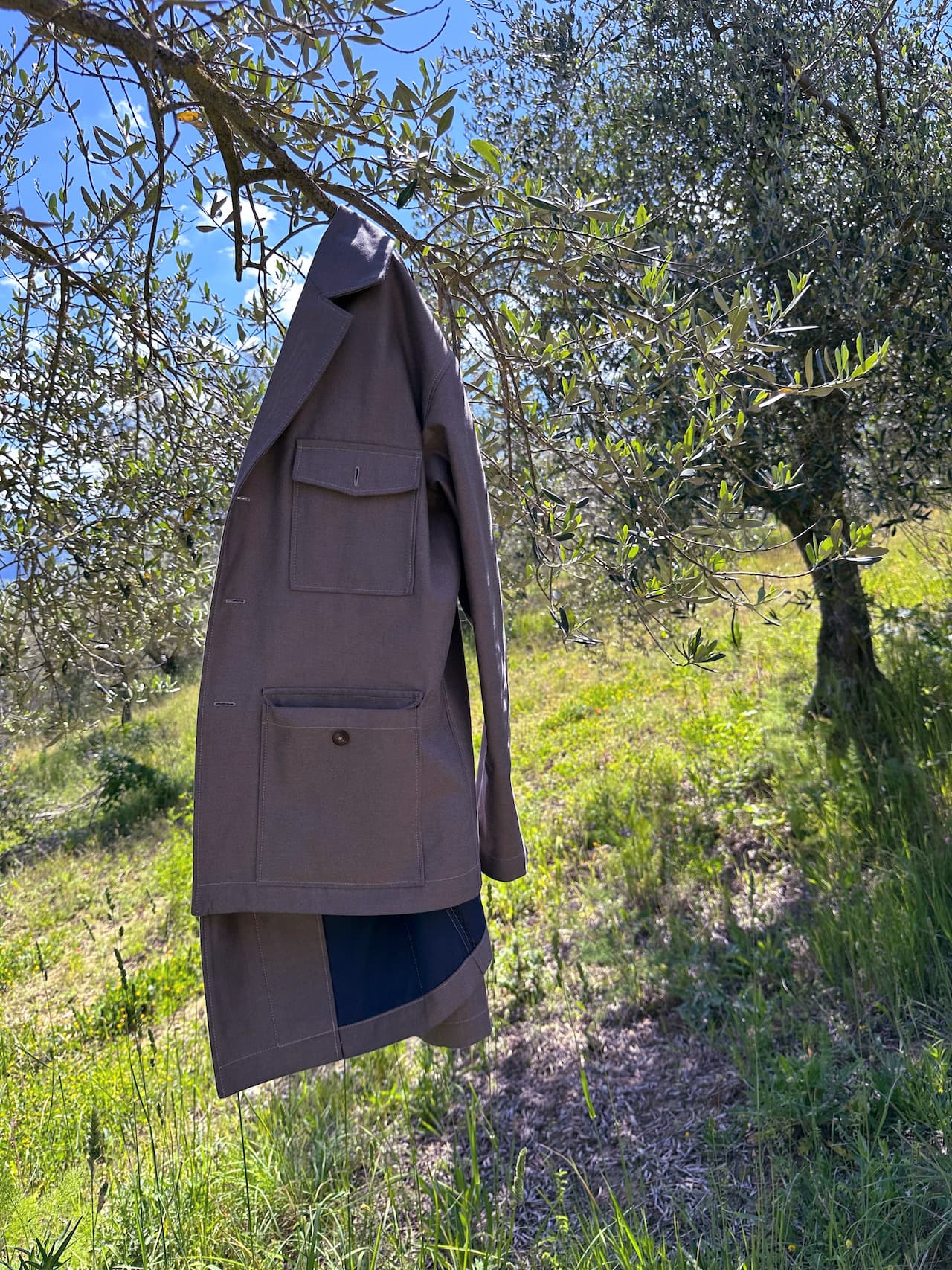
For his Verde su misura project, Mario Iannetta reinterpreted an early-1900s work jacket, upcycling it with recycled denim. (Photo by Federica Terriaca)
It is also a zero-waste process. Leftover fabric pieces are reused for the inner construction of outerwear. “I believe there is always an ethical foundation behind real quality,” Iannetta said. “Care and sustainability are not a trend but principles that underpin a well-made garment. The same values are at the heart of the Bespoke Green project.”
The initiative began when an abandoned olive grove of around sixty trees near his atelier caught his attention. He reached out to the absentee owner and offered to take care of the trees.
To fund the mission, he reinterpreted a work jacket from the early 1900s — originally made from Massawa blue cotton — into a lightweight, gender-neutral style crafted from recycled denim and vintage fabrics. All proceeds go directly to the project, from restoration and harvest to oil production. Each buyer also receives a small bottle of oil from the rejuvenated groves.
Oil meets cloth
As the project developed, Iannetta connected with Simona Cognoli, founder of Oleonauta, who recognized a deeper resonance between premium oils and fine textiles.
“When Mario showed me the fabrics he uses, I immediately sensed a connection in the tactile dimension between high-quality oils and fine cloth,” Cognoli said. “I thought pairing them could become a stimulating sensory experience.”
Together, they designed an event in which participants — experts, enthusiasts, and newcomers alike — were invited to taste oils and touch fabrics, pairing each oil with the textile that most closely evoked its sensation.
“Despite the attendees’ different backgrounds, there was unanimous agreement on the pairings,” Cognoli noted. A Sicilian oil, predominantly Tonda Iblea — elegant, vibrant with notes of grass, tomato, and aromatic herbs — was paired with a rough, fresh Irish linen. A simulated counterfeit product, blended with seed oil, was matched with a poor-quality wool-polyester mix.
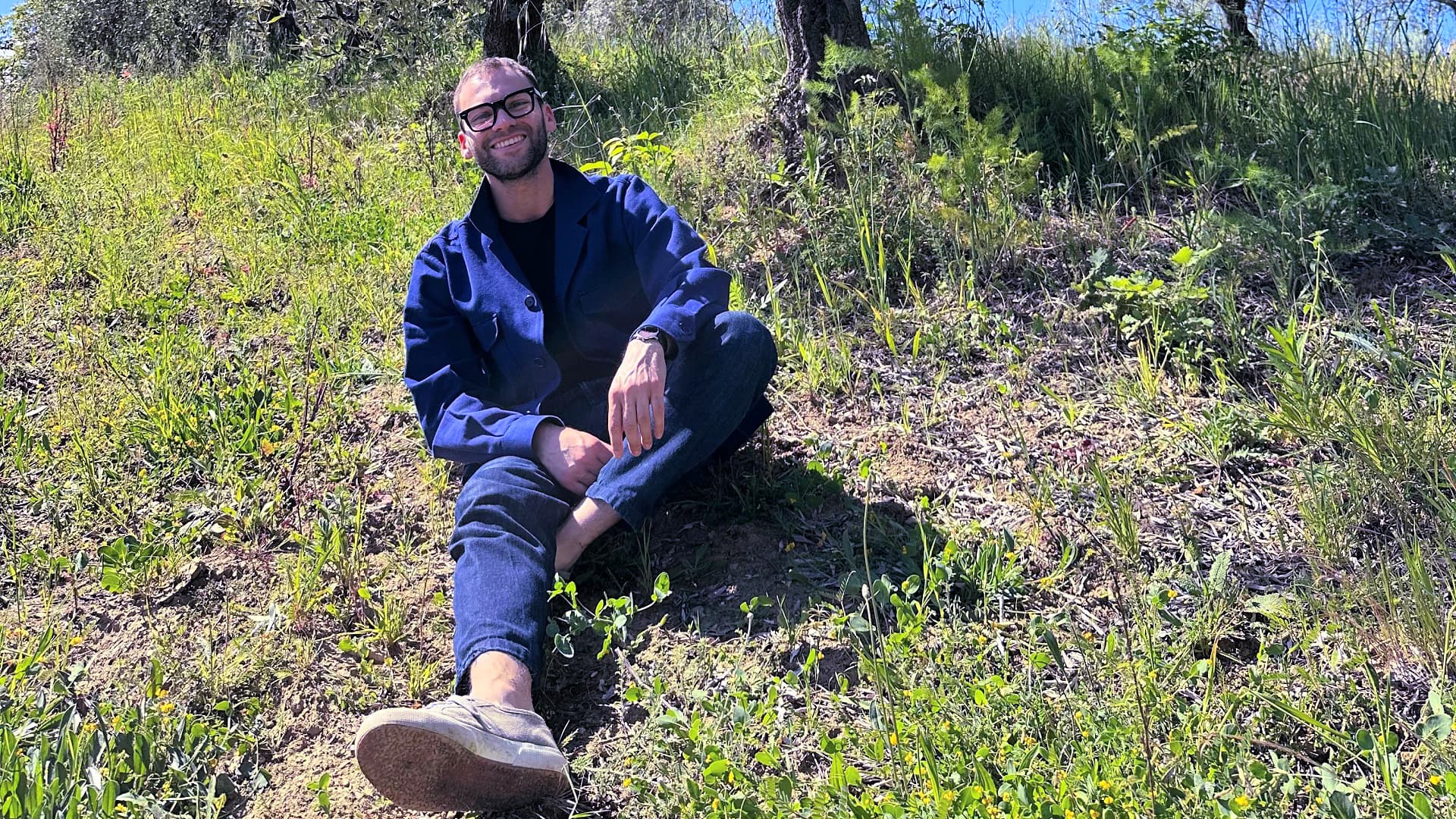
With his Verde su Misura project, Mario Iannetta recovered an olive grove near his atelier in Bojano, in the province of Campobasso, in Molise. (Photo by Federica Terriaca)
A Gentile di Mafalda monovarietal from Molise, expressing notes of green tomato and aromatic herbs with a lingering pungency, was matched with a full-bodied Shantung silk. The final pairing featured a bold Cima di Mola from Puglia, matched with a Super 180’s wool — very fine, soft, and warming.
“Now that I have approached the olive oil world, I see how craftsmanship, local tradition, and sustainability define both tailoring and olive growing,” Iannetta said. “I also hope this may inspire young people like me who are returning to reconnect with their land, to care for their orchards, and to cultivate them with love.”