How a Greek Producer Became the World’s Most-Awarded Olive Oil Brand
Konstantinos Papadopoulos built The Master Miller into the world’s top-ranked olive oil producer, anchored in tradition, certification and a record-breaking run at the NYIOOC.
From his base in Ilia, in Greece’s western Peloponnese and just a short drive from Ancient Olympia, Konstantinos Papadopoulos sometimes pauses to take in the view across his olive groves.
Papadopoulos is the founder and chief executive of The Master Miller, which tops the Olive Oil Times World Rankings with 54 NYIOOC awards and a perfect consistency score.
I wanted to fully understand why an olive oil becomes truly exceptional and how this quality can be repeated consistently.
The producer also holds the top spot in the Northern Hemisphere and in Greece specifically, reflecting the consistency of its results.
“We nurture more than 130,000 olive trees here on our land,” Papadopoulos told Olive Oil Times.
“The region has a unique microclimate, olive varieties with character, and people who carry farming knowledge passed down through generations.”
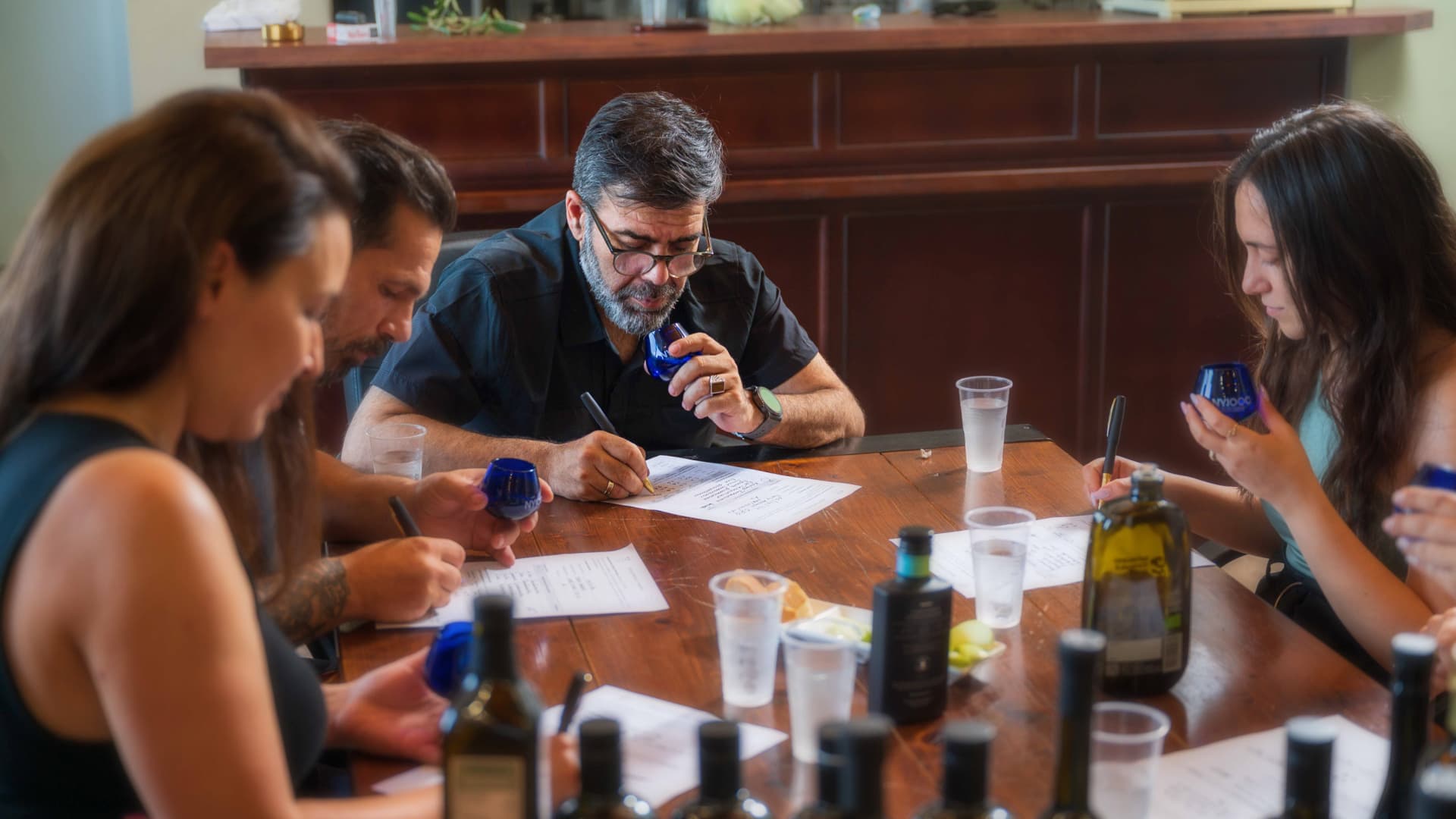
Papadopoulos and his associates assess olive oils during a tasting panel, applying the standards that have helped make The Master Miller one of the world’s most awarded producers.
The Master Miller first earned recognition at the NYIOOC World Olive Oil Competition in 2015 and has continued winning awards there every year since.
At this year’s 13th edition of the competition, ten extra virgin olive oil brands crafted by The Master Miller each earned a Gold Award, setting a new record for the most awards won in a single year by one producer.
“When we started our business, I questioned myself if we can create an olive oil that can stand next to the best in the world,” Papadopoulos said. “The awards we have won are proof that the path we follow has substance.”
The Master Miller is the evolution of Papadopoulos Olive Oil, founded by Giorgos Papadopoulos in 1989.
“My father had the vision to create a modern olive mill that would respect the olives, the producers and the whole process of olive oil production,” Papadopoulos said.
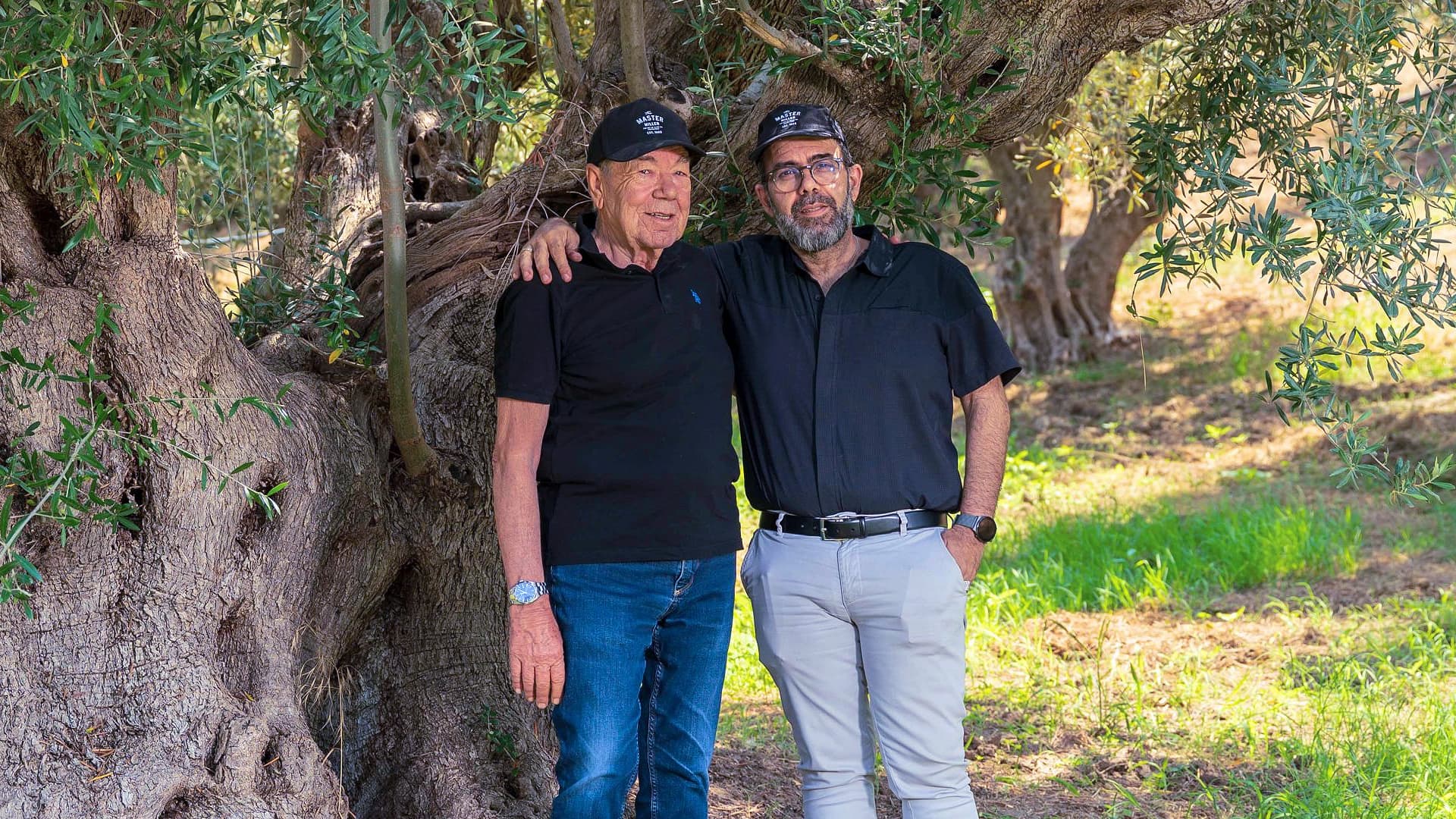
The Master Miller founder, Konstantinos Papadopoulos and his father, Giorgos, whose decades of work in olive oil production paved the way for the company’s international success.
As he grew more involved in the family business, Papadopoulos came to believe that Greek olive oil held enormous, largely untapped potential in quality.
He attributed the gap to the sector’s structure, which he said often kept consumers from recognizing and appreciating quality.
He set out to study how high-quality olive oil is produced, immersing himself in the science while modernizing the family mill.
“I wanted to fully understand why an olive oil becomes truly exceptional and how this quality can be repeated consistently,” Papadopoulos said. “This is when the journey that brought us to The Master Miller began.”
Over the years, he built a comprehensive production and supply model, called the Master Miller Ecosystem, in partnership with other olive farmers and millers in the area.
In addition to the participating millers, the ecosystem includes five subsidiaries of the parent company, each with a distinct role.
“Our ecosystem is a fully integrated model that organizes the olive oil value chain from the field to the final consumer,” Papadopoulos said.
“The Master Innovation Center analyzes data from cultivation and milling, the Master Fields carries out cultivation and revives groves at risk of abandonment, the FarmLab houses our agronomists, the Master Growers is the group of participating producers, and the Master Cargo manages the supply chain.”
Papadopoulos said the goal of the network is to educate a new generation of Greek olive oil professionals, from young growers and millers to agronomists, scientists and enthusiasts.
“We want to cultivate a new mindset and a new culture around olive oil,” he said.
Every olive oil produced by The Master Miller passes through a two-level certification process covering cultivation and production.
Cultivation certification verifies the growers and groves participating in the network, while production certification evaluates milling, storage and the resulting batch.
“Only the oils that pass both levels can qualify for our premium and ultra-premium lines, with full traceability from the field to the bottle,” Papadopoulos said.
The company’s main cultivation and production operations are based in the Ilia region of western Peloponnese.
Under an agreement with the Hellenic Ministry of Culture, The Master Miller also harvests olives from trees at iconic Greek archaeological sites, including Ancient Olympia, the Acropolis in Athens, Ancient Delphi and Ancient Messene.
Papadopoulos said the small quantities of extra virgin olive oil produced each year from these sites carry deep cultural value and symbolism that goes beyond the bottle.
“We treat these oils with absolute respect, with separate milling, quality control, traceability and storytelling that honor their origin,” he said. “These olive oils can become ambassadors of Greece.”
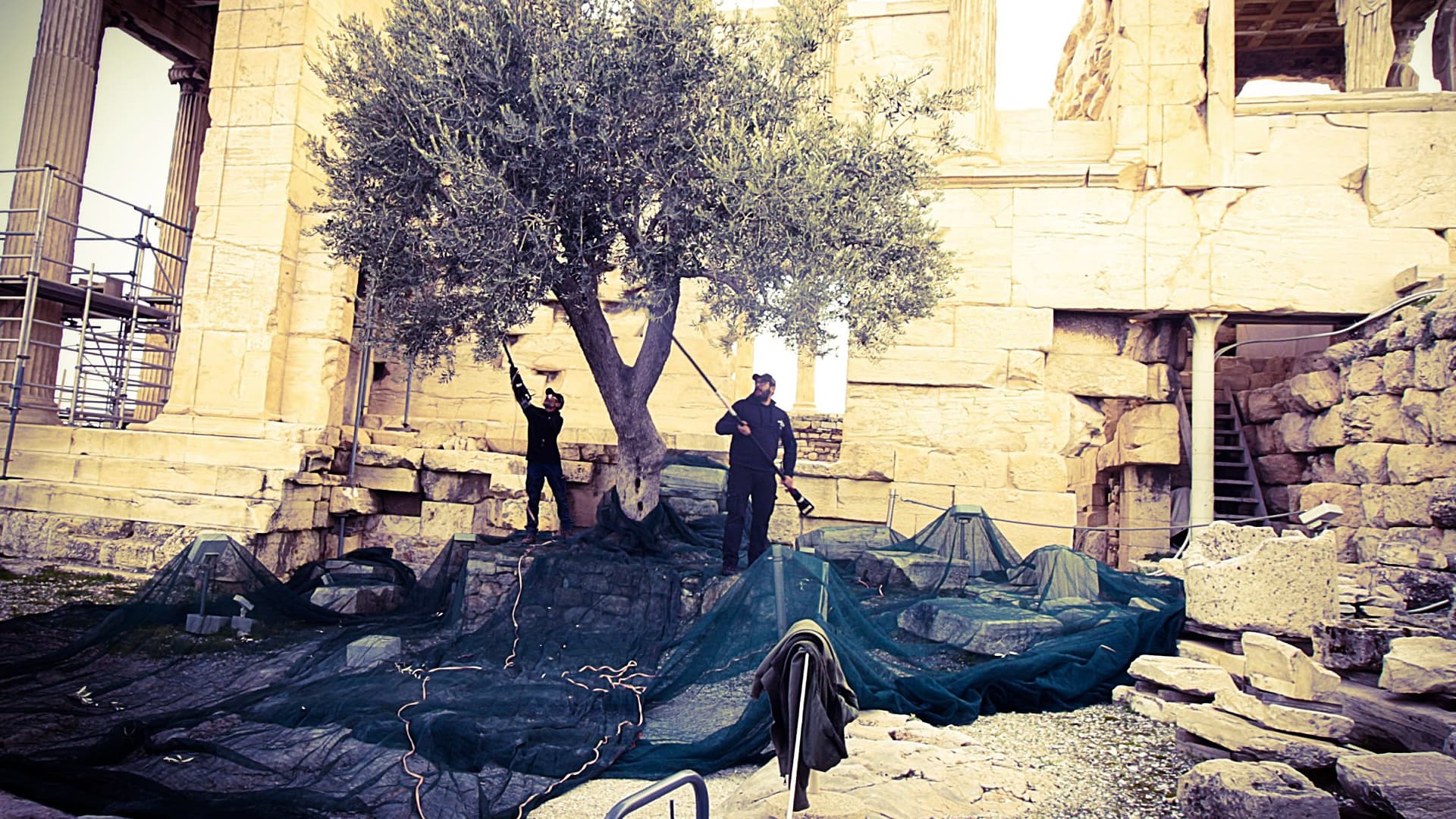
Olive harvesting at the Acropolis in Athens, one of several iconic archaeological sites whose trees contribute to The Master Miller’s heritage olive oil program.
From one successful year at the NYIOOC to the next, Papadopoulos described it all as a test of how his olive oil would fare on the international stage.
“I used to take sneak peeks at the New York competition and wondered if there was any chance that our oil could ever stand there,” he said. “And in our first participation in 2015, we won a gold award. It was a huge shock, in the best possible way.”
He said the consistency the company has shown over more than a decade of competition success confirms it stands on solid ground.
“The real value is not the first award,” he said. “The real value is the continuity. To be awarded again and again means there is a system that works.”
“For us, the NYIOOC became the point of reference and the tool of trust for business partners, growers, consumers and markets,” he added.
Papadopoulos credited two experts with helping him navigate the complexities of producing high-quality olive oil.
“I am grateful to Vassilis Frantzolas and Manolis Salivaras, both expert olive oil tasters and advisors,” he said. “They taught me to treat olive oil not simply as a product, but as the result of knowledge, technique, detail, respect and continuous pursuit of quality.”
Looking ahead, Papadopoulos said the next step for The Master Miller is to scale up operations by supporting more growers and millers and using the ecosystem to spread proven practices to sustain high quality.
“I envision that The Master Miller becomes the platform that helps change the way Greece produces, certifies and exports olive oil,” he said.
He added that significant work remains to change long-standing conditions he believes hold back the Greek olive sector.
According to Papadopoulos, the sector remains fragmented, with many growers working independently and mills often operating without common quality standards.
He said Greece needs a new national strategy to align growers, millers, scientists and the state around building an international position for Greek olive oil, with its own identity, brands and added value.
“Markets demand proof: origin, quality, consistency, certification, sustainability, technology and reliability,” he said.
“Olive oil has a soul,” he added. “When you give it knowledge, care, respect and vision, it can express something far greater than its taste: a place, a history and a future.”
“Our goal at The Master Miller is not to simply sell more bottles of olive oil,” Papadopoulos concluded. “We want to contribute to a new standard for Greek olive oil that is organized, certified, technologically supported, culturally meaningful and international.”