



Mediterranean Diet withextra virgin olive oil Outperforms Low-Fat Diet for Weight Loss
New research shows a high-fat Mediterranean diet with extra virgin olive oil increases weight loss in people with chronic health conditions.

Despite the common belief that fat is the enemy in the human diet, recent research has shown that a high-fat Mediterranean diet rich in extra virgin olive oil can actually outperform a low-fat diet for weight loss in individuals with chronic health conditions. A study published in The Lancet analyzed 7,447 participants and found that increasing fat intake through healthy vegetable fats did not lead to weight gain or visceral fat accumulation, highlighting the importance of a balanced, nutrient-dense diet over simply focusing on calorie restriction.
Fat has long been considered the evil enemy in the human diet. Largely because it has been perceived as a causative factor in the growing obesity epidemic. Being that it has a higher nutrient density compared to proteins and carbohydrates — one gram fat equating to nine calories, protein and carbohydrates only four calories per gram — it’s an easy assumption to make.
In recent years, however, researchers have become aware that a calorie is not a calorie. Meaning, calories from junk food are not going to have the same effect on human biochemistry as calories from fruit, vegetables and other nutritious foods, including fats. Despite nutritional knowledge increasing, the mainstream Western dietary advice is still entrenched with the idea that a low-fat diet is the recommended choice for the majority of individuals, particularly when it comes to weight loss.
See Also:Olive Oil Health Benefits
Yet many new studies are showing that it could quite be the opposite, especially when healthy vegetable fats — monounsaturated and polyunsaturated — make up a large proportion of fat consumption. The Mediterranean diet (MedDiet) has long been considered one of the healthiest dietary patterns, with ample research supporting its consumption and the inclusion of extra virgin olive oil for a wide range of health benefits. New research has now shown that a high-fat MedDiet rich inextra virgin olive oil outperforms a low-fat diet for weight loss in a population suffering chronic health conditions.
An analysis recently published in The Lancet of secondary outcomes from the PREDIMED randomized controlled trial looked at 7,447 participants, both men and women ranging from 55 – 80 years old, 90 percent of which were either overweight or obese and had either type 2 diabetes or multiple cardiovascular risk factors. The study assessed changes in body weight and waist circumference over the 5‑year trial period and compared three interventions, a MedDiet with EVOO, a MedDiet supplemented with nuts, and a control (low-fat) diet. There were no restrictions or recommendations advised for daily energy/ calorie consumption or physical activity.
Participants in the two MedDiet groups were directed by dietitians to increase their fat intake by 40 percent, while the control (low-fat) group was directed to consume no more than 30 percent of their daily energy requirements in fat. Though energy restriction was not required, it decreased in all groups with the largest decrease in the control (low fat) group. All groups had an average of 40 percent fat intake at baseline. Fat intake reduced by 2.6 percent in the control (low-fat) group, and increased by 1.8 percent, from monounsaturated and polyunsaturated fats, in both MedDiet groups
The results showed the MedDiet+EVOO group lost 0.88 kg compared to 0.60 kg in the control group and 0.40 kg in the MedDiet+nuts group. Waist circumference increased slightly for all three groups but this was less for both MedDiet groups (0.85 cm in the MedDiet+EVOO and 0.37 cm in the MedDiet+Nuts group), and a greater increase of 1.2 cm in the control (low-fat) group.
These results of the analysis highlighted the fact that a non-calorie restricted high-fat diet does not increase weight gain or visceral fat (belly fat) accumulation. They further confirm that at a practical level, that recommending a higher intake of dietary fat within a healthy dietary pattern such as a MedDiet does not lead to further health implications and can often be an easier dietary pattern for individuals to sustain than a calorie restricted low-fat diet.
Related Articles

May. 6, 2025
Italian Health Institute Publishes Mediterranean Diet Guidelines
The 600-page document includes useful health information for physicians, evidence for policymakers and recommendations for the general population.

Oct. 1, 2025
Swiss Psychiatric Hospital Adopts Olive Oil for Patient Health
Extra virgin olive oil is replacing other fats in the PDAG in Switzerland, in a decision driven by scientific evidence.

Jan. 9, 2026
U.S. Dietary Guidelines Put Olive Oil and Table Olives at the Center of Healthy Eating
New U.S. dietary guidelines highlight olive oil and table olives as essential components of a healthy diet, drawing praise from industry groups and skepticism from some health experts.

Nov. 4, 2025
Frequent Olive Oil Consumption Linked to Smaller Waistlines, Study Finds
People who consume extra virgin olive oil nearly every day tend to have smaller waistlines, according to a new study examining the dietary habits of more than 16,000 adults.

Feb. 2, 2026
Study Finds Virgin Olive Oil Linked to Better Gut Health and Slower Cognitive Decline
New research suggests that virgin and extra virgin olive oil may support brain health by shaping the gut microbiota, while refined oils show weaker effects.

Jun. 27, 2025
Study Links Skipping Breakfast to Poor Diet and Lifestyle Habits in Teens
Researchers found that adolescents who regularly skip breakfast are at higher risk of obesity, depression, poor academic performance and are less likely to follow the Mediterranean diet.
Feb. 23, 2026
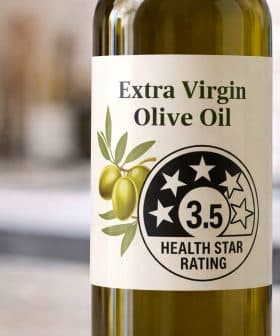
Australia and New Zealand Producers Warn Health Star Ratings Could Undercut Olive Oil Messaging
With Health Star Ratings set to become mandatory, olive oil producers say the algorithm penalizes extra virgin olive oil and overlooks compounds linked to its health benefits.

Apr. 14, 2026
Heart Association’s New Guidance Recommends Olive Oil and Other Unsaturated Fats
The American Heart Association’s new dietary guidance recommends olive oil and other unsaturated fats as part of long-term eating patterns aimed at reducing cardiovascular disease risk.