U.S. Dietary Guidelines Put Olive Oil and Table Olives at the Center of Healthy Eating
New U.S. dietary guidelines highlight olive oil and table olives as essential components of a healthy diet, drawing praise from industry groups and skepticism from some health experts.
Olive oil and table olives have been placed at the heart of new dietary guidelines recommended by the United States Department of Agriculture and the Department of Health and Human Services.
The government’s official health and nutrition recommendations, which will remain in place until 2030, call on Americans to consume more nutrient-dense foods and healthy fats from whole foods, including table olives, and to cook with “essential fatty acids, such as olive oil.”
The U.S. government’s guidance on food and drink is highly influential, shaping meals served by public institutions such as hospitals, military bases, prisons and schools, as well as food distributed through federal assistance programs.
Leading industry groups welcomed the emphasis on olive oil, while some food, health and nutrition experts expressed reservations about other elements of the guidelines.
USDA
“We applaud the strong recommendations to integrate olive oil into the American diet as an essential means of improving U.S. health,” said Kimberly Houlding, chief executive of the American Olive Oil Producers Association. “The science is definitive: extra virgin olive oil is a cornerstone of a healthy dietary pattern.”
Joseph R. Profaci, the executive director of the North American Olive Oil Association, echoed those views in a LinkedIn post.
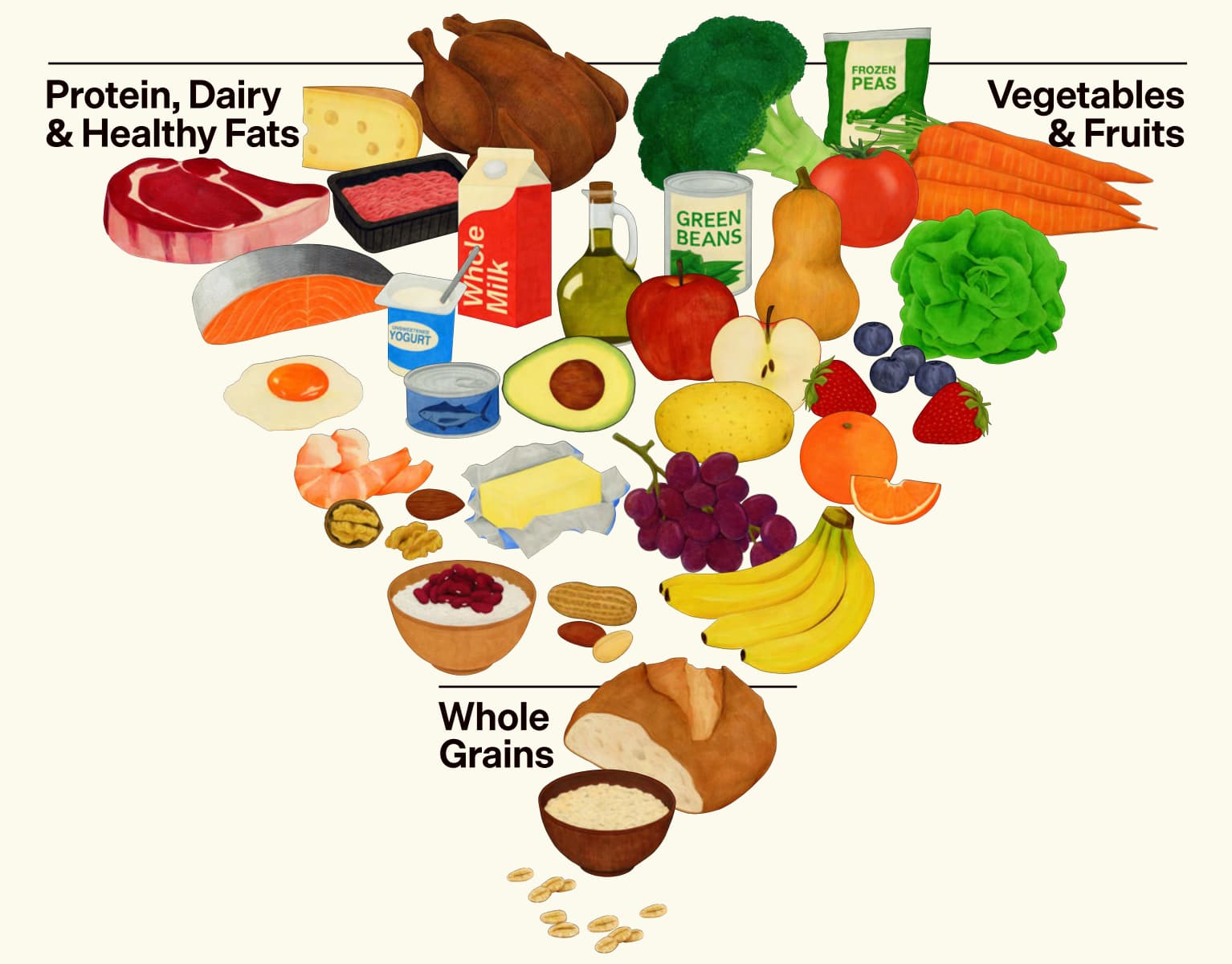
“The Dietary Guidelines for Americans 2025–2030 place extra virgin olive oil at the center of the food pyramid for the first time,” Profaci said. “The guidelines also explicitly advise prioritizing olive oil when cooking or adding fats to meals. This is a clear signal from U.S. health authorities: olive oil isn’t optional — it’s foundational to healthy eating.”
Beyond olive oil, experts also welcomed recommendations to consume five daily servings of fruits and vegetables, include two to four servings of whole grains, and limit ultra-processed foods and added sugars.
However, concerns were raised about guidance related to fat and protein intake.
While broadly supporting the guidelines, the American Heart Association warned that some recommendations could lead to excessive consumption of saturated fat and sodium.
The guidelines advise keeping saturated fat below ten percent of daily calories, but also endorse cooking with butter and beef tallow, seasoning food with salt to taste, and consuming significantly more protein than previously recommended.
Decades of research — widely accepted by many health and medical professionals but disputed by some U.S. officials — have linked high intake of saturated fats, including butter and lard, to poorer cardiovascular health.
Other experts questioned the recommended protein intake of 1.2 to 1.6 grams per kilogram of body weight per day, warning that excess protein may be converted into fat. Previous guidance advised 0.8 grams per kilogram per day.
Some health professionals also criticized the redesigned food pyramid, which replaces the traditional pyramid with an upside-down triangle.
The new design aims to help consumers compare food volumes for daily consumption, but experts questioned the logic behind the placement and relative size of certain food groups.
For example, fruit — recommended at two daily servings — appears in the middle section of the triangle, while whole grains, recommended at two to four servings, occupy a smaller area at the bottom.
Health experts also said the lack of clear definitions for “nutrient-dense” foods and “essential fatty acids” could create confusion.
Still, they welcomed the opportunity to clarify that polyphenols, including those found in extra virgin olive oil, qualify as nutrient-dense.
Current U.S. dietary guidelines differ significantly from the Tuscan food pyramid, which reflects Italy’s official recommendations.
In the Tuscan model, fruits and vegetables form the base, followed by whole grains and extra virgin olive oil, while non-dairy fats and animal-based proteins sit at the top and are meant to be consumed sparingly.