U.S. Probes Allegations of Spanish Olive Dumping
The U.S. Department of Commerce and U.S. International Trade Commission are investigating whether Spanish olive companies are violating fair trade laws and receiving unfair subsidies.
The U.S. Department of Commerce and U.S. International Trade Commission (USITC) have launched an investigation to determine whether Spanish olive producers have been violating fair trade laws.
Dumped and subsidized Spanish ripe olives are severely impacting our industry.
Officials are looking into whether these foreign companies are selling products in the U.S. for less than they would in Spain, a practice known as dumping. Such activity would violate laws that protect American producers from being undercut by outside competition. The probe will also determine whether producers in Spain are receiving unfair subsidies.
“The Department of Commerce will ensure a full and fair assessment of the facts, and, if the rules are being broken, will act swiftly to halt any unfair trade practices,” U.S. Secretary of Commerce Wilbur Ross said. “The United States is committed to a free, fair and reciprocal trade with Spain.”
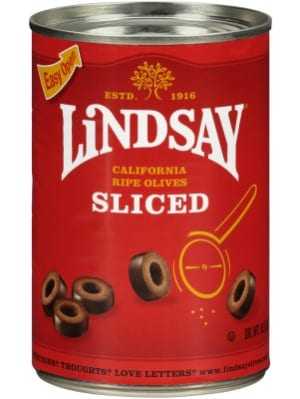
Subject merchandise includes all ripe olives grown, processed or packaged in Spain and sold in the U.S.
The investigation is the result of petitions put forth by the Coalition for Fair Trade in Ripe Olives, whose members are made up of Bell-Carter Foods, Inc. and Musco Family Olive Co.
“Dumped and subsidized Spanish ripe olives are severely impacting our industry,” Bell-Carter CEO Tim Carter said in June.
“The legacy and even the survival of the U.S. ripe olive industry are at stake.”
Close to 32,000 tons of Spanish olives were imported last year at a value of $70.9 million.
“Our ripe olive industry takes great pride in the industry it created, the high quality of its product and the thousands of workers and families the industry supports,” Musco CEO Felix Musco said in June. “Without import relief, all of this is at risk.”
If any wrongdoing is discovered and it is determined these activities are causing harm to U.S. businesses the Commerce Department will impose duties on those imports in the amount of dumping and unfair subsidization found to exist.
Bell-Carter and Musco have suggested those tariffs be between 78 and 223 percent.
Preliminary investigations have been scheduled for later this year, and the case is set to wrap up in early 2018.
The Coalition for Fair Trade in Ripe Olives submitted its petitions to the Department of Commerce and International Trade Commission on June 22.
“The flood of highly subsidized, low-priced imported ripe olives, principally from Spain, has contributed heavily over time to these industry failures,” the group said in a statement. “The U.S. industry would be much more competitive if Spanish exporters were not dumping their products in the U.S. and if Spanish growers were not receiving considerable government subsidies.”
Carter lamented the shrinking size of America’s ripe olive industry.
He said “the U.S. ripe olive industry was created in California more than 100 years ago and at its peak had more than 20 processors and 1,100 American olive growers farming more than 37,000 acres,” but now there are only two processors and 890 growers.
In December 2012, The USITC held a hearing in Washington as part of a $2-million investigation into the conditions of competition between American olive oil producers and major foreign suppliers. The commission’s report was released in September 2013.
The document, which was prepared at the request of the U.S. House Ways and Means Committee, examined the complex global olive oil industry, and the conditions confronting American olive oil producers who were relative newcomers to an ancient trade with big stakes.
The report’s findings have been cited ever since in the ongoing legislative efforts by American producers to level the playing field through Farm Bills, trade pacts, testing programs for imported olive oils, and the establishment of the Olive Oil Commission of California.