An Olive Harvest Under Bombardment in Southern Lebanon
The conflict between Israel and Hamas has drawn in Hezbollah militants from Lebanon, threatening olive farmers and their livelihoods.
RMEICH, Lebanon – “Sorry for the late meeting, but you know, it’s the olive harvest season, and I need to go there before the end of the day. Otherwise…” Father Nagib’s speech is interrupted by the sound of a bombing.
On the top of a nearby mountain, smoke rises. The surrounding of Rmeich, a Christian village in southern Lebanon, has been under constant bombardment since October 7th, the day Hamas attacked Israel.
Hamas is the political and military organization governing Gaza and is designated as a terrorist organization by the United States, the European Union and seven other countries.
See Also: Lebanon's Climate Is Becoming Less Conducive to Olive GrowingSo far, nearly 18,000 Palestinians and at least 1,200 Israelis have died in the conflict, according to the Associated Press. In Lebanon, about 20 civilians and nearly 100 militants have died.
Father Nagib’s hands are colored green and black as he spent the afternoon picking the fruits of his trees. His grove is right on the border with Israel.
Like him, many villagers in this part of Lebanon have olives in their fields for domestic consumption or to sell for a living.
According to the Lebanese Ministry of Agriculture’s figures, the olive sector in Lebanon counts more than 110,000 olive growers and about 200,000 plots with 12 million trees. The local farmer’s union estimates that 20 and 30 percent of the national production comes from southern Lebanon.
The olive sector is important in Lebanon, not only economically but also culturally. More than half of the trees are more than 500 years old, according to at least one estimate.
While the economic and social crisis, ongoing in the country for the past four years, has impacted the country’s olive oil production, conflicts in the south of Lebanon between Hezbollah, a political party and militant group with links to Iran, and Israel’s army are making it even more difficult this year.
The Lebanese government said 40,000 olive trees have burned down since the beginning of the conflict.
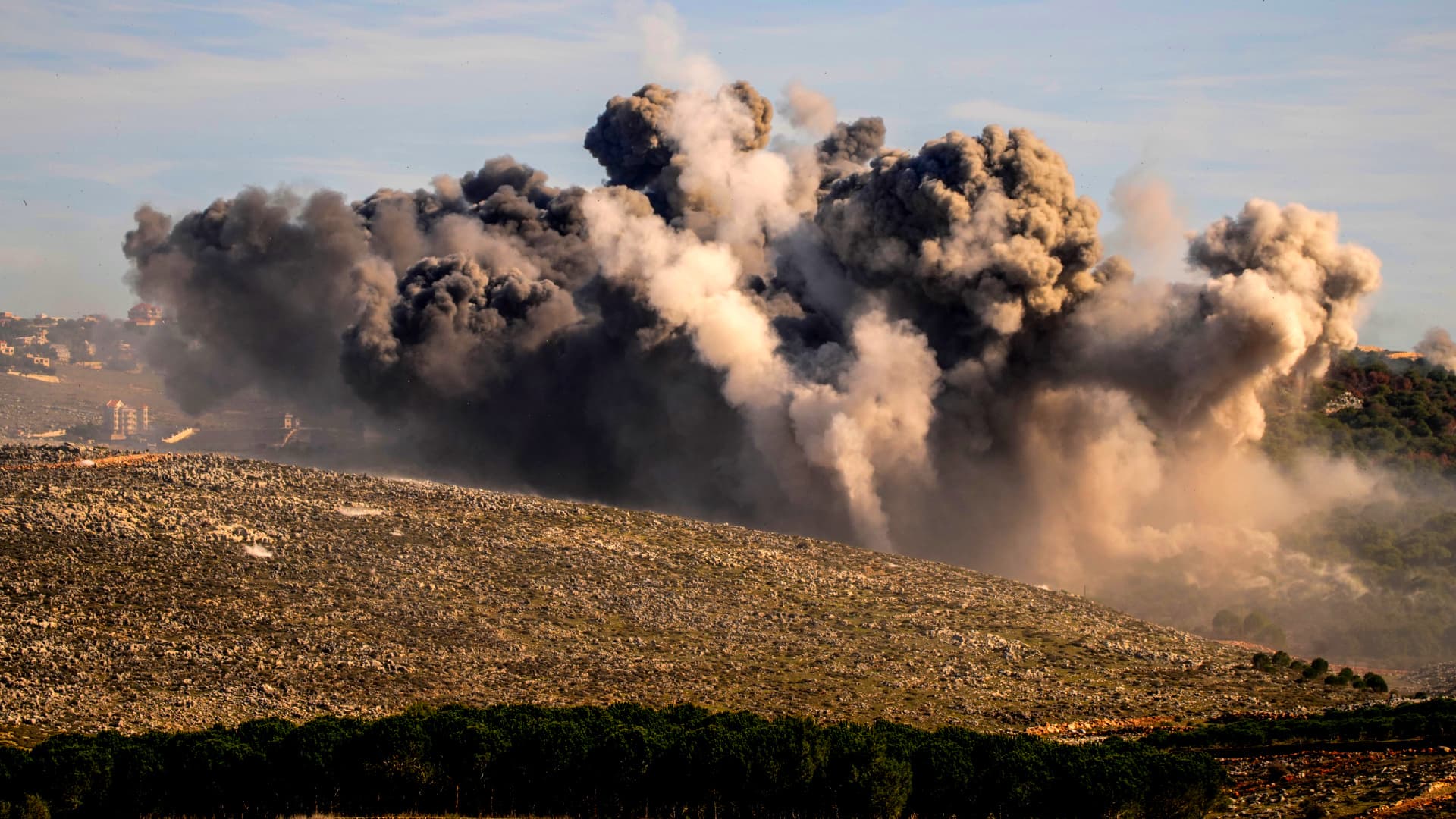
Smoke rises from an Israeli airstrike near Yaroun, in south Lebanon, Sunday, Dec. 10, 2023. (AP Photo/Hassan Ammar)
If some people decided to stay to save their harvest, more than 50,000 people flew south. Some of them we met at a displaced camp in Tyr (north of Rmeich) were agricultural workers. Olives stay on the trees in some fields because no one can pick them.
In Deir Mimas, north of Rmeich but still close to the border, the sound of airplanes is nearly constant.
See Also: Nurturing Italian Cultivars in Olive Tree's Historic HomeSyrian workers come back from the olive groves, where they try to rush to harvest as much as they can.
This village needed 400 workers in the field during the past season. However, this year, many have already left because of the conflict. Even though Deir Mimas was not hit directly, it was in the middle of the fights.
Sitting down at her table in her garden, Hanoune, who declined to give her full name, finishes her lunch. Despite her smile and warm welcome, the villager can not hide her worries about this year’s season.
“Sometimes, when we are in the fields, we can hear the bombings. It’s scary. But sometimes, we can’t,” she said while peeling a mandarine.
Hanoune relies on her olive groves and a guesthouse for her family’s livelihood. She knows this year will not be a good one for either.
“We are waiting for the olives, and then we sell them,” she said. “Every year it’s like this, but what about this year? I made soap out of the oil, the packaging, and stuff, it cost me a lot of money.”
“But, now I can’t sell them,” she added. “It can wait until next year, but how am I supposed to live in the meantime?”
Hanoune fears an escalation at the border, similar to what happened in 2006. During the 34-day conflict between Hezbollah and Israel, nearly all the local infrastructure was bombed.
It would add another challenge to this year’s harvest season, more collateral damage of humankind’s fury.