150-Year-Old Sailboat Brings Olive Oil From Portugal to Britain
Almost 90 percent of the world’s cargo travels by ships which contribute four percent of global CO2 emissions. Not this one.
A nineteenth-century sailboat could be seen arriving in the Newhaven marina. Complete with two wooden masts and triangular, crimson-colored sails, the Nordlys appeared to have arrived from a previous century.
We need to take the organic and fairtrade movement a step further by cleaning up all aspects of cultivation, manufacture and transport.
The boat had come along an historic trading route, which was used to carry Port from Portugal to England. However, instead of importing wine, the Nordlys’ crew unloaded one thousand liters of extra virgin olive oil.
The olive oil came packaged in five-liter bottles, which sold for £50 ($66.51) each. Crispin Field, on the receiving end of the Sailboat Project, had not even batted an eyelash at this seemingly expensive price.
Extra virgin olive oil sells for about £4 to £5 per liter in the larger British supermarket chains, but Field said that the quality of the oil relative to the price made it an easy sell. Field and his colleagues purchased the 1,000 liters and lined up buyers before the oil had even left Portugal.
The idea to import olive oil to Britain via wind power was the brainchild of Alex Geldenhuys, a shipping coordinator and co-founder of New Dawn Traders. She had previously met members of the Sailboat Project at an annual meeting of the Sail Cargo Alliance, which she organizes.
Geldenhuys had already been shipping rum and chocolate to Britain via sailboat for five years and she thought the same concept would also work well with olive oil. She began looking for partners who shared her environmentally-friendly vision and found Marije van den Boogaard via Facebook.
Boogaard, an olive farmer and olive oil sommelier, liked the idea and agreed to source and transport the olive oil in Portugal from Geldenhuys to England where members of the Sailboat Project would distribute it.
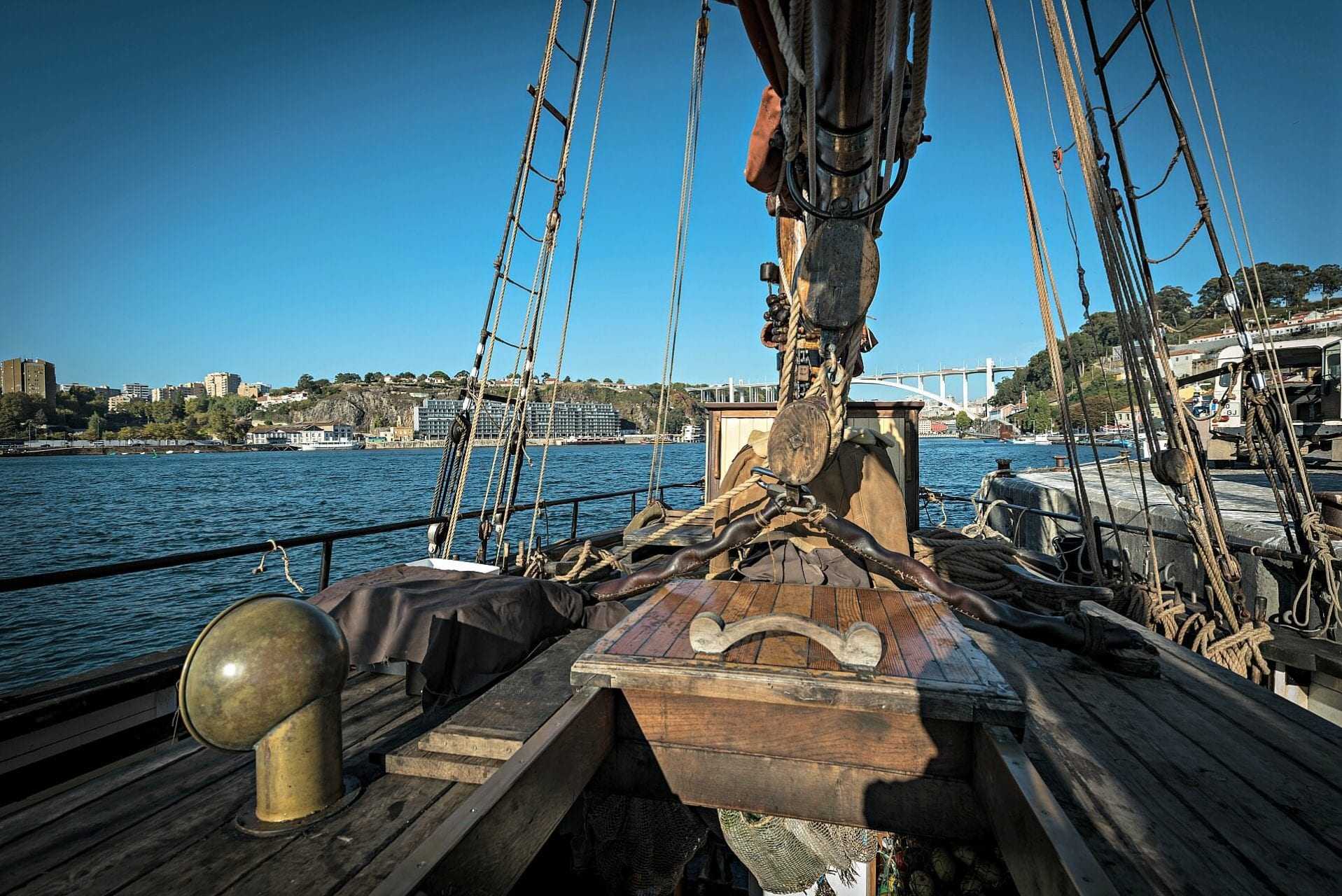
Photo: Sérgio Ferreira
With this task in mind, Boogaard met Emilia Reigado at a trade show in Portugal. The two chatted for a bit and Boogaard learned about Reigado’s sustainable farm in the country’s northwest. Boogaard tried Reigado’s olive oil and loved it.
After discussing the plan to transport the olive oil to Britain using only wind power, Reigado agreed to sell her last 1,000 liters on the spot.
Reigado grows an ancient variety of olive and presses them to make olive oil on a small, family-run farm in Figueira de Castelo Rodrigo, a region of northwestern Portugal composed of mountains and valleys. Due to its unique climate, the olives and resulting olive oil produced in the region have a distinct flavor.
Reigado and her family have been growing olives organically for more than 20 years in Figueira de Castelo Rodrigo.
When Reigado heard about an opportunity to extend her sustainable way of doing things to the supply chain, she couldn’t say no.
“I loved the idea of transporting the oil by sailboat because it is a different, environmentally friendly kind of transport,” Reigado said. “Our effort was validated by continuing the all natural process of transporting the olives only using wind power.”
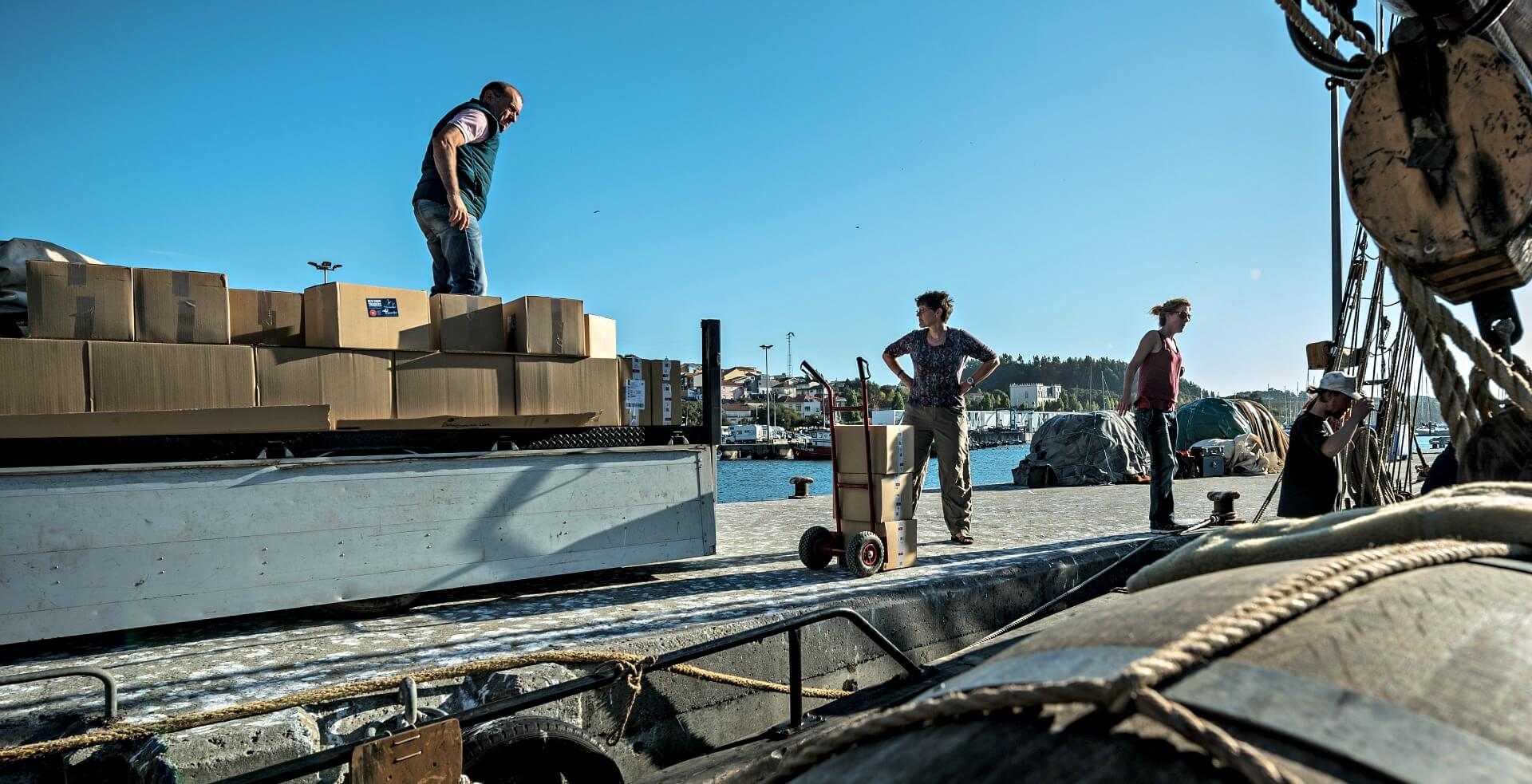
Photo: Sérgio Ferreira
The olive oil was packaged into the same five-liter containers in which they were sold and transported to the coast where they met with the Nordlys, which had been chartered by Geldenhuys.
This voyage was a part of what she described as the sailboat shipping renaissance. Geldenhuys aims to revolutionize shipping by patronizing small, family-run farms and minimizing the carbon footprint of transporting oil from farm to table.
Almost 90 percent of the world’s cargo travels by ship, which contributes four percent of global CO2 emissions. If the entire shipping industry were a country, it would be the sixth largest emitter on the planet.
“We need to take the organic and fairtrade movement a step further by cleaning up all aspects of cultivation, manufacture and transport,” Geldenhuys said. “With our small wooden ships we will in no way compete with the giants of the existing shipping industry, but on a human scale we can inspire greater awareness and a motivation for change through small practical actions.”