Azerbaijan President Inaugurates Country’s Largest Olive Mill
The country’s largest mill has been built ahead of an anticipated boom in table olive and olive oil production.
Azerbaijani President Ilham Aliyev attended the opening ceremony of the country’s largest table olive and olive oil mill earlier this month.
Operated by the Absheron Olive Gardens, the mill was opened in the country’s most productive olive-growing region ahead of an anticipated boom in production.
“We plan to make maximum use of unused land for olive production, especially here on the Absheron Peninsula and in some other areas of Azerbaijan,” Aliyev told the event, according to local media.
See Also: U.N. Developing Olive Groves and Mills in Drought-Prone Areas of IraqOlive trees have dotted the Absheron peninsula for centuries and are one of its main crops. However, plans are underway to plant nearly 700 hectares of Manzanillo, Arbequina, Arbosana, Blanqueta, Koreneiki, Gemlik and Imperial olives on reclaimed land created by clearing rocky soil west of the capital.
Once completed, the project will cover 3,000 hectares of reclaimed land, with 1,000 hectares of olive groves planned for the coming years.
“We have created such a beautiful complex on a vacant piece of land,” Aliyev said. “Throughout history, there was nothing here.”
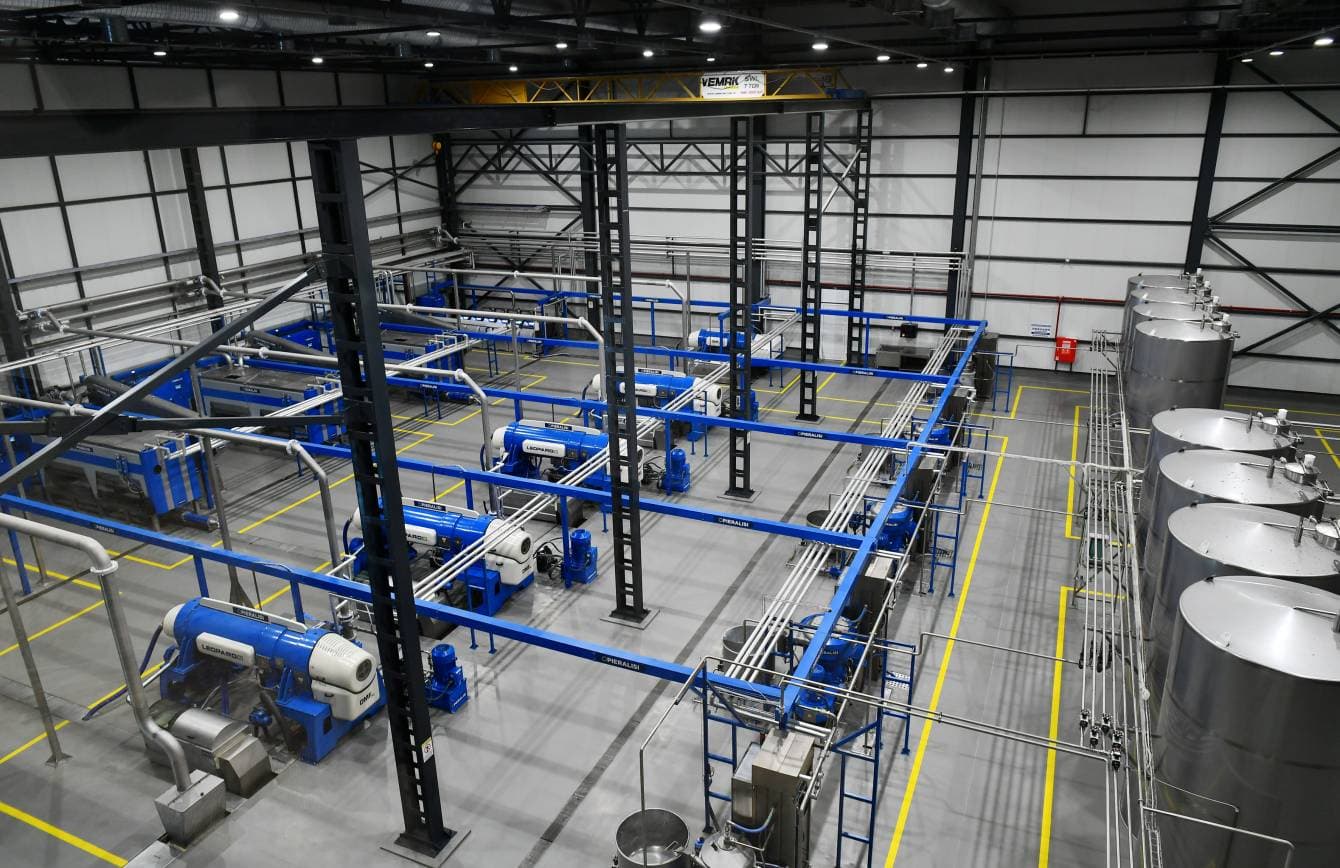
(Photo Presidency Azerbaijan)
Absheron Olive Gardens said they expect to eventually harvest 10 tons of olives per hectare in the new groves, which will be equipped with an automated irrigation system.
This year, the company expects to produce two to three tons of olives per hectare, prompting its decision to invest in the new mill. The company added that it expects to transform these olives into 4,000 tons of olive oil, half of which will be exported.
Aliyev thanked the Italian consultants who helped construct the mill and said new projects would likely follow the mill’s completion as olive growing expands on the peninsula.
“I think that this is why our cooperation with your company will be of strategic importance,” he said. “Because there is potential here, in Absheron, as well as in the reclaimed areas.”
“Of course, everything will have to be evaluated – the land, the climate, the productivity,” he added. “But we have serious plans to become an important producer. We also have plans to create thousands of jobs and local production throughout the country.”
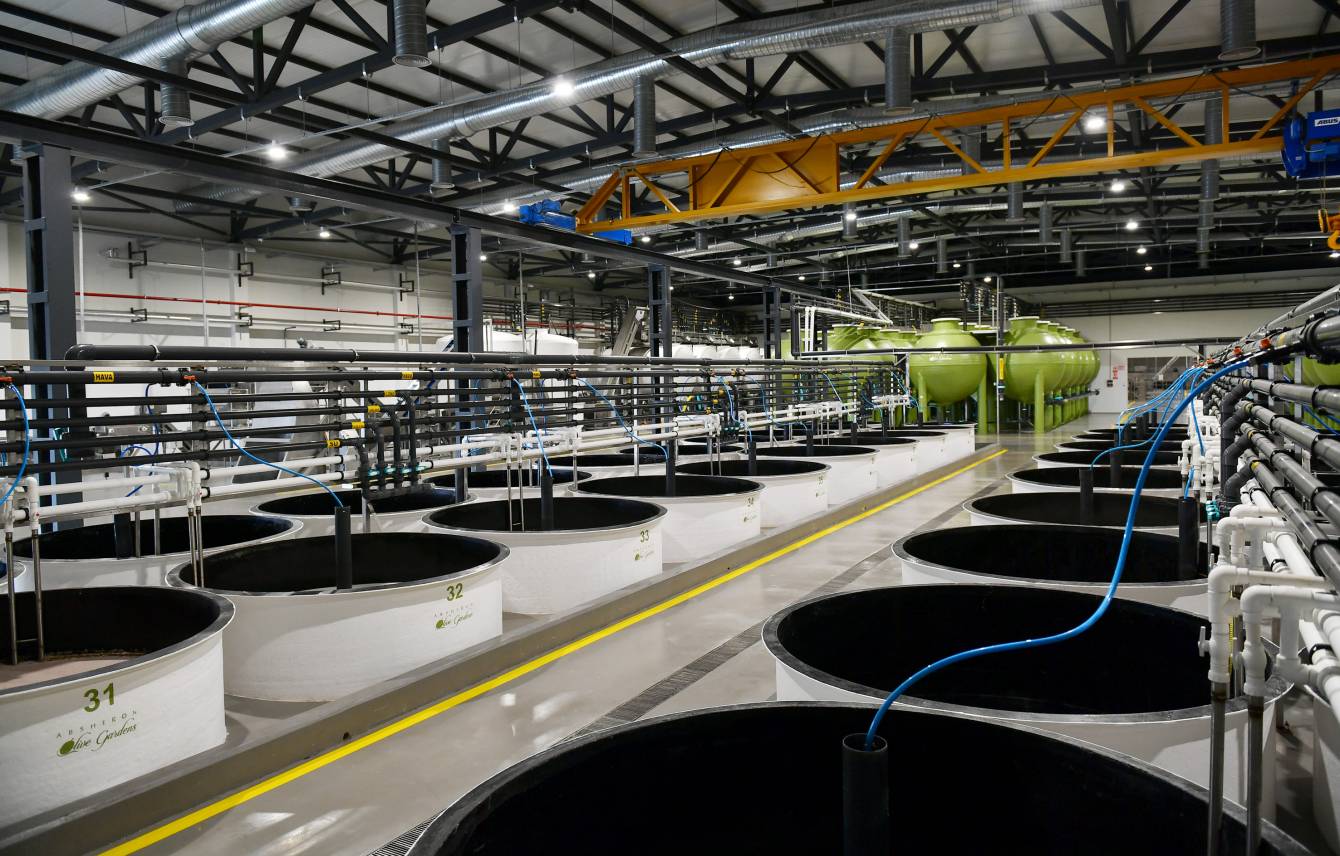
(Photo Presidency Azerbaijan)
During the ceremony, Absheron Olive Gardens executives emphasized the need to foster an olive oil consumption culture in Azerbaijan, raising awareness about its health benefits and organoleptic qualities.
The opening of the new mill comes five months after Eldar Salimov, Azerbaijan’s ambassador to Jordan, met with officials from the International Olive Council at its June meeting in Amman to discuss joining the international governing body of table olive and olive oil production.
“Azerbaijan will join the family of countries that produce and export olives and olive oil,” Aliyev confirmed at the ceremony.