U.N. Helps Moroccan Cooperative Boost Production Despite Drought
The International Fund for Agricultural Development (IFAD) has teamed up with a rural Moroccan cooperative in order to boost the local olive oil industry.
The International Fund for Agricultural Development (IFAD), a body dependent of the United Nations Organization, has partnered up with a rural Moroccan cooperative in order to promote and boost the local olive oil industry. The results have been tremendous thus far despite the fact that the country has been struck with a major heat wave recently.
See Also: Complete Coverage of the 2016 Olive Harvest
The IFAD’s mission is to promote, monitor, and better agricultural development, mostly in emerging countries. The UNO-subsidized body has been facing increasingly tough challenges in the past few years as climate change has become an urgent, worldwide concern.
In fact, annual rain levels are expected to drop significantly during this century (the decrease would be between fifteen and fifty-two percent) while global temperatures are expected to rise, and might even reach never-seen-before levels. The IFAD has responded to those threats with measures that it hopes will ensure that growers do not suffer too much from climate change.
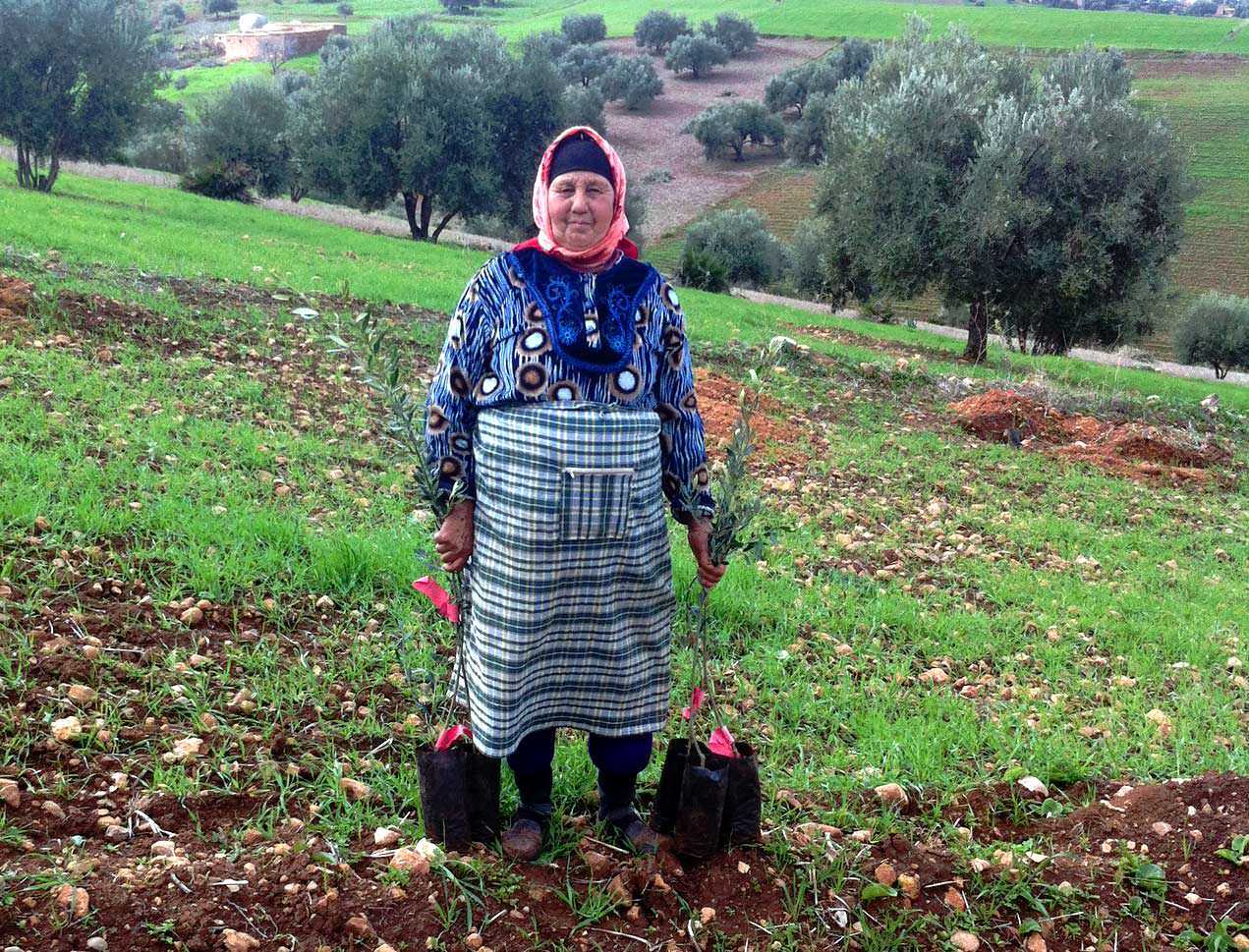
Morocco has been hit with drought during the critical summer months, much like most of the world’s biggest olive oil producers. Italy and France, among others, have experienced a drastic decrease in yield because of the rough climate conditions but that has not been the case for the growers of Sidi Badhaj.
Abdelatif El Badaoui is the head of the Amghras cooperative, located South of Marrakech. He is also the leader of a team of young technicians who help olive growers through technical and scientific means. El Badaoui has joined efforts with the IFAD in order to lend a hand to the olive growers of Sidi Badhaj, a rural town not far from the Atlas Mountains.
El Badaoui’s plan of action has been threefold. First, local growers have been encouraged to prune their trees. The process is crucial and allows for better fruit, and can even help make an abandoned tree bear fruit again.
The team of technicians has shared their expertise with growers regarding growth, pest prevention, and harvest monitoring which has made a significant difference in the final output, both qualitatively and quantitatively. Moreover, more relevant irrigation systems have been implemented; the effort has revealed itself to be wholly effective.

©IFAD/Giulio Napolitano
All those elements have revolutionized olive growing in Sidi Badhaj. In fact, and on average, the growers have been able to harvest one hundred kilograms (120 Lbs.) of olives per tree, when last year’s harvest was just twenty kilograms (44 Lbs.) of olives per tree.
The quality of the oil made from those olives has improved, too. Local growers have been encouraged to take their olives for pressing within twenty-four hours after harvest at the latest instead of doing so during the two months that follow harvest, as they were doing before.
The International Fund for Agricultural Development (IFAD), a specialized agency of the United Nations, was established as an international financial institution in 1977 as one of the major outcomes of the 1974 World Food Conference.
IFAD is dedicated to eradicating rural poverty in developing countries. Seventy-five percent of the world’s poorest people — 1.4 billion women, children and men — live in rural areas and depend on agriculture and related activities for their livelihoods.