



EU Action Plan for Olive Oil Inching Forward

The European Commission is proposing stricter anti-fraud measures for olive oil, including mandatory testing and improved reporting, as part of the Olive Oil Action Plan discussed at a recent meeting. Changes to labeling requirements, chemical testing methods, and private storage aid trigger prices are also being considered by the committee, with a potential vote on amendments expected by the end of the year.

A minimum number of tests on olive oil authenticity would have to conducted each year in the European Union under proposed anti-fraud measures before a European Commission committee.
And EU countries would have to be more rigorous in the details they gave the EC on their testing and any irregularities found, as part of a proposed standardization of obligatory reporting.
The moves are part of the EC’s Olive Oil Action Plan and were discussed at a meeting of the Management Committee for the Common Organisation of Agricultural Markets on October 23.
Labeling: more prominent details of origin
Steps to improve olive oil labeling were also discussed there, including proposed rules on the positioning of information and font size.
It’s been reported in the Italian press that the origin of an olive oil would have to appear in the main visual field of labeling — not on the back of a bottle — and in lettering of at least 5mm in the case of one liter packaging and 2mm for smaller sizes.
The committee is considering various measures requiring amendment of key EU olive oil legislation, namely regulation 29/2012 on marketing standards for olive oil, and 2568/1991 on the characteristics of olive oil and olive-residue oil and on the relevant methods of analysis.
Brussels sources say it is hoped that the committee will be ready to vote on the amendments by the end of December or early January.
They say that though the EU’s olive oil producer countries are generally in favor of the changes, those from non-producer countries fear the financial burden of increased monitoring.
Non-refillable olive oil containers in restaurants
Among other measures in the proposed action plan, the committee is still discussing whether the EU’s restaurant and hospitality sector should be required to use one-way packaging (non-refillable containers) for olive oil provided for customers.
Chemical tests
Proposed changes to chemical testing methods and quality parameters are awaiting decision at the level of the International Olive Council (IOC), an EC agriculture spokesman said.
Similarly, a proposal to allow the IOC to admit countries where olive oil is not produced but is consumed is to be decided by the IOC’s Council of Members.
Price support for farmers
Spain’s agricultural organizations are among those sweating on details of reform to private storage aid, a form of intervention used when ex-mill prices are low.
They say the current trigger prices of 1779€/t for extra virgin, 1710€/t for virgin and 1524€/t for lampante are far too low.
Private storage aid trigger prices
Changes to the trigger prices are understood to be part of current discussions at the level of the European Parliament and Council.
However, EC documents show that early drafts of regulatory change proposed raising the trigger price for extra virgin alone, to 1980€/t, “in the interests of the quality of the olive oil.”
But there were also various proposed amendments sought by members of the Committee on Agriculture and Rural Development, including one to increase the prices to 2357, 2266 and 2019€/t for the respective triggers, on the grounds that the current prices “which were set in 1998, must be increased since they no longer reflect the real situation in the market.”
Private storage aid in 2012: €17 million
Documents forming part of the current EC general budget process say that private storage schemes for olive oil opened in February and May this year will have a “financial impact” of about €17 million ($22m) on the 2013 budget.
Related Articles

May. 22, 2025
European Producers Face Limited Alternatives to U.S. Market
Asia’s most populous and prosperous countries imported less than one-third of the olive oil by value that Spain, Italy and Greece exported to the U.S. in 2023.

Aug. 5, 2025
EU Accepts 15% Tariffs on Olive Oil Exports to U.S.
Europe agreed to accept 15 percent tariffs on table olives and olive oil in a trade deal with the U.S., causing concern and backlash from stakeholders.

Sep. 19, 2025
European Parliament Rejects Proposed Revision of the Common Agricultural Policy
With their vote, MEPs want the European Commission to stick to the current model instead of pooling funds with other sections of the budget, and to reduce red tape for farmers.

Jul. 8, 2025
Europe Endorses Olive Oil Standard Changes Despite Industry Divide
The new standards established by the European Union and the International Olive Council have raised concerns among several European producers.

Nov. 17, 2025
EU Moves to Streamline Farm Rules and Help Farmers Compete
EU lawmakers have reached a provisional deal to simplify the Common Agricultural Policy, easing administrative burdens on farmers, reducing inspections and expanding support for small and organic producers.

Sep. 29, 2025
Food Inflation in Europe Squeezes Budgets, Shifts Consumer Habits
Food inflation is driving changes in diets and retail markets as prices for staples like olive oil skyrocket, impacting vulnerable households.

Jan. 20, 2026
EU Audit Finds Gaps in Olive Oil Controls Despite Strong Regulatory Framework
A new audit by the European Court of Auditors finds that while E.U. olive oil rules are robust, uneven enforcement continues to undermine quality and traceability.
Oct. 2, 2025
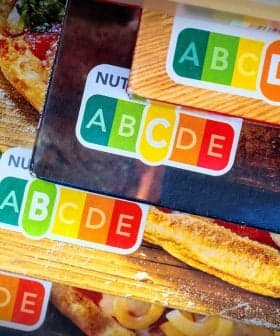
Romania’s Nutri-Score Plan on Hold After E.U. Objections
E.U. Commission raises concerns that the draft law could restrict trade and breach EU food labeling rules.