Concrete and Water Are Damaging Montenegro’s Oldest Olive Tree
In their efforts to turn the 2,247-year-old Stara Maslina into a tourist attraction, local authorities have inadvertently damaged the iconic olive tree.
Near Ulcinj and Bar on the coast of Montenegro, more than 50 olive trees are at least 500 years old.
The oldest is Stara Maslina in Mirovica. According to scientists from the University of Istanbul’s forestry department, the tree is an estimated 2,247 years old, making it one of the three oldest trees in the Mediterranean basin.
We are afraid that the tree might not survive.
“We have nothing more significant, nothing more valuable and nothing older than it,” Gojko Kastratović said during a lecture about Montenegro’s cultural heritage.
Ćazim Alković, president of the Bar Olive Growers Association, agrees, and he could not hide his concern when he learned that the branches on the oldest part of the tree were starting to wither. “We are afraid that the tree might not survive,” he said.
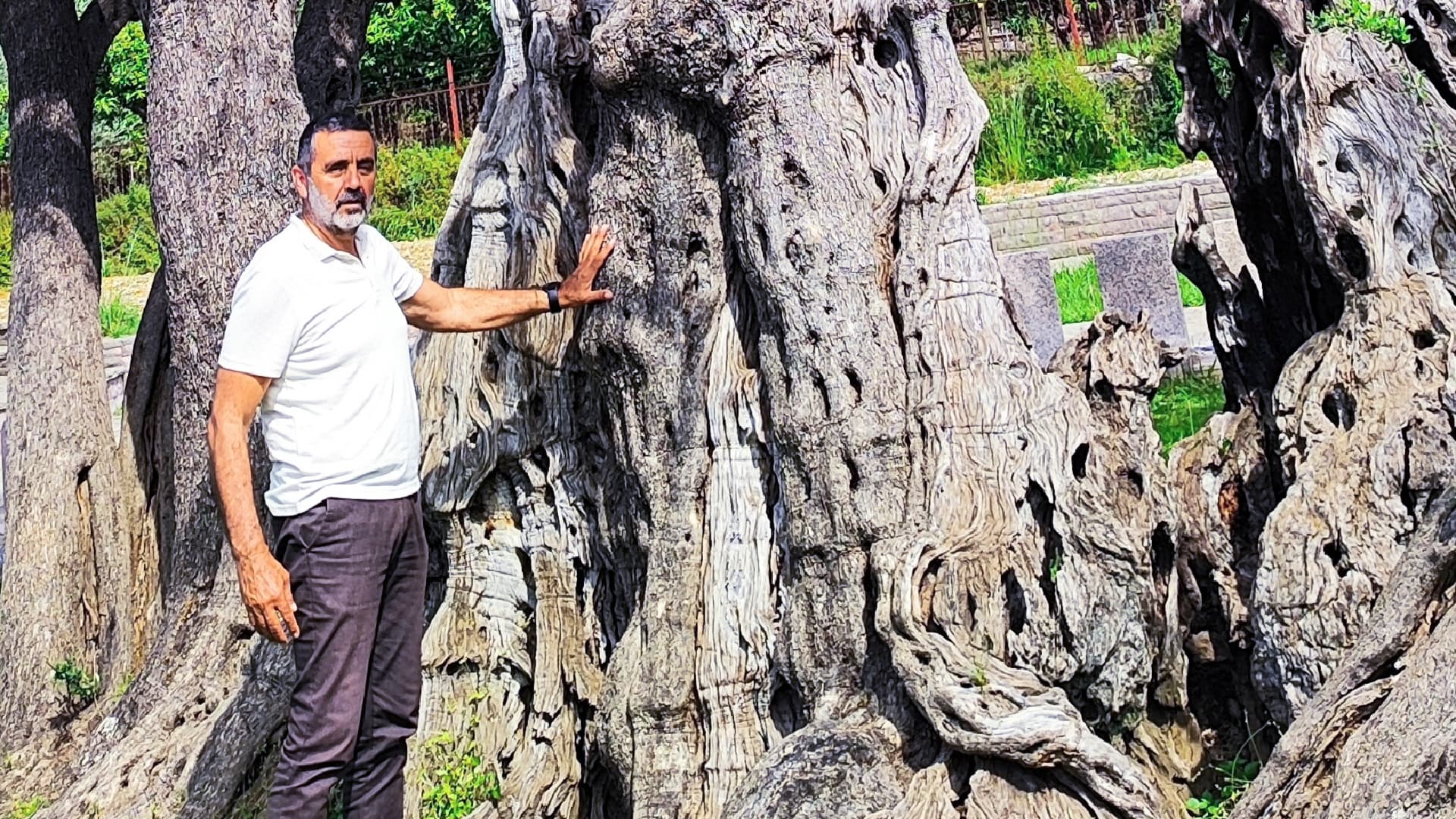
Ćazim Alković, president, Bar Olive Growers Association
Worrying changes were first noticed by the employees of the local cultural center, which maintains the park in which the tree is located. Visitors can pay an entrance fee and take a guided tour to visit the tree and learn more about it.
The local authorities in Bar realized 18 years ago that the Stara Maslina could become a tourist attraction and began developing the area to “improve” the environment around the olive tree.
This involved pouring a concrete ring around the tree to create a pavement for visitors. However, the concrete was poured, so water collected and remained around the tree’s roots. In the meantime, more buildings and family houses were constructed around the olive tree.
See Also: L’Olivo di Sant'Emiliano – A 1,800-Year-Old Symbol of Umbria's Olive TraditionRatko Bataković, an agronomist from Nikšić, a town in the continental area of Montenegro, was the first to warn about the problem and its possible consequences. In an article published in the daily newspaper Republika, he explained the perniciousness of the concrete surrounding Stara Maslina.
Some citizens protested, including the well-known archaeologist Omer Peročević and activist Anto Baković.
However, local media did not speak out against the decision then, nor did the Bar Association of Olive Growers until four years ago, when the current president, Ćazim Alković, came to the fore.
Since then, the Bar Olive Growers Association has undertaken numerous activities. He signed a contract with the cultural center to help maintain Stara Maslina. During three years, the association applied all necessary agrotechnical measures.
“In accordance with the recommendations of the faculty of biotechnology, we carried out top dressing through soil and leaves, protection against pests and diseases, sanitary pruning and everything else,” Alković said.
In addition, the cultural center organized the public harvest of Stara Maslina two years in a row, which became a festival in the city that also marked the beginning of the olive harvest.
Many residents and guests, including the agriculture minister, the Bar municipal assembly president and the Bar municipality president, participated in the public harvest.
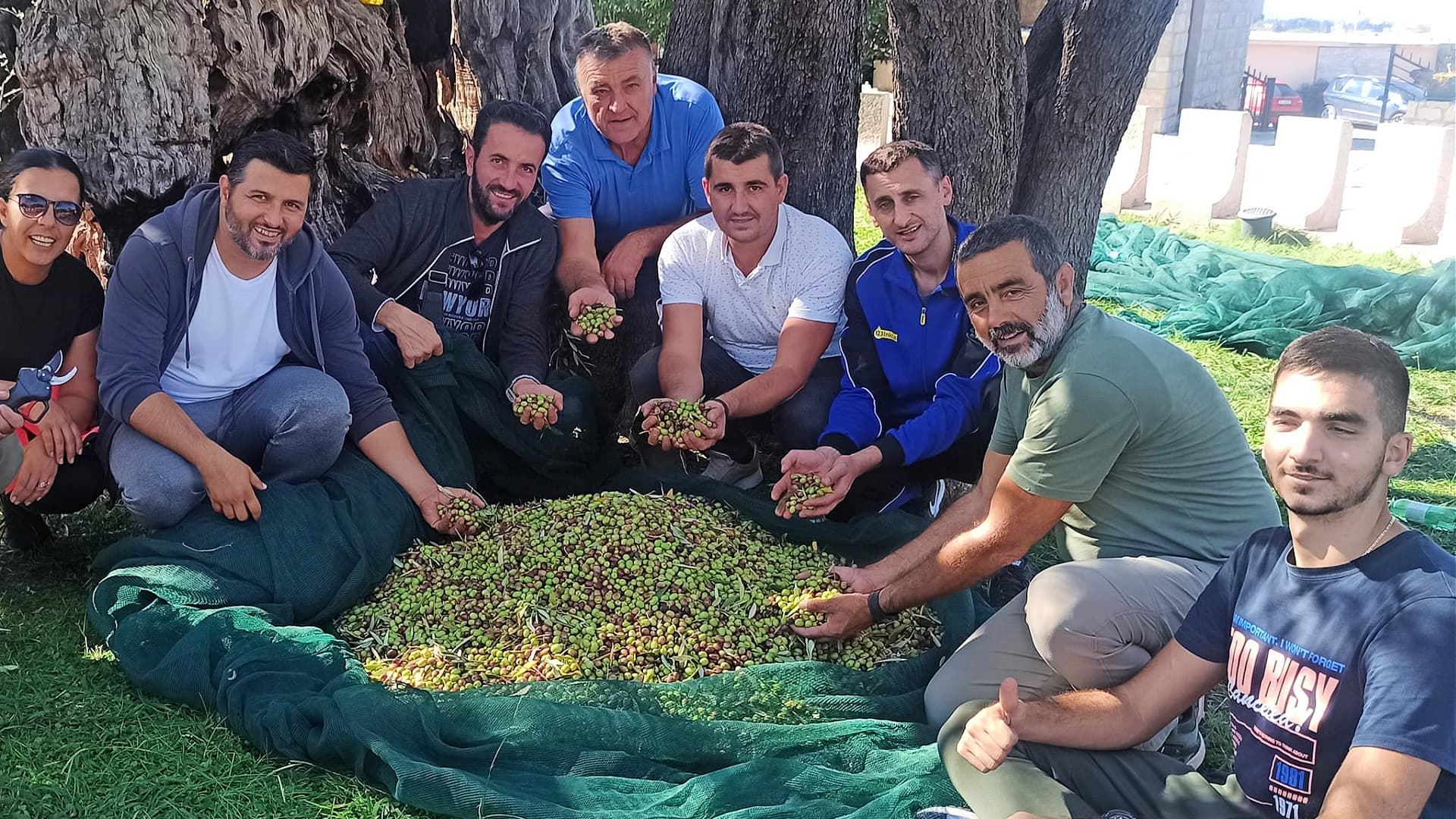
Stara Maslina harvest
Altogether, the company produced olive oil from carefully picked fruits only from Stara Maslina, which the municipality of Bar gifted to selected guests, including King Charles III and his wife, Camila, in 2016 when he was still the Prince of Wales.
When the Bar municipal assembly put the study on the protection of Stara Maslina up for public discussion four years ago, only the Bar Olive Growers Association submitted written comments.
“Our first remark was that the concrete threatens Stara Maslina and that the water it collects can permanently endanger its roots,” Alković said.
Unfortunately, the growers’ warning, some of whom have a 300-year family tradition of olive growing, was not taken seriously.
“Also, at the beginning of the summer of 2023, we pointed out the problem of the withering of Stara Maslina, that is, the problem of excessive water in its root system,” Alković said.
However, few people took the association’s warning seriously. “Only Mirko Bujišić, assistant director of the Bar Cultural Center, wanted us to do something, and he was the only one who tried to remove water from the root system since we did not have permission to intervene, even though we knew what needed to be done,” Alković said.
In August 2023, Dušan Raičević, the president of the Bar municipality, formed a commission to manage Stara Maslina, which did not include members of the Bar Olive Growers Association.
“Since then, the association has had no information about what is being done and how it is being done,” Alković said. “Even more worrying is that the president formed the commission in August, and the intervention was expected to start in January next year. Those additional five months in the water must have contributed to additional damage to the roots.”
He believes that the drainage ditch construction and pump installation were successful. However, Alković adds that there is still water on the ground, albeit much less than before, but more than would be advisable.
Like most olive growers, he suggested removing excess water from the root system; although recent interventions have yielded results, the problem has not been completely solved.
“Our proposal is also the general public’s: to remove the concrete ring around the Stara Maslina and the concrete walls surrounding the tree and to create the prerequisites for the water to drain naturally,” Alković said.
He cites one of the oldest olive trees in neighboring Croatia, Brijuni National Park, as an example. A simple wooden fence surrounds it, and it is an incomparably more significant tourist attraction.
Alković also thinks the construction of the ticketing building, which is meant to block the view of the tree from the street, prevents sunlight from reaching the tree’s base and has allowed weeds, including oleander, to grow, which can also be harmful to the tree.
The Bar Olive Growers Association has an entirely different approach and believes that the Stara Maslina should be open to view, not hidden.
“The whole complex would certainly be much nicer if the concrete was removed and the grass was allowed to beautify the space,” Alković said.
“We are sure Stara Maslina would continue to live and could be a bigger tourist attraction if the concrete around it were removed,” he added. “We should also remove the oleander that surrounds it, which we know can be harmful.”