News Briefs

A millenary olive tree in Fornalutx, Mallorca has been named the best monumental olive tree in Spain for 2020 by AEMO, estimated to be 1,100 years old and believed to have been planted by Moorish settlers. The tree, named Can Det, has survived the spread of Xylella fastidiosa on the island and still produces olives of the native Empeltre Mallorquina variety, thanks to the care of the Deya Canals family who grind their olives in the last press mill on the island.
A millenary olive tree on the island of Mallorca has been named the “best monumental olive tree in Spain” for 2020 by the Spanish Association of Olive Municipalities (AEMO).
Situated in the municipality of Fornalutx, on the terraced slopes of the northerly Sierra de Tramuntana mountains, the tree is estimated to be 1,100 years old.
See Also:Millenary Olive Trees in Spain Named Global Agricultural Heritage SiteResearchers believe it was planted by the Moorish settlers in the ninth century. The judgment panel for AEMO said this means the tree lived through an important part of Spanish history: the reconquest of Mallorca by the Spanish kingdoms.
“The ancient olive trees always contain the mystery of how a living being dares to challenge eternity, of how a plant, where the living sap passes century after century, is capable of surviving both civilizations,” the judgement panel wrote.
The millenary olive tree, named Can Det by the locals, has also survived another invasion: the spread of Xylella fastidiosa on the island.
Introduced in 2016, the plant pathogen has been detected in eight municipalities in Mallorca and infected millions of grapevines, almond and olive trees.
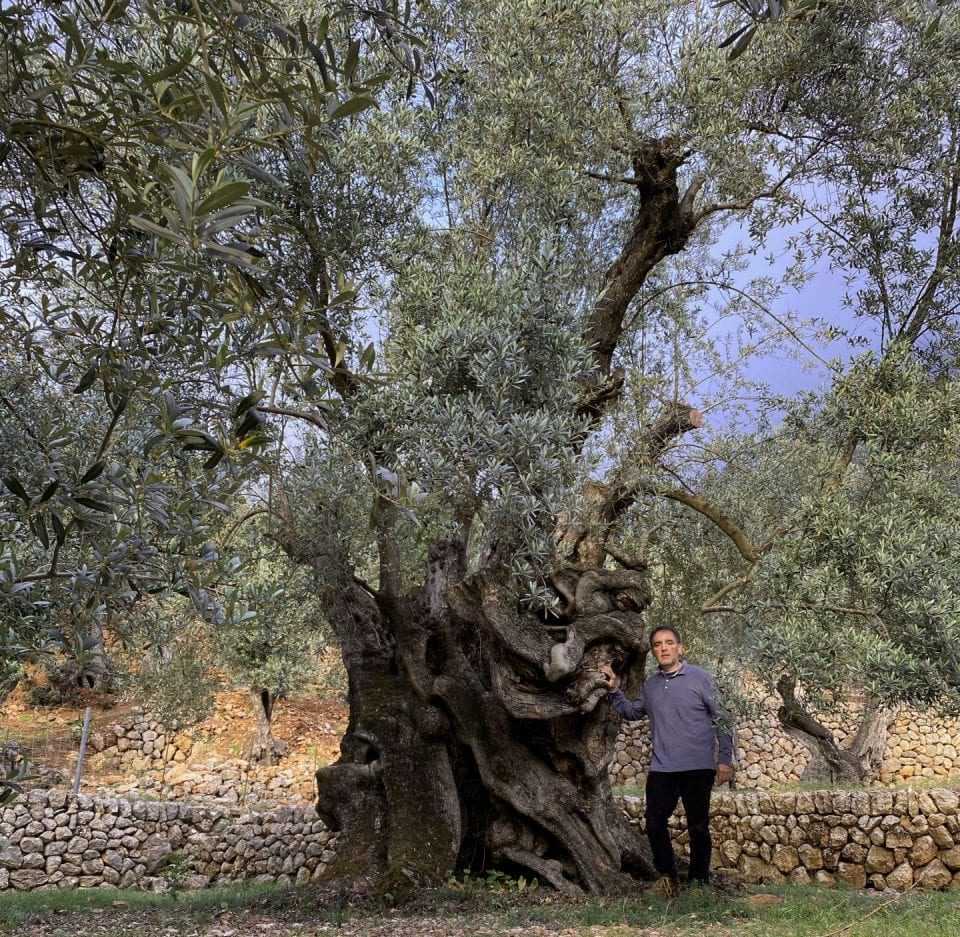
Can Det is also unique for another reason: the tree still produces olives of the Empeltre Mallorquina variety, which is native to Mallorca.
Thanks to the dedication of a local farmer, the olives continue to be transformed into oil.
“In the 21st century, the olive tree continues to bring harvest thanks to the care of its owners, the Deya Canals family, who grind their fresh olives in the last press mill on the island, the Can Det Mill,” the judges wrote.
More articles on: culture, millennial trees, Spain
Jan. 14, 2026
Ice and Subzero Temperatures Test Olive Trees in Northern Adriatic Hinterland
Freezing rain and subzero temperatures have damaged olive groves in northern Dalmatia, with growers and experts warning that the full impact will only become clear in spring.
Oct. 15, 2025
Sustainability Takes Root in the Hills Above Florence
Fattoria Poggio di Fiesole, a Tuscan estate with a rich history and dedication to sustainability, produces an award-winning organic olive oil.
Nov. 4, 2025
New Research Strengthens Link Between Olive Oil Polyphenols and Cardiovascular Health
A new study shows that extra virgin olive oils rich in polyphenols may provide greater cardiovascular benefits than low-phenolic varieties, improving cholesterol profiles and heart function.
Dec. 1, 2025
Montenegrin Producers Push to Boost Consumption as Ancient Groves Face Threats
In Bar and Ulcinj, ancient olive trees still thrive, but low consumption and growing development pressure worry producers. A new digital initiative aims to change that.
Apr. 23, 2025
Spain Moves to Mitigate Impacts of New U.S. Tariffs
Spain's Minister of Agriculture reassured agri-food producers about potential impact of US tariffs, emphasizing EU collaboration and market diversification.
May. 22, 2025
Journalists, Poets and Scientists Honored at Ranieri Filo della Torre Prize
Olive Oil Times senior writer Ylenia Granitto was among the individuals awarded at the eighth edition of the cultural and literary award ceremony in Rome.
Aug. 21, 2025
Mild Temperatures Worry Olive Growers in Central and Northern Italy
Cool, wet weather has led to increased olive fruit fly activity. Authorities recommend preventative measures and treatments in infected groves.
Jan. 22, 2026
Women Farmers at the Forefront of Olive Oil’s Future, UN Says
As the United Nations prepares for the International Year of the Woman Farmer in 2026, women olive oil producers from Greece, Portugal, Tunisia and Lebanon share how resilience, sustainability and stewardship guide their work.