When Olives Became a Thing in Martinis
When did the olive reach the iconic status as the signature garnish of sophistication and class, the perfect companion to its dirty patron, the Martini? We thought you’d never ask.
For over a century, the olive has maintained its iconic status as the signature garnish of sophistication and class, remaining the perfect companion to its dirty patron, the Martini. Some of the most well-known Martini lovers include John D. Rockefeller, Humphrey Bogart, Franklin D. Roosevelt, Ernest Hemingway, and of course, James Bond.
A famed Frank Sinatra tale describes him offering his date an olive from his Martini as a litmus test: “If she was keen on them, it was a done deal.”
See Also: Is That Olive Oil in Your Cocktail?
Despite its frequent association with New York City, the first mention of a “Martinez” cocktail was discovered in a bartending manual in San Francisco in 1887. Legend has it that a miner during the California Gold Rush walked into a bar in the city of Martinez after a successful gold strike and the bartender concocted the libation, including what he had available: a Mission olive.
In Paris, a Dr. Ammar Martini claims that his grandfather, after moving from Syria to France where he ran a bar, used an olive, one of the most popular items from his town of origin, Idlib, popularizing the garnish in the famed drink.
While the specific origin of the olive is a little blurry, as is the case with many drink geneologies, the olive stands the test of time. A significant addition to the culinary canon, the olive in a Martini remains one of the most alluring embellishments of one of the most popular drinks in high society.
The green olive has enjoyed its longstanding presence as the most recognizable Martini accessory due to its immense popularity among New York City’s elite.
Prohibition fueled the Martini’s prominence, as it was fairly easy to manufacture gin in the 1920s. In the 1950s, “Martini Lunches” became a popular theme of the splashy Mad Men era. The celebration of this image in pop culture elevated the picture of the olive in a Martini glass to its iconic status.
To this day, plump green Sicilian olives remain the premiere choice of olive used by most bartenders.
Some bartenders will skewer (typically two or three) olives and lay them across the glass for presentational purposes. Another method used by bartenders is to squeeze the juice from the olives before dropping them into the glass to enhance its flavor. Always fresh, the brine adds an extra element of sharpness to the popular libation.
As a gastronomical accent, the olive compliments the distinct flavors of vermouth and gin, as the saltiness of the olive creates a delightful juxtaposition of crisp and brawny flavors.
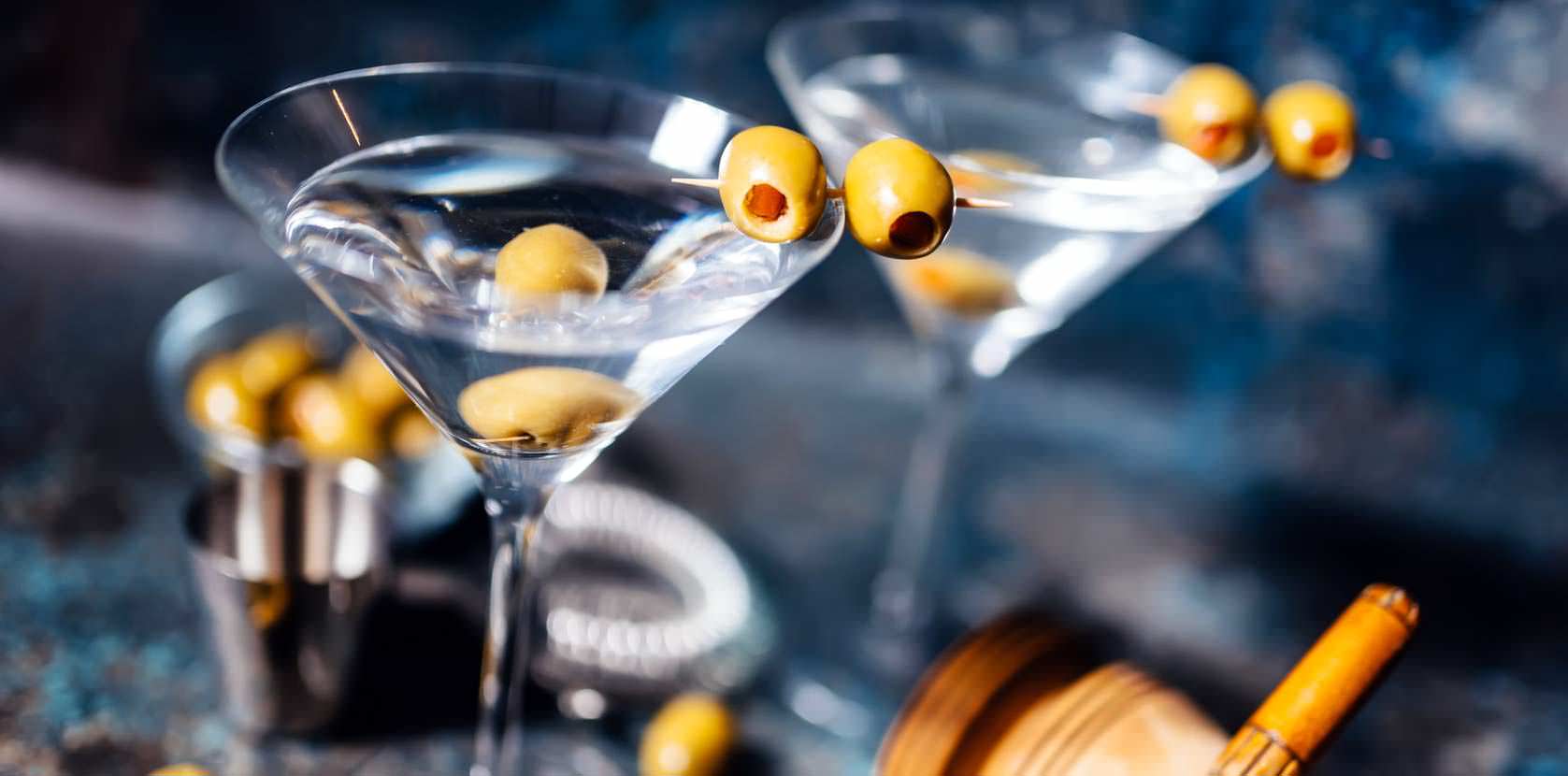
The top five types of green olives include: Cerignola from Italy’s Puglia region, with a crisp and buttery flavor; Liguria from Italy’s Northwestern region, typically cured with bay leaves, rosemary and thyme; Picholine, a torpedo-shaped French olives with a tart and nutty flavor; Gordal, called “The Fat One” in Spanish with a firm, meaty richness; and Manzanilla, a Spanish olive often stuffed with pimientos and dressed with garlic.
And these days, even the oil from olives is making its way into Martinis at watering holes around the world to add a fruity aroma and hint of bitterness to the revered cocktail (not to mention some healthy polyphenols).