Starbucks Could Become a Global Ambassador for Extra Virgin Olive Oil, Experts Say
A new generation of consumers might discover extra virgin olive oil through Starbucks’ new line of olive oil-infused coffee drinks.
Some experts predict that Starbucks’ initiative to blend Italian olive oil and coffee might significantly enhance the global popularity of extra virgin olive oil.
Last week, Starbucks introduced five new olive oil-infused hot and cold coffee beverages at its flagship Italian location in Milan. The company used Nocellara del Belice extra virgin olive oil sourced from the NYIOOC award-winning producer – Oleificio Asaro – in Partanna, Sicily.
Should the coffee-extra virgin olive oil mix achieve a high level of satisfaction among consumers… for sure, it could win the interest of those who might still be hesitant to consume… olive oil.
Nicholas Sampogna, a spokesman for Starbucks, declined to comment on why the multinational coffeehouse chose Oleificio Asaro. The Sicilian producer’s Partanna brand earned a Gold Award at the 2022 World Olive Oil Competition.
Sampogna confirmed that Partanna would also be used in olive oil-infused coffee beverages when launched in California, the United Kingdom and the Middle East later in the year.
See Also: First Vodka Made With Olive Oil Released in Italy“Partanna extra virgin olive oil is the exclusive brand that will be used to craft Starbucks Oleato as we launch around the world,” he told Olive Oil Times.
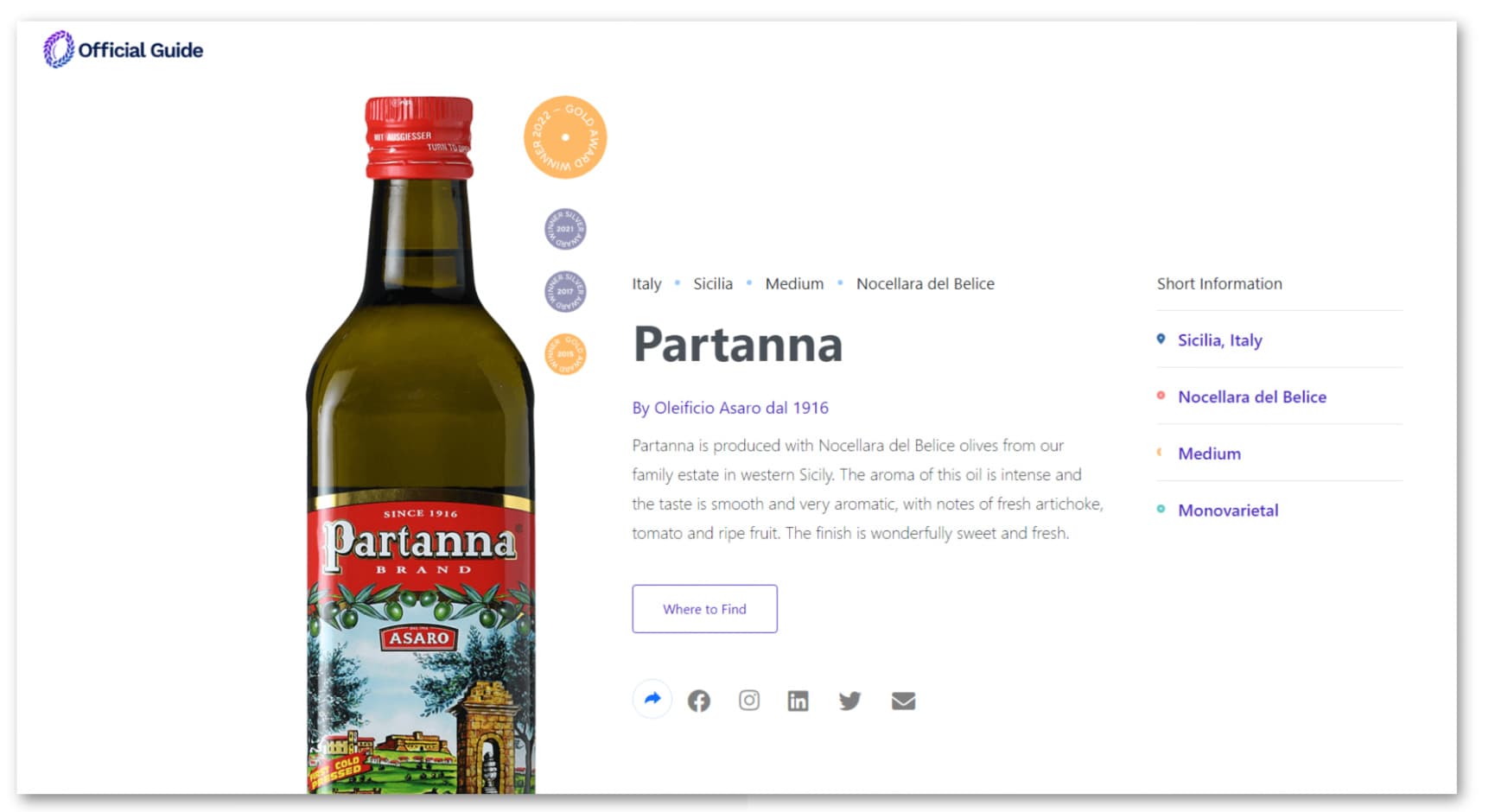
Starvucks supplier Partanna is listed in the Official Guide to the World’s Best Olive Oils.
According to Anna Cane, president of the olive oil group of the Italian Association of the Edible Oil Industry (Assitol), the new beverage could widen the olive oil market’s horizons.
“Mixing coffee and olive oil is a truly challenging innovation,” she told Olive Oil Times. “Extra virgin olive oil is an extraordinary product. Giving it value through coffee could relaunch its image, mostly among the younger generations.”
Denis Pantini, head of the agrifood business unit at Nomisma, a consulting firm, said Starbucks’ global reach could provide a significant platform to promote olive oil.
As he waits for a taste of the new coffee, Pantini told Olive Oil Times how “the partnership between a big player such as Starbucks and a ‘Made in Italy’ product such as extra virgin olive oil offers, without doubt, both promotion and visibility for Italian olive oil.”
“Should the coffee-extra virgin olive oil mix achieve a high level of satisfaction among consumers, then its positive effect will be even more amplified,” he added. “For sure, it could win the interest of those who might still be hesitant to consume a healthy product such as olive oil.”
While representing a breakthrough for the American coffeehouse chain, Cane emphasized how innovators increasingly use extra virgin olive oil to venture into new food and beverage consumption categories.
“Think of extra virgin olive oil-based cocktails, which are appreciated by all great bartenders or the olive oil-based Panettone [a popular Italian Christmas fruit cake],” she said, adding that extra virgin olive oil is increasingly used in ice creams and pastries.
Pantini said the wide variety of extra virgin olive oil organoleptic properties provide plenty of opportunities for innovative food producers to experiment.
“Consumers have plenty to choose from and to explore,” he said. “Let us hope that this new partnership triggers a virtuous circle enabling [extra virgin olive oil] promotion and giving new value to the Italian olive oil and specifically to those olive oils which come from the many different territories of the country.”
Daniel Dawson contributed to this report.