



Brussels to Monitor Olive Oil Prices
Olive-producing countries are showing mixed signals in terms of prices and production despite the market’s relative stability, according to an EU commissioner.
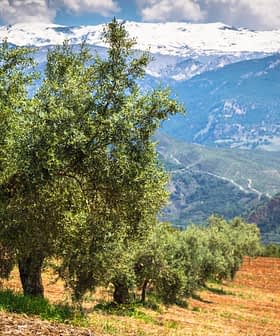
 Photo courtesy of Fred Romero
The European Commission is closely monitoring olive oil prices in member countries, particularly Spain, due to significant price decreases despite stable production for the 2018/19 olive campaign. European Commissioner for Agriculture and Rural Development, Phil Hogan, noted mixed signals in olive oil prices and production across EU countries during a meeting in Luxembourg, with Italy experiencing high prices and Spain facing very low prices.
The European Commission will monitor olive oil prices in member countries, such as Spain, where they have decreased significantly in spite of a rather stable production for the 2018/19 olive campaign.
Phil Hogan, European Commissioner for Agriculture and Rural Development, said during a meeting in Luxembourg that olive producing countries within the European Union are showing mixed signals in terms of prices and production despite the market’s relative stability.
Although at the E.U. level there are no particular signs of market disturbances, my department will closely monitor developments at Member State level in the coming weeks
“Although at the E.U. level there are no particular signs of market disturbances, my department will closely monitor developments at Member State level in the coming weeks,” Hogan said.
Examples of this are the high olive oil prices in Italy, caused by a low yield that was due to difficult weather and Xylella fastidiosa, and the very low prices found in Spain, a country that enjoyed a very good campaign.
See Also:Olive Oil PricesIn Andalusia, where the vast majority of Spanish olive oil is produced, some described the 2018/19 campaign as atypical, with good yields in terms of volume, average quality and lower extraction levels because of an inadequate proportion between olive pulp and skin.
This was caused by an irregular climate throughout the campaign, which featured episodes of untimely rain and high temperatures during the olive cycle. Consequently, there was a lack of uniformity in fruit size and maturation as a result of which many fruits had not yet produced oil at the moment of their picking. This led to a lower fat content, less intense early extra virgin olive oils and difficulties at the time of grinding which required the addition of water to the paste and a resulting correction during extraction.
In January, estimates released by the European Commission indicated that olive oil production numbers for the 2018/19 olive harvest in the European Union were expected to remain rather stable at 2.375 million tons, only 1.4 percent below the 2017/18 campaign yield.
This contrasts with the 5.5 percent decrease in global oil production expected for the 2018/19 as per the estimates provided by the International Olive Council (IOC) to Olive Oil Times. Tunisia and Argentina, with harvests dropping between 55 and 57 percent, were critical in this decline.
Spain was expected to make up for 75 percent of the European Union’s olive production in the 2018/19 season and more than 50 percent of the global production. Italy, the second largest global olive oil producer saw its production fall by 38 percent. Greece and Portugal also had 35 percent and 20 percent decreases, respectively.
According to estimates from the European Commission, Spanish olive production increased by 26.6 percent in 2018/19, when production reached 1.76 million tons, a figure higher than the 1.39 million tons from the previous year. This production volume has enabled Spain to compensate the decreases of other producing countries in the European Union.
Luis Planas, Spain’s Minister of Agriculture, Fishing and Food, is in constant contact with the European Commission to monitor the market evolution. He recommended self-regulation to ensure that prices do not go too low. He also asked the Interprofessional Body for Spanish Olive Oil to develop a proposal addressing strategies to handle demand and prices for olive oil, which will be presented to the European Commission.
Planas is confident that this self-regulation will lead to a price increase, preventing the need to depend on private storage to control offer and demand, withdrawing lower level categories from the market in order to keep reasonable prices. Currently, olives have an average price of €2.40 per kilogram and the Minister expects this would not go lower than €1.78.
The last time private storage was allowed was back in 2012. The procedure is a complicated and time-consuming decision that must be ratified by the European Commission and a number of its member countries.
Related Articles
Feb. 7, 2025
Olive Oil Demand Expected to Grow Alongside Supply
The International Olive Council expects global olive oil consumption to increase with production, though its distribution is changing.
May. 20, 2025
USDA Predicts Global Olive Oil Production Decline
While United States Department of Agriculture economists forecast a lower harvest in 2025/26, producers across the Mediterranean say conditions in the groves are promising.
Jul. 17, 2025
Concerns Mount Over Sharp Decline in Olive Oil Prices
Prices hit record lows in Spain, prompting calls for withdrawal of excess oil from the market to avoid further decline.

May. 22, 2025
European Producers Face Limited Alternatives to U.S. Market
Asia’s most populous and prosperous countries imported less than one-third of the olive oil by value that Spain, Italy and Greece exported to the U.S. in 2023.

Jun. 16, 2025
EU Investigates Alleged Fraud in Greek Agricultural Subsidies
Greek officials are under investigation for mismanaging agricultural subsidies, with allegations of fraud and misuse of funds.
Jan. 28, 2025
Farmers in Hungary Make Headway in Olive Cultivation
Capitalizing on the country’s warming winter weather and the persistence of farmers, olive trees flourish in Hungary's southern territories around Lake Balaton.

Jul. 8, 2025
Europe Endorses Olive Oil Standard Changes Despite Industry Divide
The new standards established by the European Union and the International Olive Council have raised concerns among several European producers.
Sep. 13, 2025
Olive Oil Production in Leading Countries Forecast to Fall to 2.65 Million Tons
Experts project lower but still significant olive oil production in 2025/26 across Mediterranean countries, with price fluctuations and climate playing key roles.