Fourth Generation of Sicilian Farmers Celebrate Local Cultivars
In southeastern Sicily, the producers behind Vernèra share a sense of social responsibility and environmental sustainability.
Nestled in the southeastern corner of Sicily, in Syracuse, Buccheri is the highest municipality in the Hyblaean Mountains. It is widely considered one of Italy’s most beautiful villages.
The village’s picturesque surroundings are home to Vernèra, a company founded nearly 200 years ago that has evolved into an award-winning olive oil producer.
Vernèra’s success story is driven by a passionate commitment and defined by human bonds that find expression in top-notch extra virgin olive oils.
See Also: Producer Profiles“The company was born in the mid-1800s when our great-grandfather bought a small plot of land for his eleven children,” Maria Grazia Spanò said, describing the origins of Vernèra, which she manages with her sister Tania and her brother Gaetano.
“All his sons, however, emigrated to the United States to find work, and the only one who eventually returned to Italy was our grandfather Gaetano,” she added. “He had made his fortune as a contractor building roads in Philadelphia. Once back in Italy, with the money saved, he bought more land and took care of his father’s olive trees.”
When Spanò’s father, Vito, inherited the farm – named after the district of Vernèra, where it is located – he purchased more land and planted 2,000 new olive trees. The property now has 70 hectares with approximately 9,500 trees, mostly of the autochthonous Tonda Iblea variety.
He continued cultivating the family’s passion for olives despite engaging in several other activities. Spanò was also a physician and health official, president of the mountain community and mayor of Buccheri for 25 years.
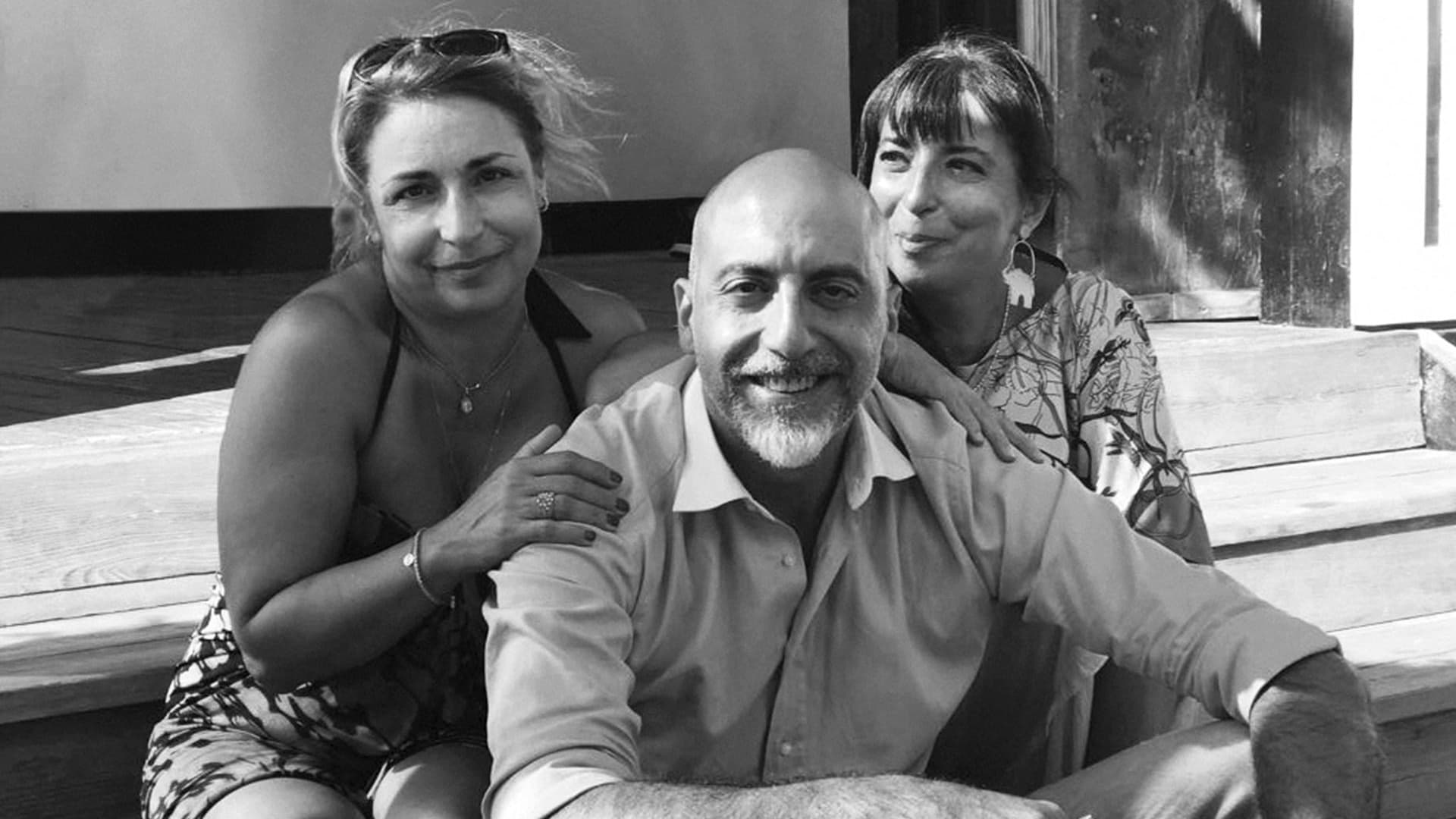
Tania, Gaetano and Maria Grazia Spanò (Photo: Vernèra)
He was also in the group of Sicilian professionals who drafted the production specification of the Monti Iblei Protected Designation of Origin certification.
“He did a great job in the administration of our town and was committed to improving the local olive oil sector,” Spanò said, who has followed in her father’s footsteps and also served as Buccheri’s mayor from 1994 to 1998.
“In 1985, my mother passed away. We wanted to do something that would make her, in a way, eternal,” Spanò said. “Until that time, we used to sell our products wholesale. Therefore, we decided to start bottling our extra virgin olive oil, designing our label and dedicating it to her. Thus, our PDO Le Case di Lavinia (The Houses of Lavinia) was born.”
In 2010, the three siblings did the same to honor their father’s memory after his passing and created the blend Le Terre di Vito (The Lands of Vito). After a couple of years, it was followed by the PGI Sicilia Vico Rosella N.1, which takes its name from their grandfather’s home address.
“Carlo Coniglio, a talented graphic designer, has taken care of our communication from day one,” Spano said. “Being a friend of ours, he knows our homes, family and parents. He was able to conceive labels that perfectly describe their essence with exquisite details. Even the checkered yellow and red pattern that returns on all of them has aesthetic value and recalls the floor tiles in our grandmother’s house.”
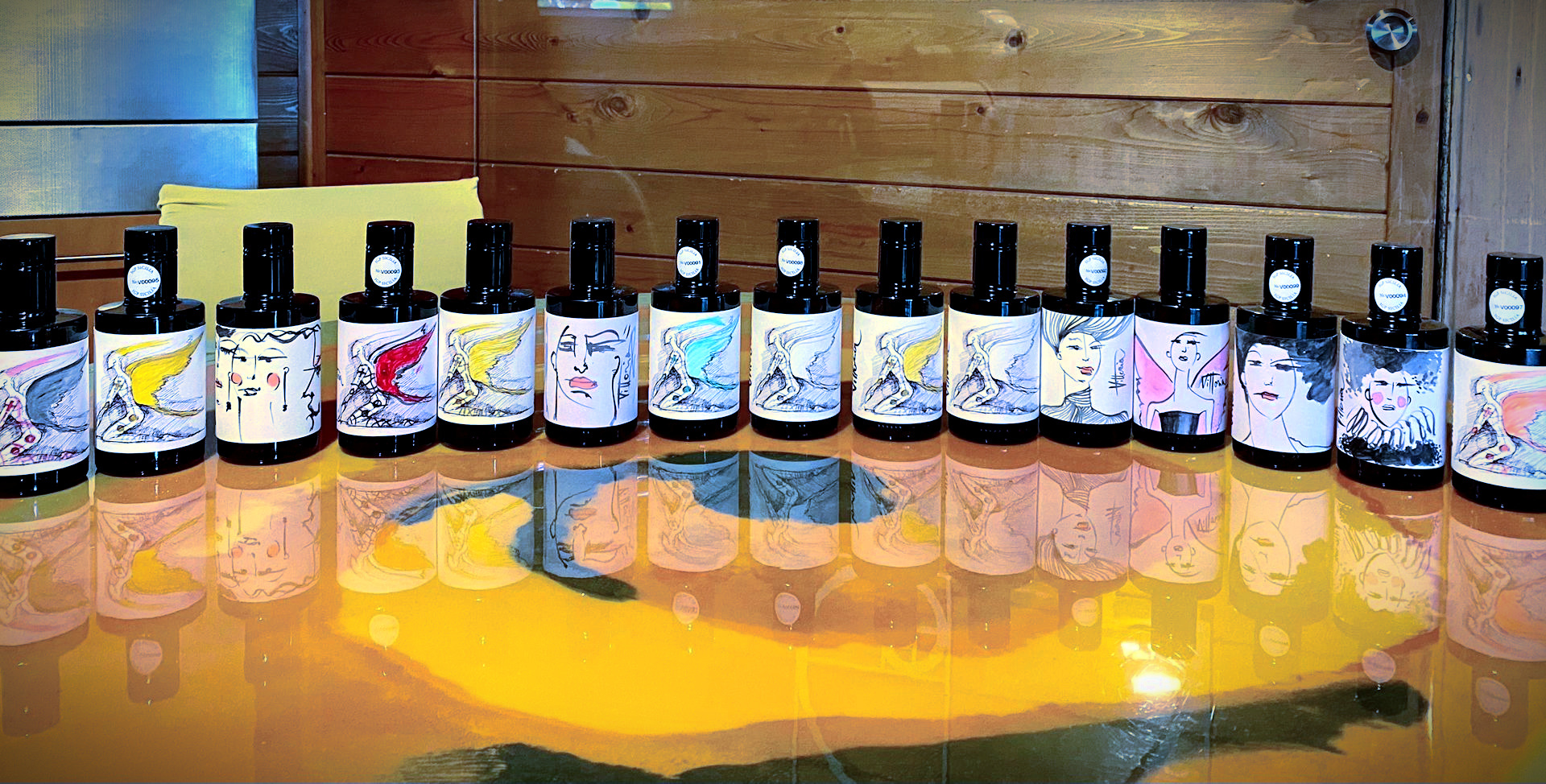
Illustrated labels evoke the company’s history and philosophy. (Photo: Vernèra)
“We worked together on a line of ceramic bottles with embossed designs and messages like ‘Make Oil Not War’ and ‘Peace & Oil,’ with which I wanted to send out a message of peace,” she added.
A sense of corporate social responsibility has guided the choices of Vernèra, which supports organizations operating in humanitarian and social fields at both local and international levels.
In addition to supporting the non-governmental organization Doctors Without Borders, the Sicilian producer shares the goals of the Italian Association of Methylmalonic Acidemia with Homocystinuria cblC type (cblC aps), which supports scientific research and improving the quality of life of patients affected by the rare condition that occurs primarily in neonatal infants causing severe illness.
Proceeds from selling a special line of bottles, with labels hand painted by Carlo Coniglio, go to the association.
The extra virgin olive oils originate from orchards on the slopes of a plateau, an underwater volcanic complex millions of years ago that is now extinct. As a result, the soil is rich in minerals that favor the development of the trees, which also benefit from excellent day-to-night temperature swings.
Along with Tonda Iblea, Vernèra grows Biancolilla and Moresca olives, most of which are centuries old. The trees thrive at a remarkable altitude between 600 and 800 meters and are protected by the local authorities due to their proximity to the remains of the 13th-century Gothic church of Sant’Andrea.
“We are not interested in quantity but in following a process at the end of which we must be happy and those who use our extra virgin olive oils even more so,” Spanò said.
“The harvest is done by hand, at most with rastrelli (handheld rakes), not only because the sloping terrain does not allow the use of mechanical means like shakers but also for the company philosophy that aims to preserve the ancient trees and their fruits as much as possible,” she added.
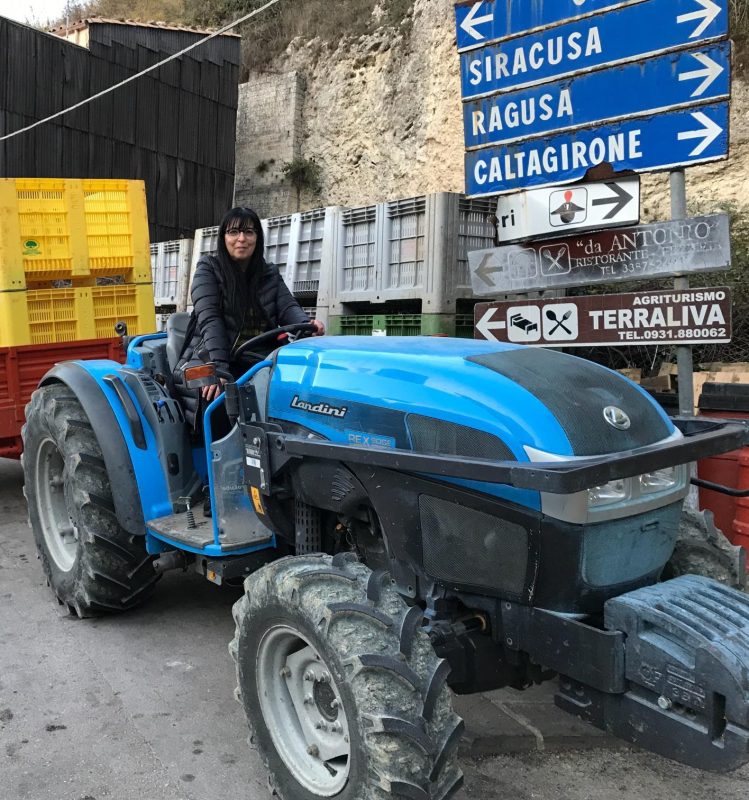
Vernèra harvests its centenarian and millenary trees by hand to preserve them. (Photo: Vernèra)
The olives are harvested and milled within a few hours at Frantoi Covato, a state-of-the-art mill in San Giacomo, a short distance from the farm in the province of Ragusa. Once extracted and filtered, the oil is placed under nitrogen in a controlled temperature environment.
“The product is bottled only at the time of the order, even if we receive an order for just one bottle, because I want it always to remain in ideal condition to preserve its organoleptic properties,” Spanò said.
Great attention is also paid to the environmental aspect of production, as sustainability is one of the core values of the organic farm.
“Sustainable farming is essential to tackle climate change, the consequences of which often caused production decreases in recent years,” Spanò said. “The work in the orchard is continuous and, due to this and other industry issues, is also harder and more expensive.”
However, Spanò believes the emotional and sometimes tense ten months ahead of the harvest are well worth it after entering the mill and smelling and tasting the season’s first extra virgin olive oil.
“It brings me back to the cold nights with my father in the mill, to u pane ch’e olive stricate (‘bread rubbed with olives,’ in the local dialect) that my grandmother prepared for us during the harvest, putting the olives in the embers and then rubbing them on slices of warm bread. And in those moments, I forget all the difficulties.”
“When you look at that emerald green, and you feel that scent, it is a true moment of bliss,” she concluded. “You feel real happiness, and you do not think about anything else; you just think that is one of life’s truly joyous moments.”