



How a Family Mill in Florence Built Five Decades of Olive Oil Craftsmanship
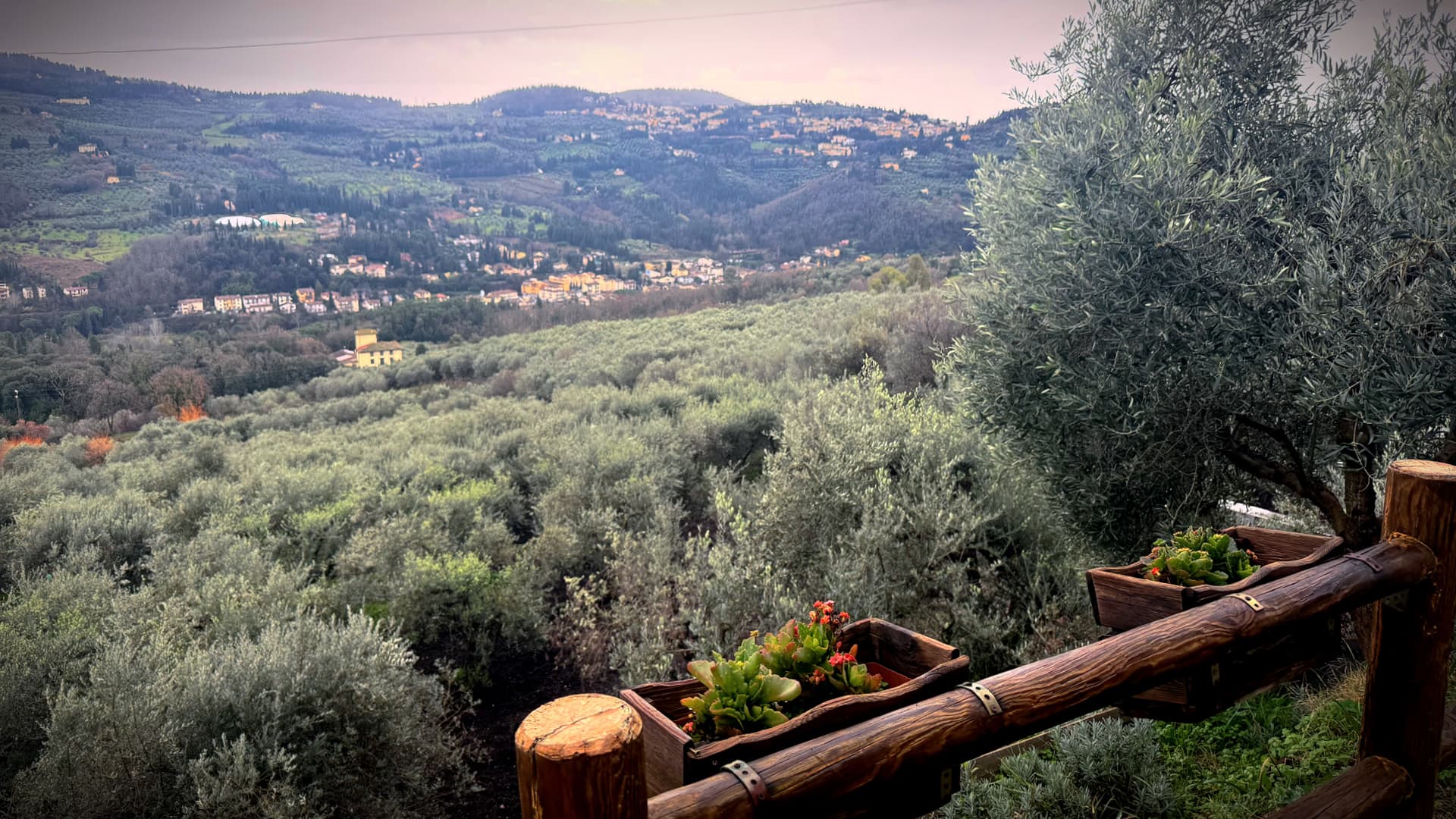

Frantoio Il Mandorlo, a family-run olive oil company in Florence, recently celebrated over 50 years of operation, receiving recognition for their high-quality organic olive oil. The company has evolved from traditional millstones to modern milling technologies, focusing on sustainability and community engagement by supporting local initiatives and promoting environmental stewardship. The company’s commitment to quality and innovation, as well as their dedication to preserving the land and tradition, has positioned them as a leading reference point for olive growers in the area.
Frantoio Il Mandorlo recently marked more than 50 years of activity, evolving from a local milling operation into a reference point for olive growers in the Florence area while continuously updating its technology. In 2002, founder Lino Lonari received the Fiorino d’Oro, the highest honor awarded by the city of Florence to individuals whose work brings prestige to the city and its institutions.
A quality-focused company must also be engaged with its community.
“We have reached the third generation carrying forward the tradition begun in 1974 by my grandfather, a truly visionary figure,” said Daniel Ronca, who runs the company alongside his brother Manuel, their parents Luciano Ronca and Renza Lonari.
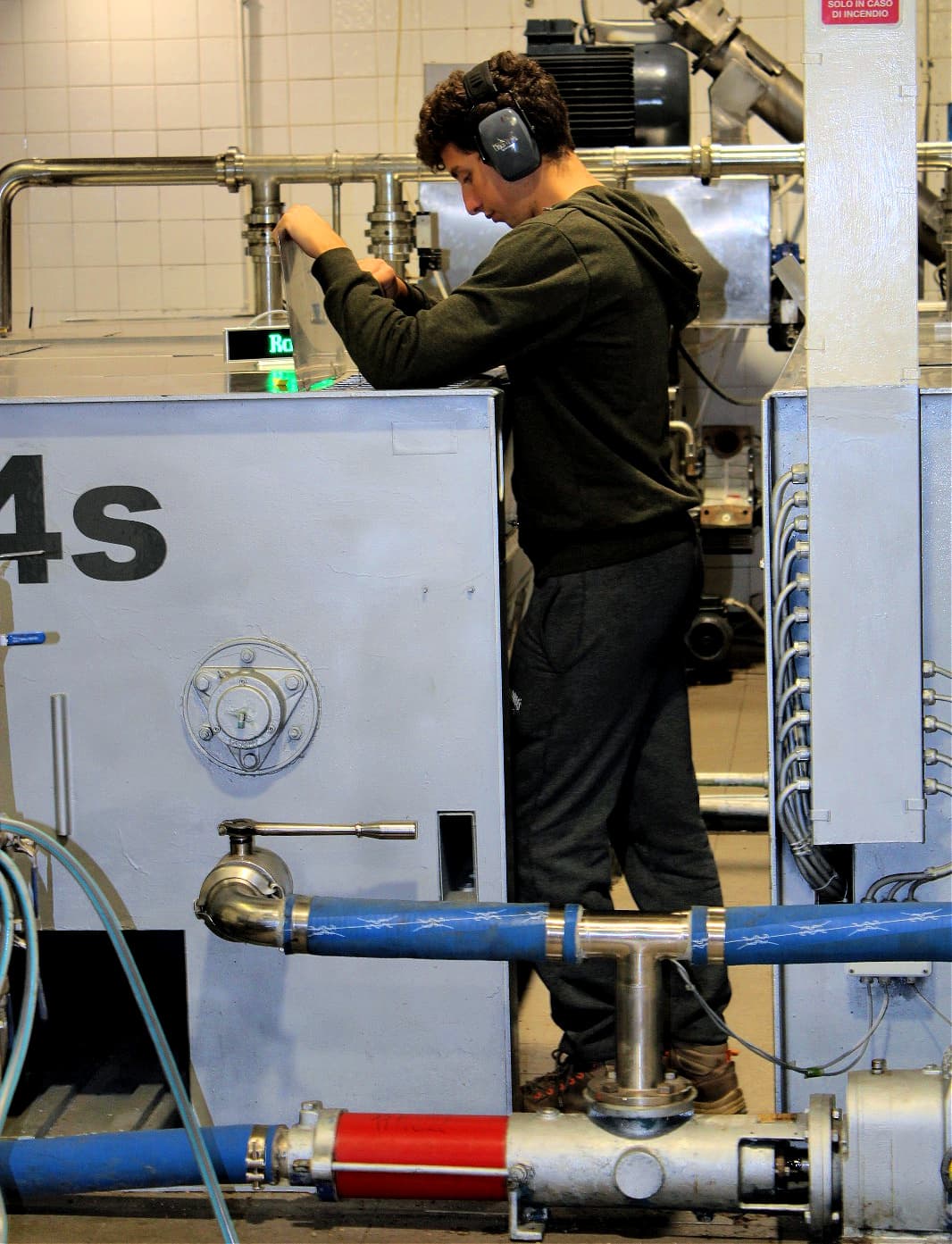
Daniel Ronca is in charge of the milling operations at Frantoio Il Mandorlo
“He started as a sharecropper and ran a small flower stand before building a thriving company,” Ronca said. “The 1970s were favorable years after the economic boom, but it still took courage and foresight to invest in olive milling. Today, we recognize him as one of the first in the area to introduce modern milling technologies.”
Lonari named the company Il Mandorlo, Italian for “the almond tree,” after the almond trees that once lined the Florentine hills where the mill was established. Initially equipped with traditional millstones and presses, the facility transitioned to continuous-cycle technology in the mid-1990s.
The estate includes a seven-hectare olive grove at elevations between 250 and 300 meters, with approximately 2,000 trees of the main Tuscan varieties, Frantoio, Leccino and Moraiolo. Many of the trees were restored after the historic 1985 frost. More recently planted Leccio del Corno trees complete the grove, from which the company produces its organic blend, Il Mandorlo Bio.
The oil’s refined profile, marked by medium to intense green fruitiness with notes of freshly cut grass, artichoke leaf and a hint of almond, earned the family company a Gold Award at the 2025 NYIOOC.
“When my father took over in 2017, he trained as a professional taster and became a panel leader, which proved essential for improving our quality,” Ronca said. “My brother and I joined the management in 2020, and I also became a taster. Producers need to be able to evaluate their own oils, and I had already been exposed to tasting from a young age.”
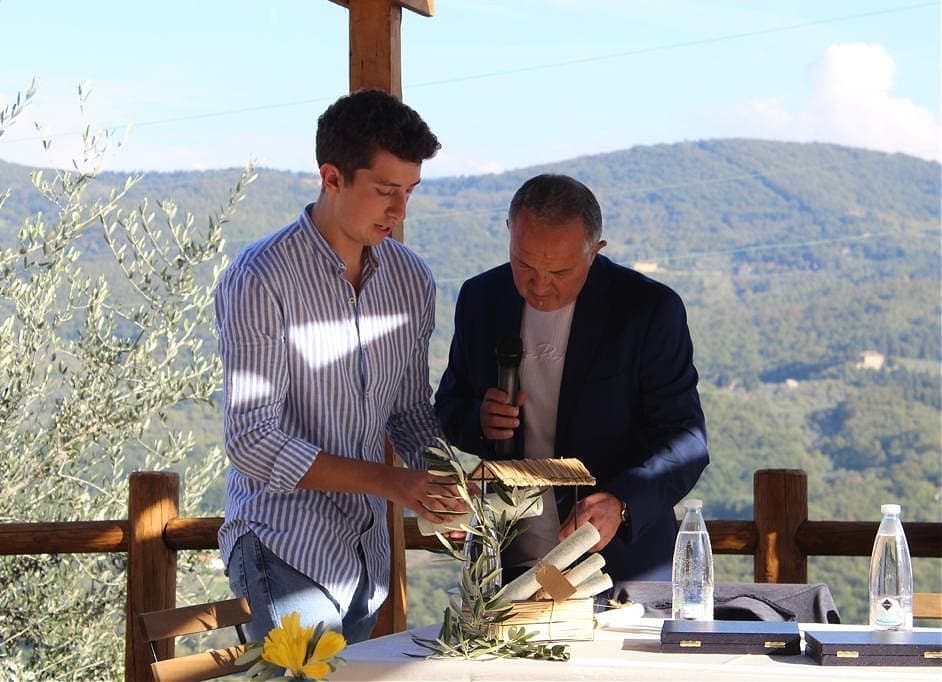
Daniel and Luciano Ronca at Frantoio Il Mandorlo
Having grown up in the grove and the mill, both brothers developed an early interest in olive farming and milling. After completing degrees in agricultural sciences and biotechnology, Ronca recently began a PhD program related to the sector.
“Manuel mainly handles administration, while I oversee the milling process,” Ronca said. “At the same time, I am pursuing doctoral studies to strengthen my scientific background, which I believe is essential for meeting today’s challenges.”
The company produces its own line of extra virgin olive oil and also provides milling services for third parties. It currently operates a latest-generation Alfa Laval plant designed to minimize water use while maximizing polyphenol retention.
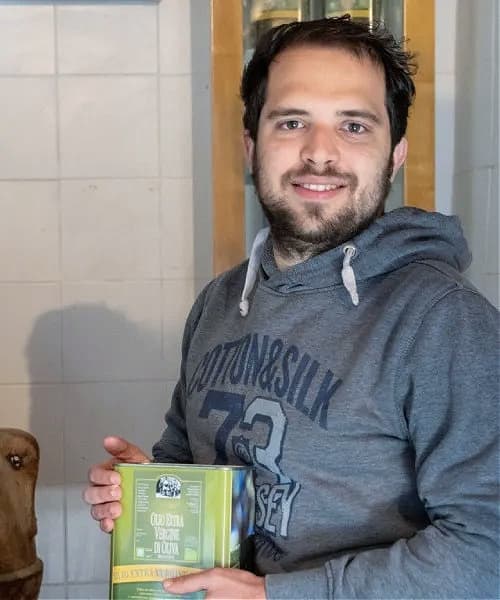
Manuel Ronca, Frantoio il Mandorlo
“We work with passion, building on what my grandfather began and on the quality standards my father further raised,” Ronca said. “My grandfather also converted the company to organic production as early as 2001.”
Environmental stewardship remains central to the company’s philosophy. Ronca noted that his academic background includes environmental sciences, which he continues to deepen to better address climate-related challenges while maintaining a commitment to sustainability.
However, managing pests and diseases organically has become increasingly complex and costly. In response, the company introduced a conventional production line while maintaining environmentally responsible practices across all operations.
“The use of chemicals that accumulate in the soil and affect microflora and microfauna should be minimized,” Ronca said. “This area is ideal for olive oil production, but it is also exceptionally beautiful. We have a responsibility to protect it.”
Located in the hills overlooking Fiesole, the estate has also expanded into oleotourism, offering guided farm visits and olive oil tastings.
“A quality-focused company must also be engaged with its community,” Ronca said. “As producers deeply connected to this land, we feel an ethical responsibility.”
In recent years, the mill has joined two community initiatives. It supports the Rinasciamo 4.0 association by providing milling services for a public olive grove managed by the city of Florence. The project supports victims of violence and vulnerable individuals through harvesting and educational activities.
The company also participates as an indirect partner in a Tuscany Region-funded project aimed at restoring olive trees in public parks, which concludes each year with a competition among the oils produced.
“We hope these initiatives help raise awareness about the importance of caring for olive trees,” Ronca said. “Land abandonment caused by a lack of generational renewal is a serious issue. We are working to recover abandoned groves in the area and bring them back into production.”
“In recent years, the effects of climate change and rising production costs have made producing high-quality extra virgin olive oil increasingly challenging,” Ronca added. “That is why continuing to learn and adapt is essential. Awards like the NYIOOC Gold motivate us to keep moving forward.”
Related Articles
Sep. 5, 2025
NYIOOC 2025 Southern Hemisphere Edition Live Updates
Judging is underway at the 2025 NYIOOC World Olive Oil Competition Southern Hemisphere Edition, with results to be released in real time as they are certified.
Apr. 17, 2025
Top Producers Emerge as Competition Nears Final Results
As results continue to be announced, a snapshot reveals a dynamic and competitive year, with established leaders holding their ground and new challengers making a name for themselves.
Nov. 4, 2025
Drought and Low Yields Push Jordan to Explore Olive Oil Imports
With output expected to fall by half due to drought and natural yield cycles, Jordan faces rising olive oil prices and supply shortages.
Jul. 23, 2025
Italian Producers Wrap Up a Modest Season
The moderate harvest comes amid a wider trend of declining olive oil production. Producer groups are working to add value and improve climate resilience.
Nov. 17, 2025
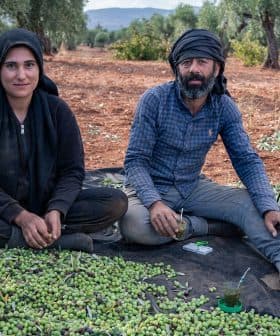
Amid the Hum of Olive Mills, Afrin Farmers Work Under Threat
In Afrin, the hum of olive presses returns, but unease lingers as Turkey-backed factions continue to influence Syria’s main olive-growing region.
Feb. 26, 2026
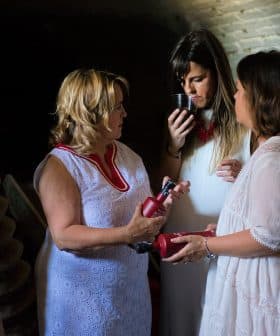
Gold Award Marks a Standout NYIOOC Debut for Jaén Picual
Pago de Espejo earned a Gold Award at the 2026 NYIOOC, with co-owner Rosario Minchón Espejo crediting early harvesting, careful milling and a focus on balance for the debut win.

Feb. 18, 2026
Dalmatian Heritage and Early Harvest Precision Drive an Award-Winning Brand
Sebastijan Adžić says archaeological finds off Croatia’s Dalmatian coast reinforce his commitment to traditional olive growing, now paired with early harvest practices and fast milling to protect aromas and polyphenols.
Mar. 3, 2026
Italy’s Organic Food Market Nears €7 Billion as Demand Outpaces Supply
A new report says organic is expanding in Italy, but organic extra virgin olive oil remains a niche.