New Legislation Aims to Limit Use of ‘California’ on Olive Oil Labels
Supporters of Assembly Bill 535 say it will protect California growers from unfair business practices. Detractors believe the bill punishes large producers and is unconstitutional.
New legislation has been introduced to the California State Assembly that would tighten the restrictions on using the word “California” on olive oil labels, in marketing campaigns and by brands.
Existing laws in the state, which is responsible for virtually all of the olive oil production in the United States, already prohibit using the term “California olive oil” on labels in which the contents were not produced from 100-percent California-grown olives.
It’s time we stop people from profiting off our name by giving the impression consumers are getting something they’re not.
However, the new legislation goes one step further. It prohibits the use of “California olive oil,” “California olives” or other similar terms in brand names, product labels, packaging material, company letterhead, invoices, business cards, signs and other oral, written or printed material associated with products that are not produced from 100-percent California-grown olives.
See Also: Crafted in California Makes its DebutThe bill would also apply similar restrictions for olive oils produced in certain regions of the state unless 85 percent of the olive oil (by weight) had been produced in the named region.
“This is in response to the growing devaluation of California extra virgin olive oil by California Olive Ranch’s products that cynically and with false representations carry the name California marqueed across their label to give consumers the impression the olive oil is from California, driving them to buy something that is not, but rather from foreign countries,” Alan Hilburg, the founder of the California Coalition for Truth in Olive Oil Labeling (CCTOOL), told Olive Oil Times.
“AB-535 is simply designed to end misleading practices and level the playing field by holding those whose actions demean and devalue the California brand accountable,” he added. “The passage of this bill will go a long way to protecting the integrity of the California brand and starting a new era of trust [in California olive oil].”
Assembly Bill 535 was first introduced at the beginning of 2020 by Assemblywoman Cecilia Aguiar-Curry, but was tabled after the onset of the COVID-19 pandemic and reintroduced last month.
“This bill will ensure that consumers know exactly what they are buying, and it will help to support our local farmers who are producing world-class oils from olives grown here in our state,” Aguiar-Curry said in a press release. “It’s time we stop people from profiting off our name by giving the impression consumers are getting something they’re not.”
Aguiar-Curry represents California’s fourth state assembly district, which includes several prominent olive-growing regions. Hilburg estimates that between 150 and 200 olive growers are located in her district.
The bill is currently awaiting a vote in the agriculture and health committee before returning to the assembly floor for a full vote. Hilburg, who has been following the process closely, said that the bill is likely to pass with bipartisan support and Governor Gavin Newsom could sign it before the end of the year.
However, the process is far from over. Michael Fox, the CEO of California Olive Ranch (COR), told Olive Oil Times that he and other producers who the legislation will negatively impact intend to fight it.
“This is a direct attack on California Olive Ranch,” Fox said. “Fundamentally, we believe AB-535 as currently drafted violates existing federal First Amendment rights around commercial speech, and we are confident there are several very strong legal arguments challenging its constitutionality.”
The former PepsiCo and Safeway executive added that he believes the bill punishes large producers and could “negatively impact hundreds of jobs across the state.”
Milad Emam, an attorney at the Institute for Justice, a non-profit libertarian public interest law firm, agrees that AB-535 is unconstitutional.
“If California enacts AB-535, the bill’s olive oil labeling requirements would be unconstitutional,” he said. “The olive-oil labels that AB-535 regulates are not misleading when they conspicuously identify their product’s region of origin.”
At the crux of the issue are products such as COR’s Global Blend brand (formally known as the Destination Series), which is made from olives farmed in Argentina, California, Chile and Portugal.
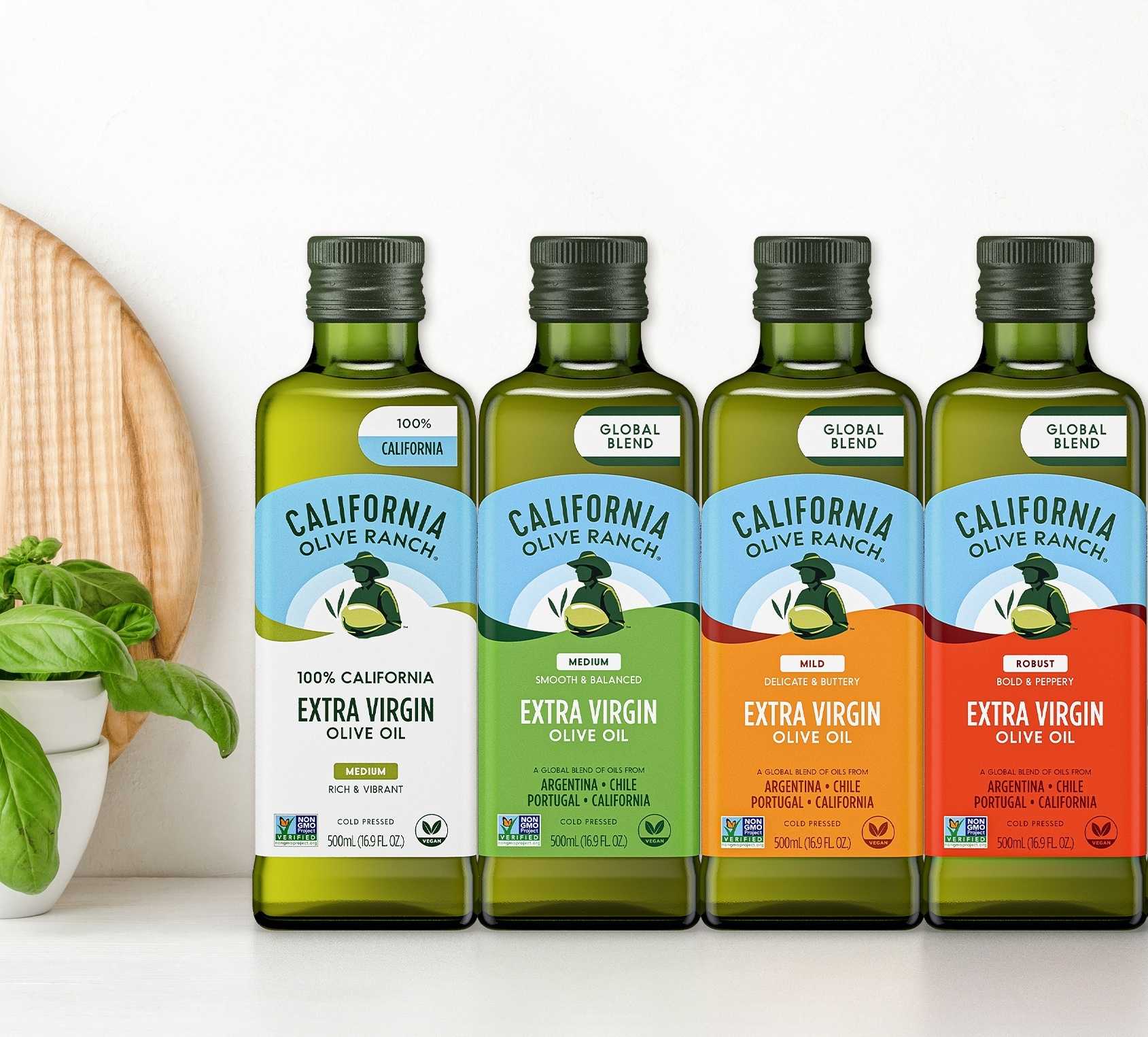
California Olive Ranch argues their blended brands are differentiated from their 100-percent California olive oil.
Hilburg contends this brand does not “conspicuously identify” the origin of their products. He argued that regular consumers cannot easily read the smaller print on the labels that identifies the origins of the bottle, but can easily see the larger “California” printed at the top of the label.
According to Emam, there are several precedents set by previous cases that protect brand names and company trademarks from being restricted by legislation. He added that passing AB-535 would set a dangerous precedent.
“Besides being unconstitutional, the speech restrictions in AB-535 would set a dangerous example,” Emam said. “Just as reasonable consumers know that Kentucky Fried Chicken has products fried outside Kentucky, they know that olive oil with ‘California’ in a trademark sometimes consists of out-of-state olives.”
However, members of CCTOOL say that selling imported olive oils in a bottle labeled conspicuously with “California” undercuts their products. They argue that these blended olive oils are produced at lower prices than 100-percent California olive oil while heavily implying that it is a California product.
Fundamentally, we believe AB-535 as currently drafted violates existing federal First Amendment rights around commercial speech, and we are confident there are several very strong legal arguments challenging its constitutionality.
“It’s trading on our region and name with a product that is not even close to a majority from our region and undermines all of us that are trying to do business and promote our product as a California extra virgin olive oil,” Greg Traynor, co-owner of 43 Ranch, told Olive Oil Times.
He added that, anecdotally, many consumers with whom he speaks during mill tours and olive oil tastings at 43 Ranch assume that the Destination Series was made with California-grown olives. For Traynor, this misconception exemplifies the need for AB-535.
Fox disagrees with CCTOOL and Traynor on these points and emphasized that COR’s Global Blend brand – which make up roughly 70 percent of the company’s olive oil sales – is accurately labeled and complies with all existing legislation in place to prevent false advertising.
See Also: The Best Olive Oils From the U.S.“We’re not giving consumers enough credit,” he said. “We’ve tested this with consumers and done consumer research that shows 90 percent of consumers can understand the difference between our 100-percent California bottle and our Global Blend bottle. Consumers get it.”
Citing market research from IRI/SPINS, Fox said in the two years that COR’s Global Blend has been on the market, items labeled as 100-percent California extra virgin olive oil had grown in volume by 315 percent and are 116 percent more expensive than the extra virgin olive oils of major importers, up from 96 percent in January 2019.
“There is no data that illustrates that accurately labeled products like our Global Blend have had any negative impact on the broader California extra virgin olive oil producers and their growers,” Fox said.
Olive Oil Times could not independently corroborate this data and IRI/SPINS did not respond to questions about the report.
Fox added that large-scale producers, such as COR, rely on blending imported olive oils with California olive oils to meet the demand for the product. He said that COR is sold in 29,000 stores across the U.S. and relies on imported olive oils to maintain its expensive shelf space, especially after poor local harvests, such as the previous one.
“We have to have the ability to compete and this allows us the flexibility to manage high-yield years and bad years,” Fox said. “This line was born out of a crop disaster and last year we had an off-year that was worse than we like and climate change has an impact too.”
“We have to be able – after spending millions of dollars to secure space on supermarket shelves – protect that investment and continue to deliver olive oil to consumers,” he added. “We should be allowed to compete like this.”
See Also: America's largest olive oil producer goes rogue.However, CCTOOL members and supporters argue that having the word “California” emblazoned on a bottle of mostly-imported olive oil is not allowing them to compete on a level playing field.
“In California, we’re subject to much stricter regulations, much stricter oversight when it comes to how we treat our workers and how we use water and pesticides,” Samantha Dorsey, president of McEvoy Ranch and a member of CCTOOL, told Olive Oil Times. “All of that costs money and that’s true for every crop in California.”
“Every one of us who grows crops in California, we’re proud of the crop that we grow and proud that it’s a high-quality product,” she added. “Imported products are not subject to the same regulatory oversight and they just completely diminish the work that we do here.”