Trans Adriatic Pipeline on Trial for Uprooting Olive Trees in Puglia
TAP executives have been summoned to appear in court on May 8 and will face charges of committing environmental damage including the unlawful removal of olive trees.
The company behind the Trans Adriatic Pipeline (TAP) and 18 of its top executives have been called to trial in southern Italy.
In the region of Puglia, TAP has been responsible for uprooting at least 10,000 olive trees, including some listed as “monumental,” to make way for the controversial pipeline, which is being constructed to transport gas from Azerbaijan.
We are going through hard times, being punished for defending our home and future generations.
TAP executives have been summoned to appear in court on May 8 and will face charges of committing environmental damage. The company has been accused of carrying out unauthorized work in restricted areas and on agricultural land deemed to be of “considerable public interest,” polluting groundwater and the unlawful removal of olive trees.
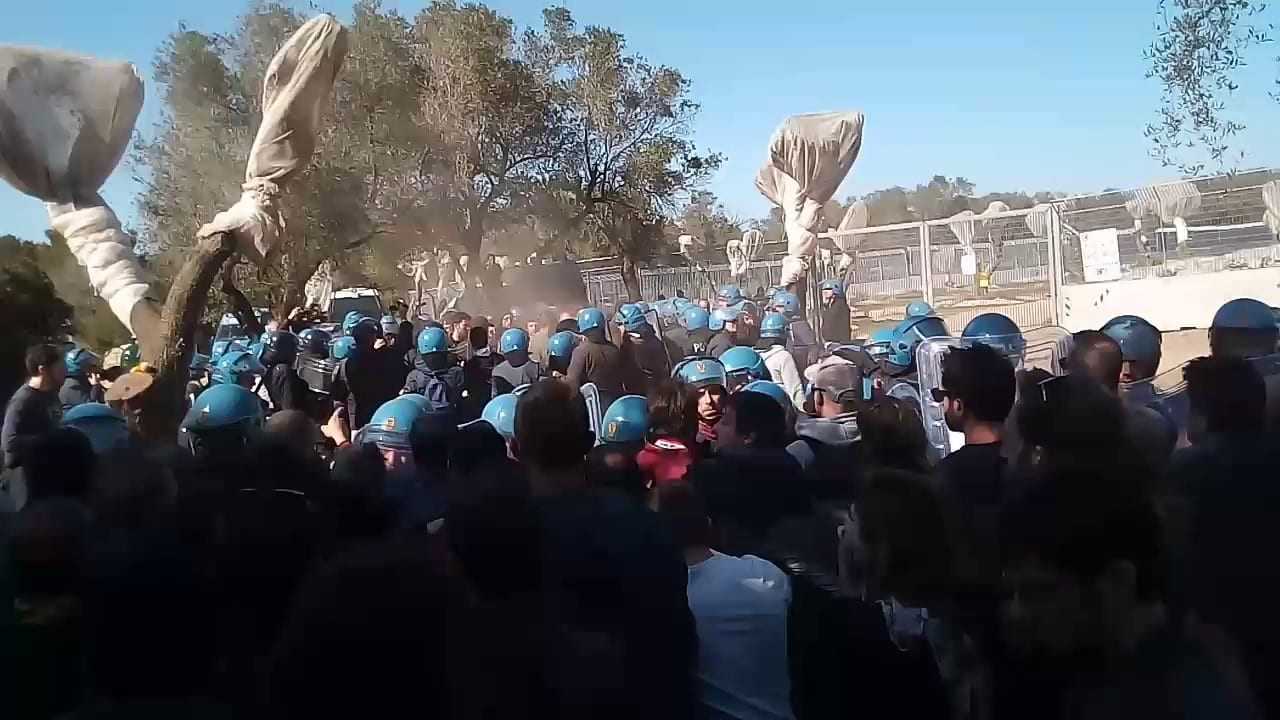
In 2017, Olive Oil Times reported on the widespread protests in Puglia that broke out when the company was given the green light to uproot more than 200 trees to facilitate construction of TAP’s Italian terminal in Melendugno, despite ongoing appeals.
See Also: Trans Adriatic Pipeline NewsThe upcoming court case against TAP has failed to quell the anger of the No-TAP organization, which was formed to prevent the pipeline’s construction. Around 100 of the group’s members have been charged with participating in unauthorized demonstrations, blocking roads and insulting a public official at the height of the 2017 protests.
Sabina Giese who is heavily involved in the No-TAP movement told Olive Oil Times that charges had already been brought against 25 No-TAP activists. They appeared in court back in January.
Giese said there was widespread frustration at the length of time taken to bring TAP to account and anger that the authorities had been much quicker in bringing charges against peaceful protesters.
She also expressed outrage that work on the pipeline has not been halted in light of TAP’s trial and suggested there had been corruption between Italian and Azerbaijani government officials, but provided no evidence to back up this claim.
Vito Matteo
Giese played an active role in what she called the “legitimate and peaceful protests” of 2017 and went as far as tying herself to an olive tree to prevent its removal.
This resulted in her being taken to court and charged with delaying work on the pipeline.
“We are going through hard times, being punished for defending our home and future generations,” she said.
The doomed olive trees were given a short reprieve when a court order was issued against their uprooting. However, the trees were removed after TAP pledged to meticulously care for them and eventually replant them on their original sites.
Giese said that far from being well looked after, the olive trees are dying. She claimed to have photographic evidence and reports that support this claim.
Puglia’s governor, Michele Emiliano, was instrumental in bringing charges against TAP and had the support of several local towns, the environment ministry and other consumer and heritage associations. Giese said that funding for the hearing has been provided by leaders of the No-TAP Salento group including Alfredo Fasiello.
The TAP project was given the go-ahead in Puglia, a region highly dependent on agriculture and tourism, despite threats to the environment including; the destruction of olive farms, damage to water sources, loss of cultural heritage sites and a reduction in the local coastline.
No-TAP claimed that residents and environmentalists were not consulted prior to the construction of the pipeline. They also believed there was a failure in adequately assessing the environmental impact of the pipeline, which, according to No-TAP, fell short of the Paris Agreement on reducing fossil fuel production.
The charges against TAP were coordinated by the Lecce prosecutor following an investigation by the carabinieri – Italy’s main law enforcement agency.
TAP executives called for trial include Michele Mario Elia, TAP’s country manager for Italy, and project manager Gabriele Paolo Lanza. Marco Paoluzzi, director of RA Costruzioni SRL, the company which carried out the works, was also named as a defendant.
TAP has declined several requests from Olive Oil Times for comment on the charges against the company.