Tracing Olive Oil History Through Ancient Cuisines
In her new book, Joan Nathan documents the global migration of olive oil and Jewish food since the biblical era.
Considered the preeminent Jewish food historian, author Joan Nathan has incorporated more than 40 years of study into her most recent book, King Solomon’s Table: A Culinary Exploration of Jewish Cooking from Around the World.
We went through the time in the 1950s and ’60s of processed foods, including oils. Now we’ve returned to appreciate the ways olive oil is good for our food and our health.
Nathan begins her critically acclaimed book with an overview of Jewish food history, introducing readers to King Solomon, whose existence is subject to debate. Solomon is considered to have led Israel for four decades beginning in 970 B.C.E.
As Nathan writes, Solomon’s legacy “offers an image of a ruler presiding over a diversity of cultures, an abundance of food, and reaching beyond his borders to feed his kingdom.”
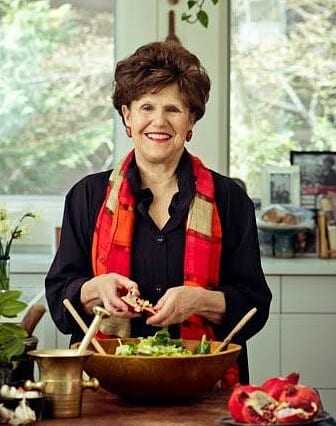
Joan Nathan
Solomon exported wheat and olive oil, Nathan writes here in her 11th book. In an earlier book, Nathan writes that olive oil was accepted as a form of payment for taxes in Solomon’s era.
Noting its historic use for cooking, light, and heat, Nathan said, “I’ve always been interested in olives and olive oil because they are bridges between the past and present. They are integral to the ancient food we’re now making in modern ways.”
Nathan cites the chickpea pancake as an example. Placing the recipe in its historical context, Nathan notes that Mesopotamians used chickpea flour since at least 2500 B.C.E. and that migrants brought it to southern Europe centuries later.
Originating in Nice, Nathan’s socca are chickpea pancakes with fennel, onion, and rosemary. The vegetables are sautéed in olive oil. Naturally vegan and gluten-free, the chickpea pancake assumes various names in the many countries that serve it today.
In her recipe for what she colloquially terms “eggplant bits,” the award-winning author embeds a metaphor. The recipe itself is Jewish-style eggplant with Italian and Georgian influences. To Nathan, the “wandering eggplant” represents her nomadic profession.
“I feel as if eggplant has been the leitmotif of my culinary career,” Nathan writes. “Throughout my life of eating in homes and restaurants around the world and writing about ethnic foods, eggplant has always been there, calling me to order it from the menu, begging me to request the recipe from the cook.”
Where there’s eggplant, there’s olive oil. “The pairing is so natural it’s almost hard to imagine an eggplant dish without olive oil,” said Nathan, a frequent contributor to The New York Times and Tablet magazine.
Nathan has been studying the link between olive oil and Hanukkah for at least 20 years, arguing in 1996 that Hanukkah is “as much a celebration of the olive as it is of the miracle of the oil that lasted eight days.”
Nathan’s chocolate and olive oil mousse is neutral under Jewish dietary laws, making it a versatile dessert for Hanukkah and other holiday meals.
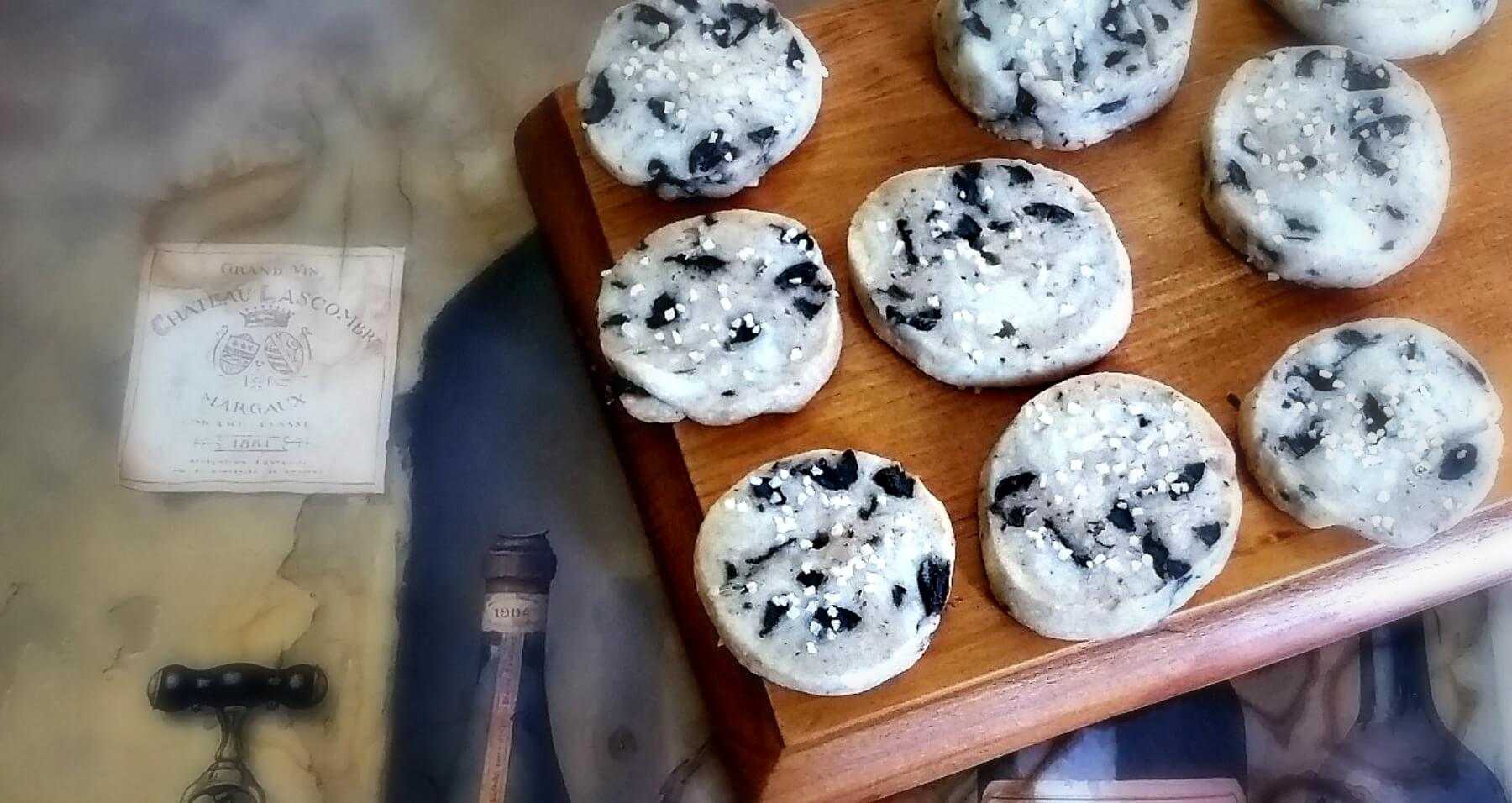
Scourtins
Her scourtins are dairy biscuits rooted in history. “A scourtin, an ancient press to mash cured olives, is also the name of a very old biscuit, now served as an appetizer with drinks, a specialty of Nyons, in the south of France, a town that had a Jewish population from at least the 13th century and where many Jews fleeing south during World War II took refuge,” writes Nathan.
The recipe is shortbread cookies with olive oil, chopped black olives, and fennel.
“The purity of olive oil brings us back full circle to its popularity through the millennia,” said Nathan. “We know it’s one of the earliest oils, next to coconut and sesame. We went through the time in the 1950s and ’60s of processed foods, including oils. Now we’ve returned to appreciate the ways olive oil is good for our food and our health.”