Bureaucracy Hampers Expansion of Olive Oil Production in Croatia, Producer Warns
Award-winning producer Marijana Podrug sees increased production and tourism potential in Croatia but said government bureaucracy is getting in the way.
A growing number of Croatian women are successfully engaged in olive growing. Among them is Marijana Podrug from Piramatovac, a picturesque town in central Dalmatia.
Podrug is the owner of OPG Podrug, which comprises 1,600 olive trees from five to 150 years old on seven hectares.
“The problem is that the olives are scattered in 25 olive groves in as many different locations. But you can do anything when you want,” Podrug told Olive Oil Times.
See Also: Producer ProfilesWith the help of her husband, Denis, children, Sara and Dino, mother-in-law, Marica, and family friends, Podrug is completing this year’s harvest with a shaker in hand.
“The harvest is excellent, and the fruits are healthy. It’s a pleasure to pick them,” she said.
Podrug started picking at the beginning of October and continued to harvest daily through the first half of November. The fruits were transformed at the Laća Oil Company in Skradinski Polje on the same day.
“We are satisfied with the yield and quality,” she said. “This year, we received 40 tons. The oils are all extra virgin. Along with spiciness and mild bitterness, aromas and fruitiness are expressed.”
OPG Podrug has earned various awards at international olive oil competitions, including a Silver Award at the 2022 NYIOOC World Olive Oil Competition, the world’s largest olive oil quality competition.
“Our oils have won for two years in a row,” she said, adding that the awards have led to increased demand for her olive oils, which are sold at the family shop.
The awards are the latest chapter in the ongoing evolution of the family company, of which Podrug took control eight years ago.
“My father-in-law, Milan, founded it about 17 years ago,” she said. “I took it over and modernized it with funds from the European Union’s rural development program.”
Before taking the reigns of OPG Podrug, Podrug previously managed another small business.
“I had a store for moms and babies, and my husband worked in a print shop as a graphic designer,” she said. “Additionally, we had a family stand selling fruit and vegetables, where my father-in-law and mother-in-law worked, and my husband and I procured goods for them.”
When she took over OPG Podrug, Podrug and her husband devoted themselves to working on the property full-time.
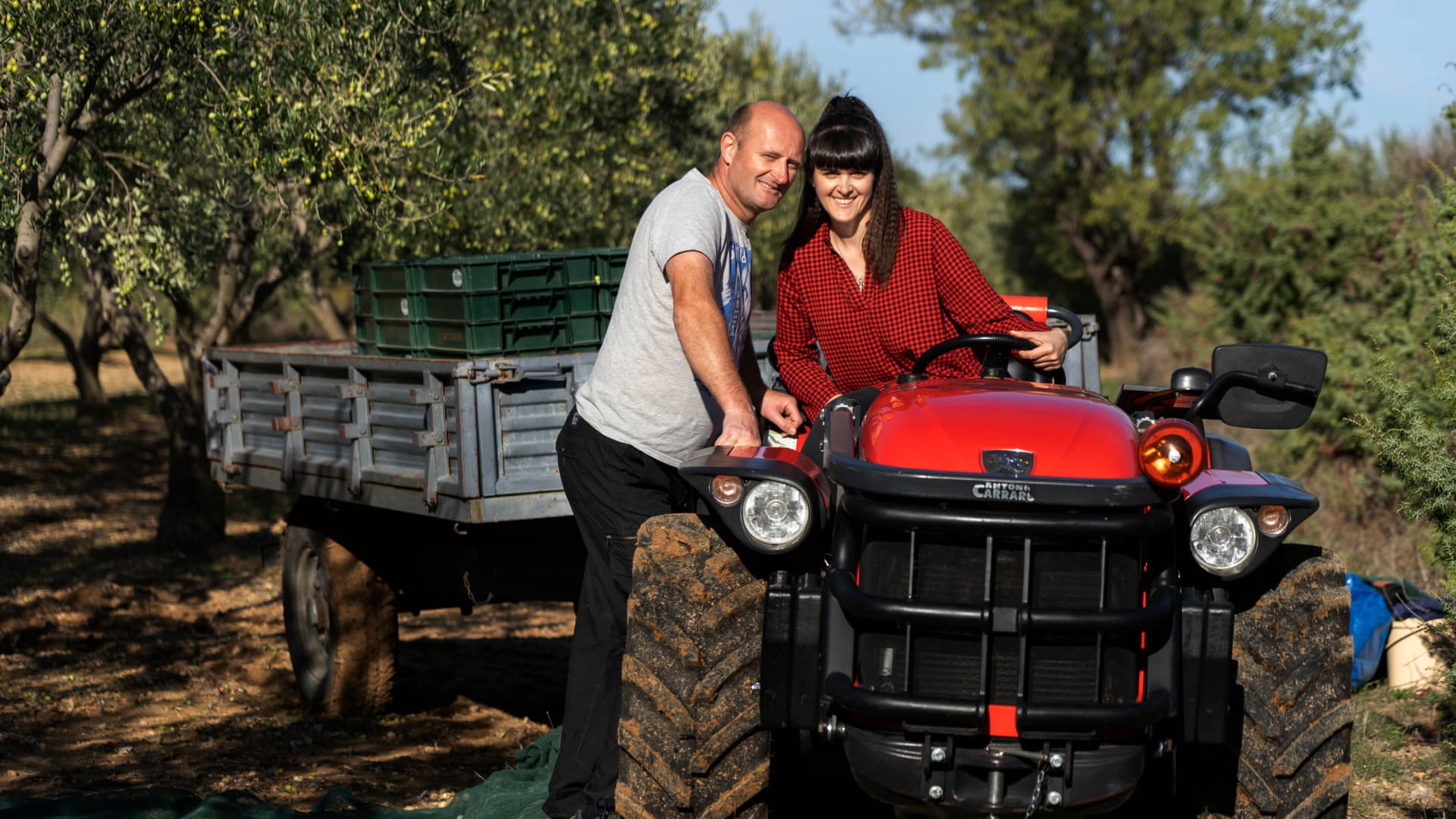
Marijana and Denis Podrug
The couple successfully applied for a small business loan and received 380,000 Kuna (€50,000). With this and money from their own business, they bought new equipment and converted all their farmland – including vines, fruit trees and a vegetable garden – to organic cultivation.
Along with extra virgin olive oil, Podrug uses other fruits to make cakes, jams and marmalades. She also produces sauerkraut and sauces from the cucumbers, peppers and tomatoes she grows.
She sells all of these products at the family shop near the entrance of Krka National Park. As a result of the location, the family sells to plenty of tourists visiting the park.
“We have good conditions for developing olive tourism,” Podrug said.
See Also: Despite Drought, Croatia Enjoys Fruitful HarvestHer efforts to produce olive oil have not gone unnoticed. Three years ago, Podrug was recognized for her entrepreneurship and awarded as runner-up on International Day of Rural Women, which coincided with World Food Day.
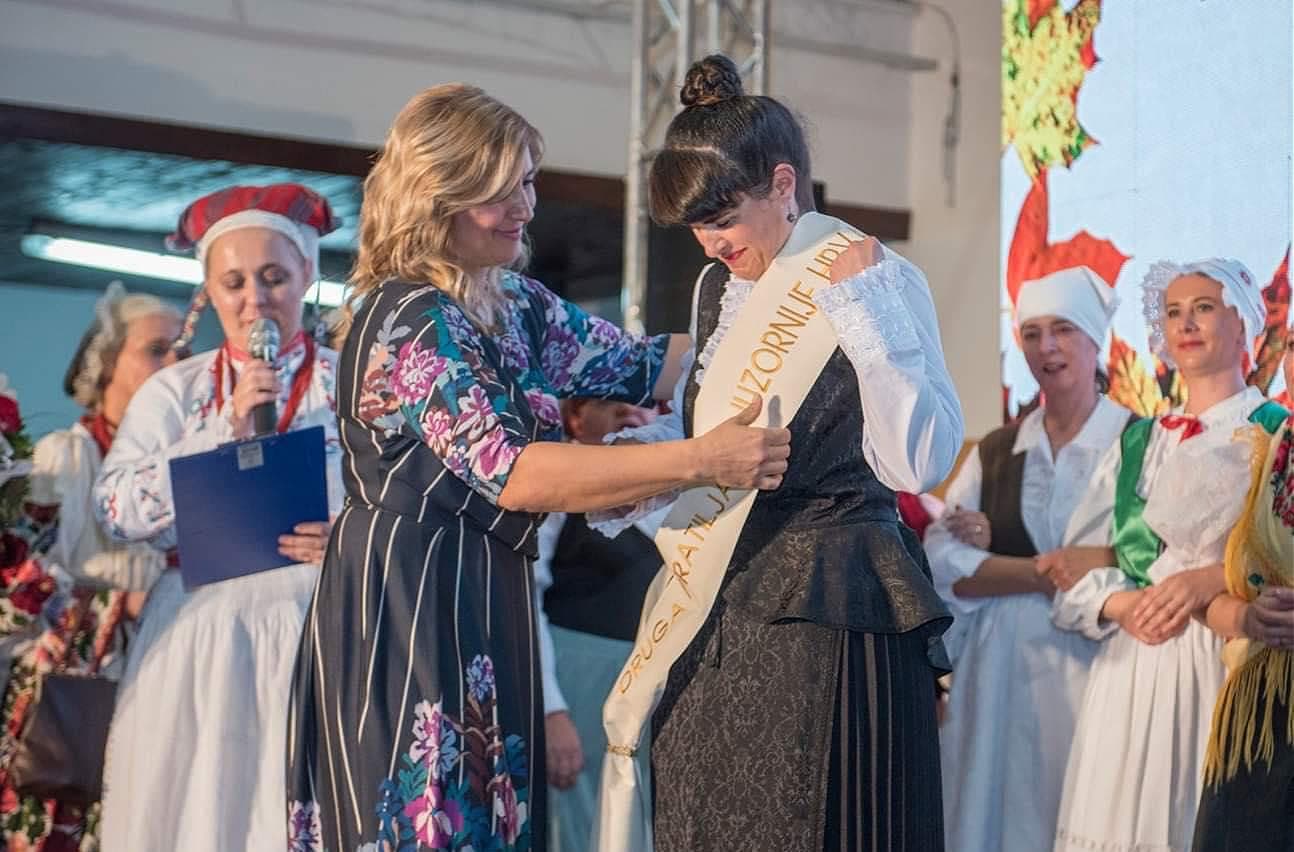
Marijana Podrug recognized on International Day of Rural Women
She has no shortage of ideas and plans to start hosting olive oil tastings at the farm to promote olive oil tourism.
“The nearest tasting room is in Vodice, 20 kilometers away,” Podrug said, adding that she also wants to host tours of the groves.
However, before expanding her operations, Podrug requires more capital, which has been difficult to obtain.
“Unfortunately, this is the third year of waiting, and the bureaucracy is playing with my life,” she said.
To ensure the success of her farm for future generations, Podrug also wants to purchase more land and plant more olive trees. However, the necessary paperwork to buy the land has also been very slow and logistically challenging.
As a result of what Podrug considers to be an inefficient bureaucracy, she said the country is full of “dead capital,” more than one million hectares of uncultivated land in Croatia.
She believes that if even a small part of this land were to be cultivated, it would be possible to drastically increase Croatian olive oil production, allowing the country to meet domestic demand of about 1.5 liters per capita annually.
According to official data, there are 3,748,705 olive trees in Croatia that produce 3,000 to 4,500 tons of olive oil each year. However, unofficial figures are much higher – some say almost three times higher than the official statistics.
Podrug believes increasing production would eliminate the need to import cheaper olive oils, which she said hurts local producers.
She asserted that many imported olive oils are of lower quality – even adulterated – and urged the ministry to conduct quality analyses of imports to confirm this.
“Although we are not self-sufficient in the production of olive oils and cannot match the quantities and prices of large producers, we have a quality that we are proud of,” she said.
Podrug points to the performance of Croatian producers at the 2022 NYIOOC as evidence.
Croatians earned 96 awards from 112 entries, making the country the third most successful in terms of total awards and the joint most successful in terms of winning percentage for any country that submitted more than three oils.