Catalonia Expects Significant Increase in Olive Oil Production
Catalonia’s olive oil production is expected to double in 2025/26 due to improved weather conditions, but challenges remain for producers.
Olive oil production in Spain’s fourth most significant producing region is expected to double in the 2025/26 crop year.
According to the Federation of Agricultural Cooperatives of Catalonia, the region is expected to produce 35,500 metric tons of olive oil, a significant increase from the 15,350 tons produced in the previous harvest.
Before the significant production drops of 2023/24 and 2024/25, Catalonia produced about 30,000 tons annually.
There are areas of Catalonia that were historically rainfed and will be able to be irrigated in the coming years. This represents an opportunity for the sector to gain productivity and stability.
“The rains of recent months, which facilitated flowering and ripening, also favored an improvement in production, especially in rainfed olive groves,” said Antoni Galceran, the federation’s head of olive oil. “It remains to be seen whether yields also improve, after a bad year in this regard.”
Tarragona, the leading producing province in Catalonia, is expected to see the most significant increases, with yields rising from 5,700 tons in 2024/25 to 24,000 tons for the current harvest.
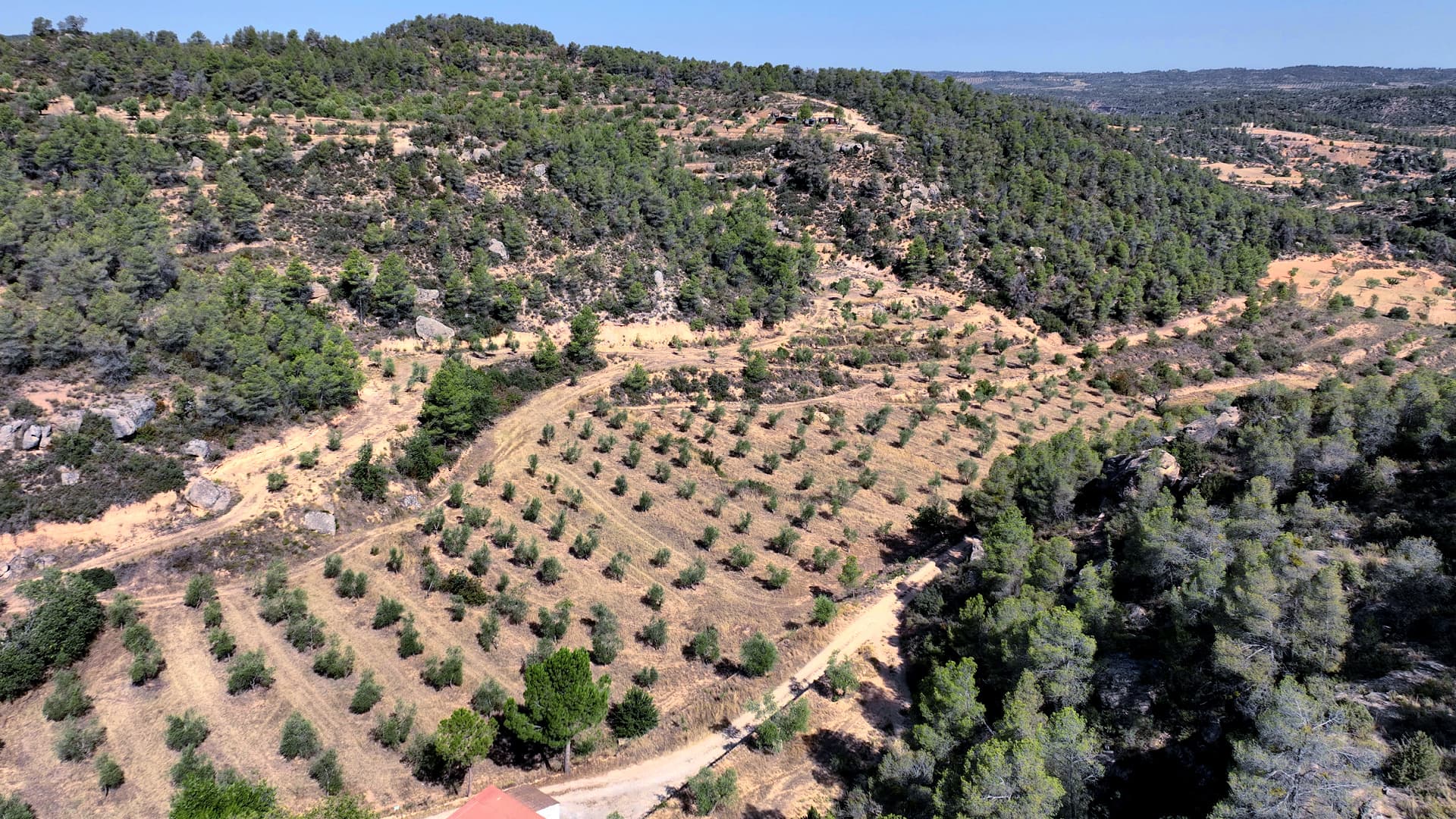
Producers in westerly Garrigues county expect a higher production, but are still calling for the completion of regional irrigation infrastructure projects. (Photo: Oli Cometes)
The counties of Baix Ebre and Montsià, where the most significant production in the autonomous community is located, were expected to have a “normal” harvest. Production was also expected ot increase in the province’s other five counties.
See Also: 2025 Harvest UpdatesHowever, extreme weather in Montsià also has producers worried, with reports of hail in recent weeks knocking olives to the ground and damaging branches.
More modest increases are also anticipated in Lleida, from 8,500 to 10,000 tons and in the coastal regions of Barcelona and Girona, increasing from 1,150 to 1,500 tons.
In Lleida, the producers at Torres Import said they are expecting an improved harvest from previous years.
“The long-awaited rains in 2024 have helped restore the balance of the olive groves, and a good harvest is expected this season,” said Magda Martí Vargas, the company’s commercial manager.
“The change in the olive groves is significant,” she added. “The trees have good vegetation, and the flowering was splendid in May. Currently, the earliest varieties on the estate are already veraison, and the later ones are beginning to bloom.”
Looking ahead, Martí said timing the harvest to pick the fruit at their optimal stage of ripeness while avoiding the late autumn rain will be the most significant challenge.
In the longer term, she added that finding enough qualified employees to work in the groves year-round continues to be a challenge.
“Farm work is costly,” she said. “Tasks such as pruning and olive harvesting are done manually on the farm. It’s increasingly difficult to find people with technical knowledge and a passion for working in the fields.”
Farther west in Lleida’s Garrigues county, the 2025/26 harvest is underway at Oli Cometes. The award-winning producer anticipates an increase in production compared to 2024/25 and 2023/24.
“This year, we have not suffered the severe drought that we have been experiencing for the past two years, so in terms of the quantity of olive fruit from the trees and the yield in the first days of milling, the campaign is expected to be better than last year,” co-owner Anna Canal said.
Due to the “severe drought” that plagued Catalonia over the past two years, Oli Cometes saw production fall by two-thirds compared to normal yields.
“However, we probably won’t reach the average from years before the drought,” she added.
This year, Canal said the company’s olive grove was full of fruit, with the team harvesting more kilograms than the previous harvest and enjoying 15 percent fat yields in their green Arbequina olives.
However, Oli Cometes’s olive groves are not irrigated, so Canal said that since extreme heat and no rain in August interrupted the relatively mild start to summer, the olives are maturing quickly.
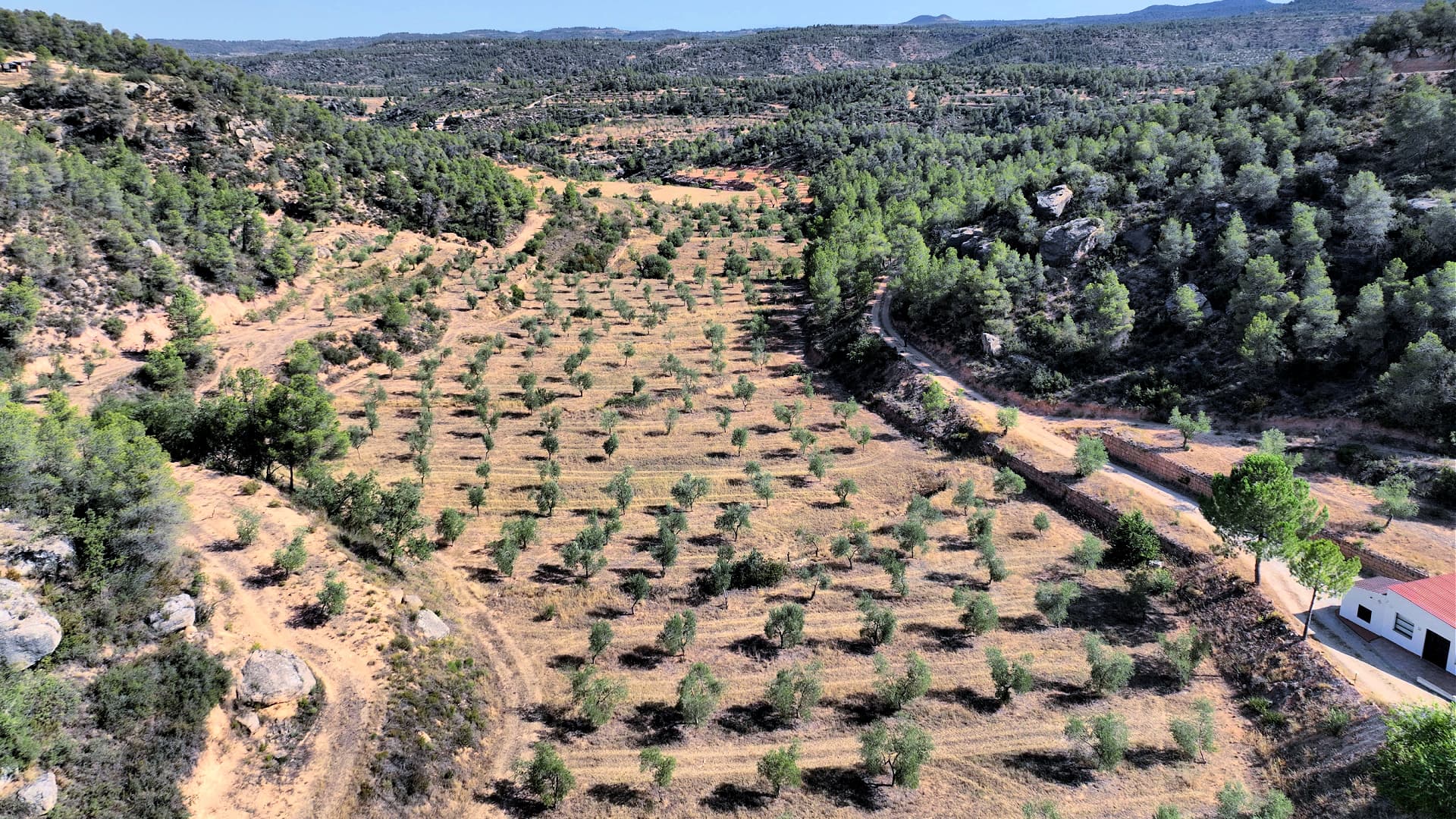
Olive oil production is expected to more than double in the 2025/26 crop year, rising to 35,500 metric tons. (Photo: Oli Cometes)
“This means that if it rains in the coming days and weeks, the olives will fall, and part of the harvest will be lost,” she said.
Overall, Canal highlighted the lack of irrigation in Catalonia as a challenge and an opportunity.
“The clearest opportunity we have in our area is irrigation,” she said. “Irrigation has been planned for our area for 22 years.”
However, Canal said the company meant to install the new systems in the province is well behind schedule, with no certainty about when the work will be completed.
See Also: Summer Heat Trims Andalusian Olive Oil Output“Water is not only essential for the plants and trees in this area, but also for the population,” she said. “We are in an economically depressed area, and irrigation water is the only option for crops to thrive and therefore the only option for the region’s inhabitants to survive and avoid migrating to the big cities.”
Gerard Camps, the director of Gaudea, also located in Garrigues, echoed this sentiment.
“There are areas of Catalonia that were historically rainfed and will be able to be irrigated in the coming years,” he said. “This represents an opportunity for the sector to gain productivity and stability.”
According to Camps, the award-winning producer forecasts a 30 percent production increase this season.
“Production in kilograms is similar, but we have a three to four percentage point increase in yield compared to last year,” he said.
While the lack of water and heatwaves are the main challenges facing producers in Catalonia, Camps added, “we believe the only thing that could spoil the harvest is an early frost.”
Other producers are looking forward to significant harvest rebounds in different parts of Catalonia.
“If we follow the estimates and look at our olive groves, we could reach 35,000 kilograms of oil,” said David Ribas, the head of quality and food security at Finca La Gramamosa.
“Indeed, this year’s harvest has increased significantly,” he added. “Our olive grove in Barcelona will be the same as last year’s, but our olive grove in Tarragona has doubled our production.”
Ribas attributed the production increase to the plentiful rain at the beginning of the year and the agricultural best practices followed by the company throughout the season.
Instead of agronomic factors, he cited olive oil market conditions as the most significant challenge facing producers in Catalonia, but noted that focusing on the region’s most well-known endemic olive variety presents a potential solution.
“The current challenges for extra virgin olive oil are price fluctuations, new consumers and our ability to generate new product profiles to add more sales niches where they already exist,” he said.
“Our flagship variety is the Arbequina, which is challenging to harvest but very rewarding, and it is gaining many followers in Spain,” Ribas concluded. “This variety could be the foundation for what may come in the coming years, a new crop in a new planting framework.”