Monte do Camelo Wins Big with Sustainably Grown Native Varieties
The small-scale Portuguese producers earned a Silver Award at the 2024 NYIOOC for a Galega monovarietal. The company focuses on growing native olives sustainably.
For the third year in a row, Monte do Camelo has been recognized on the international stage. The Portuguese producer earned a Silver Award at the 2024 NYIOOC World Olive Oil Competition for its Tratturo de Fronteira brand, a medium-intensity Galega.
The ten-hectare farm is nestled in Fronteira in upper Alentejo, one of Portugal’s principal olive oil-producing regions.
Sometimes, sustainability is cited without real merit. In our case, growing biodiversity is a relevant part of our work here. Our goal is maintaining the soil while helping the environment thrive.
Ana Cardoso and Paolo Morosi started growing olives in 2017. They initially concentrated their efforts on the local Galega cultivar and later incorporated the Cobrançosa to diversify and enrich their production.
Morosi said Galega trees produce modest amounts of small olives. “The trees are strong, healthy and resilient,” he added.
See Also: Producer ProfilesThe couple expressed a combination of satisfaction with the recognition and motivation to improve for the next year upon learning the news of the award.
“We are, of course, very happy with the results at the NYIOOC,” Cardoso said. “Last year, we won a Gold Award with our Cobrançosa monovarietal at its debut. We hoped to win Gold this year as well.”
“One of the unusual aspects of the excellent Galega olive oil is its volatile notes, which tend to quickly change so that on the nose, the green, fruity aromas might quickly turn to almost ripen while retaining that unique green, fruity flavor in the mouth,” she added.
When Cardoso and Morosi first acquired the farm in 2014, about 1,000 Galega olive trees were scattered across the property.
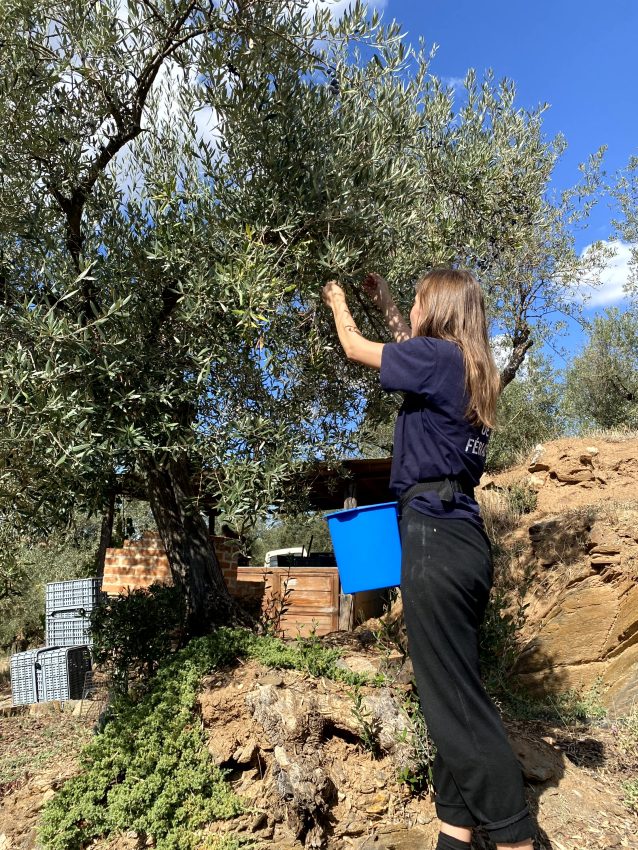
Cardoso and Morosi cultivate Galega and Cobrançosa, both native to Portugal. (Photo: Monte do Camelo)
“They are randomly scattered across the farmland, up to ten meters apart,” Cardoso said. “It is beautiful, even if harvesting might require more effort than elsewhere.”
In 2018, the couple expanded their operations, adding 2.5 hectares of Cobrançosa olives in a densely planted orchard setting.
“Those are the only olive trees we irrigate,” Cardoso said. “They are young trees. Once they grow a bit, we will stop irrigation.”
This approach reflects the growers’ commitment to sustainable agricultural practices and anticipation of future self-sufficiency.
Four years ago, motivated by their studies at the University of Lisbon and other educational pursuits focused on processing technologies and procedures, Cardoso and Morosi built a mill.
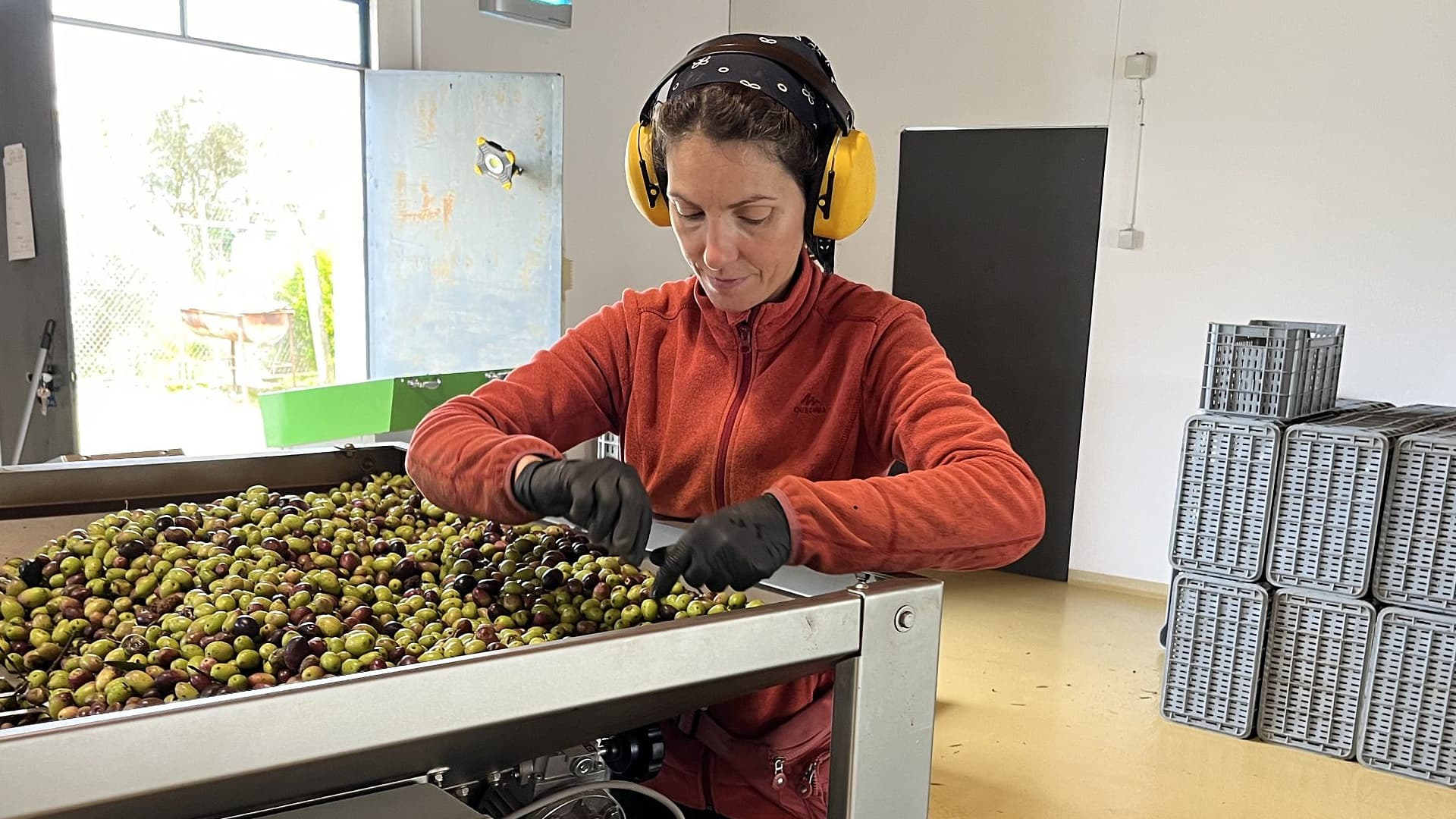
In 2020, Cardoso and Morosi built a mill to control the produciton process. (Photo: Monte do Camelo)
“We had to, as we did not want our olives mixed with those of other producers, which happened before,” Cardoso said. “We adopted an organic approach promoting regenerative agriculture, something not many other producers in the area apply in the groves.”
Monte do Camelo’s extra virgin olive oil will be formally certified organic next year, completing the legal requirements for converting to organic farming.
“Sometimes, sustainability is cited without real merit. In our case, growing biodiversity is a relevant part of our work here,” Cardoso said. “Our goal is maintaining the soil while helping the environment thrive.”
The farm discontinued the traditional practice of tillage. Instead, the couple has begun planting leguminous plants to enrich the soil and prevent erosion, a common practice in the arid region of Alentejo.
Additionally, the farm reuses compost from pruning remains and olive milling byproducts spread across the orchards to fertilize the soil.
Monte do Camelo is also the guardian of a vibrant ecosystem around the property.
“In the outer areas of our property, we maintain a rich diversity of autochthonous plants, shrubs and trees, which define the borders of our farmland and are also a significant habitat for animals and insects,” Cardoso said.
Furthermore, the couple has implemented measures to support local wildlife, including providing water storage tanks accessible to animals during the region’s often extended dry periods and creating quiet nesting areas for birds and bees.
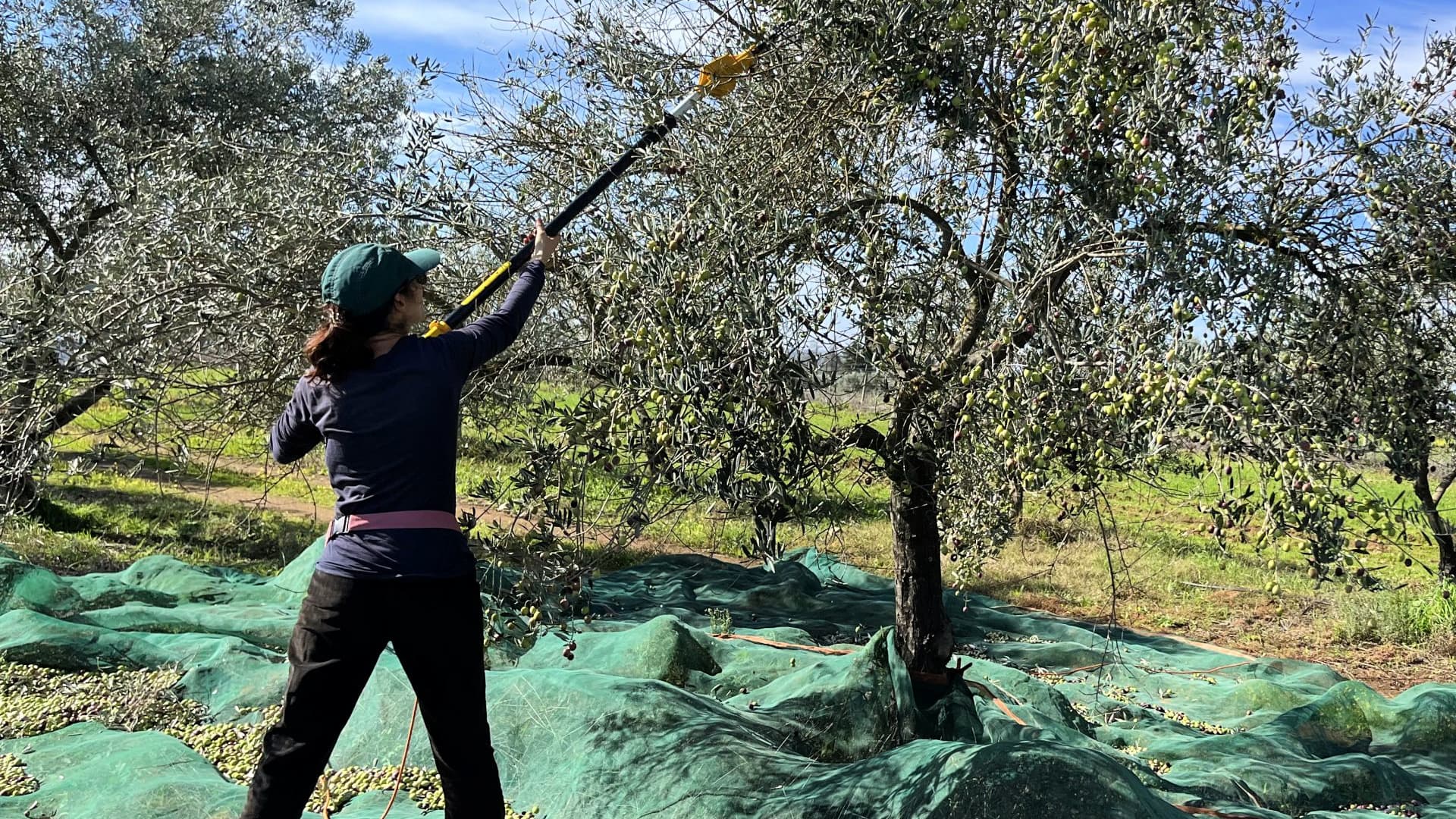
Hiring enough harvest workers is among the challenges Monte do Camelo faces. (Photo: Monte do Camelo)
“Birds in the orchards are precious, as in daylight they can efficiently combat the spreading of the olive fruit fly,” Cardoso said. “We also provide houses to the local population of bats, which at night will have the olive moth as part of their diet.”
The most recent season was particularly fruitful for the Portuguese producer. “The 2023/24 season was bountiful, despite a quite dry winter followed by a drought, which probably triggered even higher levels of polyphenols,” Cardoso said.
“While the previous season was really bad for us, as well as for so many other people in the country and elsewhere, this one has gone much better,” she added. “A reason for this is the organic treatments we provide to our trees, be it potassium, calcium or boron. Those are all aimed at reinforcing the plants.”
As Monte do Camelo aspires to break into the North American market, it faces ongoing challenges, such as labor shortages and regulatory hurdles, but it remains focused on producing high-quality olive oil.
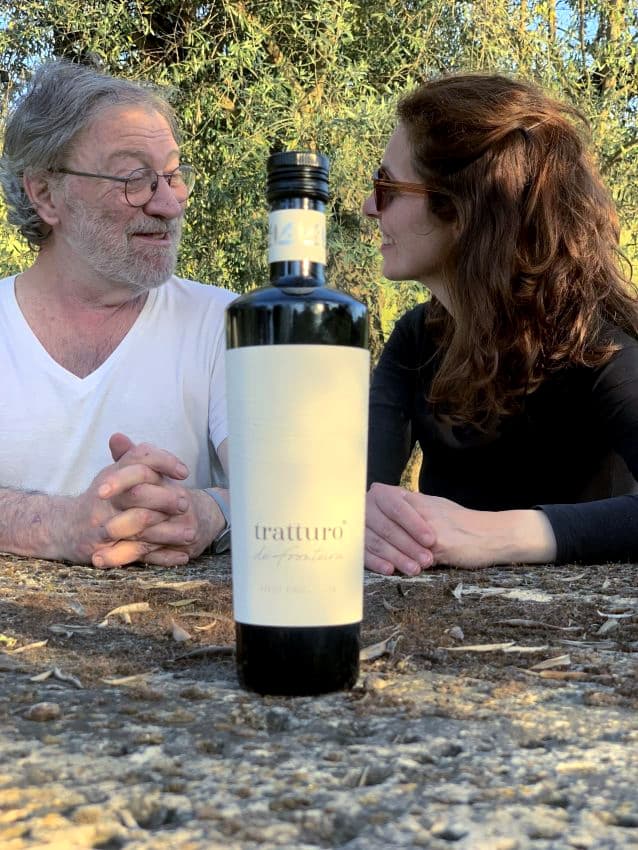
Winning awards at the World Olive Oil Competition helps Monte do Camelo reach new markets. (Photo: Monte do Camelo)
“The harvest is manual, with the sole help of the harvesters, and you have to arrange the nets for the olives under the trees and move them around,” Cardoso said. “I would say that the lack of seasonal workforce is the number one problem for high-quality olive oil production in the region.”
As the number of high-density and super-high-density olive farms increases in Alentejo, the couple admitted in an October 2023 interview that it makes it harder for small-scale producers to compete.
“Small-medium scale producers, in addition to having to cope with drought and other challenges, find themselves forced to contend with the ever-increasing number of super-intensive groves, both environmentally and economically,” Cardoso and Morosi said.
Despite these challenges, the farm’s success at the NYIOOC further strengthened its reputation, attracting new customers and confirming its status as one of the world’s top olive oil producers.
“Winning in New York was a confirmation,” Morosi concluded. “Our customers look at those Awards when deciding whether or not to continue buying our olive oils.”