39 Complete Sommelier Certification Program in London
Olive oil professionals and enthusiasts completed a hands-on sensory analysis program, mastering the nuances of production and quality evaluation to elevate their careers and launch new initiatives.
Thirty-nine olive oil professionals and enthusiasts completed the five-day Olive Oil Times Education Lab Sommelier Certification Program in central London earlier this month.
Students from diverse geographic and professional backgrounds gathered at Russell Square in the Bloomsbury district to learn more about olive oil. While many attendees sought to progress in an olive oil-related career, others aimed to learn more about a passionate hobby.
I will use the knowledge I got from the course to improve the experience and inspire more people to use extra virgin olive oil.
Over the week, participants learned about quality standards, production methods, sensory analysis, defects and positive attributes, chemistry, olive cultivars, health benefits, culinary applications and sustainability, among many other topics.
Sabrina Rea, who flew from Toronto and works as an olive oil importer in Canada and the United States, attended the course to deepen her understanding and better serve her clients.
See Also: 38 Complete Sommelier Certification Program in New York“This course provided me with a solid foundation, refining my existing knowledge and offering a structured framework to evaluate and select the finest olive oils,” she told Olive Oil Times.
“I am deeply involved in the olive oil industry as an importer of extra virgin olive oil and related products,” Rea added. “My mission revolves around elevating the [usage] and appreciation of extra virgin olive oil in Canada and North America.”
Rea said she planned to explore different olive cultivars, producing countries and cultivation methods to identify new products for her clients.
“I envision leveraging these learnings to refine our product selection process, enhance customer education initiatives and ultimately elevate the quality of extra virgin olive oil offerings in our markets,” she said.
Along with importers, many of the attendees in London were new or aspiring olive oil producers there to learn more about the process and product to improve their craft. Eleni Florou is working to turn her family’s farm of 3,000 olive trees in Laconia, Greece, from a side business to a professional outfit.
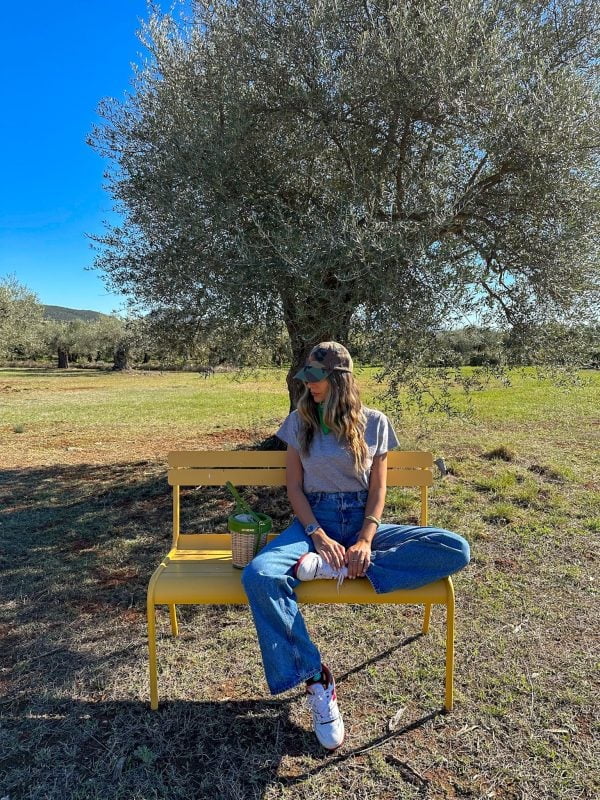
Eleni Florou among her olive groves (Photo: Eleni Florou)
“We have been producing extra virgin olive oil, mainly from the Koroneiki variety, since I can remember,” she told Olive Oil Times. “I must have been a toddler during my first harvest.”
“In the last few years, we have started bottling and distributing to family and friends,” Florou added. “I am very keen on taking over the business, rebranding the product and making all the necessary improvements so it can stand out in terms of quality. I intend to go through the process of our own olive oil-making tradition step by step from the orchard to the mill, comparing notes with what we have been taught as good practices.”
On the other side of the olive oil-producing world, Dave and Claudia Sadoff traveled from Sonoma County, California, as they were embarking on their journey as olive oil producers at Nomad Groves.
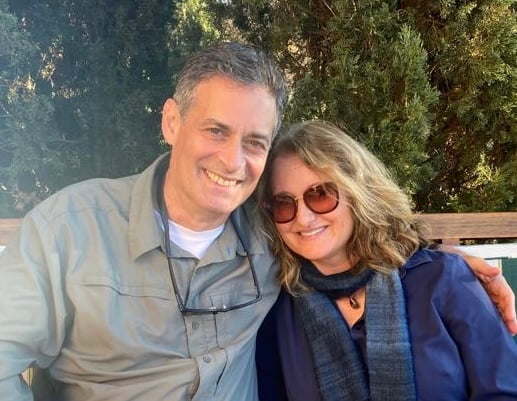
Dave and Claudia Sadoff
“We are new olive oil producers, taking over the stewardship of a beautiful, established olive grove and keen to learn as much as we can about what makes an exceptionally high-quality extra virgin olive oil,” the couple told Olive Oil Times.
“The sommelier course offered us the opportunity to learn from and interact directly with world-class specialists, to explore the attributes and complexity of fine oils, and to guard against the missteps that can lead to defective oil,” they added.
The Sadoffs produce a limited amount of a robust blend of Italian, Spanish, Greek, and French olive varieties and are expanding the grove.
“We are now better equipped to avoid problems that can produce defective oil, have a deeper appreciation for when we should seek expert guidance, and ought to be able to more accurately assess the quality of our oil and the means by which we can refine its taste through curated blending,” they said. “Also, during the course, we met a number of presenters and classmates with whom we hope to collaborate in one way or another.”
Along with planting more trees, the Sadoffs plan to start an olive tree nursery. “The property we acquired came with two large greenhouse structures,” they added.
While plenty of attendees were focused on production, others sought to learn more about extra virgin olive oil to serve as ambassadors to the culinary world.
Bill DeWitt, who owns a brewery and winery in Virginia, trekked from the Washington, D.C., area to learn how to highlight olive oils in his recently added kitchen.
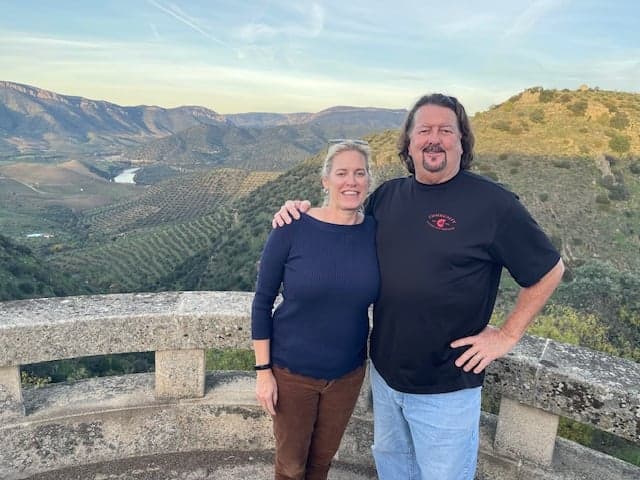
Billl DeWitt and his wife Michelle in Portugal. (Photo: Bill DeWitt)
“I have been a long-time wine enthusiast, and as my wife, Michelle, and I traveled the world on the wine journey, it became apparent that olive oil was also a big part of the meals we shared while wine tasting,” he told Olive Oil Times. “So, I set out to learn as much as possible about extra virgin olive oil as well.”
“Our goal is to become stewards of good olive oil and feature it within our menu,” he added. “Also, we will have food, wine and olive oil events featuring a certain country that fits the script, focusing on smaller production groves.”
DeWitt was not the only attendee seeking to emphasize the organoleptic qualities of extra virgin olive oil in hospitality.
Zack Manganas and Agelos Bougias, who manage a farm-to-table restaurant and organic farm together, journeyed from Crete to better understand organic extra virgin olive oil production and quality to improve the synergy of their businesses.
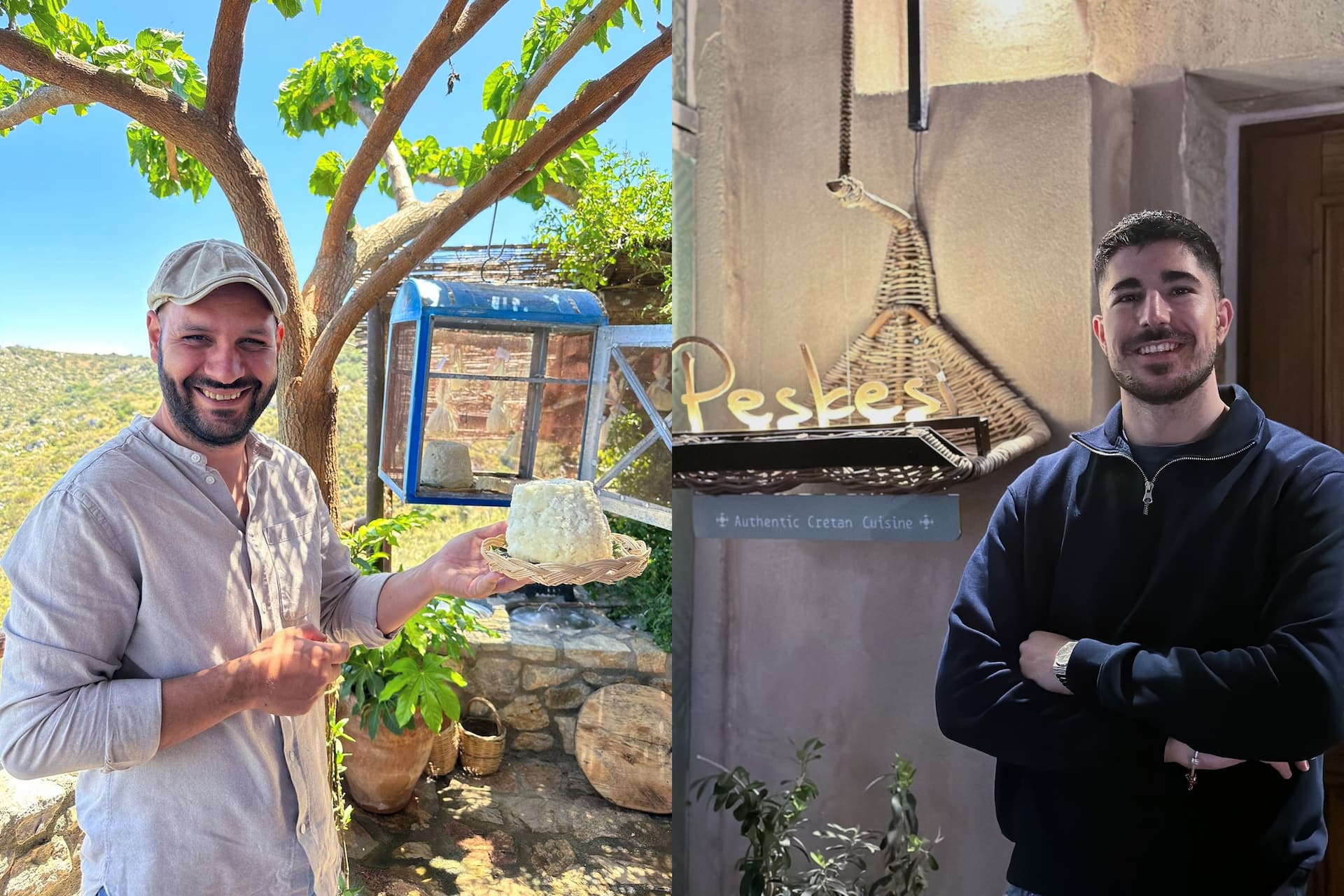
Agelos Bougias and Zack Manganas promote the traditional Cretan diet in their olive farm and farm-to-table restaurant.
Manganas is responsible for the restaurant, which specializes in Cretan cuisine. Bougias manages Peskesi Organic Farm, which offers guided olive oil tastings and food pairings.
“We are passionate about environmentally friendly ways of farming, and our vision is to revive the authentic Cretan diet with so many health benefits,” Bougias told Olive Oil Times. “I will use the knowledge I got from the course to improve the experience and inspire more people to use extra virgin olive oil.”
Extra virgin olive oil is the linchpin of the Cretan diet. Manganas, who grew up in the family olive mill “helping and tasting,” said he needed to know more.
“Olive oil was, is and will always be in my life, as I am literally surrounded by it,” he told Olive Oil Times. “I feel the duty to do my best so people will know more about olive oil production, and now I can, with higher efficiency, educate people through the tastings.”
“Olive oil is the main product that the island of Crete produces, and we try to showcase the importance and quality of the product to every guest who pays us a visit,” Managas added.
While many attendees traveled internationally to explore olive oil with leading professionals, one aficionado commuted to the program each morning on the Tube, the local name for London’s metro.
“I have been absolutely passionate about olive oil all my life,” Vesna Cramer told Olive Oil Times.
In 2014, Cramer had her olive oil moment when she volunteered to harvest olives from trees in Croatia that would have otherwise gone unpicked. She bought ten hectares of land to plant 125 olive trees in Šibenik.
“I am working on my own further development linked to harvesting, milling, selecting and selling on a small scale to friends and family,” she said.
“I aim to focus more on tasting olive oil at every opportunity and to work more on improving my skills as a taster so I can help my friends and family choose good olive oils,” Cramer added. “I also aim to work on setting up a few tasting group activities here and in Croatia with my summer guests.”
Enrollment is open for the upcoming olive oil sommelier certification program in New York, which will run from May 20th to 24th.