Croatian Producers Share Secrets Behind Their Award-Winning Success
The small southeastern European country produced just 3,500 tons of olive oil in the 2023/24 crop year but earned 80 awards from 97 entries at the World Competition.
After a challenging harvest, Croatian olive growers are satisfied with their achievements at the 2024 NYIOOC World Olive Oil Competition.
Producers from the southeastern European country earned the fourth-highest number of awards at the competition — 80 from 97 entries. According to data from the Olive Oil Times World Ranking, only Italy (148), the United States (96), and Spain (83) won more awards.
Croatia is a small country but a superpower in the quality of olive oils, which is confirmed year after year.
However, farmers and millers quickly pointed out that their 82 percent success rate was the highest of any country that submitted more than ten extra virgin olive oil samples to the World Competition.
Croatian producers celebrated their success after adverse circumstances, including extreme climatic conditions and pests.
See Also: The best extra virgin olive oils from CroatiaCold weather during the spring, followed by rain at the moment of flowering and pollination, resulted in lower fruit set on the trees. This was followed by the emergence of the olive fruit fly ahead of the harvest, which impacted the quantity and quality of the olive oil.
“We won fourth place in a strong competition with much fewer registered oils than our main competitors,” said Ante Vulin, the owner of Antino, which earned a Gold Award for a medium Oblica.
The producer grows 1,000 olive trees, of which 550 are in production, along the shores of Lake Vrana, Croatia’s largest lake, in the northern Dalmatian region of Pakoštane.
Along with Vulin, three other producers from the municipality, which is slightly smaller than Manhattan, combined with five World Competition awards.
Tomislav Čudina of Olea Viola earned a Gold Award for a medium blend; Vinko Lalin of OPG Lalin earned two Silver Awards for a blend and Oblica; and Mario Barešić of Skipper Drage earned a Gold Award for an Oblica.
“We don’t have large groves or quantities of oil,” Vulin said. “We don’t even have mills. But we have a tradition, a natural way of growing healthy fruits and producing premium oil that we get by cold pressing.”
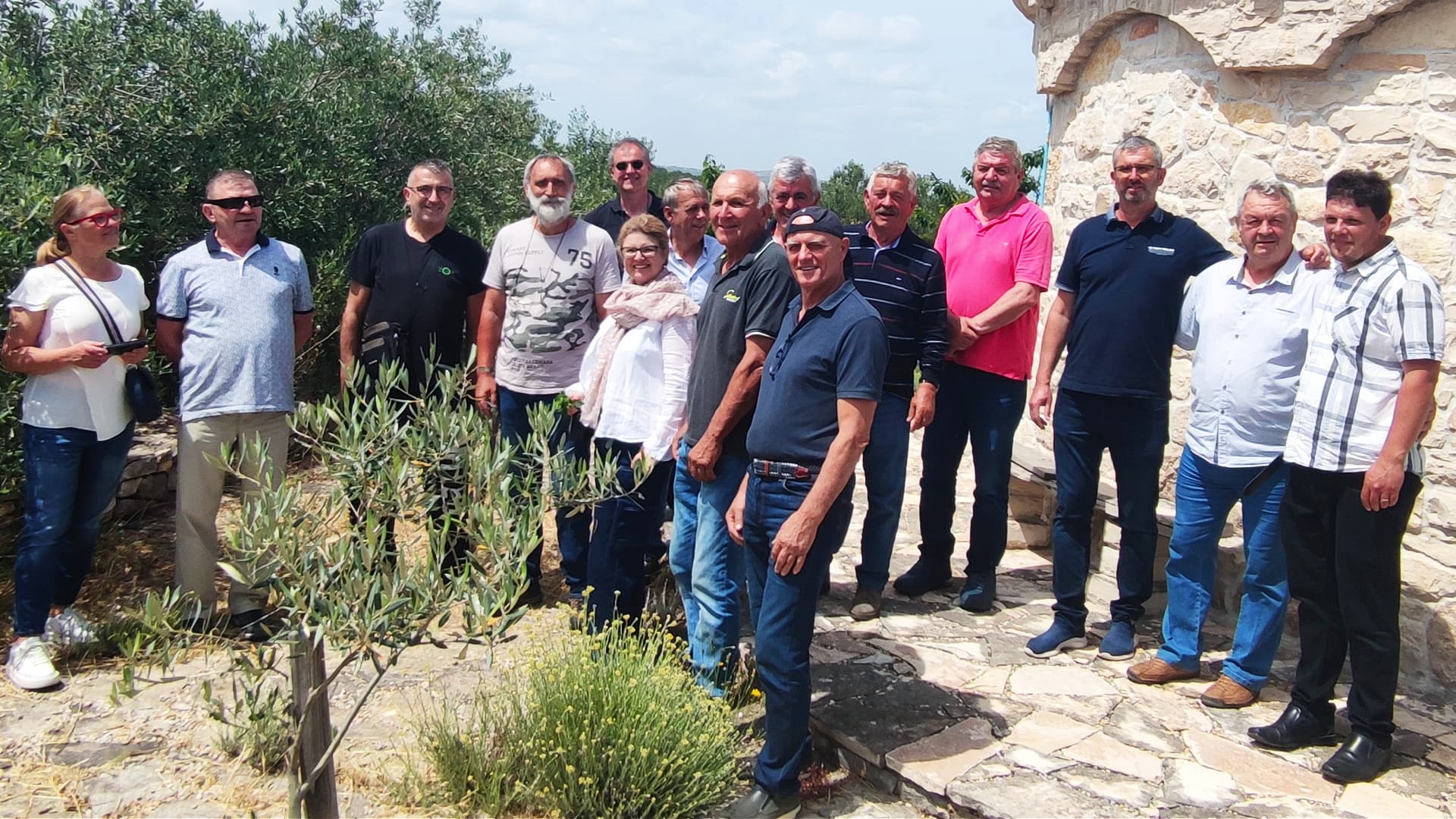
Croatian producers celebrated their success after a difficult harvest.
Ivica Vlatković, the president of the county olive growers’ association and an award-winning producer from nearby Novigrad, also hailed the country’s immense success despite its small size.
Croatia is home to about 3.8 million people. According to the European Commission, the country produced 3,500 tons of olive oil in the 2023/24 crop year, about ten percent below the average of the previous four years.
“Croatia is a small country but a superpower in the quality of olive oils, which is confirmed year after year,” said Vlatković, widely considered the best olive grower among doctors and the best doctor among olive growers.
Since 2017, he has also earned 15 awards at the NYIOOC, making him the country’s most successful producer at the competition.
Since Tomislav Duvnjak, owner of Vodice, launched a coordinated effort to organize and help finance small Dalmatian producers to send entries to New York in 2021, Croatia has consistently been one of the biggest winners at the World Competition.
See Also: World Competition coverageVlatković said that he and other producers now “live for the day” when Croatia wins the most awards at the competition.
“Olive oils come to New York from all over the world where olives are grown,” he said. “That’s why it represents the world championship in evaluating the olive oil quality. On a global level, Croatian olive oils have confirmed their high quality for years regarding the number of oils sent and awarded.”
Vlatković said Croatian producers are encouraged to see that they are achieving results similar to their counterparts in more well-known olive-growing countries.
He attributed the country’s disproportional success to several factors, including the mentality of Croatian producers, many of whom are small farmers who dedicate themselves to caring for a small number of trees.
Another key to the country’s success is the professional education provided to these olive growers through regional and country associations.
Additionally, significant effort has been made to build high-quality oil mills with sufficient capacity to process what is harvested on the same day.
Vlatković also praised the role of local tasting panels in helping olive growers identify defects and determine their causes.
Finally, he said many growers enter numerous local and national events, creating a competitive spirit and a culture of improvement in the sector.
“If, instead of 97, Croatian olive growers had sent at least as many of their oils to the NYIOOC [as producers from other countries did], I’m sure they would have won more Gold Awards and thus shown everyone how far Croatia has come in the production of top-quality extra virgin olive oils,” Vlatković said.
He added that conditions look good in the groves ahead of the 2024/25 crop year,
“The situation in the olive groves is promising,” Vlatković said. “Spring brought enough moisture. The temperatures are almost ideal, so the olive trees are full of flowers.”
“We also expect good pollination,” he added. “The harvest is still far away, but there is every chance we will have a successful campaign. Much more successful than last year, which means more oil at the world’s largest quality assessment in New York.”