Art Exhibition Raises Awareness of Growing Wildfire Risk, Funds Reforestation
Artist Michele Ardu’s exhibition ‘Aurum Urens’ uses charred olive tree remains from Sardinia to raise awareness of the impacts of climate change.
In the aftermath of last summer’s wildfire in Sardinia, artist Michele Ardu created a series of works of art to raise money for reforestation and awareness of the ever-growing risk of such events.
Under the title ‘Aurum Urens’ (Latin for ‘Ardent gold’), 15 photos and 30 sculptures were recently displayed at the Magazzini del Sale in Siena, Tuscany.
I wanted the visitors of the exhibit to feel the atmosphere of the destroyed orchards, including the smell of fire and earth.
“A few months after the blaze, a national newspaper called me for a photo reportage on the affected Montiferru area,” Ardu told Olive Oil Times. “When I first walked into an olive groves hit by the fire, I felt like I was on a battlefield.”
“Yet in such devastation and sadness, I was struck by the elegance and dignity that the remains of the trees kept despite the irreparable damage,” he added. “Then, I realized that art could be a powerful tool to stimulate reflection and convey a positive message.”
See Also: Olive Farmer Unearths an Ancient Mosaic in GazaArdu collected burned pieces of olive trees and entire plants, mainly from a 10-hectare grove that was almost entirely destroyed by the flames.
Located in Cuglieri, the plot is adjacent to the thousand-year-old oleaster of Sa Tanca Manna, which, after the devastation, recently showed signs of life.
“The culture and economy of this area, where I am originally from, is strongly linked to olive farming,” said Ardu, who was born in Oristano and lived in London for several years.
“That orchard has belonged to the same family for generations,” he added. “The owner told me that it was planted in the mid-1600s. It is clear that the burned olive trees are damage within the damage, for the trashing of the environmental and historical heritage and also for the job loss.”
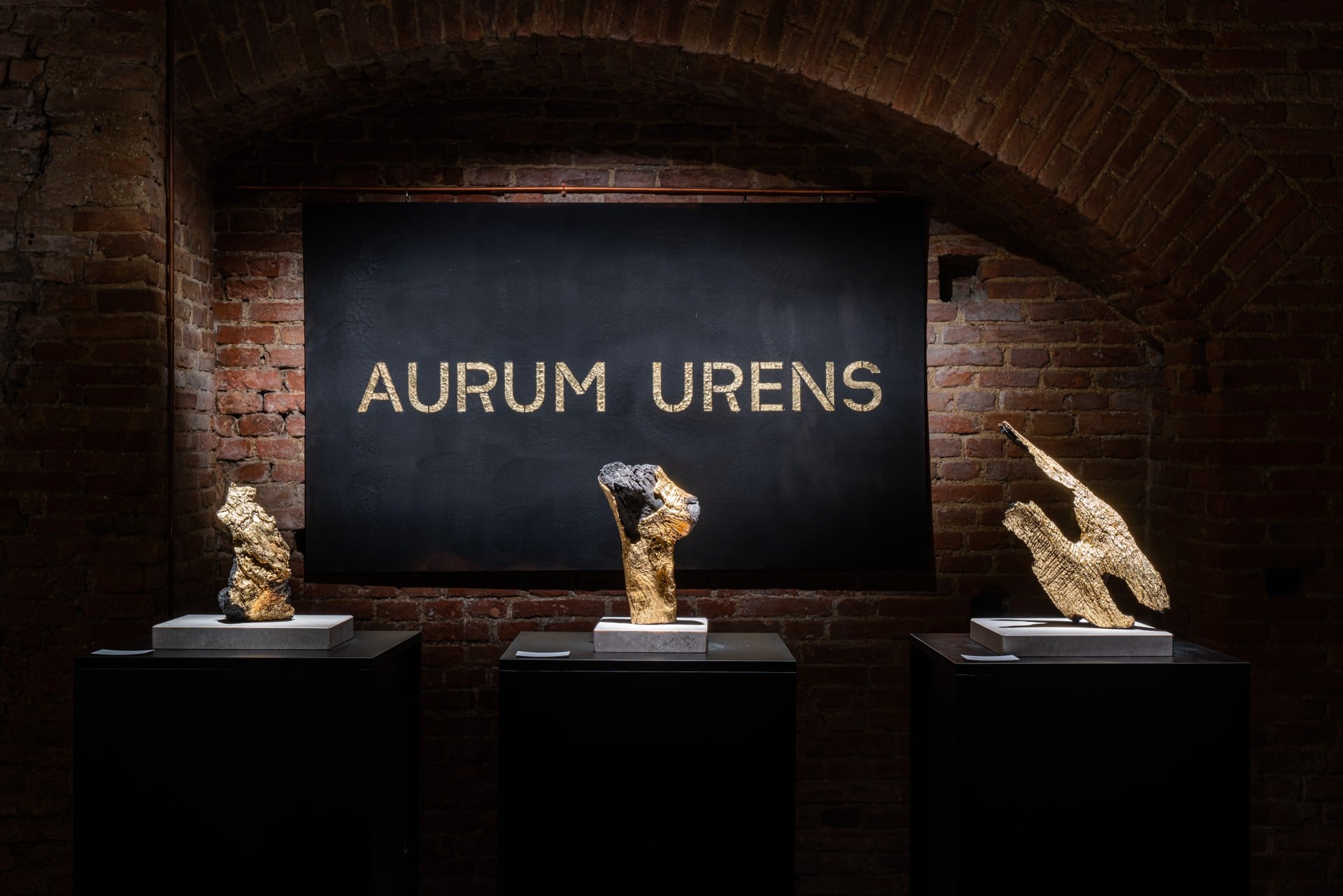
(Photo: Francesco Orrù)
Using the gold leaf technique, he covered the olive tree fragments with a layer of gold. The exhibition setup included the golden pieces and installations obtained from the charred olive trees.
“I wanted the visitors of the exhibit to feel the atmosphere of the destroyed orchards, including the smell of fire and earth,” said Ardu, specifying that multi-sensoriality is a major element in his works.
“The olive trees and nature, in general, are so precious,” he said. “Everyone can understand that gold is valuable and that the disruption caused by fire ends up in lifeless coal. I imagined that this artistic installation may announce the key value of nature, conveying encouragement to overcome the event of death and destruction while doing something good in concrete terms.”
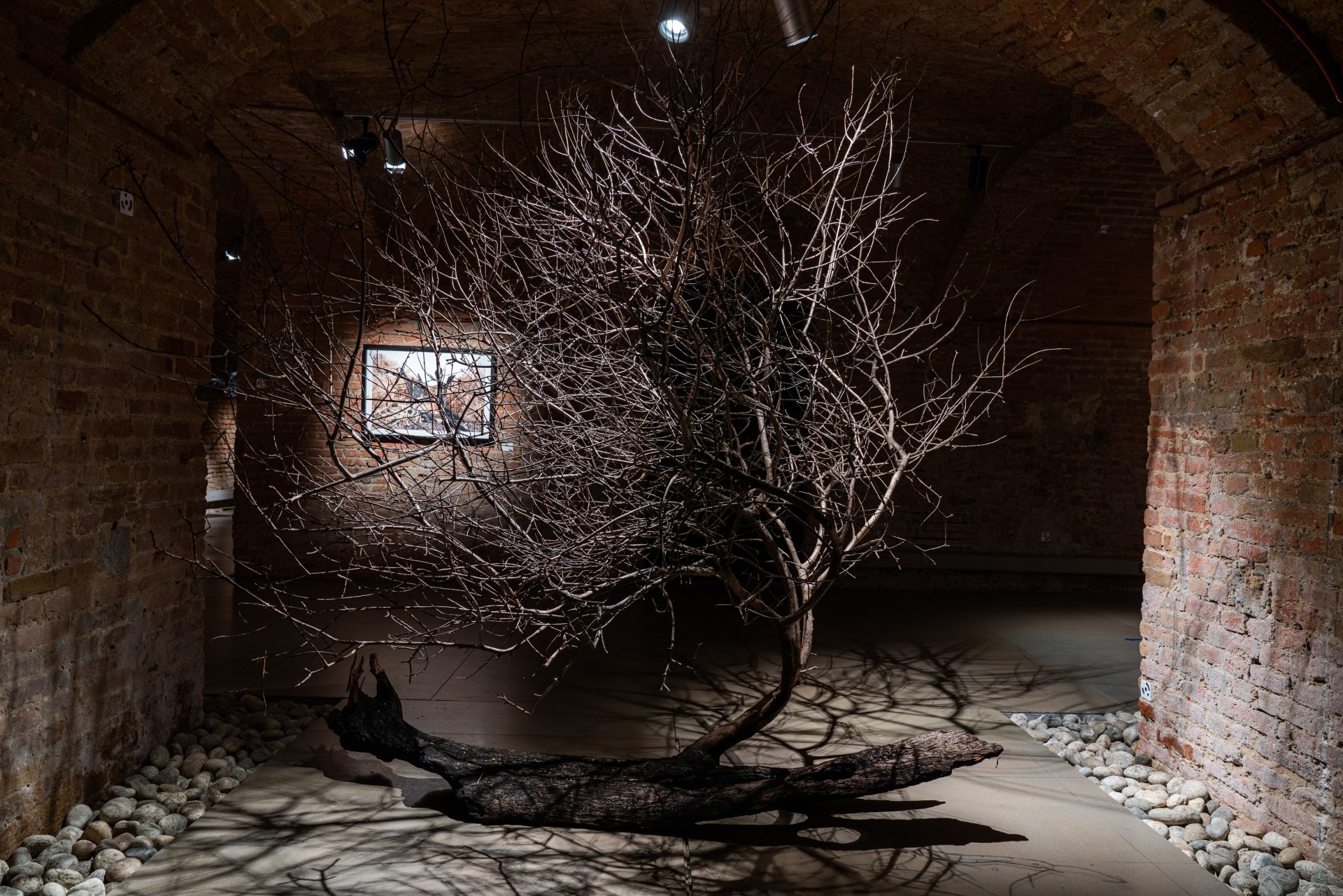
(Photo: Francesco Orrù)
Ardu synthesizes his vision of art as an experience that should impact the viewer due to its universal language.
“Wildfires hit many communities in several countries,” he said. “They represent a growing problem closely related to the climate change issue, but I think there is still no real understanding of the need for effective prevention, yet I believe that everyone can do their part, and this is mine.”
His project is to bring this exhibition to other countries, such as Spain and California, which also have suffered wildfire damage.
“The idea is to create ‘Aurum Urens’ parks around the world to build awareness about the importance of prevention,” Ardu concluded. “Part of the proceeds from sales will be used for continuing the project and planting new trees in the areas affected.”