Olive Oil Waste Fuels Spanish Power Plant and Palestinian Startup
A new plant will work to counteract the negative impacts of olive by-products in the region while developing a reliable substitute for fossil fuel.
Last week, a renewable energy company and pulp mill operator Ence Energia y Celulosa SA announced that it would be opening a new 50-megawatt biomass power plant in Puertollano, Spain.
The plant is projected to consume around 238,000 tons of biomass each year, with olive pomace, vine shoots, olive leaves, and agricultural remains acting as its primary fuel.
The amount of heat produced by olive jifit is higher than ordinary firewood and cheaper than petroleum products.
Ence has put about €100 million ($111 million) toward their new project with the hopes of reducing the unregulated burning of agricultural stubble in Spain.
The company estimates that, once fully operational, the facility will be capable of producing enough electricity to provide for the consumption of over 60,000 people each year.
See Also: Articles on RecyclingThe waste produced by olive oil extraction is far from negligible, not only in Spain but worldwide.
In a study published last month in EcoMENA, author Catherine Hansen discusses the two environmentally threatening byproducts of oil extraction: olive press cake (the solid waste) and olive-mill wastewater.
Hansen wrote that the effluents from olive oil production contain phenols, a poisonous caustic crystalline compound which, “unless disposed of properly, can result in serious environmental damage.”
“There is no general policy for disposal of this waste in the olive oil-producing nations around the world,” she added.
This results in inconsistent monitoring and non-uniform guidelines across these regions. Thus, Ence’s new plant will work to counteract the negative impacts of olive by-products in the region, while developing a reliable substitute for fossil fuel.
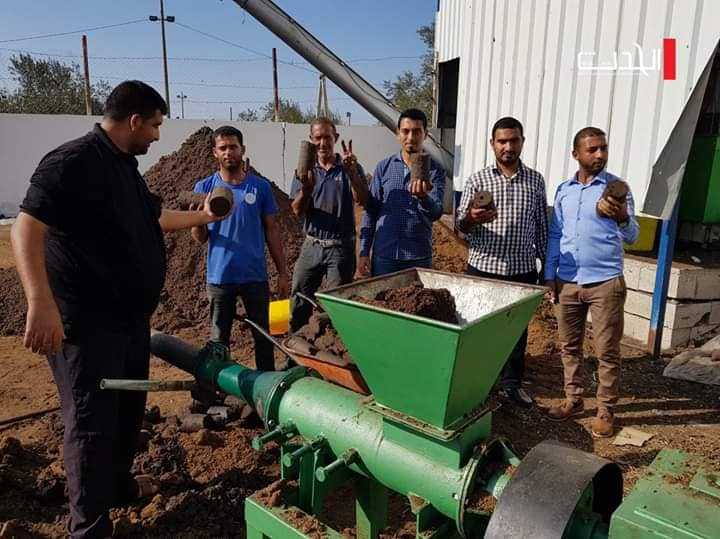
The Olive Jifit Project
Ence is not the only company attempting to repurpose pomace as clean energy in recent months.
One Palestinian startup, the Olive Jifit Project, converts olive jifit (solid waste byproducts more commonly called pomace) into fuel pellets used for power generation, poultry farming and home heating.
The Gaza City-based group was founded by civil engineering graduates Tamer Abo Motlaq, 26, Usama Qudaih, 24, and Khaled Abo Motlaq, 24, after they entered their startup idea in a Danish Church Aid contest and won $5,000 in micro-funding.
Speaking with Olive Oil Times, Motlaq explains that there is no scarcity of pomace in the region. In the Gaza Strip alone, “there are around 30 olive presses which produce about 150,000 tons of jifit annually,” he said.
The group is currently coordinating with presses in the Absan Alkabira municipality, in southeastern Gaza. Motlaq anticipates a steady rise in the demand for jifit in the coming years.
“The amount of heat produced by olive jifit is higher than ordinary firewood and cheaper than petroleum products,” he said. “Since [jifit] is rubbish, the percentage of profits is high compared to other products.”
Motlaq hopes to continue building on his work in bioenergy by finding more cheap, efficient and resourceful ways to repurpose waste products.