Women Farmers at the Forefront of Olive Oil’s Future, UN Says
As the United Nations prepares for the International Year of the Woman Farmer in 2026, women olive oil producers from Greece, Portugal, Tunisia and Lebanon share how resilience, sustainability and stewardship guide their work.
The United Nations has declared 2026 the International Year of the Woman Farmer (IYWF 2026) to spotlight the essential contributions of women across agrifood systems. While women farmers play a central role in food security, nutrition and economic resilience, their work remains too often underrecognized. IYWF 2026 aims to raise awareness and promote action to close gender gaps and improve women’s livelihoods worldwide.
Being a woman farmer today means carrying the future in your hands,” she added. The IYWF 2026 reminds us that without women farmers, there is no future for food.
According to the 2023 report, The status of women in agrifood systems, by the Food and Agriculture Organization of the United Nations (FAO), agrifood systems employ 36 percent of working women and 38 percent of working men globally. However, women’s roles are frequently marginalized, and their working conditions are often disadvantaged due to structural gender disparities driven by discriminatory social norms and rules affecting women and girls.
FAO estimates that closing the gender gap, which today leaves many women in irregular, informal, low-skilled and labor-intensive roles, particularly in low- and middle-income countries, would increase global gross domestic product by 1 percent, or nearly USD 1 trillion. Such progress would reduce global food insecurity by about 2 percent, improving food access for an estimated 45 million people. These figures underscore that advancing gender equality and women’s empowerment benefits not only women but society as a whole.
As IYWF 2026 approaches, women olive oil farmers from several countries shared with Olive Oil Times the challenges they face, the values that guide them and their aspirations in an increasingly uncertain world.
“Being a woman farmer, to me, is closely connected to stewardship of the land, resilience and responsibility,” said Cristina Stribacu, co-owner of LIÁ. “It goes beyond production and is about continuity: caring for the soil, making thoughtful decisions season after season and contributing through everyday practice to a more balanced and inclusive agricultural landscape.”
Stribacu produces premium extra virgin olive oil from Koroneiki olives in the village of Filiatra, in Greece’s Messinia. Her company also operates the LIÁ Olive Oil Hub, conceived as a space for knowledge, education and exchange. The hub recently launched Re:Olive, an educational program focused on regeneration and sustainable olive-growing practices, designed to address the evolving challenges faced by small producers.
“Today, the main challenges are closely linked to climate instability, rising production costs and the uncertainty that accompanies each harvest,” Stribacu said. “For small producers, resilience is a daily practice based on observation, learning and constant adaptation. My goal is to cultivate with respect for the land and pass on knowledge so olive growing remains viable for future generations.”
This perspective is shared by Ana Cardoso, co-owner of Monte do Camelo in Fronteira, in Portugal’s upper Alentejo. There, she produces the award-winning extra virgin olive oil Tratturo* de Fronteira from autochthonous Cobrançosa and Galega olives cultivated using organic and regenerative agriculture principles.
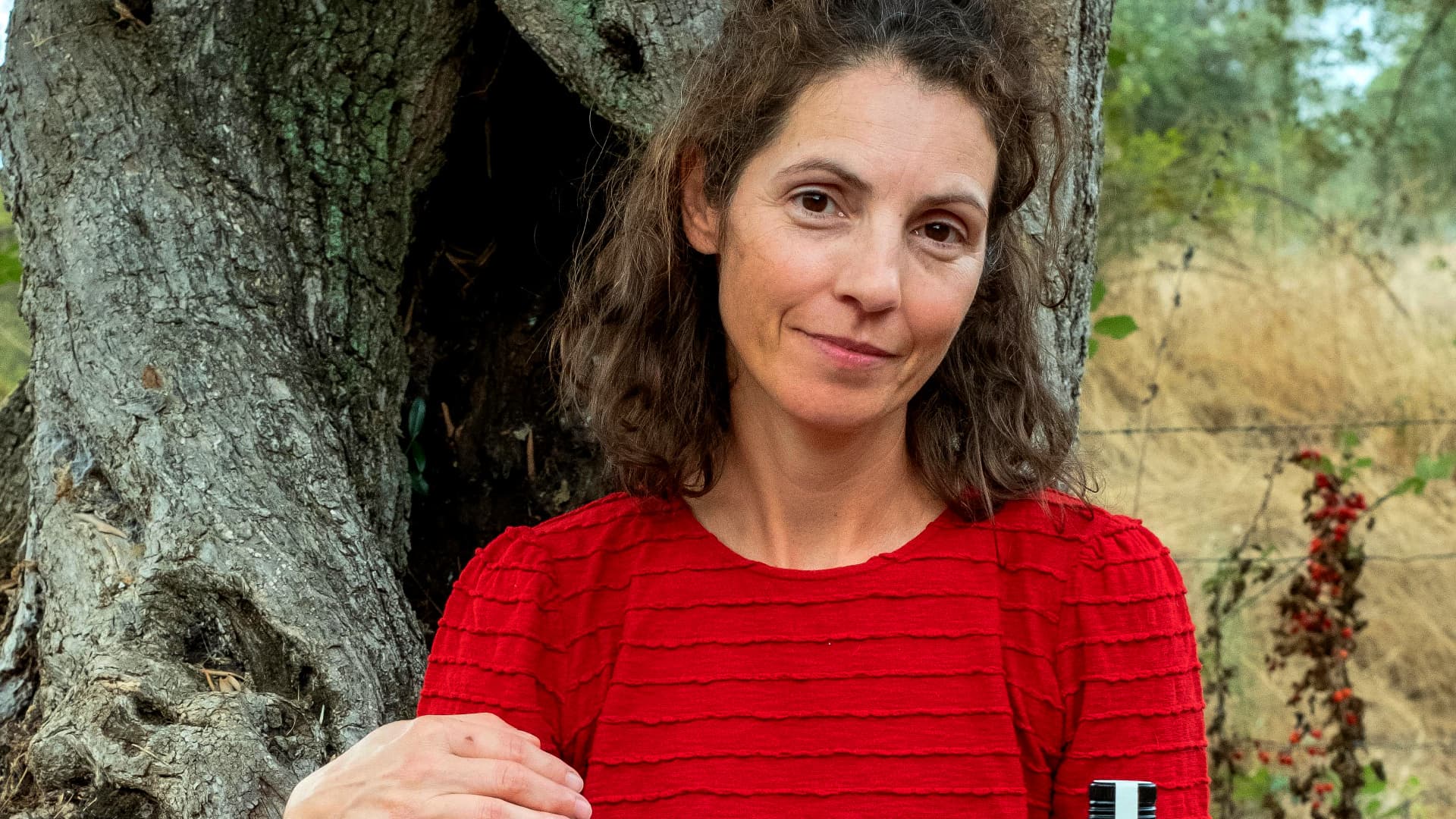
Ana Cardoso, the producer behind Tratturo de Fronteira, at Monte do Camelo farm
“Climate change, human resources and fair recognition of agricultural work are among the biggest challenges women farmers face,” Cardoso said. “Farming demands resilience, patience and a deep connection to the land. I have often had to prove my technical competence and leadership in a traditionally male-dominated sector.”
Cardoso added that prioritizing quality over quantity is both a moral and environmental imperative. “It means farming in harmony with biodiversity, refusing to overexploit the soil and protecting a cultural and environmental legacy that we are merely entrusted to safeguard.”
This commitment led her to pursue a postgraduate degree in oleotourism, motivated by a desire to share the story of her territory and the responsibility behind producing high-quality olive oil.
In northeastern Tunisia, sisters Afet and Selima Ben Hamouda launched A&S Extra Virgin Olive Oil in 2017. On their family estate in Mateur, they cultivate native Chétoui and Sayali varieties alongside Arbequina, Arbosana, and Koroneiki, and operate a mill equipped with state-of-the-art technology.
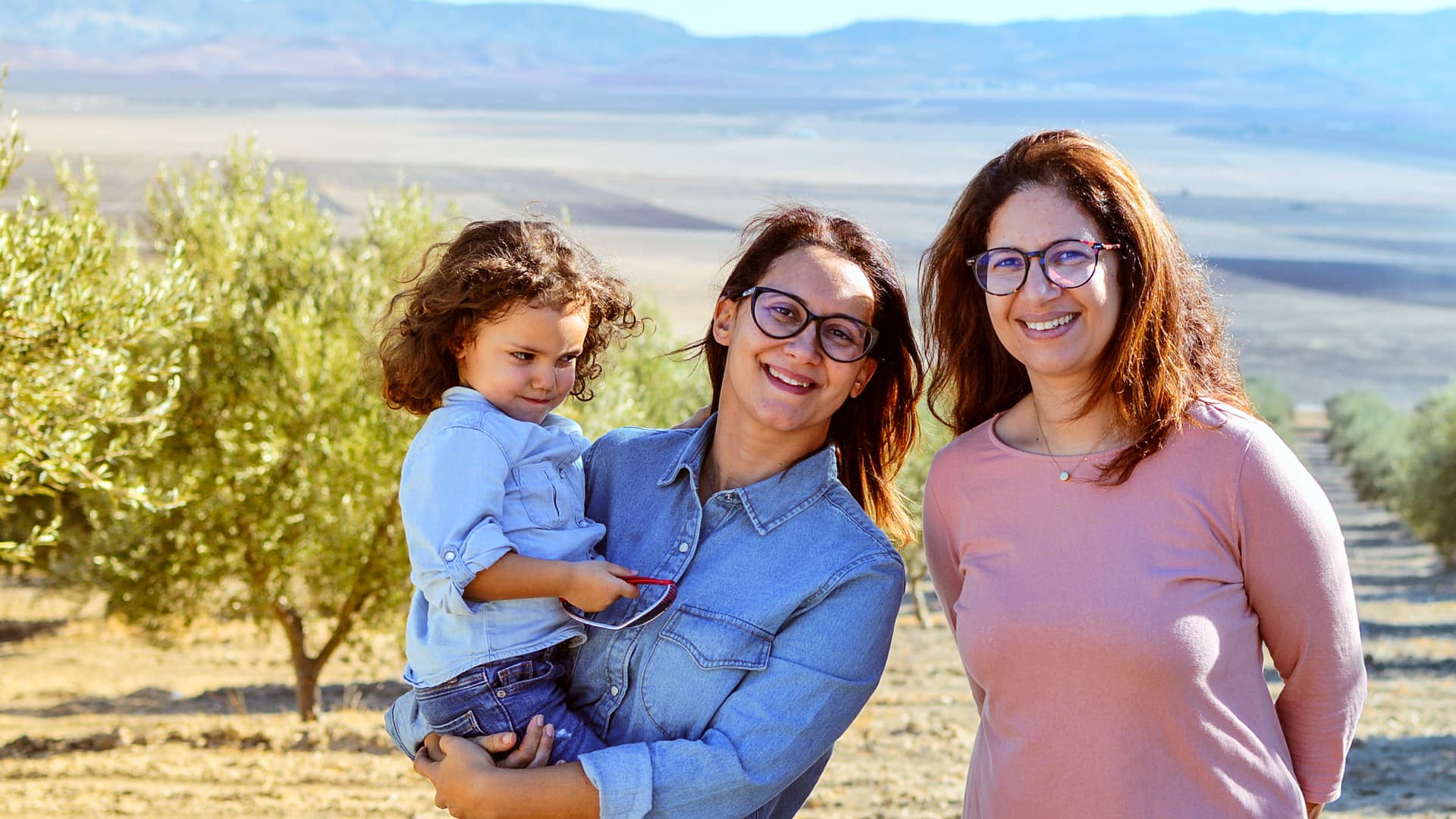
Afet and Selima (with her daughter Alia) Ben Hamouda at A&S farm in Mateur, northeastern Tunisia
“We grew up immersed in farming culture, and adaptation is essential to being a farmer today,” the sisters said. “Climate change is one of our greatest challenges, so soil conservation and sustainable practices are central to our work.”
They have also implemented satellite imagery to monitor olive groves and optimize water use. “We want our work to reflect our values and the authenticity of our product, while sharing knowledge so others can learn how to produce quality olive oil,” they added.
In Lebanon and Greece, Rose Bechara Perini founded Darmmess, a social enterprise that produces high-quality, traceable extra virgin olive oil sourced from small-scale farmers across six terroirs.
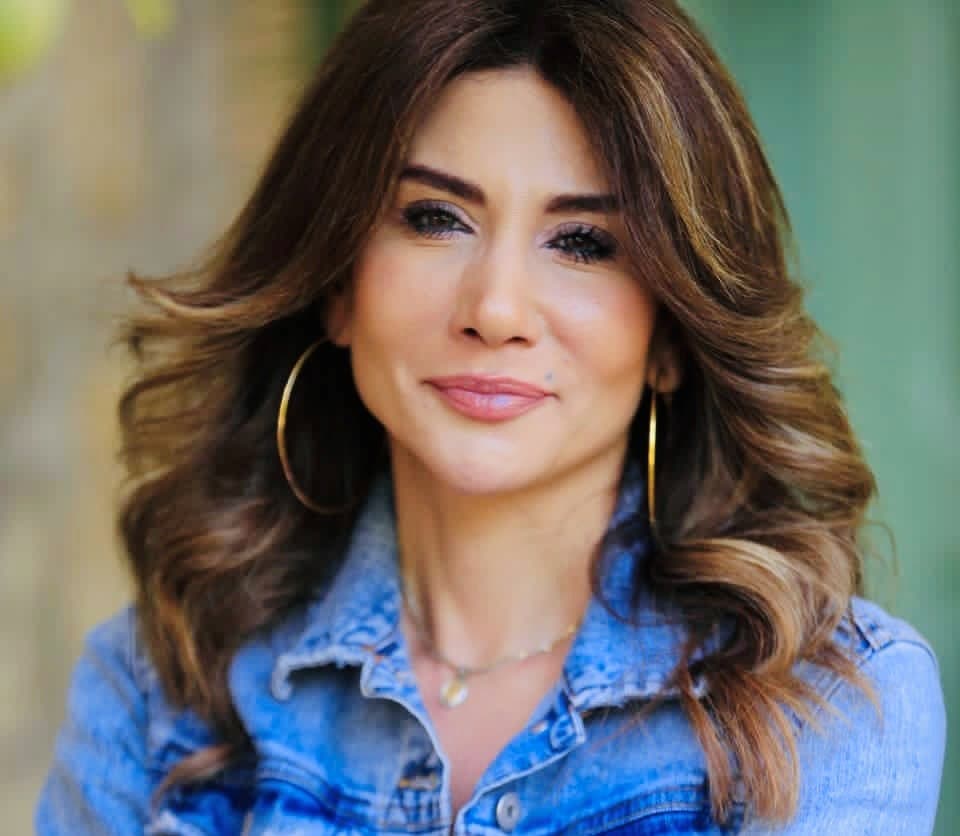
Rose Bechara Perini
“Olive growing teaches humility, patience and stewardship,” Bechara Perini said. “As a woman, I have often had to prove not only my competence but my legitimacy in spaces traditionally coded as male. These experiences shaped how I farm and lead, with intention and ethics.”
“Being a woman farmer today means carrying the future in your hands,” she added. “Climate, soil, biodiversity and social equity guide daily decisions. The IYWF 2026 reminds us that without women farmers, there is no future for food.”