Philippe Starck Reflects on LA Almazara’s Avant-Garde Design
In the Andalusian town of Ronda, the mill is envisioned as an homage to Andalusian culture and practical space for high-quality olive oil production.
LA Almazara, an avant-garde olive oil mill, opened in October 2024 in Ronda, a picturesque town in southern Spain.
The town sits on a plateau, provides stunning views of El Tajo Gorge, and is rich in history. It features one of Spain’s oldest bullfighting rings and the picturesque Moorish quarter, La Ciudad.
Designed by French architect Philippe Starck, who prefers to be called a creator, LA Almazara honors the cultural heritage of olive oil production in Andalusia.
Our vision has been and always will be to continue to celebrate the essence, the beauty, and magic of organic olive oil and, through this respect, also our love for us, humans.
The project, initiated by late investor Pedro Gómez de Baeza and LA Organic’s chief executive Santiago Muguiro, took 14 years to complete.
The structure’s exterior showcases a striking red cube resembling a fallen object from the sky. It also features a large eye symbolizing the vigilance of Andalusian surrealist artists.
Starck approaches all his projects like a film director, crafting narratives to evoke emotions and inspire viewers. LA Almazara reflects this philosophy.
See Also: Spanish Olive Oil Prices Fall as Production RecoversStarck told Olive Oil Times that his goal was to create a space filled with surprises that engage the senses.
“For LA Almazara, I aimed to translate the Andalusian culture and traditions into a monumental object, where everything is out of scale, and where fertile surprises captivate the eye and stimulate the mind,” he said.
The idea for LA Almazara stemmed from a conversation between Starck and his late friend Perico Gómez de Baeza. They wanted to show the world the value of Spanish organic olive oil.
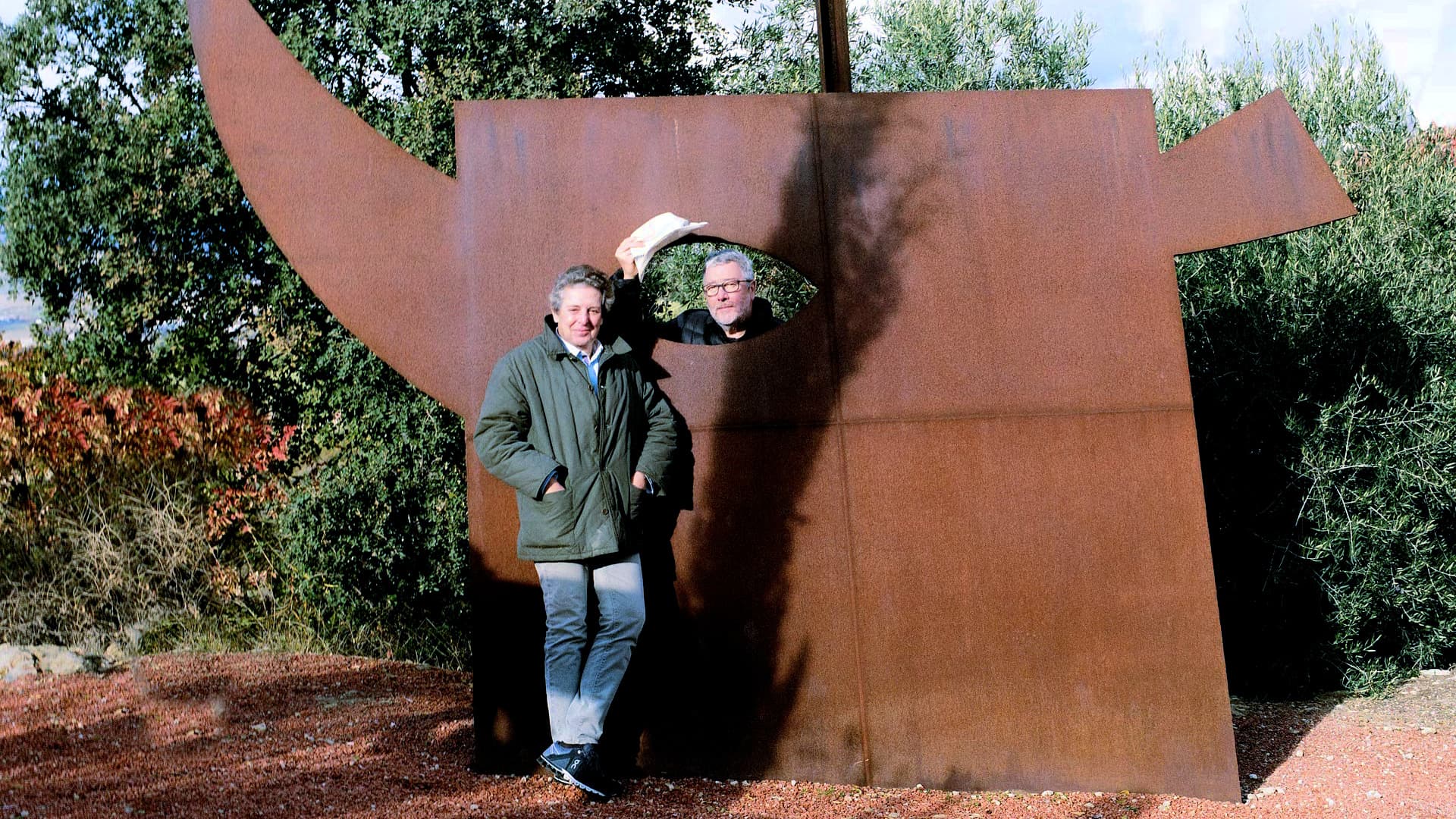
Pedro Gomez de Baeza (left) with Philippe Starck (Photo: Álvaro Medina)
“When Perico came to see me 20 years ago, he told me that something seemed strange to him,” Starck recalled. “It was the fact that the number one seller of olive oil in the world is known to be from Italy, but strangely enough, the number one producer of olive oil is Spain.”
Together, they created LA Organic, crafting extra virgin olive oil the same way a cellar master would produce fine wines and winning numerous awards. Gómez de Baeza, who worked for four decades in the financial and investment banking sector, served as the president of LA Organic.
Years after that initial conversation with his friend, Starck finally brought LA Almazara to life.
“At LA Almazara, sustainability is central to our philosophy,” said Jorge Amat, LA Almazara’s marketing executive. “We practice 100-percent organic farming in our olive groves, avoiding synthetic pesticides and fertilizers to maintain soil health and biodiversity.”
Our regenerative agriculture techniques, such as cover cropping and natural composting, enrich the land and reduce water usage,” he added. “We also employ precision irrigation and energy-saving technologies to minimize environmental impact.”
“By prioritizing organic methods, we produce olives in a chemical-free environment, resulting in purer oils rich in antioxidants that reflect the authentic flavors of our land,” Amat continued. “Our careful handling during harvesting and cold extraction preserves the fruit’s integrity, enhancing the aromas and taste of LA Organic oils.”
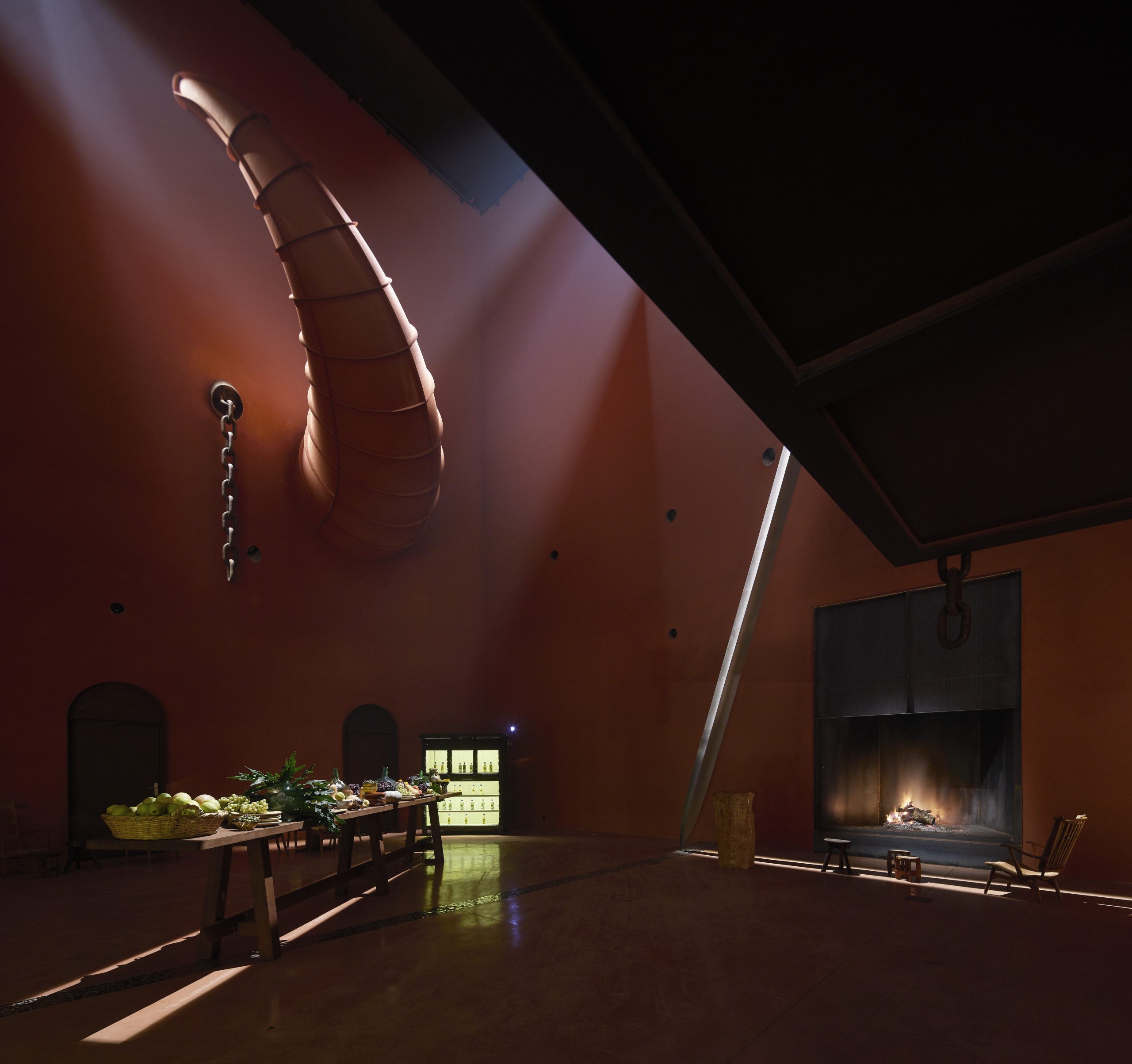
LA Almazara’s interior includes designs that pay hommge to traditional Andalusian culture, including bullfighting. (Photo: Alfonso Quiroga Ferro)
At the center of the groves, Starck said he intended LA Almazara to serve as a sanctuary for the sensory experiences entwined in olive oil production and tasting.
“It is a place for contemplation and sensory experience, surrounded by vast olive groves and illuminated by Andalusia’s vibrant and warm light,” he said. “This remarkable environment dictated the level of radicality required for the project. Everything had to be extraordinary, somewhat peculiar and surrealistic.”
Along with the aesthetics, Starck added that the design is highly conducive to producing high-quality extra virgin olive oil.
“LA Almazara is a wonderfully functional machine in the service and respect of olive oil,” he said. “There is a radical contrast between the inside of LA Almazara, where it is dark and cool, and the outside, with Andalusia’s warmth and dazzling lights.”
Inside, visitors encounter unexpected artistic elements, such as a half-olive embedded in a rusted steel wall and a metal pipe that penetrates the building. The design plays with light and shadow, featuring a terrace suspended by metal chains. Additionally, the space honors Andalusian culture through a large bullfighting sword and a portrait of a renowned matador.
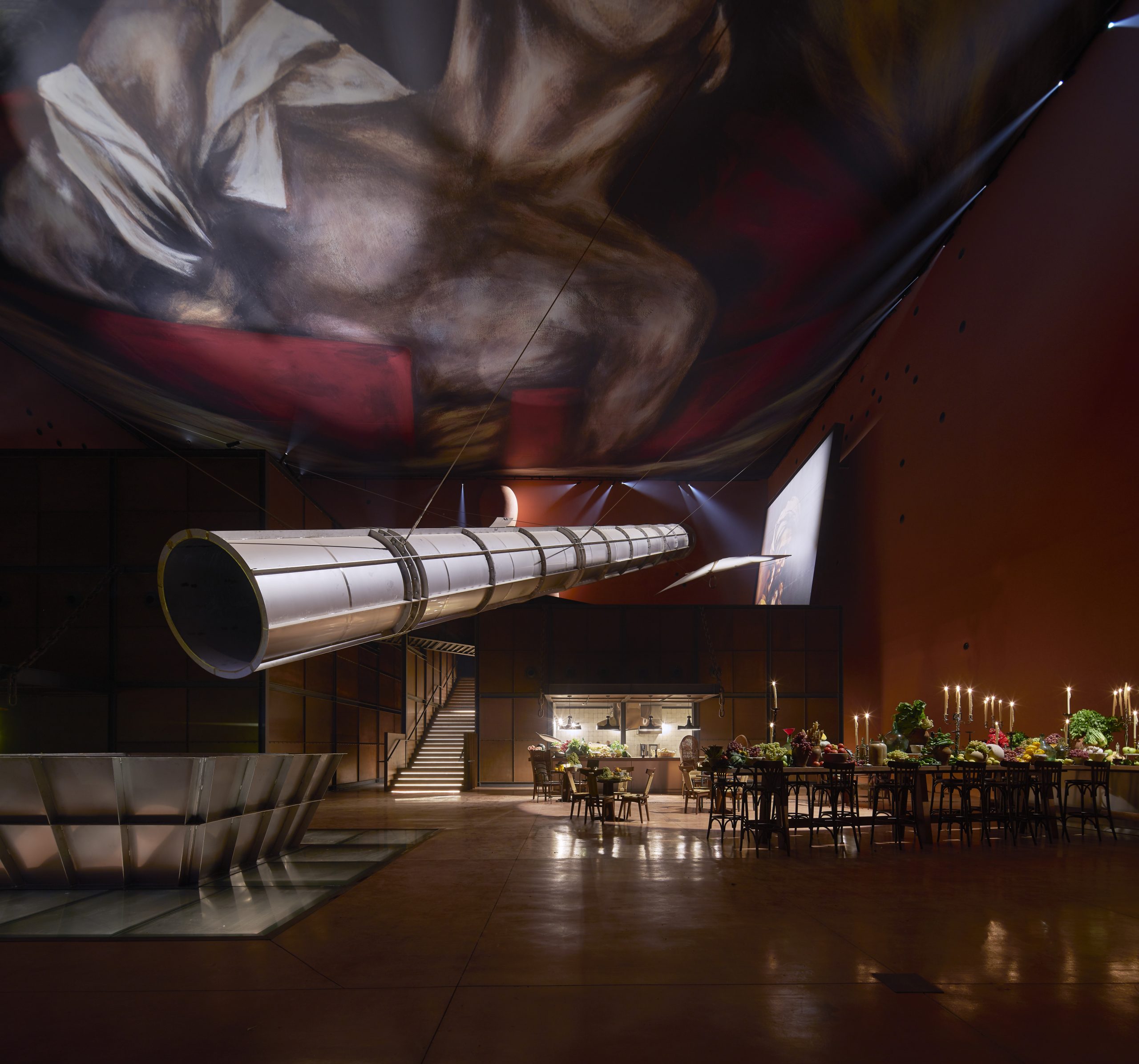
LA Almazara is designed to be dark and cool inside, ideal for long-term olive oil storage. (Photo: Alfonso Quiroga Ferro)
“LA Almazara is, above all, a functional building that serves the community and humanity by honoring and protecting olive oil,” Starck said. “Yet it is also a great ‘slap in the face’ that awakens, shakes up, enlivens and moves.”
Amat noted that LA Almazara’s team has multiple projects in the pipeline.
“Soon, we will launch exclusive tastings and workshops that delve deeper into olive oil and organic farming,” he said. “We are also expanding our event offerings, transforming LA Almazara into a premier destination for gourmet events, concerts and cultural gatherings.”
“Additionally, we are working on enhancing our visitor experience with new routes through our olive groves and vineyards, as well as immersive activities that connect guests even more deeply with our philosophy of sustainability, nature, and excellence,” he added.
Starck concluded that he had created the mill to become part of humanity’s cultural and architectural heritage.
“Our vision has been and always will be to continue to celebrate the essence, the beauty, and magic of organic olive oil and, through this respect, also our love for us, humans,” he said. “LA Almazara is a place for forever.”